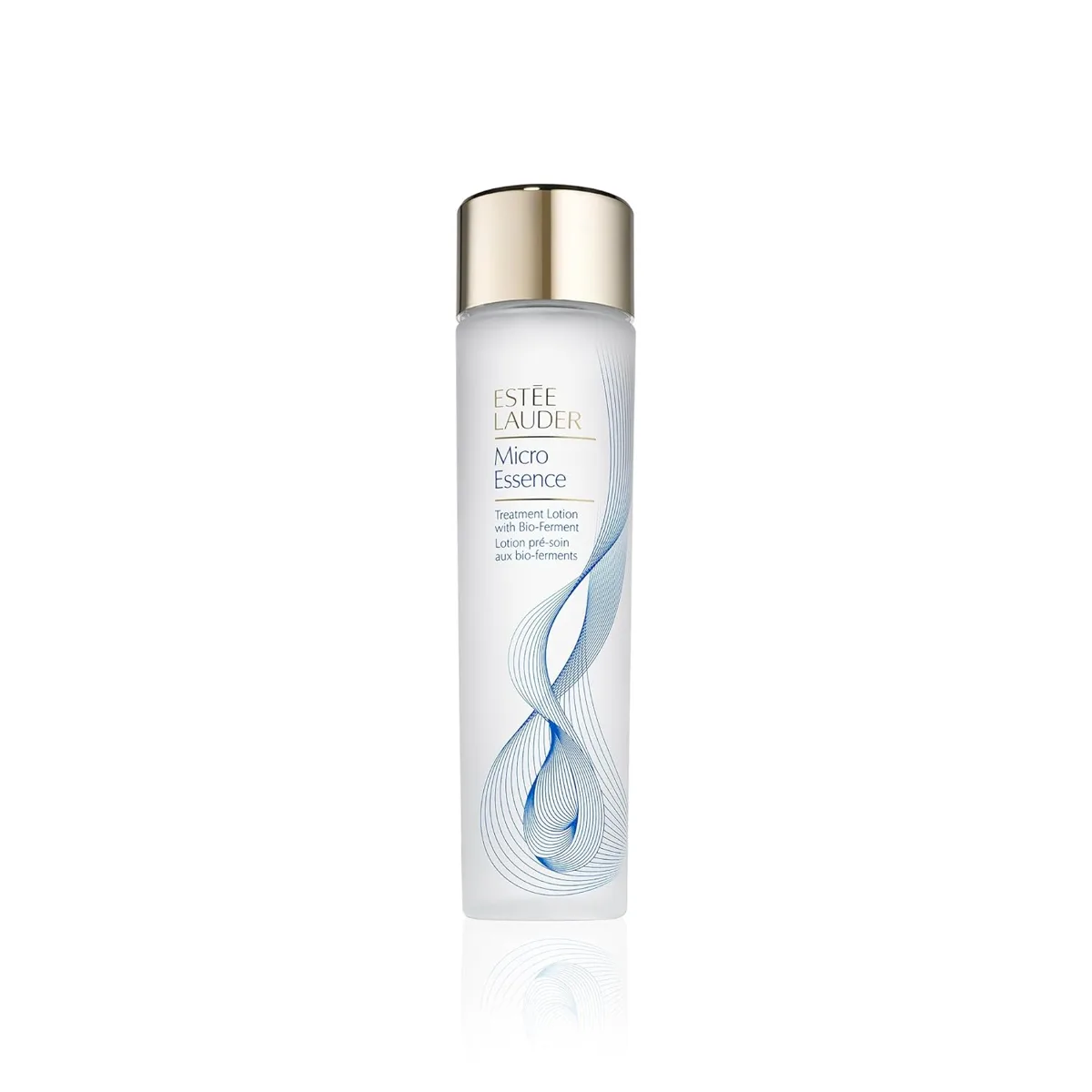
Unlike most toners that simply remove residual impurities, The Treatment Lotion is an essence-style treatment that delivers Miracle Broth as the second ingredient in a watery vehicle designed for rapid absorption. The combination of licorice root, Lactobacillus ferment, multiple algae extracts (Laminaria digitata, Laminaria saccharina, Palmaria palmata), and plankton extract creates a marine-forward prep step unlike anything in the Western toner category — more aligned with the Korean/Japanese essence tradition.
La Mer's most accessible product by per-ounce value delivers Miracle Broth, hyaluronic acid, and licorice root in a fast-absorbing essence format that genuinely improves subsequent product absorption. The best entry point into the La Mer universe — if you can look past the persistent fragrance allergens.
Good choicefor DehydrationIn your profileYou chose · Hyaluronic Acid is a reference standard by mechanism for dehydration; this liquid carries it.Moderate evidenceStandard tolerabilityNo reviews collected yet
The case for it
Sodium Hyaluronate has trial-supported standing for this concern.
It is plausibly present at a working level, though the concentration is not declared.
The formula carries no trigger this concern is sensitive to, with the cautions noted.
Cautions: drying alcohol.
What would change this: A declared concentration would move this to a firmer reading of the dose.
Same rule for everyone. “Good choice” is the verdict on 9,564 of 45,024 concern verdicts across the catalog; rule R5 decided 9,072 of them.
Unchanged since September 5, 2026, engine 5.1.1.
R5 — Trial-supported or guideline-supported active, adequately or plausibly dosed. · the full register
Carrying active
Sodium Hyaluronate
Standing
supported — its mechanism is established
Form
plausible — studied range 0.1%, from the trials on the row; needs leave-on contact; judge it after ~1 weeks
Tolerability
standard — drying alcohol
Row checked
against its sources on July 17, 2026 (evidence table ev-2026.09-r228)
The studies behind the evidence row
Draelos ZD, Cosmetic Dermatology: Products and Procedures — hyaluronic acid classified as a humectant water-binding agent holding many times its weight in water — reference work
Promisingfor DullnessIn your profileYou chose · Hyaluronic Acid has trial-level evidence for dullness but no guideline or regulatory standing yet — promising, short of a recommendation; the other actives here are not yet assessed for it.Moderate evidenceStandard tolerabilityNo reviews collected yet
The case for it
Sodium Hyaluronate has trial-level evidence for this concern but no guideline or regulatory standing yet.
It is present at an effective concentration, declared or high in the ingredient list.
The formula carries no trigger this concern is sensitive to, with the cautions noted.
What would change this: Guideline or regulatory standing for the active on this concern would move this from a promising bet to a recommendation.
Same rule for everyone. “Promising” is the verdict on 7,858 of 45,024 concern verdicts across the catalog; rule R9p decided 7,858 of them.
Unchanged since September 5, 2026, engine 5.1.1.
R9p — 0.5.0: 'Unproven' beside three filled dots read as one question answered twice with opposite words (7,018 rows). The chip measures standing, the dots measure trial volume; where the row carries at least one RCT or a tier-2 source (moderate dots) and the active is present at a working level, the honest word is Promising. Unproven is reserved for plausible-standing rows with limited or weak evidence, or an under-dosed form. Same rank as Unproven — a bet either way; the dots order them. · the full register
Carrying active
Sodium Hyaluronate
Standing
plausible — trials support it
Form
adequate
Tolerability
standard
Row checked
against its sources on July 17, 2026 (evidence table ev-2026.09-r228)
Also listed for Dryness — the actives here (Hyaluronic Acid, Licorice Root Extract, Trehalose, Probiotics & Prebiotics) are in our research queue for that concern; there is no verdict until their evidence rows are written. That is a gap in our table, not a mark against the product.
Does the jobDoes what a toner is for: adds something real. Not measured from the label: restores skin pH, plays well with what follows.
A verdict is DermApproved’s assessment of how well a product’s ingredients fit a concern — never a claim about what the product treats. Evidence dots and collected reviews sit beside it and are never blended in.
Rules 0.5.1 · evidence table ev-2026.09-r228 · how we decide
Assessment
Pros & Cons
Pros
✓ Miracle Broth as the second ingredient in a fast-absorbing format optimized for penetration
✓ Best per-ounce value in La Mer's entire product range at $38-40/oz
✓ Genuinely enhances absorption and performance of subsequently applied products
✓ Licorice root and Lactobacillus ferment provide soothing and microbiome support
✓ Cumulative improvement in skin texture, hydration, and radiance over weeks
✓ Efficient 3-drop application means the bottle lasts 3-4 months
Cons
✗ Five fragrance allergens plus eucalyptus and lime oils in a first-contact product
✗ Alcohol denat is counterproductive in a hydrating treatment essence
✗ Still expensive at $190 compared to Korean/Japanese essences with similar architecture
✗ Results are subtle and cumulative — those seeking dramatic visible change may be disappointed
✗ Not suitable for sensitive or eczema-prone skin despite the gentle essence format
✗ Lime peel extract can cause photosensitivity if used in the morning without sunscreen
Review
Full Review
In a lineup dominated by three-hundred-dollar creams and four-hundred-dollar serums, La Mer's The Treatment Lotion occupies an unusual position: it might be the brand's most sensible purchase. Not the most glamorous. Not the most scientifically ambitious. But ounce for ounce, the most defensible use of your money if you have already decided that La Mer's Miracle Broth deserves a place in your routine.
That conditional is carrying a great deal of weight, and it should be examined before anything else. Miracle Broth is a fermented sea kelp extract born of Dr. Max Huber's twelve years and six thousand experiments, and it is one of the most famous ingredients in cosmetics. It is also one of the least independently validated. The research supporting it is proprietary, the mechanism is described rather than demonstrated, and no body of external literature exists that a skeptical reader could consult. This does not make it inert. It makes it unproven, which is a different and more honest word, and it means the price is buying a story alongside a formula.
The Treatment Lotion is an essence — a category La Mer borrows from Korean and Japanese traditions, where hydrating liquid treatments applied to freshly cleansed skin have been foundational for decades. The concept is simple: deliver actives in a low-viscosity vehicle that penetrates rapidly into damp skin, creating a hydrated foundation that improves the absorption of everything applied afterward.
And here the product stands on genuinely firm ground. A well-hydrated stratum corneum is measurably more permeable to topically applied actives; this is basic transdermal delivery science, not marketing. Glycerin, sodium hyaluronate, urea and sodium PCA in this formula create real hydration, and the sensation that your serum works better afterward is not placebo. That mechanism would function identically in a twenty-dollar essence.
The formula positions algae extract second, ahead of glycerin, which for a fluid this thin implies a generous concentration. The supporting cast is intelligent rather than extravagant: dipotassium glycyrrhizate from licorice for anti-inflammatory soothing, Lactobacillus ferment for microbiome support, trehalose — a disaccharide that stabilizes cell membranes under dehydration stress through vitrification, distinguishing it from ordinary humectants — and a mineral complex of copper, zinc, magnesium and calcium gluconates mirroring seawater's electrolyte profile. Three additional algae species and a plankton extract broaden the marine profile. Deeper still sit caffeine, niacin, glycosaminoglycans, soybean protein, a tourmaline mineral, and two peptides — acetyl hexapeptide-8, the neurotransmitter-inhibiting molecule marketed as a topical Botox mimic, alongside a second peptide of similar ambition. Whether either does much through intact skin is a longer argument than this bottle can settle.
The sensory experience is understated by La Mer standards. Pour three drops into your palms — the controlled-pour bottle makes this precise — and press into damp skin. Don't use a cotton pad; it absorbs a meaningful fraction of a very expensive liquid and delivers it to the bin. The lotion is barely thicker than water, absorbs almost instantly, and leaves no residue. Skin immediately feels plumper and more receptive.
Over several weeks the cumulative effect becomes clearer. Texture improves, radiance increases as a well-hydrated surface reflects light more evenly, and users consistently report their serums performing better. All of this is real, and all of it is attributable to ingredients that are neither rare nor proprietary.
Then there is the flaw La Mer cannot seem to shed. Five individually declared fragrance allergens — limonene, linalool, hydroxycitronellal, citronellol, geraniol — accompany eucalyptus leaf oil and lime peel extract. Alcohol denat appears near the end. This is a product designed to touch freshly cleansed, briefly more permeable skin as the very first treatment step, and it has been deliberately loaded with the compounds most likely to sensitize it. The lime peel adds a photosensitivity note for morning use. From a dermatological standpoint these inclusions are indefensible, and their persistence across a luxury range suggests they survive because customers expect the scent, not because anyone thinks they help.
What remains is a genuine, narrow argument for buying it. At $190 for five ounces — three or four months at three drops twice daily — this is dramatically cheaper per ounce than The Concentrate, The Regenerating Serum, or The Moisturizing Soft Cream. If you have decided to own one La Mer product, this is the financially rational one: the signature ingredient at high concentration, in the format where it has the best chance of absorbing, in a vehicle whose hydrating benefits are independently established even if its headline ingredient's are not. Essences built on the same architecture sell for a fraction of this from Korean and Japanese houses, and they will hydrate your skin just as effectively.
The Treatment Lotion is not flashy. It doesn't firm like the mask or glow like the oil. It's a quiet, effective prep step that makes everything after it perform a little better. In a brand famous for extravagance, this understated workhorse might be the smartest thing La Mer makes — which is praise for the product, and a rather pointed observation about the rest of the range.
Formula
Key Ingredients
The hero actives that drive this product's performance.
The second ingredient in this watery essence format, where the Miracle Broth is delivered in a low-viscosity vehicle designed to penetrate quickly and prep skin for subsequent products. The aqueous base allows for rapid absorption of the fermented sea kelp bioactives.
Provides a humectant foundation in this prep-step essence, drawing moisture into the uppermost layers of skin and creating a hydrated canvas for serums and creams. The watery texture allows sodium hyaluronate to be applied to still-damp skin for maximum hydration.
Established mechanismfor Dehydration · established mechanism
A potent anti-inflammatory licorice derivative that calms freshly cleansed skin and prepares it for active treatments. In this first post-cleanse step, it helps soothe any cleanser-induced tightness while providing its own brightening and redness-reducing properties.
A probiotic ferment that supports the skin's microbiome health at the very first treatment step. By introducing beneficial ferment metabolites before serums and creams, it helps create a balanced skin environment that optimizes the performance of subsequent products.
A natural disaccharide with unique cell-protecting properties — it stabilizes cell membranes under stress (dehydration, temperature fluctuation). In this treatment lotion, it works alongside sodium hyaluronate and glycerin to provide multi-mechanism hydration that protects skin cells from environmental stressors throughout the day.
Not yet assessed
Ingredient standings describe the active at treatment-level doses and
vehicles; this product's own condition grades weigh its actual formula.
Apply to freshly cleansed, still-damp skin using the dropper or poured into cupped palms. Pat gently into face and neck — do not use a cotton pad, which wastes product. Wait 30 seconds for absorption, then follow with serum and moisturizer. The essence preps skin to absorb subsequent products more effectively.
Results Timeline
Immediate hydration boost and skin plumping from the first use. Skin feels softer and more receptive to subsequent products. Within 2-4 weeks, cumulative hydration improves skin texture, radiance, and overall resilience. Pore refinement may become visible after 4-6 weeks.
Pairs Well With
Any La Mer serum or creamHyaluronic acid serumRetinol treatments
The Treatment Lotion's efficacy as a prep step rests on well-established dermatological principles. Work appearing in the British Journal of Dermatology has demonstrated that hydrated stratum corneum has increased permeability to topically applied actives — a fundamental concept in transdermal drug delivery that underlies the entire essence category. By delivering glycerin, sodium hyaluronate, and urea to freshly cleansed skin, the Treatment Lotion creates optimal conditions for the absorption of subsequently applied serums and moisturizers.
Dipotassium glycyrrhizate (licorice root extract) is one of the most well-documented anti-inflammatory ingredients in cosmetic science. Its mechanism involves inhibition of 11-beta-hydroxysteroid dehydrogenase and phospholipase A2, reducing the production of pro-inflammatory mediators. In a post-cleanse application, this helps calm any irritation from the cleansing process itself.
Trehalose has gained attention for its unique cell-protective properties. This natural disaccharide stabilizes cell membranes and proteins under stress conditions (dehydration, heat, oxidative stress) through a mechanism called vitrification. Research in the journal Cryobiology has shown that trehalose can protect cells from dehydration damage at the membrane level — a property that distinguishes it from standard humectants like glycerin or hyaluronic acid.
The Lactobacillus ferment contributes post-biotic metabolites that support the skin's microbiome. Research has shown that ferment lysates and filtrates can enhance the skin's innate immune response and improve barrier function, creating a healthier microbial environment from the very first step of the routine.
Dermatologist Perspective
Dermatologists familiar with the Korean skincare philosophy recognize the value of well-formulated treatment essences as a prep step. The hydrating ingredients (glycerin, hyaluronic acid, urea) and the licorice root anti-inflammatory align with evidence-based approaches to skin prep. Most dermatologists emphasize that the Treatment Lotion's principle — hydrating the stratum corneum to enhance penetration of subsequent products — is supported by transdermal delivery research. However, dermatologists would consistently flag the fragrance complex and eucalyptus oil as unnecessary irritation risks in a first-contact treatment product.
Guidance
Usage & Recommendations
How to Use
Immediately after cleansing, while skin is still slightly damp, pour 3 drops of Treatment Lotion into cupped palms. Press gently into face and neck — do not rub, and do not use cotton pads (they absorb too much product). Wait 30-60 seconds for absorption, then proceed with your serum and moisturizer. Use morning and evening. The essence preps skin for maximum absorption of whatever follows.
Value Assessment
At $190 for 5 oz ($38/oz) or $135 for 3.4 oz ($40/oz), The Treatment Lotion is La Mer's most accessible product by per-ounce cost. With a 3-drop application, the 5 oz bottle lasts 3-4 months — roughly $1.50-2 per day. This is still premium compared to Korean essences like Missha First Treatment Essence ($20-30 for 5 oz) or SK-II Facial Treatment Essence ($100 for 2.5 oz) that follow similar principles. But within La Mer's range, it represents the most efficient way to experience the Miracle Broth at high concentration.
Who Should Buy
La Mer enthusiasts looking for the most cost-effective way to incorporate Miracle Broth into their daily routine. Excellent for anyone with dry, dehydrated, or dull skin who wants a hydrating prep step that genuinely enhances their overall routine performance. The best gateway product for those curious about La Mer.
Who Should Skip
Those with sensitive, eczema-prone, or rosacea-affected skin — the fragrance allergens and eucalyptus oil in a first-contact product pose real sensitization risk. Budget-conscious consumers will find similar treatment essence architecture at a fraction of the price from Korean and Japanese brands.
A water-thin, almost gel-like liquid with a subtle viscosity — not quite water, not quite serum. It has a silky slip that allows it to be patted into the skin without dripping. Absorbs within seconds, leaving skin that feels immediately hydrated and slightly tacky until it fully sets.
Scent
La Mer's herbal-marine signature in a lighter, more diffuse form. The eucalyptus and lime notes are present but less concentrated than in the heavier cream products. Dissipates quickly after application.
Packaging
A distinctive deep green glass bottle with a controlled-pour opening. The weighty bottle feels luxurious and the pour mechanism dispenses a few drops at a time, preventing waste. The glass protects light-sensitive ingredients.
Finish
dewylightweightfast-absorbing
What to Expect on First Use
The first use reveals a product that feels almost deceptively simple — a few drops of liquid that absorb almost instantly. But within minutes, skin feels noticeably plumper and more hydrated. Subsequent products (serums, moisturizers) seem to absorb better and apply more smoothly. The effect is cumulative rather than dramatic, building with each day of use.
The Treatment Lotion bridges La Mer's marine fermentation heritage with the East Asian beauty philosophy of layering hydrating essences before serums and creams. Reformulated in 2022 with enhanced barrier-boosting actives, it represents La Mer's acknowledgment that the prep step — the first product to touch clean skin — deserves as much formulation attention as the moisturizer or serum that follows.
About La Mer Legacy Brand (20+ years)
La Mer was created in 1965 by aerospace physicist Dr. Max Huber after a lab accident, following 12 years and over 6,000 experiments with sea kelp fermentation. Acquired by Estée Lauder in 1995, the brand commands luxury pricing but its proprietary Miracle Broth has limited independent clinical validation.
Brand founded: 1965 · Product launched: 2022
Myth vs. Reality
Common Myths
Myth
Toners and essences are unnecessary steps that don't add real benefit.
Reality
Treatment essences like this deliver active ingredients (hyaluronic acid, licorice root, ferment extracts) in a low-viscosity vehicle that absorbs rapidly into freshly cleansed skin. Research shows that hydrated skin absorbs subsequently applied actives more efficiently, making a well-formulated essence a legitimate enhancement to any routine.
Myth
You need to apply this with a cotton pad for best results.
Reality
Cotton pads absorb a significant portion of the product — wasteful at $190 per bottle. Pouring 3-5 drops directly into cupped palms and pressing into damp skin is more efficient and ensures the formula stays on your face rather than in the pad.
FAQ
Frequently Asked Questions
Is La Mer The Treatment Lotion worth $190?
At $38 per ounce for the 5 oz size, this is actually one of La Mer's better value propositions — the per-ounce cost is a fraction of The Concentrate or Regenerating Serum. The formula delivers Miracle Broth at a high concentration alongside proven hydrators (hyaluronic acid, glycerin, trehalose) and soothing agents (licorice root). If you're already invested in La Mer's range, this is the most cost-effective entry point.
What is the difference between a toner and a treatment lotion?
Traditional toners focus on removing residual impurities and adjusting skin pH. La Mer's Treatment Lotion is closer to a Korean essence — a hydrating, nutrient-rich liquid treatment designed to deliver active ingredients rapidly to freshly cleansed skin and enhance the absorption of products applied afterward. It adds hydration and actives rather than removing anything.
How many drops of La Mer Treatment Lotion should I use?
La Mer recommends 3 drops for full face coverage. Pour into cupped palms, then press gently into slightly damp skin. You don't need to drench your face — a small amount creates a hydrated canvas for your serum and moisturizer. At 3 drops twice daily, the 5 oz bottle lasts approximately 3-4 months.
Can I use La Mer Treatment Lotion with retinol?
Yes — the Treatment Lotion's hydrating and soothing properties (glycerin, licorice root, trehalose) can actually help buffer retinol irritation. Apply the Treatment Lotion to clean skin first, let it absorb, then apply your retinol serum. The hydrated skin base may improve retinol tolerance for some users.
Which size La Mer Treatment Lotion is best value?
The 5 oz size at $190 ($38/oz) offers better per-ounce value than the 3.4 oz at $135 ($40/oz). Both are significantly more affordable per ounce than most La Mer products. The 5 oz bottle lasts approximately 3-4 months with twice-daily use.
Reviews
What Reviewers Tend to Say
Recurring themes our editors read across retailer reviews of this product — summaries in our words, not quotations, and not a substitute for your own patch test.
Common Praise
Exceptional hydration that makes skin visibly plumper from day one
Fast absorption with no stickiness or residue
Noticeable improvement in skin texture and pore size over weeks
Enhances the performance of subsequently applied products
A little goes a long way — 3 drops covers the full face
Common Complaints
Still expensive at $190 for an essence despite the larger volume
Fragrance from eucalyptus and lime peel can irritate sensitive skin
Contains alcohol denat that some feel contradicts the hydrating claims
Results are subtle and gradual rather than dramatic
Some users find the watery texture unfamiliar if new to essences
That headline is the story every brand tells about trehalose. It is also, as of a 2017 paper in Molecular Cell, not quite true — which turns out to be the most interesting thing about the ingredient.
The internet's favorite hydrator has a counterintuitive dark side — in dry air, a humectant with nothing to seal it can pull water out of your skin instead of into it.
Licorice root is skincare's rare two-in-one: a pigment inhibitor and an anti-inflammatory in the same molecule — which is exactly why reactive skin should know it.
The burn trials are real and the skeptics who dismiss aloe as folklore are wrong — but the same substance has delayed healing in other wounds, and none of it says anything about what a soothing gel does to intact skin.
Products, answers, therapy guides, tools and articles in one search. Brand names,
slang and abbreviations all work — accutane finds isotretinoin, bacne finds truncal acne.