




Menopause Changes the Skin You Are Treating, Not Just How It Looks
The collagen number is real. It is also the wrong thing to fix first — because the substrate your routine was built on has quietly been replaced.
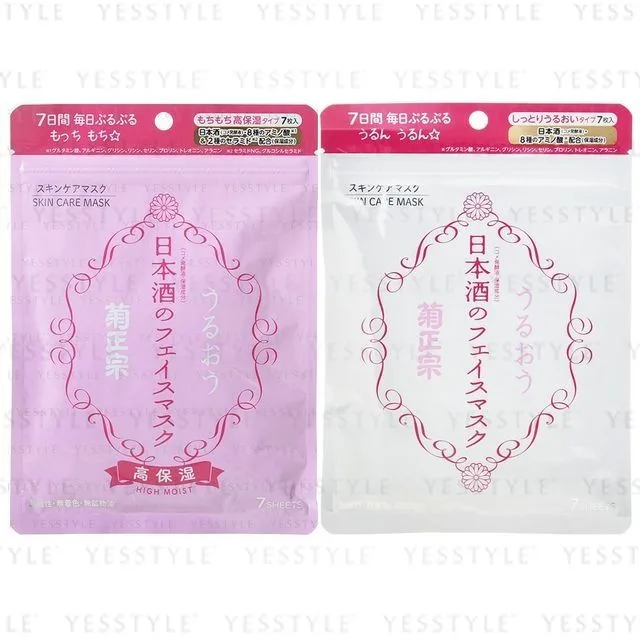
Sake ferment filtrate from Japan's oldest sake brewery (1659) — the brand's 350+ year fermentation expertise applied to cosmetic formulation. Multi-active treatment layer beyond simple hydration.
Affordable Japanese sake-ferment sheet mask from Japan's oldest sake brewery (founded 1659). Combines sake ferment filtrate with 8-amino acid complex, dual ceramide, arbutin brightening, and anti-inflammatory layer at exceptional value pricing.
The case for it
What would change this: A declared concentration would move this to a firmer reading of the dose.
Same rule for everyone. “Good choice” is the verdict on 9,564 of 45,024 concern verdicts across the catalog; rule R5 decided 9,072 of them. Unchanged since September 5, 2026, engine 5.1.1.
Brand or formulator? Disclose a concentration or correct a fact →
The studies behind the evidence row
The case for it
What would change this: A researched evidence row for the lead active would replace this with a verdict.
Same rule for everyone. “Supporting role” is the verdict on 8,197 of 45,024 concern verdicts across the catalog; rule R8 decided 4,250 of them. Unchanged since September 5, 2026, engine 5.1.1.
Brand or formulator? Disclose a concentration or correct a fact →
Also listed for Dullness and Aging — the actives here (Licorice Root Extract, Amino Acids, Ceramides, Probiotics & Prebiotics) are in our research queue for those concerns; there is no verdict until their evidence rows are written. That is a gap in our table, not a mark against the product.
As a maskNot judged: what a mask is for — works within its wear time, benefit outlasts the mask, comes off cleanly — cannot yet be measured from the ingredient list (only intensity without injury can).
A verdict is DermApproved’s assessment of how well a product’s ingredients fit a concern — never a claim about what the product treats. Evidence dots and collected reviews sit beside it and are never blended in. Rules 0.5.1 · evidence table ev-2026.09-r228 · how we decide
Sake brewers in Japan have long been known for their unusually soft, youthful hands, an observation that predates anything resembling modern dermatology, and Kiku-Masamune has been positioned to investigate that folklore longer than almost anyone alive. The brewery traces back to 1659, making it one of the oldest sake houses in Japan, and somewhere across those three and a half centuries it noticed that the rice-fermentation byproducts central to its craft were doing something measurable to skin. That heritage, more than any single active, is what makes this single-use sheet mask worth a second look. You are essentially borrowing 350 years of accumulated fermentation knowledge for the price of a vending-machine coffee.
The formula's anchor is sake itself, listed as rice ferment filtrate, the same liquid byproduct that emerges from the brewing process and arrives loaded with amino acids, small peptides, and skin-conditioning compounds. It carries an emerging but credible evidence base for cosmetic use, partly because its kojic acid content has a documented tyrosinase-inhibiting mechanism that explains the gentle brightening so many users report. Built around that ferment is a genuine eight-amino-acid complex, glutamic acid, arginine, alanine, serine, and the rest, assembled to echo the composition of skin's own natural moisturizing factor. These amino acids carry well-established evidence for softening and water-binding, and they are the reason skin feels conditioned rather than merely damp after a session. Two ceramides, NP and AP, contribute barrier support with the kind of robust research behind ceramide replenishment that needs no apology, and a small dose of arbutin layers a well-tolerated brightening action atop the ferment's own. Dipotassium glycyrrhizate, the licorice-derived calming agent, rounds things out with anti-inflammatory backup that keeps the whole experience soothing. None of these are present at heroic concentrations, but the combination reads as thoughtful rather than thrown together, and the logic of layering a barrier active, two humectant systems, a brightener, and a soother in one sheet shows a formulator who understood that hydration alone is the floor, not the ceiling.
What sets the ferment apart from a generic galactomyces or rice-water dupe is the specificity of its origin. This isn't a lab-cultured stand-in approximating what brewing produces; it is the actual filtrate from Kiku-Masamune's own sake production, the same fermentation chemistry the brewery has refined for the better part of four centuries. Fermentation breaks larger molecules into smaller, more bioavailable fragments, which is part of why ferment-based skincare tends to feel like it sinks in rather than sitting on top, and the amino-acid richness that results is exactly what gives sake its reputation among brewers for hand-softening. Pairing that ferment with a structured eight-amino-acid complex rather than relying on it alone is the kind of belt-and-suspenders move that keeps the conditioning effect consistent from sheet to sheet, regardless of natural batch variation in the ferment.
Materially, the experience matches the gentle profile. Each sheet arrives generously saturated with a thin, water-light essence carrying a faint yeasty-sake note that fermentation fans will find oddly pleasant and everyone else will find inoffensive. The mask drapes well, stays put through the usual wear, and on removal leaves behind a supple, smooth, slightly plumped surface without tackiness. Skin that felt tight or dehydrated going in tends to feel cushioned and comfortable coming out, which is exactly the brief for a hydration mask. Because the formula is fragrance-free, alcohol-free, and fungal-acne-safe, even reactive or malassezia-prone skin can usually wear it without drama, a rare combination at any price and especially at this one.
Where expectations need tempering is in the nature of sheet masking generally. A single sitting cannot remodel pigment or smooth wrinkles; the arbutin and ceramides contribute slow, cumulative support that rewards a weekly habit rather than a one-night miracle. Treating this as an intermittent comfort-and-hydration treatment, used when skin feels parched or stressed, is the realistic frame. Two formulation footnotes also deserve mention before purchase. The preservation system leans on methylparaben, which is safe and effective but will disqualify the mask for anyone avoiding parabens on principle, and the essence includes a placental protein that makes the product non-vegan and may concern anyone screening for animal-derived ingredients. Neither is a safety red flag, but both are worth knowing.
Value is where the mask becomes genuinely difficult to argue against. Securing sake ferment filtrate, a real eight-amino-acid complex, dual ceramides, and arbutin inside a fragrance-free, fungal-acne-safe sheet at roughly three dollars borders on the absurd. Most masks at this price point are little more than glycerin water in a printed pouch; this one carries a treatment layer that more expensive sheets rarely match, which is precisely why a deep catalog of user reviews skews so positive and why the value scoring sits near the top of the range. The low cost also changes behavior in a useful way: a mask cheap enough to use without flinching is a mask you will actually use often, and consistency is what makes any hydration product pay off.
For skin type, the net is wide. Normal, dry, dehydrated, combination, and sensitive complexions all stand to benefit, and the fungal-acne-safe status pulls in a group that often gets left out of the masking conversation entirely. Anyone charmed by the brewery backstory gets a small bonus of delight along with the hydration. The clearest recommendation is this: if you want an everyday, gentle, brightening-tinged hydration mask you can stock by the dozen and reach for whenever your skin feels flat, this is one of the easiest buys in the category and an outright bargain. Look elsewhere only if you need a mask that aggressively targets a single concern like stubborn pigment or established wrinkles, if parabens or animal-derived proteins are hard lines for you, or if you simply prefer the richer slip of an essence or sleeping-mask format. For sheer pleasure-to-price ratio with a genuinely interesting heritage attached, though, Kiku-Masamune has quietly made one of the smartest cheap masks around.
The hero actives that drive this product's performance.
| Ingredient | Function | Evidence |
|---|---|---|
| Sake (Rice Ferment Filtrate) | The signature ingredient — fermented sake from Kiku-Masamune's brewing process. Contains kojic acid, amino acids, vitamins, and small molecules with documented skin-conditioning effects. The brand's 350+ year sake brewing heritage applied to skincare. | Not yet assessed |
| 8-Amino Acid Complex | Eight amino acids (glutamic acid, arginine, leucine, alanine, serine, threonine, proline, histidine, valine) mimicking natural moisturizing factor composition. Supports skin barrier amino acid content during the mask contact. | Not yet assessed |
| Dual Ceramide + Arbutin | Ceramide NP and AP for barrier support; arbutin for gentle brightening through tyrosinase inhibition. Combined treatment beyond pure hydration. | Established mechanism for Dryness · established mechanism |
| Dipotassium Glycyrrhizate (Anti-Inflammatory) | Licorice-derived anti-inflammatory providing skin calming function during the mask wear. | Not yet assessed |
Ingredient standings describe the active at treatment-level doses and vehicles; this product's own condition grades weigh its actual formula.
Water (Aqua), Saccharomyces/Rice Ferment Filtrate (Sake), Glycerin, Butylene Glycol, Glutamic Acid, Arginine, Leucine, Alanine, Serine, Threonine, Proline, Histidine, Valine, Ceramide NP, Ceramide AP, Placental Protein, Arbutin, Dipotassium Glycyrrhizate, Glycine Soja (Soybean) Protein, Maltitol, Sodium Hyaluronate, Disodium EDTA, Phenoxyethanol, Methylparaben
treatment
PM
Use as evening treatment after cleansing and toner. Leave on 10-15 minutes. Remove and pat remaining essence into skin. Follow with moisturizer.
Immediate plumped and brightened skin appearance. Cumulative benefits with regular weekly use.
Sake ferment filtrate has emerging research support for skin applications — kojic acid content has documented tyrosinase-inhibiting brightening mechanism, amino acid content supports skin barrier. Multi-ceramide and arbutin have well-established individual mechanisms.
Sake-ferment sheet masks like Kiku-Masamune occupy a useful niche in Japanese skincare — provide modest hydration and gentle brightening at affordable pricing. Not transformative; suitable as occasional treatment.
Use 1-2 times weekly as evening treatment. After cleansing and toner, apply mask for 10-15 minutes. Remove and pat remaining essence in. Follow with moisturizer.
Excellent value — heritage brand sake-ferment mask at affordable per-sheet pricing.
Users wanting affordable Japanese sake-ferment skincare. Anyone seeking sheet mask treatment with multi-active ingredient depth.
Vegan or animal-derived-ingredient-avoidant users should choose alternatives without placental protein. Paraben-avoidant users may prefer Korean alternatives.
Ready to try Kiku-Masamune Sake Brewing Moisturizing Face Mask?
Buy at Amazon ♥Standard sheet mask saturated with sake-based essence.
Subtle sake/yeast scent characteristic of fermentation.
Individually sealed single-use sheet masks.
Mask applies smoothly with characteristic sake scent. Skin afterward looks plumped and luminous.
1 use per sheet; available in multi-packs.
All Year
Kiku-Masamune extended its sake brewing heritage into cosmetic applications recognizing the documented skin benefits of sake fermentation byproducts.
Kiku-Masamune is a Japanese sake brewery founded in 1659 — over 350 years old — that expanded into skincare leveraging the documented skin benefits of sake fermentation byproducts. The Sake Brewing Skin Care line draws on the brand's centuries of fermentation expertise applied to cosmetic formulation. The Face Mask delivers the line's signature sake ferment in single-use sheet mask format.
Sake skincare is purely marketing.
Sake ferment filtrate contains documented kojic acid, amino acids, and small molecules with real skin-conditioning mechanisms.
All sake-based sheet masks are equivalent.
Kiku-Masamune's specific brewing process and ferment composition is distinct from other brands using generic sake extracts.
Subtle and characteristic of fermentation — most users find it pleasant. Dissipates after mask removal.
Different ferment systems. Kiku-Masamune uses sake; SK-II uses galactomyces. Kiku-Masamune is much more affordable; SK-II has more clinical research backing.
Generally yes — fragrance-free, alcohol-free formulation. Placental protein is an allergen for some users.
1-2 times weekly is appropriate for sheet masks. Daily use unnecessary.
Modest brightening from sake kojic acid, arbutin, and gentle exfoliation effects. Not transformative — cumulative with consistent use.
Recurring themes our editors read across retailer reviews of this product — summaries in our words, not quotations, and not a substitute for your own patch test.
Excellent value sake-ferment sheet mask
Skin feels plumped and brightened after use
Brand heritage backs the formulation
Gentle for sensitive skin
Placental protein excludes vegan users
Paraben preservation concerns
Single-use sheet mask format generates packaging waste