Hyaluronic Acid Can Actually Dehydrate Your Skin (Here's When)
The internet's favorite hydrator has a counterintuitive dark side — in dry air, a humectant with nothing to seal it can pull water out of your skin instead of into it.
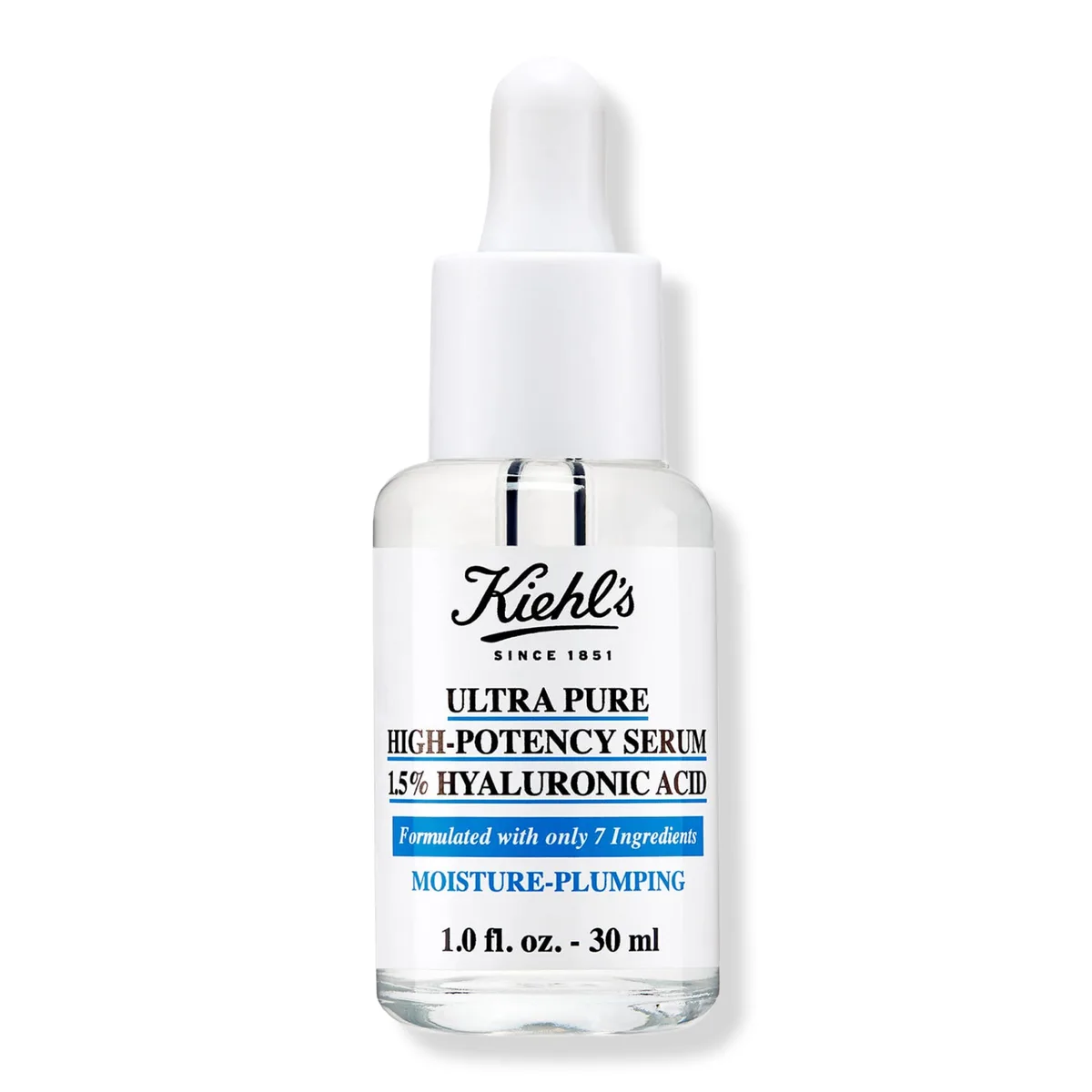
It is Kiehl's stripped to the bone: seven ingredients, a declared 1.5 percent sodium hyaluronate riding on glycerin, no fragrance, oil, silicone or botanicals, from a brand whose signature is usually a long herbal list. The minimalism is genuine and the tolerability is total; the price is the part that belongs to the apothecary label rather than to the formula.
Seven ingredients, a declared 1.5 percent hyaluronate riding on glycerin, no fragrance and nothing to react to: this is the most tolerable serum Kiehl's has ever sold and one of its least interesting. It plumps for hours, resets daily, needs damp skin and a cream over it, and costs forty dollars for a formula that is essentially two humectants and a preservative. Buy it for the minimalism and the glass dropper; the hydration is available for far less.
The case for it
Same rule for everyone. “Good choice” is the verdict on 9,564 of 45,024 concern verdicts across the catalog; rule R5 decided 9,072 of them. As of September 25, 2026, engine 5.1.1.
Brand or formulator? Disclose a concentration or correct a fact →
The studies behind the evidence row
The case for it
Same rule for everyone. “Good choice” is the verdict on 9,564 of 45,024 concern verdicts across the catalog; rule R5 decided 9,072 of them. As of September 25, 2026, engine 5.1.1.
Brand or formulator? Disclose a concentration or correct a fact →
The studies behind the evidence row
The case for it
What would change this: A researched evidence row for the lead active would replace this with a verdict.
Same rule for everyone. “Supporting role” is the verdict on 8,197 of 45,024 concern verdicts across the catalog; rule R8 decided 4,250 of them. As of September 25, 2026, engine 5.1.1.
Brand or formulator? Disclose a concentration or correct a fact →
A verdict is DermApproved’s assessment of how well a product’s ingredients fit a concern — never a claim about what the product treats. Evidence dots and collected reviews sit beside it and are never blended in. Rules 0.5.1 · evidence table ev-2026.09-r228 · how we decide
Kiehl's built its name on ingredient lists you could read like a Victorian herbal: calendula, avocado, squalane, a dozen extracts and a discreet fragrance to tie them together. So the Ultra Pure line, launched in 2023, was a genuine departure. Seven ingredients, a percentage on the label, no scent, no botanicals, no colour; the aesthetic of the single-ingredient serum brands that had spent the previous decade teaching customers to read labels, executed in Kiehl's clear glass. The hyaluronic acid version is the purest expression of that turn, and it raises a question the brand's usual products do not: when Kiehl's takes everything out, what is left to pay for?
The list answers half of it. Water, glycerin, sodium hyaluronate at a declared 1.5 percent, two preservatives, a biodegradable chelator, citric acid. Two humectants and the minimum needed to keep them stable, which is a respectable way to build a hydrating serum. The 1.5 percent is at the top of the range a hyaluronate serum can carry before it becomes a gel, and it is honestly labelled. What is not labelled is the molecular weight, and in a serum this bare that is the only technical question that matters: high-weight hyaluronate sits on the surface and holds a film of water, low-weight grades reach the upper epidermis, and a blend does both. The serum's stringy, film-forming texture and its behaviour on skin suggest a single high-weight grade, which means it plumps very well and very briefly.
And it does plump. Two or three drops on damp skin spread with a slip, set within a minute to a faint tacky film, and the face looks smoother and fuller almost at once; Kiehl's instrumental testing records an immediate hydration jump of nearly ninety percent, and its expert grading finds plumper skin within a week, which is what glycerin and a hyaluronate film do and what several hundred reviewers describe. Fine dehydration lines soften for as long as the skin stays watered. Sensitive, rosacea-prone, eczema-prone and freshly treated skin can all use it, because there is nothing in it to object to, and that total tolerability is the formula's real distinction. It layers under a retinoid or vitamin C without interaction, mixes into foundation for a dewy finish, and never pills.
The conditions of use are the part the label does not explain and the reviews do. A humectant film needs water to hold and an occlusive over it; applied to dry skin in a dry room with nothing on top, it can draw moisture the wrong way and leave the face tighter than before, and the users who report the serum doing nothing are almost always the ones applying it bare. On damp skin with a cream within a minute it works every time. The tackiness before that cream is the other recurring complaint, and it is inherent to a high-weight hyaluronate at this concentration rather than a flaw in execution; anyone who has used a pure hyaluronate gel knows the feel, and anyone who has not should expect a minute of stickiness before the routine moves on.
There is a case for the bottle beyond the formula, and it should be made fairly. Kiehl's glass dropper is a better object than the plastic pumps and squeeze bottles most minimalist serums come in, it meters drops precisely, and it protects a preservative-light formula better than plastic does. For someone who keeps their skincare on a counter rather than in a drawer, and who wants a hydrating step that will never cause a reaction, that counts for something, and it is the honest basis for a good share of the serum's loyal reviews.
What the serum does not do is anything cumulative. Hydration resets daily, there are no actives to change tone or texture over months, and the plumped look is a state rather than a result. That is fine, and honest, for a product that calls itself a hydrating serum; it is worth saying because the high-potency name invites a reading it cannot support. Potency here means concentration, and concentration is not the variable that governs what hyaluronic acid does on skin.
Which brings the price. Forty dollars for thirty millilitres of two humectants and a preservative system is a lot, and there is no polite way around it: the same hydration is sold, with disclosed molecular weights, for a fraction of the cost by brands that made minimalism their whole business before Kiehl's borrowed it. The premium buys the apothecary name, the glass dropper, L'Oréal's instrumental testing and the comfort of a brand many people already trust on their bathroom shelf; the bottle lasts three or four months at a few drops a day, which softens the arithmetic without changing it. Kiehl's own richer serums, with their long lists, at least give the price something to do.
So the recommendation is a fair one for a narrow buyer. If you want a hyaluronic serum with nothing in it, from a brand you know, in a bottle that feels like a considered object, and you will apply it damp and seal it, this does its job perfectly and gently. If you want the best hydration for the money, or a hyaluronate blend that reaches beyond the surface, the minimalism this bottle imitates is available elsewhere at a price that reflects seven ingredients.
The hero actives that drive this product's performance.
| Ingredient | Function | Evidence |
|---|---|---|
| Sodium Hyaluronate 1.5% (1.5%) | Third on a seven-ingredient list at a declared 1.5 percent, which is at the upper end of what a hyaluronic serum can carry before it turns to a gel, and it is the whole point of the bottle. Kiehl's does not state the molecular weight, and that matters: in a serum with nothing else to do the work, a single high-weight grade sits on the surface and plumps for a few hours, while a blend of weights would hydrate the upper epidermis as well. The formula behaves like the former. | Established mechanism for Dehydration · established mechanism |
| Glycerin | Second on the list and, in truth, a co-star rather than a supporting player: glycerin is the better-evidenced humectant of the two and at this placement it is likely present at a similar or higher percentage than the hyaluronate. Much of the instant hydration jump Kiehl's measures is glycerin drawing water into the stratum corneum with the hyaluronate holding a film over it. | Established mechanism for Dehydration · established mechanism |
| Tetrasodium Glutamate Diacetate | A biodegradable chelator that binds trace metals so the preservatives work and the hyaluronate does not degrade, chosen over the usual EDTA to support the clean positioning. It is one of two ingredients in the serum that exist to keep the other five stable, and its inclusion is a sign of a formula built for shelf life rather than sensation. | Not yet assessed |
Ingredient standings describe the active at treatment-level doses and vehicles; this product's own condition grades weigh its actual formula.
Water, Glycerin, Sodium Hyaluronate, Phenoxyethanol, Chlorphenesin, Tetrasodium Glutamate Diacetate, Citric Acid
serum
AM & PM
Press two or three drops onto skin that is still damp from cleansing or toner, since hyaluronate needs water to hold, then seal it with a moisturiser within a minute; in dry air it must be sealed or it will pull moisture the wrong way, and it can be mixed into another serum or foundation for slip.
Skin looks plumper and feels smoother within minutes, and Kiehl's instrumental testing measures an immediate hydration rise. The effect is surface-level and resets daily; there is no cumulative change beyond what consistent hydration gives, and fine lines soften only while the skin is well watered.
Sodium hyaluronate and glycerin are two of the most studied humectants in dermatology, and a serum consisting of little else has an evidence base that is broad but bounded. Sodium hyaluronate, the salt of hyaluronic acid, binds many times its weight in water; applied topically at high molecular weight, above roughly one million daltons, it does not penetrate intact stratum corneum and instead forms a hydrating film on the surface that reduces transepidermal water loss and increases corneometry readings within minutes, an effect that persists for hours and reverses as the film dries or is removed. Lower-weight fractions, below about fifty thousand daltons, penetrate the upper epidermis and produce more durable hydration in controlled studies, and blends of weights are the current standard in well-designed hyaluronic serums. Kiehl's declares the concentration at 1.5 percent but not the weight; the serum's viscosity and film-forming behaviour are characteristic of a predominantly high-weight grade, which is consistent with strong immediate plumping and limited depth. The brand's instrumental finding of an 89 percent hydration increase immediately after application and its four-week expert grading of plumper skin within a week both describe surface hydration and are in line with the ingredient literature.
Glycerin, second on the list, is arguably the more important humectant. It draws water into the stratum corneum, improves barrier recovery and has been shown in comparative trials to outperform hyaluronic acid on sustained hydration measures; at this placement it is likely present at a concentration comparable to or above the hyaluronate and accounts for a meaningful share of the measured effect. The two together, with no occlusive in the formula, explain why the serum requires a moisturiser over it: humectants in low-humidity conditions can draw water from deeper skin toward the surface and increase water loss unless an occlusive layer is applied, a well-documented behaviour that matches user reports of tightness when the serum is used alone.
The remaining ingredients are preservation and stability: phenoxyethanol and chlorphenesin as the preservative system, tetrasodium glutamate diacetate as a biodegradable chelator that protects both the preservatives and the hyaluronate from metal-catalysed degradation, and citric acid to hold the pH near that of skin. None has activity on skin at the levels used, and the absence of fragrance, alcohol, oils and botanicals removes the usual sources of irritation and sensitisation. There is no evidence that a hyaluronate serum of this kind alters collagen, wrinkle depth or skin structure over time; its effects are hydration-dependent and reversible. No independent study of the product exists beyond the brand's own consumer and instrumental testing.
Dermatologists tend to regard hyaluronic acid serums as pleasant, safe and slightly oversold, and a seven-ingredient version with nothing to react to sits at the benign end of that view. Clinicians recommend this kind of product mainly for its tolerability, as a hydrating layer for rosacea, eczema-prone or post-procedure skin, during retinoid adjustment, or for patients who want a serum step without any active in it, and they are usually careful to explain the two rules that determine whether it helps: apply it to damp skin and seal it with a moisturiser, since a bare humectant film in dry air can leave skin tighter. They would also be direct that hydration is not treatment; a hyaluronic serum plumps fine lines while the skin is watered and changes nothing underneath, and the high-potency framing should not be read as a stronger anti-ageing effect. On value, most would say plainly that the molecular weight matters more than the percentage, that blends of weights are the better-designed option, and that the money saved on a cheaper hyaluronic serum is better spent on sunscreen or a retinoid, which do change the skin.
Morning and evening, after cleansing and while the skin is still damp, or straight after a hydrating toner, dispense two or three drops from the dropper into the palm and press them over the face and neck rather than rubbing, letting the film set for half a minute. Follow within a minute with a moisturiser to seal the water in; do not leave the serum bare, especially in heated or air-conditioned rooms, where it can feel tight. It can go under a retinoid or vitamin C serum without any wait, and a drop can be mixed into foundation for slip and a dewy finish. Use it on the eye area if you like, as it contains nothing that stings. Keep the glass bottle out of direct sun and cap it promptly; the formula has no fragrance to fade but preservation depends on the seal.
At $40 for 30 mL this is a luxury price for a formula of water, glycerin, 1.5 percent sodium hyaluronate and a preservative system, and the arithmetic is unkind: comparable or better-designed hyaluronic serums, with disclosed molecular-weight blends, cost a quarter to a half as much. What the money buys is the Kiehl's name, a glass dropper bottle, L'Oréal's instrumental testing and total tolerability, and the bottle's economy of use, two or three drops twice a day for three to four months, brings the daily cost down to something modest. For a buyer who wants the reassurance of a legacy brand and a serum with nothing in it, the premium is a known quantity; for anyone buying hydration on merit, it is poor value, and there is one size.
People with dry, dehydrated, sensitive or reactive skin who want a hydrating serum with nothing in it to react to, and anyone building a minimal routine around a legacy brand they trust. It suits those who will apply it damp, seal it with a cream, and treat it as a comfort step rather than a treatment.
Anyone buying hyaluronic acid on value or on formulation, since better-designed molecular-weight blends cost far less, and anyone expecting a high-potency label to mean anti-ageing results. Very oily skin that dislikes a tacky film, and people who apply serums bare in dry air, will find it underwhelming.
Ready to try Kiehl's Ultra Pure High-Potency 1.5% Hyaluronic Acid Serum?
Buy at Amazon ♥A clear, viscous, slightly stringy gel-serum that spreads with a slip and sets to a smooth, tacky film that disappears under moisturiser.
None; entirely fragrance-free with no base odour.
A 30 mL clear glass dropper bottle with a white cap and Kiehl's white Ultra Pure label, the seven-ingredient count printed on the front; the dropper meters drops cleanly and the glass keeps the formula stable.
The first application plumps visibly within minutes and leaves a faint tackiness that lingers until a cream goes over it; there is nothing to react to, so sensitive skin tends to notice only the texture. Applied to dry skin in a dry room it can feel tight rather than hydrating, which is the cue to apply it damp and seal it.
Three to four months at two or three drops twice daily; the dropper makes overuse easy to avoid.
All Year
Kiehl's launched the Ultra Pure High-Potency line in 2023 as its answer to the single-ingredient, percentage-on-the-label serums that had reshaped the market, releasing a hyaluronic acid, a glycolic acid and a niacinamide version with matching seven-to-nine-ingredient lists. The line marked a deliberate break from the brand's botanical, fragranced house style toward a clinical, clean minimalism it had not previously sold.
Kiehl's has traded on its 1851 New York apothecary origins for generations and has been part of L'Oréal since 2000, which gives it the group's formulation, instrumental-testing and consumer-study infrastructure. Its claims are brand-run rather than peer-reviewed, and for a seven-ingredient hyaluronic serum the relevant evidence is the ingredient's own literature rather than anything specific to the brand.
A higher percentage of hyaluronic acid means deeper hydration.
Concentration matters less than molecular weight. At 1.5 percent this serum carries plenty of hyaluronate, but Kiehl's does not disclose the weight, and a single high-weight grade cannot penetrate the skin; it forms a water-holding film on the surface. That plumps well for hours without changing hydration deeper down.
Hyaluronic acid draws moisture from the air, so it works anywhere.
In dry indoor air a humectant film with nothing over it can pull water from the skin below and leave it tighter. This serum needs damp skin to start and a moisturiser to seal it, which is why users who apply it dry and bare are the ones who report it doing nothing.
Seven ingredients: water, glycerin, sodium hyaluronate at a declared 1.5 percent, two preservatives, a chelator and citric acid to set the pH. There is no fragrance, oil, silicone, alcohol or botanical extract.
Apply two or three drops to skin that is still damp from cleansing or toner, then follow with a moisturiser within a minute. Hyaluronate needs water to hold and an occlusive over it; applied to dry skin in dry air it can pull moisture outward and feel tight.
It is one of the safest serums available for reactive skin, with nothing in it that sensitises; the only thing sensitive users notice is the tacky film before moisturiser. It suits rosacea, eczema-prone and post-procedure skin.
It plumps fine dehydration lines for as long as the skin stays well hydrated, which Kiehl's grading records within a week, but it does not change the skin's structure. Lines return when hydration drops, and a retinoid is what changes them over time.
Yes. Kiehl's suggests layering it with its other serums or adding a drop to foundation for slip and a dewy finish. It has no actives to clash with retinoids, vitamin C or acids.
For the formula alone, no; two humectants and a preservative system cost far less elsewhere. For a fragrance-free, seven-ingredient serum from a legacy brand with instrumental testing and a glass dropper, some buyers find the premium acceptable, and the bottle lasts three to four months.
Recurring themes our editors read across retailer reviews of this product — summaries in our words, not quotations, and not a substitute for your own patch test.
Users consistently describe an immediate plumping and smoothing effect
No fragrance, no sting, no reaction even on sensitive skin
Layers under anything and mixes into foundation for a dewy look
A few drops go a long way
Tacky, film-like feel until moisturiser goes over it
Expensive for such a short ingredient list
Effect fades within hours if not sealed
Some users see no difference from cheaper hyaluronic serums