Industry & Trends News
Skin Flooding and the Great Barrier Obsession of 2026
Half a genuine correction to the acid-everything era, half a new excuse to sell you five products where two would do.
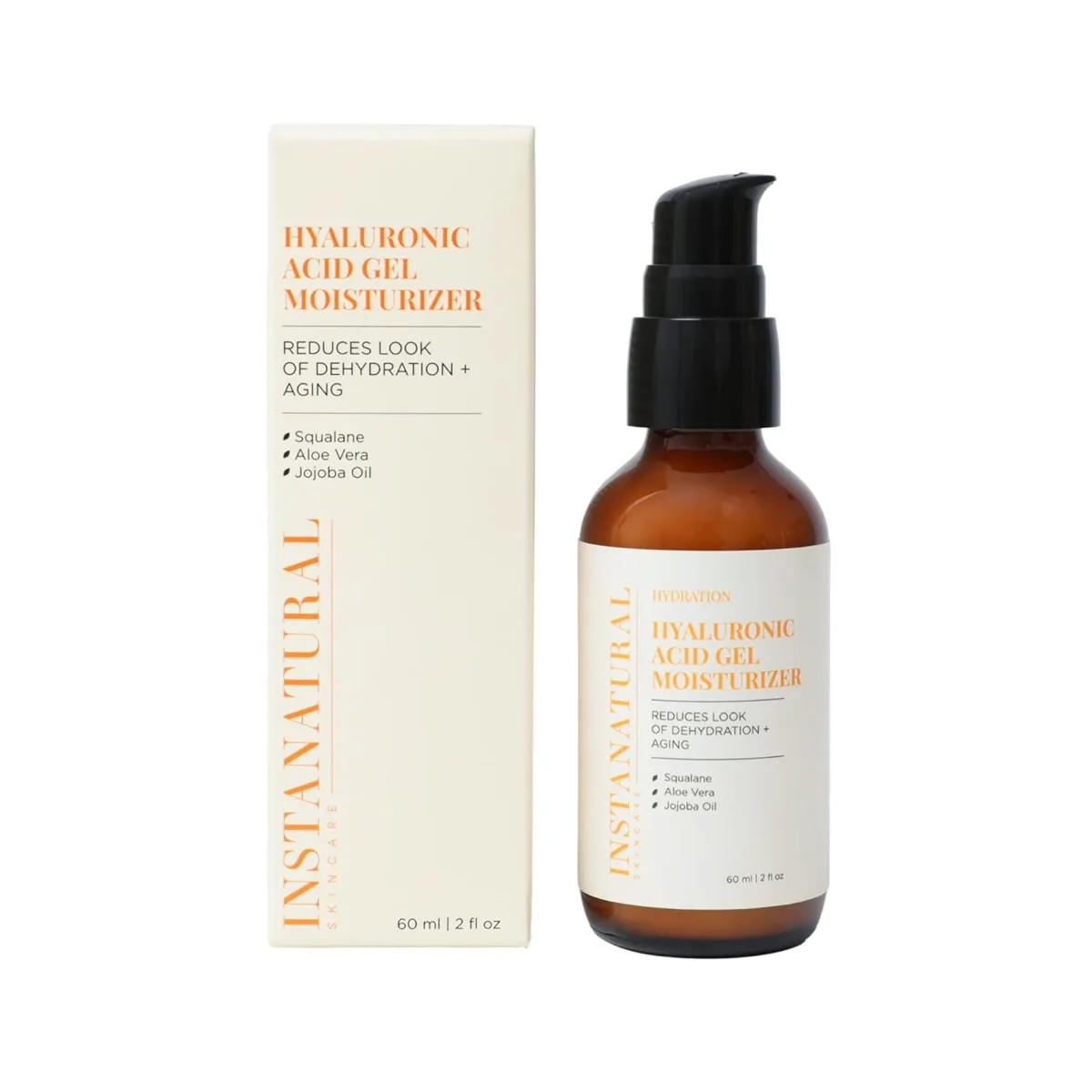
Rather than the usual water-and-carbomer HA gel, InstaNatural built this on glycerin, squalane and light esters with an amino-acid emulsifier, then added not only sodium hyaluronate but the two precursors — acetyl glucosamine and glucuronate — the skin uses to make hyaluronic acid itself. The precursor idea is more interesting than proven, and the HA itself sits low, but the base is a genuinely comfortable, fragrance-free gel-cream for lighter skin.
A comfortable, fragrance-free gel-cream that hydrates oily and combination skin on the strength of glycerin and squalane, with real hyaluronate present but low and a pair of HA-precursor sugars that read better in a brochure than on skin. It does the light-moisturizer job well; it is not the wrinkle-plumping HA treatment the box suggests, and 60ml for $22 is fair rather than a bargain.
This gel launched in early 2025 and carries only around twenty Amazon ratings on a repurposed listing plus a few brand-site reviews, which is too little to establish patterns of tolerance or longevity. The score rests on the complete published ingredient list and the well-documented behavior of glycerin, squalane and light esters, and would move if a larger review set surfaced separation, pilling or hydration complaints beyond the current handful.
The case for it
Same rule for everyone. “Good choice” is the verdict on 9,564 of 45,024 concern verdicts across the catalog; rule R5 decided 9,072 of them. As of September 25, 2026, engine 5.1.1.
Brand or formulator? Disclose a concentration or correct a fact →
The studies behind the evidence row
The case for it
What would change this: Guideline or regulatory standing for the active on this concern would move this from a promising bet to a recommendation.
Same rule for everyone. “Promising” is the verdict on 7,858 of 45,024 concern verdicts across the catalog; rule R9p decided 7,858 of them. As of September 25, 2026, engine 5.1.1.
Brand or formulator? Disclose a concentration or correct a fact →
The studies behind the evidence row
Also listed for Excess Oiliness — the actives here (Glycerin, Hyaluronic Acid, Squalane, Acetyl Glucosamine) are in our research queue for that concern; there is no verdict until their evidence rows are written. That is a gap in our table, not a mark against the product.
Falls shortJudged as a moisturizer, it comes up short on: seals moisture in, supplies barrier lipids.
A verdict is DermApproved’s assessment of how well a product’s ingredients fit a concern — never a claim about what the product treats. Evidence dots and collected reviews sit beside it and are never blended in. Rules 0.5.1 · evidence table ev-2026.09-r228 · how we decide
This moisturizer has an odd biography. Look it up on Amazon and you find a listing that dates back to 2014, once belonged to InstaNatural's Retinol Moisturizer, and now shows a two-ounce amber bottle of hyaluronic acid gel with about twenty ratings. The brand appears to have reassigned its old retinol page to the new product when it launched in early 2025, which is a strange way to introduce a moisturizer and leaves it looking simultaneously ancient and untested. Set the borrowed history aside and what you have is a young product with a short review record and a full ingredient list, and the list is where the useful information is.
It starts well. Water, glycerin, dicaprylyl ether, coconut alkanes — a humectant-and-light-ester base, which is the right architecture for a gel that wants to hydrate without weight. Apple fruit extract, a gelling polymer, and squalane in seventh place: that is the ingredient doing most of the sensory work, a skin-identical emollient that gives the gel its cool slip and stops it feeling tight once it sets. Then the preservative system, an amino-acid emulsifier, allantoin, and only at eighteenth the sodium hyaluronate. Behind it are biosaccharide gum, then the two ingredients that make the formula interesting on paper: disodium acetyl glucosamine phosphate and sodium glucuronate, the twin sugars from which the skin assembles its own hyaluronic acid. A botanical tail follows — centella, hibiscus, rosemary, aloe, green tea — with a trace of sodium ascorbyl phosphate and, at the very end, the jojoba oil that the front of the box lists as a headline.
In use, it is exactly what the top of the list predicts: a light, cooling, translucent gel-cream that spreads with one pump, sinks in within a minute and leaves a soft, unshiny satin surface that sunscreen goes over without any fuss. Oily and combination skin get the sensation of having moisturized without any of the afternoon slick. It is fragrance-free, and the faint green-apple note from the extracts vanishes on contact. Over a couple of weeks the skin looks a little plumper and smoother in the way well-hydrated skin does, and that is the whole of the effect: a hydration effect, pleasant and real, which the box translates as 'reduces the look of dehydration and aging'. The first half of that is honest. The second half is the marketing convention of calling any plumping 'anti-aging', and it should be read as such.
The hyaluronic acid deserves a fair hearing, because InstaNatural did put the real thing in — sodium hyaluronate, not the tara gum or cassia extract that several of its Amazon-native neighbors label as 'botanical hyaluronic acid'. That is worth a credit. But eighteenth place, behind the preservatives, is where you find ingredients at fractions of a percent, and the hydration a user feels here is glycerin in second place doing what glycerin does. The precursor sugars are a genuinely interesting idea with laboratory support — cultured skin cells given acetyl glucosamine make more hyaluronic acid — and no convincing evidence that a moisturizer dose does anything you would notice. They are a story about the future of the formula, not a benefit today.
The limits are the usual ones for a light gel. Dry skin in a cold, dry winter will find it gone by lunchtime and will either add a facial oil on top or switch to a cream at night. Fungal-acne-prone skin should note the squalane, esters and jojoba. The bottle separates slightly between uses because the emulsifier is light, and the brand's own instructions tell you to shake it, which is a small chore that a heavier thickener would have removed at the cost of the pleasant texture. And 60ml for $22 — 37 cents per millilitre, about six to eight weeks of twice-daily use — is fair for a fragrance-free squalane gel but not the bargain InstaNatural's larger tubes usually are.
The review record is where honesty demands the most caution. Twenty Amazon ratings on a repurposed listing and a handful of brand-site reviews are not a record; they are early impressions. What they say — light, absorbs fast, hydrates without shine, needs shaking, not enough for winter — matches what the ingredient list predicts, which is reassuring, but a score built on this little user data is necessarily a score built on chemistry. InstaNatural has a decade of history and a good reputation for putting the named ingredients in, and no clinical work on any of its products; that pattern holds here.
So take it as a competent, fragrance-free, lightweight moisturizer for oily, combination and normal skin — a good daytime layer under sunscreen, a good final step over a retinol for skin that hates creams — and not as a hyaluronic acid treatment. The HA is there, quietly. The glycerin and squalane are doing the job.
The hero actives that drive this product's performance.
| Ingredient | Function | Evidence |
|---|---|---|
| Sodium Hyaluronate | Genuine hyaluronate, which is more than many budget 'HA' gels manage — but it lands eighteenth in the list, behind the preservatives, so the moisturizer's hydration comes chiefly from the glycerin in second place and the HA is a supporting film-former. | Established mechanism for Dehydration · established mechanism |
| Squalane | Seventh in the list and the real reason a gel this light does not feel tight — a skin-identical emollient that, with dicaprylyl ether and coconut alkanes, gives a soft, non-oily slip that suits combination and oily skin. | Not yet assessed |
| Glycerin | The second ingredient and the true hydrator here, drawing water into the upper layers and holding it under the light squalane-and-ester film; the hyaluronic acid on the label is riding on glycerin's work. | Established mechanism for Dehydration · established mechanism |
| Disodium Acetyl Glucosamine Phosphate | A glucosamine derivative paired with sodium glucuronate — the two building blocks of hyaluronic acid — included on the theory that the skin can assemble its own HA from them, a claim with laboratory support and thin clinical proof. | Not yet assessed |
| Simmondsia Chinensis (Jojoba) Seed Oil | Featured on the box beside squalane and aloe but the very last ingredient in the list; its sebum-like wax esters are present in a whisper and contribute little beyond the marketing story. | Not yet assessed |
Ingredient standings describe the active at treatment-level doses and vehicles; this product's own condition grades weigh its actual formula.
Water, Glycerin, Dicaprylyl Ether, Coconut Alkanes, Pyrus Malus (Apple) Fruit Extract, Sodium Polyacrylate, Squalane, Phenoxyethanol, Pentylene Glycol, Glyceryl Stearate, Caprylyl Glycol, Coco-Caprylate/Caprate, Sodium Stearoyl Glutamate, Ethylhexylglycerin, Hexylene Glycol, Allantoin, Sodium Phytate, Sodium Hyaluronate, Biosaccharide Gum-1, Disodium Acetyl Glucosamine Phosphate, Sodium Glucuronate, Magnesium Sulfate, Centella Asiatica Leaf Extract, Hibiscus Rosa-Sinensis Flower Extract, Rosmarinus Officinalis (Rosemary) Extract, Aloe Barbadensis Extract, Camellia Sinensis Leaf Extract, Sodium Ascorbyl Phosphate, Simmondsia Chinensis (Jojoba) Seed Oil
moisturizer
AM & PM
Shake the bottle, then apply to damp skin as the final leave-on step; it layers cleanly under sunscreen in the morning and can be topped with a facial oil at night if skin is dry.
Immediate cooling hydration and a smoother surface; less midday tightness within a few days; a plumper, more even look over two to four weeks that holds with continued use but does not build beyond that — the 'aging' on the box is a hydration effect.
Topical hyaluronic acid works as a surface humectant film, and the evidence for what it can and cannot do is now well organized. A 2025 review in Biomolecules on hyaluronic acid in topical applications summarizes the forms in use — native high-molecular-weight sodium hyaluronate, hydrolyzed low-molecular-weight fractions, crosslinked polymers and acetylated derivatives — and their effects: high-molecular-weight HA remains on the surface and improves hydration and barrier feel, while smaller fractions penetrate a little further and may modulate inflammation, with the clinical benefit in all cases being improved hydration and a temporary plumping of fine lines rather than any structural change. This formula uses plain sodium hyaluronate at a low position in the list, so its contribution is the surface-film kind, and glycerin in second place is the ingredient responsible for most of the measurable water-binding.
The formula's more unusual inclusion is the pair of disodium acetyl glucosamine phosphate and sodium glucuronate. Hyaluronic acid is a polymer of N-acetylglucosamine and glucuronic acid, and cell-culture studies have shown that supplying N-acetylglucosamine increases hyaluronan synthesis in keratinocytes and fibroblasts. Whether a topical moisturizer supplies enough of either precursor to the living epidermis to change its hyaluronan content is not established, and no controlled clinical trial of this pairing in a leave-on product supports a visible effect; it should be regarded as plausible mechanism rather than demonstrated benefit.
Squalane, seventh in the list, is the hydrogenated form of the skin's own squalene; a 2012 review in Advances in Food and Nutrition Research summarizes its role as a non-comedogenic, oxidation-stable emollient that spreads readily and reduces transepidermal water loss without greasiness, which is exactly the property that lets a gel this light avoid tightness. Dicaprylyl ether, coconut alkanes and coco-caprylate/caprate are volatile-feeling esters that provide slip and evaporate or absorb quickly, giving the fast-set finish. Allantoin is a recognized skin protectant, and the botanical tail — centella, hibiscus, rosemary, aloe, green tea — is decorative at these levels, with rosemary the only entry of note for reactive skin.
For oily, combination and acne-prone patients, clinicians generally favor moisturizers built on humectants with a light, non-comedogenic emollient rather than heavier oils, and this gel-cream's glycerin-and-squalane construction fits that guidance well; it is a reasonable daily moisturizer under sunscreen and a sensible final layer for patients on retinoids or benzoyl peroxide who need hydration without occlusion. The absence of fragrance and drying alcohol is appropriate for reactive skin, and the ingredient list carries no acids or actives that would complicate a treatment routine. Practitioners would frame the hyaluronic acid content as a modest surface hydrator rather than a treatment, would not expect the glucosamine and glucuronate precursors to produce a clinically measurable change, and would read the 'aging' claim as the temporary smoothing that any effective hydration provides. Patients with dry or atopic skin, particularly in winter, would usually be advised that a gel of this weight needs to be supplemented with a richer emollient. Fungal-acne-prone patients may wish to note the esters and squalane, though rinse-free squalane is generally well tolerated.
Shake the bottle first, since the light emulsion separates between uses. On skin still damp from cleansing or toner, dispense one pump into the palm and press over the face and neck as the final leave-on step, morning and evening. Give it a minute to set before sunscreen or makeup; the satin finish takes both without pilling. It can go directly over a vitamin C serum in the morning or a retinol at night. In dry weather or on dry skin, press a few drops of facial oil over the top or use it only as the daytime layer with a cream at night. Store the bottle upright and out of direct sun.
At $22 for 60ml — about 37 cents per millilitre — the gel sits at the upper-middle of the budget-moisturizer market and costs more per millilitre than InstaNatural's own larger tubes, with a pump that dispenses a generous dose and a bottle that lasts six to eight weeks at twice-daily use. The money buys a genuinely pleasant, fragrance-free squalane-and-glycerin base, real if low-placed hyaluronate, and a Leaping Bunny certification; it does not buy a meaningful hyaluronic acid dose, and the precursor sugars are a formulation curiosity rather than a paid-for benefit. There is one size. The brand's decade-long track record for honest ingredient decks counts in its favor, but this particular product is too new and too thinly reviewed to have proven itself, which keeps the value score at fair rather than strong.
Oily, combination and normal skin looking for a fragrance-free, lightweight daily moisturizer that hydrates without shine and sits well under sunscreen, especially through warm months. It suits people on retinoids or acids who need a simple, non-occlusive final layer, and anyone who prefers a pump-bottle gel to a jar of cream.
Dry skin in cold or arid climates, which will find the gel gone by midday. Anyone expecting a high-dose hyaluronic acid treatment or a wrinkle-plumping effect beyond surface hydration, fungal-acne-prone skin wary of esters and squalane, and buyers who want a large user record before spending $22 on a product with about twenty ratings.
Ready to try InstaNatural Hyaluronic Acid Gel Moisturizer?
Buy at Amazon ♥A translucent, lightly viscous gel-cream that goes on cool and slightly slippery from the squalane and esters, then sets to a soft, barely-there satin without tackiness.
Fragrance-free with a faint fresh-apple and green note from the fruit and botanical extracts that fades on application.
A 60ml amber glass bottle with a black pump and a cream label, boxed; the pump keeps fingers out and the formula needs a shake before use.
A single pump covers the face with a cool, watery gel that sinks in within a minute, leaving skin feeling quenched and smooth rather than coated. No tingling or adjustment period. Some users notice the gel separating slightly in the bottle and learn to shake first; dry skin may find it fades by midday until a richer layer is added.
Around six to eight weeks at one pump twice daily; longer if used once at night.
spring summer
Added to InstaNatural's line in January 2025 as the brand refreshed its Amazon range around hydration, the gel moisturizer inherited the Amazon listing — and the review-count reset — of the brand's long-running Retinol Moisturizer, which is why it looks like a decade-old product with only a handful of ratings. It sits between the brand's vitamin C moisturizer and its richer creams as the lightweight, oily-skin option.
InstaNatural is an Amazon-native Orlando skincare brand founded around 2013, known for affordable vitamin C and retinol products with very large review counts; this gel moisturizer is one of its newer launches. The brand publishes complete ingredient lists, withholds percentages, and relies on consumer surveys rather than clinical trials to support claims.
The hyaluronic acid plumps wrinkles from within, as the box promises.
Sodium hyaluronate sits on the surface, binds water and gives a temporary plumped look that fades once the moisturizer is stopped. It is the eighteenth ingredient here, so the hydration you feel is mostly glycerin and squalane, and none of it changes wrinkles structurally.
Jojoba oil is a key ingredient, as the front of the box lists it.
Jojoba seed oil is the final ingredient in the list, after the botanical extracts. It is present at a trace level; the emollience comes from squalane, dicaprylyl ether and coconut alkanes much higher up.
Yes, it is the best fit. The base is glycerin, squalane and light esters with no heavy oils, it sets to a satin finish without shine, and it layers under sunscreen without pilling. Oily and combination skin get hydration without weight.
It is a lightly emulsified gel-cream with an amino-acid emulsifier rather than a heavy thickener, so the squalane and ester phase can drift from the water phase between uses. A quick shake blends it back; the brand's own instructions say to shake before each use.
In warm or humid weather, often. In winter or dry climates, dry skin will usually find it fades by midday and either layer a facial oil on top or switch to a richer cream at night. It works best as a lightweight daytime layer for drier skin.
No fragrance is listed. There is a faint fresh, apple-green note from the apple fruit extract and the botanicals, which disappears on application. Rosemary extract near the end of the list is the only ingredient reactive skin might notice.
Yes. It has no acids or actives of its own — the sodium ascorbyl phosphate is a trace, gentle vitamin C derivative — so it is a natural final layer over a retinol at night or a vitamin C serum in the morning, and its squalane helps soften retinoid dryness.
They are the two sugar building blocks the skin uses to synthesize its own hyaluronic acid. The idea is that supplying them helps the skin make more HA; laboratory work supports the mechanism, but there is little clinical evidence that a moisturizer dose changes anything measurable.
Recurring themes our editors read across retailer reviews of this product — summaries in our words, not quotations, and not a substitute for your own patch test.
Light, cooling gel that absorbs fast
Hydrates without shine
Fragrance-free and gentle
Needs shaking and can separate
Not enough for dry skin in winter
Small 60ml bottle for the price