


Hyaluronic Acid Can Actually Dehydrate Your Skin (Here's When)
The internet's favorite hydrator has a counterintuitive dark side — in dry air, a humectant with nothing to seal it can pull water out of your skin instead of into it.
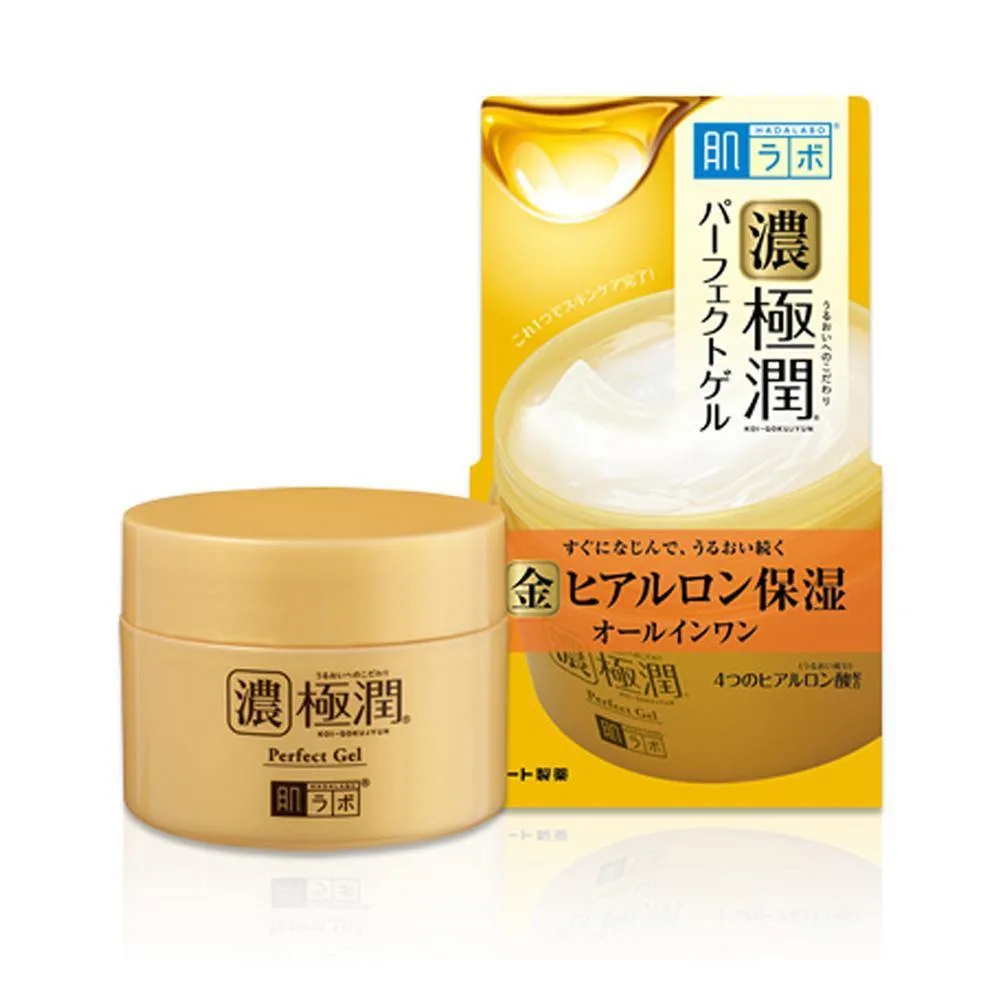
It compresses an entire hydration routine — lotion, serum, milk, mask, and cream, in the brand's own framing — into one jelly. The combination of four hyaluronic acids with squalane, a glucosyl ceramide, hydrolyzed collagen, and Sacran in a single light gel is unusually well-rounded for an all-in-one, and rare at this price.
A genuinely capable all-in-one gel that folds a whole hydration routine into one jelly: four hyaluronic acids, squalane, a ceramide precursor, hydrolyzed collagen, and Sacran in a light, refreshing scoop. Best for normal, combination, and busy skin that wants effective hydration with minimal steps. Very dry winter skin may want a cream over it, and it's not fungal-acne safe.
The case for it
What would change this: A declared concentration would move this to a firmer reading of the dose.
Same rule for everyone. “Good choice” is the verdict on 9,564 of 45,024 concern verdicts across the catalog; rule R5 decided 9,072 of them. Unchanged since September 5, 2026, engine 5.1.1.
Brand or formulator? Disclose a concentration or correct a fact →
The studies behind the evidence row
The case for it
What would change this: A declared concentration would move this to a firmer reading of the dose.
Same rule for everyone. “Good choice” is the verdict on 9,564 of 45,024 concern verdicts across the catalog; rule R5 decided 9,072 of them. Unchanged since September 5, 2026, engine 5.1.1.
Brand or formulator? Disclose a concentration or correct a fact →
The studies behind the evidence row
The case for it
What would change this: A declared concentration would move this to a firmer reading of the dose.
Same rule for everyone. “Promising” is the verdict on 7,858 of 45,024 concern verdicts across the catalog; rule R9p decided 7,858 of them. Unchanged since September 5, 2026, engine 5.1.1.
Brand or formulator? Disclose a concentration or correct a fact →
The studies behind the evidence row
The case for it
What would change this: A declared concentration would move this to a firmer reading of the dose.
Same rule for everyone. “Good choice” is the verdict on 9,564 of 45,024 concern verdicts across the catalog; rule R5 decided 9,072 of them. Unchanged since September 5, 2026, engine 5.1.1.
Brand or formulator? Disclose a concentration or correct a fact →
The studies behind the evidence row
Also listed for Rough Texture — the actives here (Ceramides, Squalane, Hyaluronic Acid, sacran) are in our research queue for that concern; there is no verdict until their evidence rows are written. That is a gap in our table, not a mark against the product.
Does the jobDoes what a moisturizer is for: draws in water, softens and smooths.
Where our review and the verdict differ. The review below was written on the formulation and the published trials; the verdicts above apply the stricter standing test in our methodology — an active earns a recommendation only with guideline or regulatory standing for the concern. Where the two disagree, the verdict is DermApproved’s position.
A verdict is DermApproved’s assessment of how well a product’s ingredients fit a concern — never a claim about what the product treats. Evidence dots and collected reviews sit beside it and are never blended in. Rules 0.5.1 · evidence table ev-2026.09-r228 · how we decide
All-in-one products carry a faint whiff of compromise. The implicit promise — one jar does the work of five — sounds like the skincare equivalent of a Swiss Army knife: technically capable of many things, excellent at none. Hada Labo's Gokujyun Perfect Gel is a good case study for testing that suspicion, because it is one of the more ambitious all-in-ones on the market, marketed in Japan as standing in for lotion, serum, milk, mask, and cream all at once. So does it actually work, or is it five jobs done at seventy percent?
Start with what is inside, because this is where the gel earns its keep. The formula pairs four types of hyaluronic acid — standard sodium hyaluronate, acetylated 'super' HA, hydrolyzed nano HA, and a cationic skin-adsorbing form — with squalane, glucosyl ceramide, hydrolyzed collagen, and Sacran, the high-molecular-weight algae polysaccharide that holds even more water than HA and lays down a flexible film. That is a notably well-rounded deck for an all-in-one. The humectants pull and hold water at different depths; squalane, a lightweight skin-identical oil, supplies the emollient counterweight that lets a gel function as an actual moisturizer rather than just a damp layer; and the glucosyl ceramide quietly supports the barrier so the hydration is retained. Most all-in-ones lean entirely on humectants and feel hollow within an hour. This one has the lipid and barrier support to back up its hydration, which is the crucial difference between a gel that genuinely moisturizes and one that merely feels nice on application.
The texture is the selling point you feel rather than read about. It is a bouncy, translucent jelly that you scoop out, and the moment it touches warm skin it breaks into a watery glide and spreads weightlessly. Within a minute it sinks to a soft, plump, lightly cushioned finish with zero greasiness and no tacky drag. The brand's promise of 'just-masked' skin is marketing, but it is marketing that lands — there is a genuine bounce to the skin afterward. On simple days, you can cleanse and use only this, and your face will feel hydrated and comfortable for hours. On more involved days, it slots cleanly into the moisturizer step after a treatment serum and before sunscreen. That flexibility is the real argument for an all-in-one: not that it is the best possible version of each step, but that it removes the friction that makes people skip steps entirely.
The sensory profile is friendly across the board. It is fragrance-free and alcohol-free, with no perceptible scent once applied, no tingling, and no adjustment period — the kind of product you can hand a skincare beginner and trust them not to mess up. The only learning curve is portion size; a thin scoop covers the whole face, and newcomers tend to over-apply at first. As a low-effort baseline routine, it is hard to beat, and the cool, refreshing jelly feel makes it especially pleasant in warm weather.
Now the honest accounting, because all-in-one does not mean all-purpose. First, the limits of the format: for very dry or barrier-compromised skin, particularly in a harsh winter, this gel alone will not be enough. The squalane and ceramide give it real moisturizing ability, but it is still a light gel, not an occlusive balm, and that skin type will want a richer cream layered over it. Second, the ingredient list is longer than the famously stripped-down Gokujyun lotions, and it includes methylparaben and silicones (dimethicone and cyclopentasiloxane). Parabens are well-studied and safe at these concentrations, and silicones are inert and pleasant — but if you specifically avoid either, this is not your gel, and the presence of those fatty and film-forming components means it is not fungal-acne safe. Third, it comes in a single 100-gram jar with no larger or refill size, and jar packaging is inherently less hygienic than a pump, so clean hands or a spatula are wise. And as always with this brand, this is hydration and barrier support — there are no actives here for pigmentation, acne, or wrinkles, so judge it on what it sets out to do.
Value is where it closes the argument. Around seventeen dollars for a jar that genuinely consolidates several routine steps is a strong proposition, especially given the ingredient quality. A thin scoop per use means the jar lasts a couple of months, and you are effectively buying a moisturizer, a hydrating layer, and a barrier-support gel in one purchase. You are not paying for prestige or hype — you are paying for a competent, ingredient-forward formula from a brand that has specialized in exactly this kind of hydration for two decades. For the convenience-to-quality ratio, it is one of the better deals in the category.
So, back to the original suspicion. Is this five jobs at seventy percent? Not quite. It is more like the hydration steps done at a confident ninety, with no attempt to be the actives steps at all — which is the honest and correct way to build an all-in-one. If you have normal, combination, or even slightly dry skin and you want effective, fuss-free hydration in a single pleasant jelly, this gel is an easy recommendation and a genuinely smart simplification of a routine. If you have very dry winter skin, avoid silicones or parabens, or are managing fungal acne, look elsewhere. For everyone in between, the Swiss Army knife turns out to be sharper than its reputation suggests.
The hero actives that drive this product's performance.
| Ingredient | Function | Evidence |
|---|---|---|
| Four Types of Hyaluronic Acid | Sodium hyaluronate, acetylated 'super' HA, hydrolyzed nano HA, and the cationic skin-adsorbing form anchor the gel's hydration. Suspended in a single jelly-like matrix alongside squalane and ceramide, they let this one product cover the hydrating-toner, serum, and moisturizer steps at once. | Established mechanism for Dehydration · established mechanism |
| Squalane | The emollient counterweight to all the humectants here — a lightweight, skin-identical oil that softens and helps seal the layered hyaluronic acid hydration in, giving the gel enough lipid content to function as a standalone moisturizer rather than just a water layer. | Established mechanism for Dryness · established mechanism |
| Glucosyl Ceramide | A plant-derived ceramide precursor that supports the skin barrier from within the gel, working with squalane to limit water loss so the four hyaluronic acids' hydration is actually retained rather than evaporating off an unsupported barrier. | Established mechanism for Dryness · established mechanism |
| Sacran (Aphanothece Sacrum Exopolysaccharides) | A high-molecular-weight algae polysaccharide that forms a flexible water-holding film, adding a second moisture-binding network beyond the hyaluronic acid stack and contributing to the gel's signature plump, just-masked finish. | Not yet assessed |
Ingredient standings describe the active at treatment-level doses and vehicles; this product's own condition grades weigh its actual formula.
Water, Butylene Glycol, Glycerin, Hydroxyethyl Urea, Pentylene Glycol, Triethylhexanoin, PPG-10 Methyl Glucose Ether, Ammonium Acryloyldimethyltaurate/VP Copolymer, Behenyl Alcohol, Dimethicone, Triethyl Citrate, PPG-17-Buteth-17, Cyclopentasiloxane, Phenoxyethanol, Disodium Succinate, Methylparaben, Dimethicone Crosspolymer, Succinic Acid, Agar, Disodium EDTA, Ammonium Acrylates Copolymer, Sodium Hyaluronate, Hydroxypropyltrimonium Hyaluronate, Glucosyl Ceramide, Alpha-Glucan, Squalane, Aphanothece Sacrum Exopolysaccharides, Hydrolyzed Collagen, Sodium Acetylated Hyaluronate, Hydrolyzed Hyaluronic Acid
moisturizer
AM & PM
Designed as an all-in-one, so it can be your only post-cleanse step on simple days. When layering, apply it after any treatment serum and before sunscreen; a thin scoop is enough, smoothed over the face until it sinks from gel to soft finish.
Skin looks plumper and feels softer right after the first use. A reduction in tightness and rough texture typically shows within a week, with the smoothing, just-masked effect becoming a consistent baseline over two to three weeks of daily use.
The gel's design follows a sound hydration principle: combine humectants of differing molecular weights with an emollient and barrier support so drawn-in water is actually retained. Hyaluronic acid binds large volumes of water, and molecular weight dictates behavior — high-weight forms film and reduce transepidermal water loss while low-weight and hydrolyzed fragments reach the upper stratum corneum, so layering four weights distributes hydration rather than concentrating it superficially. Research on multi-weight hyaluronic acid formulations reports better hydration and a smoothing effect on surface dehydration lines than single-weight products. Glycerin and hydroxyethyl urea, both high on the list, are validated humectants shown to raise stratum corneum water content. The squalane and glucosyl ceramide address the rate-limiting step: studies consistently show humectant-delivered water is only retained when barrier lipids reduce water loss, and squalane is a well-characterized skin-identical emollient while ceramide precursors support barrier lipid synthesis. Hydrolyzed collagen here functions as a surface humectant and film-former rather than rebuilding dermal collagen, a common misconception worth correcting. Sacran, the Aphanothece sacrum exopolysaccharide, is the least-established component; early characterization describes exceptional water-retention and film-forming capacity with some anti-inflammatory signals, but clinical data remain limited. The reasonable conclusion is that the gel's core mechanism — multi-weight humectants plus squalane and a ceramide precursor in one matrix — is well-supported, while collagen and Sacran are best understood as surface-level hydration enhancers rather than reparative actives.
All-in-one hydrating gels are often recommended in clinical guidance as a practical option for patients who struggle to maintain a multi-step routine, on the reasoning that a simple, well-tolerated product used consistently beats a complex one used sporadically. For normal to combination skin, such gels are generally regarded as adequate standalone moisturizers when they contain both humectants and an emollient, as this one does with squalane and a ceramide precursor. The usual clinical caveat is that very dry or barrier-impaired skin still benefits from a richer occlusive layer on top, since a light gel does not fully prevent water loss in harsh conditions. Patients managing fungal acne are typically steered away from formulas containing fatty and film-forming ingredients. Fragrance-free, low-irritant gels of this type are commonly viewed as reasonable for sensitive skin, with patch testing advised for the most reactive complexions.
Use it as your moisturizer step, morning and night. After cleansing, scoop out a thin amount — less than you think you need — and smooth it over the face and neck, letting the jelly break into a watery glide before pressing it in. Give it a minute to settle to its soft finish. On minimal-routine days it can be your only post-cleanse step; on fuller days apply it after treatment serums. Always follow with sunscreen in the morning. Use clean hands or a spatula to keep the jar hygienic.
At roughly seventeen dollars for a 100-gram jar, this gel offers strong value precisely because it consolidates several routine steps into one purchase. The ingredient deck — four hyaluronic acids, squalane, a ceramide precursor, hydrolyzed collagen, and Sacran — is more rounded than many all-in-ones costing considerably more, and a thin scoop per use stretches the jar across a couple of months. The price reflects genuine formulation substance from a brand with two decades of hydration expertise, not packaging or marketing. The main value limitation is the single size with no refill, which caps how economical heavy daily use can get; otherwise, for convenience-per-dollar it is among the better choices in its category.
This suits normal, combination, and mildly dry skin that wants effective, low-effort hydration in a single pleasant gel, and it is an excellent pick for skincare beginners or anyone prone to skipping steps. It also appeals to those who want J-beauty hydration substance — multiple HA forms, squalane, ceramide, Sacran — without committing to a multi-product routine or a high price.
Very dry or barrier-compromised skin in cold climates should skip this as a sole moisturizer, since a light gel won't seal enough on its own. Anyone who deliberately avoids silicones or parabens, or who is managing fungal acne, should also pass, as should those wanting a product that treats pigmentation, acne, or wrinkles rather than purely hydrating.
Ready to try Hada Labo Gokujyun Perfect Gel?
Buy at Amazon ♥A bouncy, translucent jelly that breaks into a watery glide on contact and sinks to a soft, lightly cushioned finish. Refreshing rather than rich, with no greasy residue.
Fragrance-free with no perceptible base scent once applied.
Wide gold screw-top jar with a protective inner lid — convenient to scoop but, like all jars, less hygienic and harder to keep sanitary than a pump.
Goes on cool and jelly-like, then absorbs within a minute to a plump, soft finish with no tackiness or tingling. No adjustment period; first-time users mainly need to learn that a thin scoop covers the whole face.
Around 2 to 3 months with twice-daily facial use of a thin scoop.
All Year
As Hada Labo's hyaluronic acid range expanded, the brand built an all-in-one gel for users who wanted the Gokujyun hydration philosophy without a multi-step routine. The Perfect Gel format answers the very Japanese demand for time-saving 'one jar' skincare while keeping the line's signature multi-weight HA approach.
Hada Labo was launched in 2004 by Japanese pharmaceutical company Rohto Mentholatum and became Japan's best-selling lotion brand on its hyaluronic acid focus. Its formulations are widely reviewed and ingredient-transparent, though clinical validation rests with the studied ingredients rather than product-specific trials.
An all-in-one gel can fully replace a dedicated moisturizer for everyone.
For normal and combination skin it genuinely can, but very dry or barrier-compromised skin in winter usually needs a richer cream layered on top. The squalane and ceramide give it real moisturizing ability, but it is still a light gel, not an occlusive balm.
Gel textures don't moisturize as well as creams.
Texture isn't the same as performance. This gel carries squalane, a ceramide precursor, and four humectants, so it moisturizes meaningfully despite its light feel — the jelly format is about a pleasant experience, not a lack of substance.
For normal to combination skin it can serve as a single hydration-and-moisturizer step, since it pairs four hyaluronic acids with squalane and a ceramide precursor. Very dry skin usually still needs a richer cream on top, and it does not replace treatment actives like vitamin C or retinol.
Yes, reasonably — its light jelly texture and watery finish suit oily and combination skin better than a heavy cream. However, it contains silicones and fatty components, so it is not fungal-acne safe, which matters for malassezia-driven breakouts.
Yes to both. It is preserved with methylparaben and contains dimethicone and cyclopentasiloxane. Both are well-studied and safe at these levels, but if you specifically avoid parabens or silicones, this is not the right gel for you.
Sacran is a high-molecular-weight algae polysaccharide that holds more water than hyaluronic acid and forms a flexible film on the skin. In this gel it adds a second water-binding network beyond the four HA forms, contributing to the plump, just-masked finish.
Scoop a thin amount after cleansing and smooth it over the face, letting the jelly turn watery before pressing it in. Use it morning and night as your moisturizer step, following with sunscreen in the daytime. A little covers the whole face.
Yes. It is a hydrating gel built on humectants, squalane, and a ceramide precursor, with no retinoids, salicylic acid, or other ingredients commonly flagged during pregnancy.
Recurring themes our editors read across retailer reviews of this product — summaries in our words, not quotations, and not a substitute for your own patch test.
One jar replaces several steps
Light, refreshing gel feel
Leaves skin plump and smooth
Excellent value for an all-in-one
Not moisturizing enough alone for very dry skin
Contains methylparaben and silicones
Jar packaging less hygienic
Single size only