Hyaluronic Acid Can Actually Dehydrate Your Skin (Here's When)
The internet's favorite hydrator has a counterintuitive dark side — in dry air, a humectant with nothing to seal it can pull water out of your skin instead of into it.
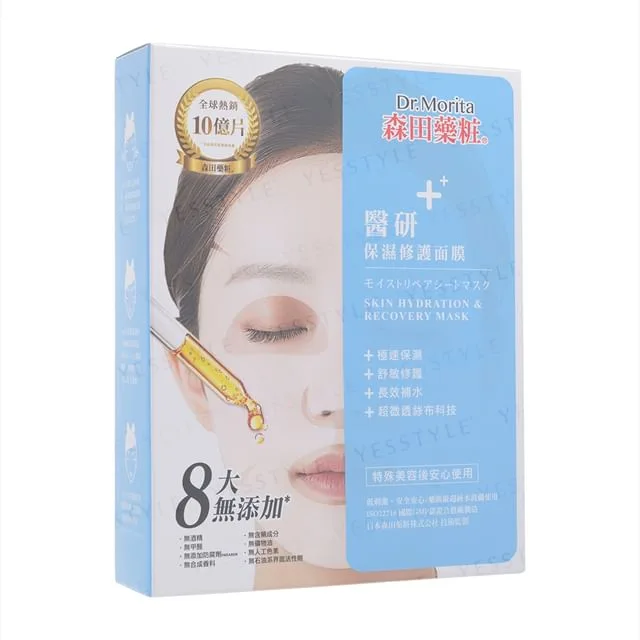
It is a stripped-back sibling of Dr. Morita's redness mask: the same fragrance-free, paraben-free base with glycyrrhizate, squalane and arginine, minus the Hokkaido kelp, daylily and rice extracts. The result is one of the shortest, least allergenic lists in the brand's large mask range.
A clean, forgettable-in-the-best-way hydrating sheet: fragrance-free, paraben-free, and built on humectants, three hyaluronic acid forms, squalane and a licorice derivative that nearly every skin type will tolerate. It is essentially Dr. Morita's redness mask with three botanicals removed, which makes it gentler still but no more interesting, and three sheets per box keeps it an occasional pick.
Reviews for this recently listed aftercare mask are too scattered to count, and it is sold mainly through a few import retailers. The assessment relies on its short ingredient list and the brand's long mask record; performance across a broad range of users has not yet been reported.
The case for it
What would change this: A declared concentration would move this to a firmer reading of the dose.
Same rule for everyone. “Good choice” is the verdict on 9,564 of 45,024 concern verdicts across the catalog; rule R5 decided 9,072 of them. As of September 25, 2026, engine 5.1.1.
Brand or formulator? Disclose a concentration or correct a fact →
The studies behind the evidence row
The case for it
What would change this: A concentration inside the studied range would raise this a step.
Same rule for everyone. “Supporting role” is the verdict on 8,197 of 45,024 concern verdicts across the catalog; rule R7 decided 258 of them. As of September 25, 2026, engine 5.1.1.
Brand or formulator? Disclose a concentration or correct a fact →
The studies behind the evidence row
The case for it
What would change this: A declared concentration would move this to a firmer reading of the dose.
Same rule for everyone. “Not for this” is the verdict on 488 of 45,024 concern verdicts across the catalog; rule R10 decided 488 of them. As of September 25, 2026, engine 5.1.1.
Brand or formulator? Disclose a concentration or correct a fact →
Also listed for Compromised Skin Barrier — the actives here (Trehalose, Licorice Root Extract, Arginine, Squalane) are in our research queue for that concern; there is no verdict until their evidence rows are written. That is a gap in our table, not a mark against the product.
As a maskNot judged: what a mask is for — works within its wear time, benefit outlasts the mask, comes off cleanly — cannot yet be measured from the ingredient list (only intensity without injury can).
A verdict is DermApproved’s assessment of how well a product’s ingredients fit a concern — never a claim about what the product treats. Evidence dots and collected reviews sit beside it and are never blended in. Rules 0.5.1 · evidence table ev-2026.09-r228 · how we decide
Put this blue box next to Dr. Morita's teal Soothing of Skin Redness Mask and read the backs, and you will find a small puzzle. The first twenty-two ingredients are identical, in the same order. The redness mask then adds three more, Hokkaido kelp, daylily flower and hydrolyzed sprouted rice. That is the entire difference. Everything else, the humectants, the licorice-derived calming agent, the Boerhavia extract, the squalane and the trio of hyaluronic acids, is shared. So the Skin Hydration & Recovery Mask is not really a different formula. It is the aftercare base with its regional garnish removed, sold in a different colour with a different promise.
That is not a trick, exactly. Brands build families of products on shared bases all the time, and a shorter list has a real advantage for the audience this line targets. Every plant extract is one more potential allergen, and skin fresh from a laser or peel is exactly when a reaction is most likely. By leaving the extracts out, this version becomes one of the least allergenic sheets Dr. Morita sells. It just helps to know that you are choosing a colour and a label as much as a formula when you pick between the two.
What the base does, it does well. The first third of the list is a textbook humectant blend: glycerin, propanediol, isopentyldiol and butylene glycol, followed by glycosyl trehalose and hydrogenated starch hydrolysate, two sugar-derived humectants that feel less sticky than glycerin alone. Under a sheet, which slows evaporation, this combination raises the water content of the outer skin layer quickly. Arginine appears a little further down and is singled out on the box as a moisture-locking ingredient. That is a generous description. Arginine is an amino acid and part of the skin's own moisture system, so it helps, but here it is also doing the humble job of adjusting pH. Squalane is the single emollient, and it is the reason the finish feels soft rather than tacky once the sheet comes off.
The recovery side of the name leans on dipotassium glycyrrhizate, which sits surprisingly high for a calming ingredient, plus allantoin and panthenol. That trio will not repair anything in the structural sense, but it makes stressed skin feel noticeably more comfortable. Boerhavia diffusa root extract, marketed to formulators as an instant soother, also appears, although its supporting data is mostly from ingredient suppliers.
The preservative system is worth mentioning because it marks a shift for the brand. Older Dr. Morita masks tend to use methylparaben and phenoxyethanol with added fragrance. This line uses hydroxyacetophenone and 1,2-hexanediol and nothing scented, the approach most sensitive-skin formulators have moved to. The box lists eight things the formula avoids, including alcohol, colourants and mineral oil, and the ingredient list bears that out.
On the face, the mask is uneventful, and that is a compliment. The sheet is fine and clings well around the nose, the essence is thin and slippery, and the fifteen minutes pass without warmth, tingling or scent. Afterward skin looks smooth and slightly dewy and feels properly watered, without the greasy layer that heavier masks leave. People with oily or combination skin will appreciate that there is almost nothing here that can sit heavily on the face. Dry skin will want a richer cream on top, because a humectant-only essence can evaporate away over a few hours if nothing seals it in.
The limitations are mostly about expectations and economics. 'Recovery' suggests barrier repair, and the lipids that actually rebuild a damaged barrier, ceramides, cholesterol and fatty acids, are not here. What the mask offers is hydration and comfort, which is what a sheet can realistically offer anyway. Three sheets per box is also thin for a product this gentle; it would make sense as a regular weekly mask, but the pack size nudges it toward occasional use. We could not confirm a stable US price, and availability outside Asian retailers is patchy.
A word on the Boerhavia extract, because both boxes lean on it. It comes from a creeping plant used in Ayurvedic practice, and suppliers sell it with in-house test data showing reduced skin reactivity. That is enough to make it a plausible soothing ingredient, not enough to make it the reason a sheet works. In a formula this short, the licorice salt, panthenol and simple hydration are what you will actually feel. It is also worth saying that the mask is pleasant to wear on a normal evening with no treatment involved at all: the clinic framing is a marketing niche, not a requirement, and a thirsty face after a long flight or a heated office gets the same benefit. If you already own the redness version, there is no reason to buy this one as well. If you are choosing between them, pick this blue box if you react easily to plant extracts or simply want the shortest possible list, and pick the teal one if you like the idea of the extra extracts and your skin tolerates botanicals. Either way, Dr. Morita's long history of mass-produced masks shows in the details, sensible sheet cut, a well-balanced essence and no unnecessary irritants.
This will never be anyone's holy-grail product. It is a quiet, reliable glass of water for skin that has had a rough day, and for that job it is hard to fault.
The hero actives that drive this product's performance.
| Ingredient | Function | Evidence |
|---|---|---|
| Glycosyl Trehalose | The sugar humectant that, with glycerin, propanediol and hydrogenated starch hydrolysate, carries the 'rapid hydration' half of this box's promise while the sheet holds everything against the skin. | Not yet assessed |
| Sodium Hyaluronate | Teamed with hydrolyzed hyaluronic acid and hydrolyzed sodium hyaluronate, giving three fragment sizes that bind water at slightly different depths of the outer skin layer. | Established mechanism for Dehydration · established mechanism |
| Arginine | Called out on the box as a moisture-locking ingredient; as an amino acid it contributes to the skin's natural moisturizing factor, and it also buffers the formula's pH. | Not yet assessed |
| Squalane | The only emollient in an otherwise water-light list, leaving a thin, soft layer after the sheet comes off so the hydration does not feel tight as it dries down. | Established mechanism for Dryness · established mechanism |
| Dipotassium Glycyrrhizate | Placed high in the list to take the edge off any stinging on freshly treated or wind-chapped skin, supporting the 'recovery' side of the name. | Not yet assessed |
Ingredient standings describe the active at treatment-level doses and vehicles; this product's own condition grades weigh its actual formula.
Water, Glycerin, Propanediol, Isopentyldiol, 1,2-Hexanediol, Butylene Glycol, Hydroxyacetophenone, Xanthan Gum, Glycosyl Trehalose, Hydrogenated Starch Hydrolysate, Dipotassium Glycyrrhizate, PEG-40 Hydrogenated Castor Oil, Arginine, Allantoin, Trideceth-9, Boerhavia Diffusa Root Extract, Squalane, Sodium Hyaluronate, Panthenol, Hydrolyzed Hyaluronic Acid, Hydrolyzed Collagen, Hydrolyzed Sodium Hyaluronate
treatment
AM & PM
Works as a mid-routine hydration step: mask first, then press a richer cream over the damp skin so the water the sheet delivered stays put.
Immediate: skin looks smoother and feels comfortably damp for several hours. After a few uses spread across a dry spell or post-treatment week, flaking and tightness usually ease. Long-term barrier repair depends on the daily moisturizer, not the mask.
This mask works almost entirely through hydration of the stratum corneum, supported by a small anti-irritant contribution.
The humectant load is heavy for a sheet essence. Glycerin, propanediol, isopentyldiol and butylene glycol draw and hold water, while glycosyl trehalose and hydrogenated starch hydrolysate add sugar-based humectancy with a less sticky feel. The sheet itself matters as much as the essence: by covering the skin for ten to fifteen minutes it reduces evaporation, a short-term occlusion that allows the outer skin layers to absorb more water than a quickly applied lotion would. Better-hydrated corneocytes swell and lie flatter, which is why skin looks smoother and fine dryness lines soften immediately after removal.
The three hyaluronic acid forms here — sodium hyaluronate, hydrolyzed hyaluronic acid and hydrolyzed sodium hyaluronate — differ in fragment size. Larger molecules form a water-binding film at the surface, while smaller fragments sit within the upper stratum corneum.
Arginine is one of the free amino acids that make up the skin's natural moisturizing factor and also neutralizes the formula's acidity. Its hydrating contribution is real but modest at the level used here.
For comfort, the formula relies on dipotassium glycyrrhizate, a licorice-derived salt with anti-inflammatory activity demonstrated in laboratory studies and a long history in Japanese sensitive-skin products, together with allantoin and panthenol. Boerhavia diffusa root extract is promoted for rapid soothing, but independent data are limited.
What is absent is equally informative: no ceramides, cholesterol or fatty acids, the lipids that restore barrier structure. The mask hydrates and calms; structural barrier support needs to come from a leave-on moisturizer.
From a clinical standpoint, a fragrance-free, paraben-free hydrating mask with no botanical allergens beyond a single root extract is about as low-risk as cosmetic products get, which makes it a reasonable option after light procedures once the practitioner permits topical products. Dermatologists would point out that hydration alone does not repair a compromised barrier; a moisturizer containing physiological lipids does that work over days to weeks. They would also note that humectant-heavy products should be followed by an occlusive or emollient layer in dry climates, or the water they attract can be lost again. For patients with contact allergies, the short list is a genuine advantage and easy to patch-test.
Start with clean, slightly damp skin. Open the sachet, unfold the sheet and align the eye openings first, then smooth it outward so it clings to the cheeks and jaw. Relax for ten to fifteen minutes and take it off before it begins to dry at the edges. Massage whatever essence remains into the face and neck, then apply a cream straight away to seal the water in. After a professional treatment, wait until the clinic clears masks for use. Otherwise, reach for it once or twice a week, or on mornings when makeup is sitting badly on dry skin.
A reliable US price could not be confirmed; import retailers list the three-sheet box at a per-sheet price higher than Dr. Morita's standard multipacks, with regular discounts. Given that the formula is nearly identical to the redness mask, the two should be judged as one product in two colours, and neither needs to be bought alongside the other. For a gentle, fragrance-free aftercare sheet made under cosmetic GMP, the price is fair at Asian retail and less so after import markups. There is no celebrity or hype premium here — the cost reflects small pack size rather than exotic ingredients.
Sensitive or allergy-prone skin that wants the shortest, plainest hydrating sheet Dr. Morita makes. It also suits dehydrated oily skin and anyone who wants a gentle mask for the days after facials or light peels.
Owners of the brand's redness mask, since the formulas are nearly the same. Very dry or barrier-damaged skin looking for real lipid repair should put the money toward a ceramide cream, and bulk maskers will find three sheets per box poor value.
Ready to try Dr. Morita Skin Hydration & Recovery Mask?
Buy at Amazon ♥A soft, close-fitting sheet soaked in a clear, thin, faintly slick essence.
Scentless — nothing added, nothing masking a base odour.
A white and sky-blue box with a dropper illustration and three sealed single-use sachets.
The face feels cool and saturated during wear, then soft and slightly dewy after the leftover essence is massaged in. Nothing in the formula is known to cause purging or tingling; any sting on post-procedure skin reflects the open barrier.
Enough for three sessions — roughly a week and a half of twice-weekly masking, or the first three nights after a treatment.
All Year
Launched as one of two sheets in Dr. Morita's aftercare line for clinic customers, the blue box handles 'hydration and repair' while its teal twin handles 'redness'. Both carry an 'eight free-from' pledge that marks a departure from the brand's older fragranced, paraben-preserved masks.
Founded on pharmacy roots in 1943, Dr. Morita is now a Taiwanese mask specialist whose boxes claim more than a billion sheets sold worldwide. The hydration-and-recovery sheet is part of a recent clinic-aftercare series and, like the brand's other masks, relies on manufacturing scale and familiar ingredients rather than published product studies.
Leaving a hydrating sheet mask on until it dries gives you more hydration.
Once the sheet dries, evaporation can start drawing water back out of the skin. Removing it at ten to fifteen minutes, while still damp, keeps the benefit.
The word 'recovery' means the mask repairs the skin barrier.
Barrier repair depends on lipids applied consistently. This mask hydrates and calms; the lasting repair work belongs to the moisturizer you use daily.
They share the same fragrance-free base. The redness version adds kelp, daylily and hydrolyzed rice extracts; the hydration version leaves them out, making its list slightly shorter.
Its ingredients are gentle enough for daily use, but with only three sheets per box most people save it for dry spells or the days after a treatment.
Yes. The only emollient is a little squalane, so it hydrates without leaving a greasy film, which suits dehydrated oily skin.
No. It is preserved with hydroxyacetophenone and 1,2-hexanediol and contains no fragrance or essential oils.
No rinsing is needed. Massage the leftover essence in and follow with moisturizer to hold the hydration in place.
Its list contains no retinoids, salicylic acid or essential oils, so it is generally considered suitable during pregnancy.
Recurring themes our editors read across retailer reviews of this product — summaries in our words, not quotations, and not a substitute for your own patch test.
Skin feels deeply watered afterward
No fragrance at all
Thin sheet that stays in place
Just three sheets in a box
Nearly identical to the brand's redness mask
Hard to find in the US