




Hyaluronic Acid Can Actually Dehydrate Your Skin (Here's When)
The internet's favorite hydrator has a counterintuitive dark side — in dry air, a humectant with nothing to seal it can pull water out of your skin instead of into it.
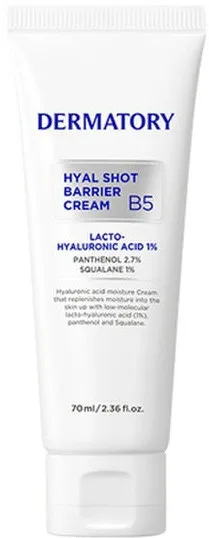
It's the seal-it-in counterpart to the Hyal Shot Ampoule — pairing the same pro-vitamin B5, hyaluronic acid and postbiotic ferment with shea butter and squalane so it both hydrates and locks moisture in, rather than relying on a separate moisturizer.
The seal-it-in sibling to Dermatory's Hyal Shot Ampoule: a B5-forward milky moisturizer that pairs pro-vitamin B5, two hyaluronic acid weights and a postbiotic ferment with shea butter and squalane, so it both hydrates and locks moisture in. It's genuinely good for dry, barrier-stressed skin. The recurring fragrance, again at odds with the barrier pitch, is its main flaw.
Even without ppm figures on every active, the formulation logic here is clear and verifiable: a B5-led emollient barrier moisturizer with hyaluronic acid, shea, squalane and a postbiotic ferment. The medium-confidence rating reflects a young brand with limited long-term independent data and US import pricing that varies enough between sellers that value is judged on the formula rather than a fixed price; the fragrance is the main factor to weigh for sensitive skin.
The case for it
Cautions: fragrance.
What would change this: A declared concentration would move this to a firmer reading of the dose.
Same rule for everyone. “Good choice” is the verdict on 9,564 of 45,024 concern verdicts across the catalog; rule R5 decided 9,072 of them. Unchanged since September 5, 2026, engine 5.1.1.
Brand or formulator? Disclose a concentration or correct a fact →
The studies behind the evidence row
The case for it
Same rule for everyone. “Good choice” is the verdict on 9,564 of 45,024 concern verdicts across the catalog; rule R5 decided 9,072 of them. Unchanged since September 5, 2026, engine 5.1.1.
Brand or formulator? Disclose a concentration or correct a fact →
The studies behind the evidence row
The case for it
What would change this: Removing the trigger named above would let the actives be judged on their own.
Same rule for everyone. “Avoid” is the verdict on 1,909 of 45,024 concern verdicts across the catalog; rule R1 decided 1,304 of them. Unchanged since September 5, 2026, engine 5.1.1.
Brand or formulator? Disclose a concentration or correct a fact →
The case for it
What would change this: A researched evidence row for the lead active would replace this with a verdict.
Same rule for everyone. “Supporting role” is the verdict on 8,197 of 45,024 concern verdicts across the catalog; rule R8 decided 4,250 of them. Unchanged since September 5, 2026, engine 5.1.1.
Brand or formulator? Disclose a concentration or correct a fact →
Does the jobDoes what a moisturizer is for: draws in water, softens and smooths.
A verdict is DermApproved’s assessment of how well a product’s ingredients fit a concern — never a claim about what the product treats. Evidence dots and collected reviews sit beside it and are never blended in. Rules 0.5.1 · evidence table ev-2026.09-r228 · how we decide
The word 'ampoule' on this bottle is doing some creative work, and clearing that up is the most useful place to start. Dermatory's Hyal Shot Barrier Cream Ampoule B5 isn't a concentrated treatment serum at all — it's a moisturizer. A milky, cushiony emulsion whose job is to hydrate and then seal that hydration in, it's the emollient finishing member of the Hyal Shot family rather than a potent step you pile more products on top of. Read it as the cream it actually is and it makes a lot of sense.
The formula follows the line's signature logic but tilts toward sealing rather than just drawing water. Pro-vitamin B5 sits fifth, high for a moisturizer, anchoring the barrier-repair story; two molecular weights of hyaluronic acid carry the hydration; and a postbiotic lactobacillus ferment with allantoin handles soothing. Where it diverges from the watery ampoule is the emollient backbone: caprylic/capric triglyceride, shea butter, squalane and a set of fatty alcohols give it real occlusive substance, so the moisture it pulls in doesn't simply evaporate. There's also a little adenosine for a mild firming signal and light silicones for a velvety slip. Notably, it drops the niacinamide the serum includes, trading that active for richness — a sensible split between the two products.
In practice it behaves like a well-made daily cream. It melts in, leaves skin softer and cushioned without a greasy film for most people, and seals whatever you layered beneath it. Dry, dehydrated and barrier-stressed skin is the obvious match; it's substantial enough to serve as a night cream in winter, while normal skin can wear it under sunscreen by day. Oily and very acne-prone skin is the one group that may find it heavier than necessary — this is a cream that leans nourishing, not weightless.
Then comes the now-familiar catch with this range. For a product whose whole identity is 'barrier' and whose audience skews toward sensitive, easily-stressed skin, the formula again includes added fragrance, sitting near the end of the list. The actives genuinely support the barrier, but fragrance is a common sensitizer, and its presence is the one choice that undercuts the positioning. Most skin won't mind; truly reactive or fragrance-intolerant skin should patch test, and it's why I can't call this fungal-acne safe given the ferment and fragrance together.
The brand context is the same emerging-K-beauty picture as the rest of the line: a young dermocosmetic brand with a transparent, sensible formula and steady positive feedback, but without the years of independent validation a legacy barrier cream would carry. The score leans on the verifiable formulation more than on track record.
Value is, frankly, hard to pin down, because US import pricing for this swings dramatically — reasonable through some channels, sharply marked up through others. Judged on the formula, it's a capable B5 barrier cream that holds its own against pricier Western options; just shop around, because the same jar can cost wildly different amounts depending on the seller, and the larger size improves the per-milliliter math.
Deciding between this and the watery ampoule comes down to climate, skin type and how many steps you want. The serum draws water in and asks you to seal it; this cream does both jobs in one, so in a dry winter or for skin that runs dehydrated it can simplify a routine down to a single, effective moisturizing step. In humid heat, or on oilier skin, that same richness can feel like more than necessary, which is exactly when the lighter serum-plus-gel approach makes more sense. Neither is better in the abstract; they're tuned for different conditions, and plenty of people will rotate between them seasonally.
The niacinamide omission is a small but telling formulation decision. The watery ampoule includes it for tone and oil regulation; this cream drops it and spends that real estate on emollients and lipids instead, a sensible split that keeps each product focused rather than redundant. What you get here is squarely a hydrate-and-seal moisturizer with a barrier-repair tilt, panthenol high, shea and squalane for occlusive comfort, two hyaluronic acid weights beneath them, and a postbiotic ferment for soothing. If tone and oil control are your priorities, the serum or a dedicated niacinamide step is the better buy; if comfort and barrier sealing are what you're after, the cream is purpose-built for it, and pairing the two covers both bases without overlap.
The bottom line: a genuinely good, emollient B5-and-hyaluronic-acid barrier moisturizer that hydrates and seals in one comforting step, ideal for dry to combination, barrier-stressed skin — provided fragrance isn't a dealbreaker. If you already use and like the watery Ampoule, this is its natural sealing partner; if you only want one step, the cream is the more complete choice. Sensitive, fragrance-averse skin should look to a fragrance-free barrier cream instead.
The hero actives that drive this product's performance.
| Ingredient | Function | Evidence |
|---|---|---|
| Panthenol (Pro-Vitamin B5) | Sitting fifth, high for a moisturizer, panthenol is the barrier-repair backbone here — it humectant-hydrates and supports recovery while the shea and squalane around it provide the occlusive seal that an ampoule-style serum can't. | Established mechanism for Dehydration · established mechanism |
| Shea Butter | Butyrospermum Parkii brings the emollient richness that makes this the 'cream' in cream ampoule — it softens and helps seal moisture in, turning the B5-and-HA hydration into something that lasts on drier, barrier-stressed skin. | Established mechanism for Dryness · established mechanism |
| Squalane | A skin-mimicking emollient that reinforces the barrier and adds slip without heaviness, working with the shea butter and fatty alcohols to lock in the layered hyaluronic acid beneath it. | Established mechanism for Dryness · established mechanism |
| Hyaluronic Acid (Sodium Hyaluronate + Hydrolyzed form) | Two weights of hyaluronic acid carry the 'hyal shot' hydration into a richer base, drawing water in while the emollients above prevent it from evaporating back out — the pairing that lets this both hydrate and seal. | Established mechanism for Dehydration · established mechanism |
| Lactobacillus Ferment | A postbiotic ferment that soothes and supports the skin microbiome, reinforcing the calming role of the allantoin and the barrier-repair intent of the B5 in this moisturizer. | Not yet assessed |
Ingredient standings describe the active at treatment-level doses and vehicles; this product's own condition grades weigh its actual formula.
Water, Glycerin, Methylpropanediol, Caprylic/Capric Triglyceride, Panthenol, 1,2-Hexanediol, Methyl Trimethicone, Betaine, Vinyl Dimethicone, Butyrospermum Parkii (Shea) Butter, Cetearyl Alcohol, Hydrogenated Poly(C6-14 Olefin), Glyceryl Stearate, Squalane, Lactobacillus Ferment, Allantoin, Sodium Hyaluronate, C14-22 Alcohols, Glyceryl Glucoside, Behenyl Alcohol, Acrylates/C10-30 Alkyl Acrylate Crosspolymer, C12-20 Alkyl Glucoside, Cetearyl Glucoside, Arginine, Sodium Stearoyl Glutamate, Xanthan Gum, Adenosine, Disodium EDTA, Glucose, Hydrolyzed Sodium Hyaluronate, Fragrance, Hydroxyacetophenone, Ethylhexylglycerin
moisturizer
AM & PM
Use as the moisturizing step after serums to seal in hydration; it's emollient enough to be a standalone night cream for dry skin, or a lighter day cream under sunscreen for normal skin.
Skin feels softer and more comfortable immediately; barrier resilience and lasting hydration build over 2-4 weeks of regular use.
This is a barrier-supporting moisturizer that combines humectants, emollients and occlusive-style lipids with a few functional actives. Panthenol (pro-vitamin B5), placed high in the list, is well-supported for improving stratum corneum hydration and aiding barrier recovery by reducing transepidermal water loss. Two molecular weights of hyaluronic acid (sodium hyaluronate and a hydrolyzed form) provide multi-level water-binding, but the formula's distinguishing feature versus the watery ampoule is its emollient and occlusive content: caprylic/capric triglyceride, Butyrospermum parkii (shea) butter, squalane and fatty alcohols create a film that limits evaporative water loss, so the bound water is retained — the hydrate-and-seal mechanism that defines a barrier cream. Lactobacillus ferment contributes postbiotic soothing with emerging evidence, allantoin adds recognized calming, and adenosine offers a modest, well-documented anti-wrinkle effect. Glyceryl glucoside and glucose support natural-moisturizing-factor-style hydration. The principal formulation criticism is consistent with the line: added fragrance, a known contact sensitizer, conflicts with the barrier-repair, sensitive-skin positioning. Overall the actives and base are appropriate and evidence-aligned for hydration and barrier support in dry to normal skin.
Clinically, this functions as a barrier-repair moisturizer rather than a treatment ampoule. The pairing of panthenol with emollients and lipids such as shea butter and squalane is a familiar, well-regarded approach for dry, dehydrated, or barrier-compromised skin, where reducing water loss is as important as adding water; the postbiotic ferment and allantoin add soothing that suits stressed complexions. It is appropriately positioned as the moisturizing step and is rich enough to function as a night cream in dry conditions. The relevant caution mirrors the range: the added fragrance is an avoidable sensitizer for genuinely reactive, eczema-prone, or fragrance-intolerant skin, for whom a fragrance-free barrier cream would be preferable. For dry to combination skin that tolerates fragrance, it is a reasonable, emollient daily moisturizer; oily or acne-prone skin may prefer a lighter texture.
Use it as your moisturizer, after any toners, essences, or serums, smoothing a small amount over the face and neck as the step that seals in everything beneath. For dry or winter skin it works well as a richer night cream; normal and combination skin can wear it by day under sunscreen, applying more sparingly if it feels heavy. Oily skin may prefer to reserve it for nighttime. If your skin reacts to fragrance, patch test on the inner arm for a few days before incorporating it nightly.
Value is difficult to state precisely because US import pricing for this cream varies sharply between sellers — competitive through some channels and heavily marked up through others — with the larger 70ml size and bundle sets offering better per-milliliter value. On formula alone, it's a well-built B5 barrier moisturizer that pairs meaningful actives with quality emollients, and it compares favorably to pricier Western barrier creams when bought at a sensible import price. The advice is simply to compare retailers before buying, since the same product can differ substantially in cost, and to weigh whether you want the cream alone or paired with the watery ampoule, which together cover hydration and sealing comprehensively.
It earns a spot if you have dry, dehydrated, combination, or barrier-stressed skin, tolerate fragrance, and want a single moisturizing step that hydrates and seals with B5, hyaluronic acid and nourishing emollients. It's an especially natural pick if you already use the Hyal Shot Ampoule and want its sealing partner, or want one comforting cream for winter.
Bypass it if your skin is oily or very acne-prone and prefers a light, weightless finish, or if you're truly sensitive, eczema-prone, or fragrance-intolerant — the added fragrance undercuts the barrier promise for that group, making a fragrance-free cream the safer choice. Those prone to fungal acne should also be wary given the ferment and fragrance combination.
Ready to try Dermatory Hyal Shot Barrier Cream Ampoule B5?
Buy at Amazon ♥A milky, cushiony emulsion that melts in to a soft, comfortable finish without greasiness.
Lightly fragranced — a soft, clean scent.
A 50ml pump bottle; also offered in a larger 70ml size and sets.
Melts into skin and leaves it instantly softer and more cushioned, sealing in whatever you layered beneath. There's no greasy afterfeel for most skin types; the light fragrance is detectable, so reactive skin should patch test before nightly use.
About 2-3 months as a daily moisturizer from the 50ml size.
All Year
Dermatory created the Cream Ampoule as the emollient member of the Hyal Shot Barrier range, designed for people who want the line's B5-and-hyaluronic-acid hydration in a single, moisturizing step that also seals.
Dermatory is a Korean dermocosmetic brand from GS Retail's Lalavla, built around hypoallergenic, dermatologically-tested positioning. The Cream Ampoule is the richer, emulsion counterpart to its Hyal Shot Ampoule — same B5-and-hyaluronic-acid logic, more emollients to seal it in. The brand is young, so it leans on testing claims and transparent formulas over long-term data.
A 'cream ampoule' is a high-strength treatment serum.
Despite the 'ampoule' name, this is functionally a moisturizer — a milky emulsion whose job is to hydrate and seal, not to deliver a concentrated active treatment. The B5, hyaluronic acid and ferment are genuinely useful, but the emollients and the cream texture mean it belongs in the moisturizer step, not as a potent serum you layer extra products over.
Functionally it's a moisturizer. Despite the 'ampoule' name, it's a milky emulsion built to hydrate and seal: pro-vitamin B5, two weights of hyaluronic acid and a postbiotic ferment for hydration and soothing, with shea butter and squalane to lock it all in. Use it as your moisturizing step rather than as a layered treatment serum.
The plain Ampoule is a light, watery serum that draws water in but needs a moisturizer over it; this Cream Ampoule is the richer emulsion that both hydrates and seals, thanks to shea butter and squalane. The serum also adds niacinamide, while the cream trades that for more emollients — pick the cream if you want a one-step moisturizing finish.
No. Like the rest of the Hyal Shot Barrier line it contains added fragrance, listed near the end. The B5, ferment and allantoin are genuinely barrier-supportive, but the fragrance makes it less suitable for highly reactive or fragrance-intolerant skin, so patch test first if that describes you.
It can be. The shea butter, squalane and caprylic/capric triglyceride make it a cushiony, emollient cream that dry and normal skin will love, but oily or very acne-prone skin may find it richer than needed. Combination skin can use it at night or apply it more sparingly during the day.
Yes — for dry to combination skin it works as a complete moisturizing step, sealing in any serums underneath. In very dry or winter conditions it's substantial enough to use as a night cream, while normal skin can wear it under sunscreen by day. Oily skin may prefer to reserve it for nighttime.
Recurring themes our editors read across retailer reviews of this product — summaries in our words, not quotations, and not a substitute for your own patch test.
Rich but not greasy
Soothing on dry, tight skin
Seals in hydration well
Good winter moisturizer
Contains fragrance
Too rich for oily skin
Pricing varies a lot by seller