Castor Oil Grows Nothing. What It Actually Does Is Stranger and More Useful.
No trial has ever shown it produces a single new lash — and the one adverse event with its own case literature is weirder than anything on the bottle.
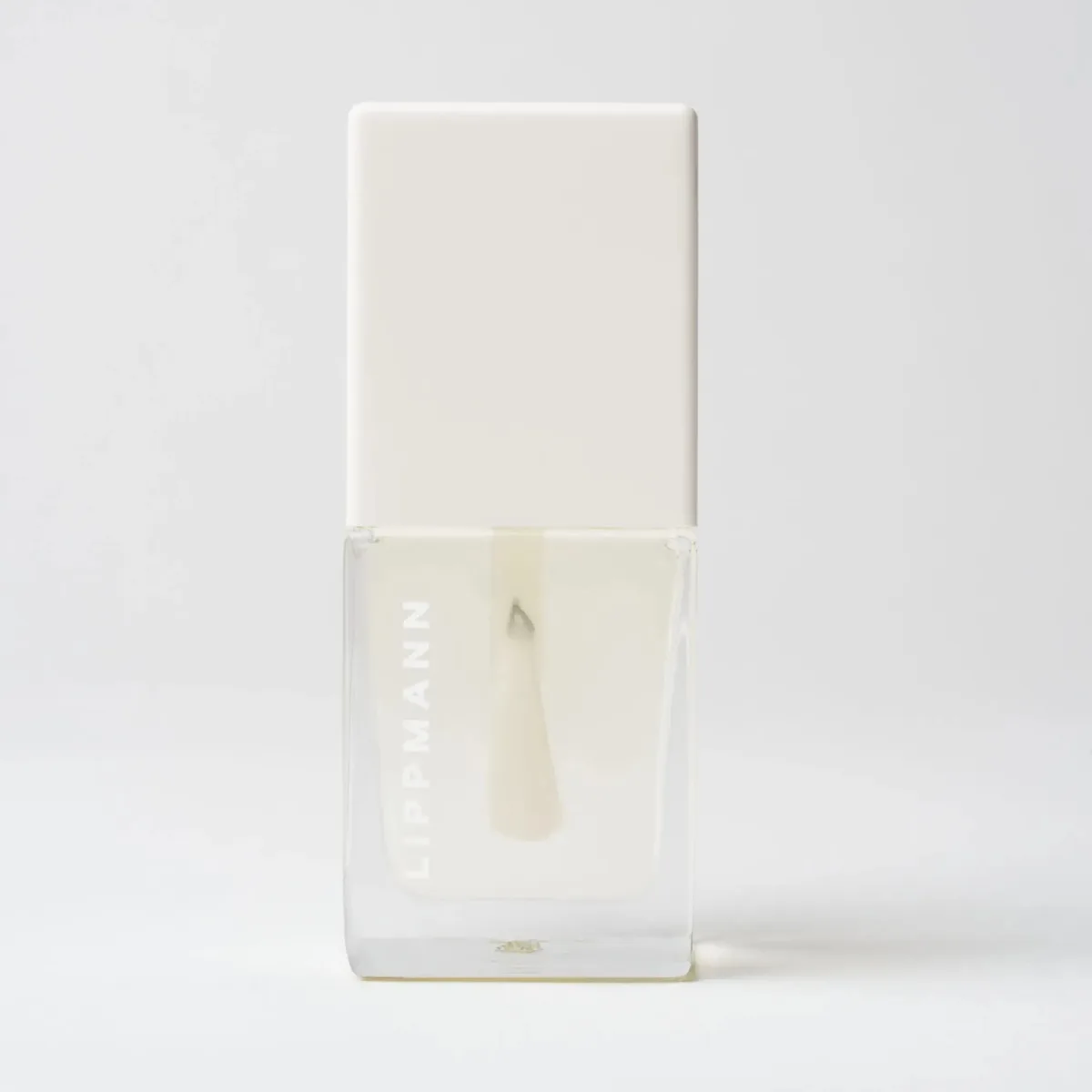
Almost every cuticle oil is a jojoba base with fragrance and a botanical story. This one skips both: eleven ingredients, no perfume, and — unusually — glyceryl linolenate and linoleate placed third and fourth, free fatty acid esters that penetrate the nail plate far better than whole triglycerides do. It is formulated to treat the nail, not just to make the skin around it feel nice.
Eleven ingredients, ten of which are doing a job, and no perfume anywhere — a cuticle oil built to condition the nail plate rather than to smell expensive. The glyceryl fatty acid esters near the top are the genuinely thoughtful part. At twenty-three dollars for fifteen millilitres you are paying a prestige premium for almond and castor oil.
The formulation read here rests on a fully published eleven-ingredient list and on twenty-seven years of brand track record, both of which are solid ground. What is missing is user evidence: this specific bottle is recent, arrived with the brand's LIPPMANN repositioning, and has no verifiable review volume — and its search results are muddled by the brand's older, differently formulated cuticle oils, so treat any review count you see elsewhere with suspicion.
Listed for Dryness — the actives here (glyceryl linolenate and glyceryl linoleate, Vitamin E, yellow 11 ci 47000, Castor Oil) are in our research queue for that concern; there is no verdict until their evidence rows are written. That is a gap in our table, not a mark against the product.
A verdict is DermApproved’s assessment of how well a product’s ingredients fit a concern — never a claim about what the product treats. Evidence dots and collected reviews sit beside it and are never blended in. Rules 0.5.1 · evidence table ev-2026.09-r228 · how we decide
Deborah Lippmann's nail polishes are named after songs. Single Ladies, It's Raining Men, Whatever Lola Wants. There is a reason for that: before she was one of the most-booked manicurists in the industry, she was a jazz singer who went to cosmetology school to pay the rent, and the naming convention is the last visible trace of the first career. It is a charming brand, and the colours are where the charm lives.
This is not one of the colours. It has no song title, no shade story, and a name so plain it reads like a placeholder. It is also, I would argue, the most considered thing in the catalogue, and you can establish that just by counting: eleven ingredients, of which exactly one is decorative.
Start at the top, because in an anhydrous product — no water, no emulsifier system — ingredient order is unusually informative. Sweet almond oil first, so most of what is in the bottle is sweet almond oil. That is a good default choice for nails: mid-weight, reasonably fast-sinking, and unlike the jojoba that dominates this category it does not simply sit as a film waiting to be wiped off. Then positions two through six are a run of glyceryl esters — stearate, linolenate, linoleate, oleate, palmitate — and this is the part worth paying attention to.
Those esters are what the label means by vitamin F, a slightly antique term for the essential fatty acids. Why they matter is a question of penetration. The nail plate is dense, layered, dead keratin, and whole triglycerides — which is what a bottle of plain oil mostly consists of — move through it poorly. Free fatty acids and their simple glycerol esters do considerably better. So a formula that puts linolenate and linoleate in third and fourth position is making an actual attempt to condition the plate itself, not merely to soften the skin around it. Most cuticle oils, however luxurious, are only ever treating the fold. This one is aiming a little deeper, and the ordering suggests that was deliberate rather than incidental.
Castor oil follows at seven, thick and ricinoleic and quietly essential, slowing evaporation so the almond oil above it has time to absorb. Soybean oil adds more polyunsaturates. And then both tocopherol and tocopheryl acetate — free vitamin E and the stable ester — which is the sort of double inclusion that tells you a formulator was thinking about the product's shelf life rather than just its ingredient deck. A bottle that is essentially all polyunsaturated oil is a bottle that wants to go rancid, and free tocopherol is what stops it.
There is no fragrance. In a category that runs almost entirely on scent — sweet almond perfume, lavender, that generic spa-mint smell — the absence is conspicuous and, I think, correct. Cuticle oil is a product you apply two or three times a day to skin that then touches your face, your food and your phone. Fragrance is the leading cause of allergic contact dermatitis from cosmetics, and hands are where people actually develop it. Leaving it out costs the product its shelf appeal and gains it a formula almost nobody has to worry about.
The one blemish is Yellow 11, the final ingredient, which is a dye. It exists so the oil is golden. There is nothing sinister about it and it is present at a fraction of a percent, but in an otherwise perfectly purposeful list it stands out as the concession to the shelf.
What should you actually expect? Honest answer: not much you can see this week. Cuticles look and feel better within a minute of applying, and that is entirely the oil sitting there — it washes off. The real effect is slower and duller. Conditioned nail resists peeling and splitting at the free edge, so less of what grows breaks off, and after four to eight weeks the nail looks longer and better because you have been losing less of it. That is the whole mechanism. Nothing in this bottle, or in any other, makes nails grow faster; growth rate is decided at the matrix and is not taking suggestions. Anyone selling you otherwise is selling you something.
Which brings us to price, the least comfortable part. Twenty-three dollars for fifteen millilitres is prestige pricing on sweet almond, castor and soybean oil — ingredients available for a few dollars a litre. The counter-argument is real if unromantic: one drop per nail twice a day means a bottle lasts four to six months, so you are spending pennies per application, and the ester content and vitamin E system genuinely are not what you get from a drugstore bottle of almond oil. Still, nobody should pretend the raw materials cost anything close to this, and if budget is the deciding factor there are perfectly adequate oils at a third of the price.
Buy it if you want a fragrance-free treatment that is actually formulated for the nail plate, if you have reactive hands, or if you have found that jojoba-based oils only ever seem to sit on top. Skip it if you have a tree nut or soy allergy, since almond leads the list and soybean sits at eight, and skip it if what you want from a cuticle oil is the ritual — because this one, deliberately, has no ceremony to it at all.
The hero actives that drive this product's performance.
| Ingredient | Function | Evidence |
|---|---|---|
| Sweet Almond Oil (Prunus Amygdalus Dulcis) | First and dominant in an eleven-ingredient formula, which in a product with no water phase means it is most of what you are applying. Sweet almond is a mid-weight oil that sinks into the cuticle fold rather than sitting on it — the reason this absorbs instead of transferring onto everything you touch. | Not yet assessed |
| Glyceryl Linolenate and Glyceryl Linoleate | The two ingredients doing the work the label calls vitamin F. These are glycerol esters of the essential fatty acids, positioned third and fourth, and they are the reason this oil conditions the nail plate itself rather than only greasing the skin around it — free fatty acids penetrate keratin far better than whole triglycerides. | Not yet assessed |
| Castor Seed Oil (Ricinus Communis) | The occlusive counterweight at position seven. Castor is thick and ricinoleic-acid-rich, and its job here is to slow evaporation from the nail fold so the lighter almond oil above it has time to absorb — the balance that keeps this from either vanishing instantly or feeling heavy. | Not yet assessed |
| Tocopherol with Tocopheryl Acetate | Both forms of vitamin E, which is unusual and sensible — free tocopherol is the active antioxidant and also protects the almond and soybean oils from going rancid, while the acetate ester is the stable reservoir. In a product that is essentially all polyunsaturated oil, that is genuine formulation care rather than a label flourish. | Not yet assessed |
| Yellow 11 (CI 47000) | The only ingredient here with no functional purpose — a dye giving the oil its golden colour. It is worth knowing it is a colourant rather than a botanical, and it is the single thing separating this from a completely purposeful ingredient list. | Not yet assessed |
Prunus Amygdalus Dulcis (Sweet Almond) Oil, Glyceryl Stearate, Glyceryl Linolenate, Glyceryl Linoleate, Glyceryl Oleate, Glyceryl Palmitate, Ricinus Communis (Castor) Seed Oil, Glycine Soja (Soybean) Oil, Tocopherol, Tocopheryl Acetate, Yellow 11 (CI 47000)
treatment
AM & PM
Oil goes last, which matters more here than people expect — applied over hand cream it seals the cream in, applied under it the cream mostly blocks it. On the nail plate itself, wait until any polish is fully cured, and skip it entirely on the natural nail in the ten minutes before a manicure, since an oiled plate will not hold lacquer.
Cuticles look and feel better within minutes — that is the oil, and it washes off. The change worth waiting for is in the nail itself: peeling and splitting at the free edge typically improve across four to eight weeks, because that is how long it takes conditioned nail to grow out from the matrix. Consistency beats quantity entirely.
Nail care is a category with unusually thin evidence, so it is worth being precise about what a cuticle oil can and cannot do. The nail plate is composed of dead, tightly packed keratinocytes bonded into layers, with a lipid content of roughly one per cent and a water content that fluctuates with the environment — brittleness correlates far more closely with hydration state than with any nutritional factor. That is the opening for a topical: a lipid film reduces water loss from the plate and the surrounding fold, and better-hydrated keratin is measurably more flexible and less prone to the lamellar splitting seen at the free edge. Where formulation choices matter is penetration. Studies of nail permeability consistently find the plate behaves more like a hydrophilic gel membrane than like the stratum corneum, and that large lipophilic molecules — intact triglycerides, which make up the bulk of any plant oil — cross it poorly. Smaller and more polar lipids do better, which is the rationale for the glyceryl esters of linoleic and linolenic acid sitting third and fourth here rather than as trace additions. Vitamin E in this context has two distinct roles that often get conflated: as tocopherol it is a genuine antioxidant on the skin of the nail fold, and it is also the ingredient preventing the polyunsaturated almond and soybean oils in this bottle from oxidising on a bathroom shelf. What no evidence supports is any effect on nail growth rate, which is determined by matrix keratinocyte turnover and is not modifiable topically; the appearance of faster growth from consistent oiling is a reduction in breakage, not an increase in production. Claims that vitamin E repairs damaged nails are similarly unsupported — the plate is not living tissue and has no repair mechanism available to it.
Brittle nail syndrome is common enough in dermatology practice that the standard advice is well settled, and topical lipids are part of it. Patients presenting with splitting, peeling or lamellar separation are typically counselled first on reducing water exposure and detergent contact, since repeated wetting and drying cycles are the dominant cause, and on wearing gloves for wet work. Emollients applied to the nail and periungual skin are then recommended as maintenance, with the practical instruction being frequency over quantity — several applications daily, sustained for the several months a nail takes to grow out fully. Fragrance-free formulations are generally preferred for the hands specifically, since hand and periungual dermatitis is one of the more common presentations of fragrance allergy and the area sees constant re-exposure. For nail fragility that does not respond, oral biotin is sometimes trialled despite modest evidence, and referral considerations include onychomycosis, lichen planus, psoriasis and thyroid disease, all of which can present as brittle or dystrophic nails and none of which will improve with an oil. The clinical framing offered to patients is that a cuticle oil is supportive care for the nail's condition, not a treatment for its structure.
One brush-load per nail is the entire dose — more just transfers onto whatever you touch next. Paint it along the base of the nail where the plate meets the fold, then run the brush down each sidewall, since that is where splitting usually starts. Massage it in with the pad of the opposite thumb for a few seconds per finger. Apply after hand cream rather than before, so the oil seals rather than sits underneath. Twice daily is the target and bedtime is the most valuable slot, since nothing washes it off overnight. Keep it off the bare plate immediately before polishing, and give it four to eight weeks before judging anything.
Twenty-three dollars for 15 ml is where this has to justify itself, because the raw materials — sweet almond, castor and soybean oil — are inexpensive commodities. Two things carry the argument. The first is dosing: one drop per nail twice daily stretches this bottle across four to six months, putting the real cost at a few cents per use. The second is that the glyceryl fatty acid esters and the dual vitamin E system are genuine formulation, not something you replicate by buying almond oil from a health shop. Against that, there is no smaller size to try and no larger size to save on, and plenty of competent cuticle oils sit at a third of the price. This is a prestige purchase justified by construction and longevity rather than by ingredient cost, and it is worth being clear-eyed that those are different things.
A strong fit for anyone with peeling or splitting at the free edge who wants a treatment aimed at the nail plate rather than just the surrounding skin, and for reactive or fragrance-sensitive hands. Frequent manicure-wearers benefit most, since regular polishing and removal is hard on the plate.
Tree nut and soy allergies are the clear exclusion, given almond leads the list. Anyone on a budget can get most of this benefit from a far cheaper oil applied just as often, and if the appeal of a cuticle oil is the scented ritual, this deliberately offers none.
Ready to try Deborah Lippmann Hydrating Vitamin E Oil?
Buy at Amazon ♥A pale straw-coloured oil of medium body — thicker than jojoba, nowhere near castor on its own, and it sinks into the cuticle fold in under a minute rather than beading on top
Genuinely none to speak of; with no fragrance in the formula, all you get is the faint nutty warmth of almond oil itself
A polish-style square glass bottle with a LIPPMANN-branded cap and a lacquer brush inside — you paint it on rather than dropping it, which controls the dose better than a dropper and makes it easy to run along the sidewalls. Recycled content is disclosed down to the cap: 60% PCR inner, 30% outer
The first thing you notice is what is missing: no perfume, no cooling, no tingle, none of the sensory theatre this category usually leans on. One drop per nail is genuinely enough, and it disappears within a minute or two. Nails look glossier immediately, which is purely optical. Anything real happens over weeks, silently, as conditioned nail grows out.
Around 4-6 months at twice-daily use on all ten nails
fall winter
Deborah Lippmann came to nails sideways, as a jazz singer who went to cosmetology school to pay the bills and ended up one of the industry's most-booked manicurists — which is why her polishes are named after songs. The treatments have always been the unglamorous half of that catalogue, and this oil is the clearest example: no colour story, no song title, just the thing a manicurist actually reaches for between clients.
Deborah Lippmann built her name as a celebrity manicurist before launching the line in 1999 at Henri Bendel and Fred Segal, and the brand — now trading as LIPPMANN — has spent more than two decades in professional and prestige nail care. Its authority is salon and editorial rather than clinical; nail treatments as a category carry very little published research, and this brand publishes none of its own.
Cuticle oil makes your nails grow faster.
Growth rate is set at the matrix and oil cannot change it. What oil does is reduce breakage and peeling at the free edge, so more of what grows stays on — which looks like faster growth and is really just less loss.
Vitamin E oil repairs damaged nails.
The nail plate is dead keratin and nothing repairs it. Vitamin E here is doing two real jobs — antioxidant activity on the skin of the nail fold, and keeping the polyunsaturated almond and soybean oils from oxidising in the bottle.
More oil means better results.
One brush-load per nail is the whole dose, and beyond that you are just making your hands slippery. Frequency does the work: twice daily for six weeks beats a flooded cuticle once a week, because you are conditioning nail that has not grown out yet.
Indirectly, and that is the honest answer for every cuticle oil. It cannot alter the nail plate, which is dead keratin, but the fatty acid esters here condition it enough to reduce peeling and splitting at the free edge — so less breaks off, and nails appear to grow better.
It is a separate formula, which matters because search results mix them up. This one is built on sweet almond oil with castor, soybean and glyceryl fatty acid esters, and it is fragrance-free — unlike the brand's earlier coconut-oil and essential-oil treatments.
No — oil on the nail plate will stop lacquer adhering and you will get lifting within a day. Apply it after polish has fully cured, or wipe the plate with remover before you start if you have oiled recently.
Approach with real caution. Sweet almond oil is the first ingredient and almonds are a tree nut, with soybean oil also present. Refined oils carry little protein, but anyone with a diagnosed tree nut or soy allergy should check with their allergist rather than assume.
A dye, Yellow 11, is the last ingredient and exists purely to give the golden colour. It is not a botanical or an active, and it is the only thing in an otherwise entirely functional ingredient list that serves appearance alone.
Four to six months if you use it properly, which means one drop per nail twice a day rather than flooding the fold. That works out to a few cents per application, which reframes the price considerably.
After. Oil is the more occlusive of the two, so applied last it seals the cream's water content in. Used the other way round, the cream sits on top and most of the oil never reaches the nail fold.
Recurring themes our editors read across retailer reviews of this product — summaries in our words, not quotations, and not a substitute for your own patch test.
Too few verifiable reviews of this specific formula to establish patterns
Absorbs without leaving hands slippery, per early feedback
Fragrance-free construction is unusual in the category
Price per millilitre is the recurring objection at this size
Brush applicator holds less per pass than a dropper would
Search results conflate it with the brand's older cuticle oils