Hyaluronic Acid Can Actually Dehydrate Your Skin (Here's When)
The internet's favorite hydrator has a counterintuitive dark side — in dry air, a humectant with nothing to seal it can pull water out of your skin instead of into it.
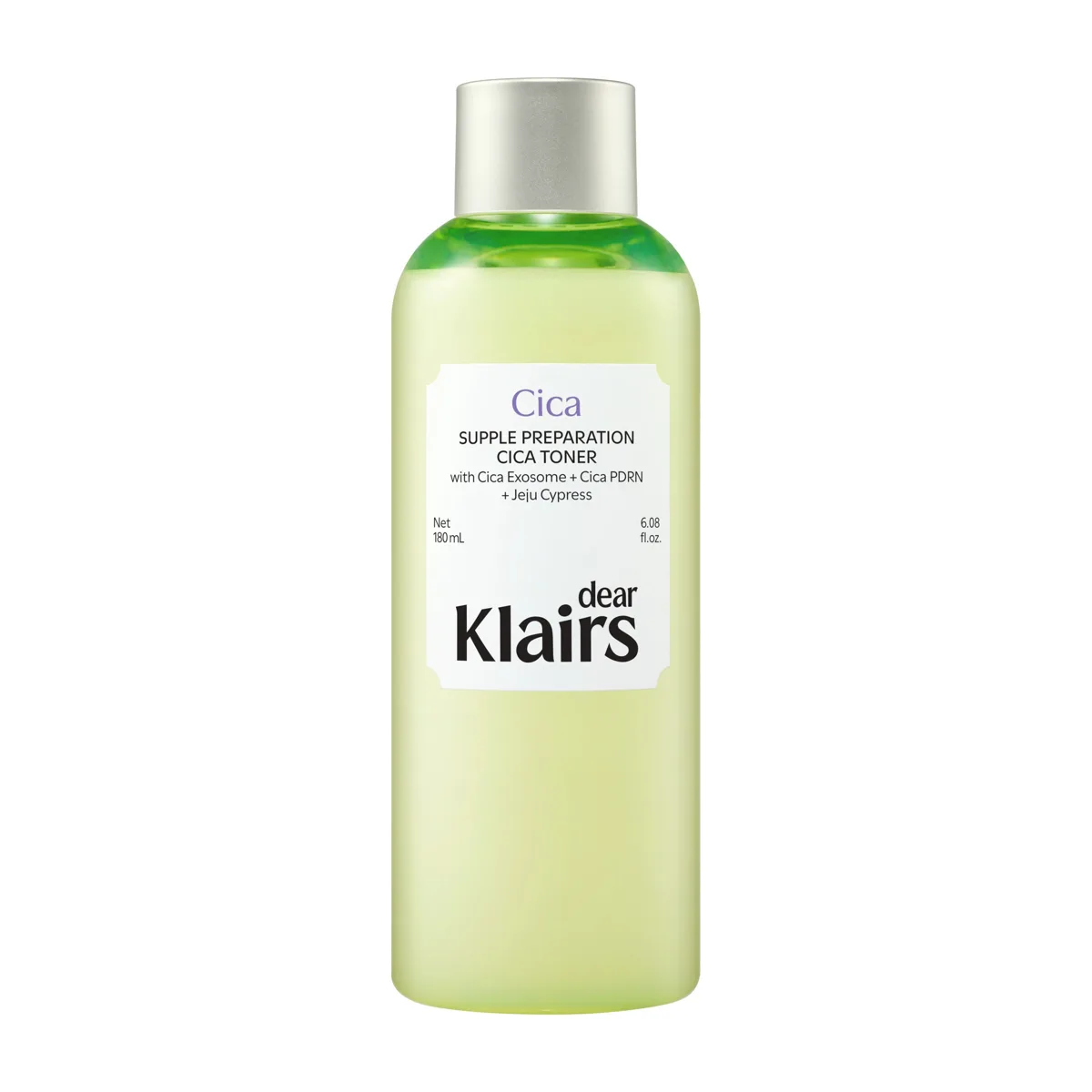
It is the Supple Preparation toner rebuilt around comfort rather than plain hydration: a Jeju cypress distillate replaces part of the water, a light emulsified phase of shea, olive oil, squalane and hydrogenated lecithin gives the liquid a cushion the original never had, a ceramide-cholesterol-phytosphingosine trio sits at the tail, and the humectant stack runs to trehalose, panthenol and three forms of hyaluronate, fragrance-free and alcohol-free. The cica exosome and cica PDRN on the label are the 2026 K-beauty vocabulary attached to centella extracts and a plant polynucleotide at trace positions, and the toner is good without them.
The Supple Preparation toner rebuilt around comfort: Jeju cypress water third, a humectant stack of glycerin, trehalose, panthenol and three hyaluronates, a light emulsified shea, olive and squalane phase that cushions where the original merely wet, and a ceramide-cholesterol-phytosphingosine trio at the tail, fragrance-free and alcohol-free for eighteen dollars. The cica, exosome and PDRN it is sold on sit at the tail without doses and are the 2026 vocabulary on a good hydrating toner; oily skin will find it richer than it wants, and two reviews in two months is no record, but on the label it is the gentlest bottle in the Supple Preparation family.
Two reviews on the brand's site are all this toner has gathered since its July 2026 launch, alongside a fully disclosed ordered label that, unusually for the brand, declares no doses for its three headline ingredients and no published testing; the hydrating and comforting behaviour is judged from the well-documented humectant and barrier-lipid literature rather than from user data on this bottle, and the cica exosome and PDRN claims from their trace positions on the list.
The case for it
What would change this: A researched evidence row for the lead active would replace this with a verdict.
Same rule for everyone. “Supporting role” is the verdict on 8,197 of 45,024 concern verdicts across the catalog; rule R8 decided 4,250 of them. As of September 25, 2026, engine 5.1.1.
Brand or formulator? Disclose a concentration or correct a fact →
The case for it
What would change this: A declared concentration would move this to a firmer reading of the dose.
Same rule for everyone. “Good choice” is the verdict on 1,938 of 45,024 concern verdicts across the catalog; rule F2 decided 1,938 of them. As of September 25, 2026, engine 5.1.1.
Brand or formulator? Disclose a concentration or correct a fact →
The studies behind the evidence row
The case for it
What would change this: A declared concentration would move this to a firmer reading of the dose.
Same rule for everyone. “Good choice” is the verdict on 9,564 of 45,024 concern verdicts across the catalog; rule R5 decided 9,072 of them. As of September 25, 2026, engine 5.1.1.
Brand or formulator? Disclose a concentration or correct a fact →
The studies behind the evidence row
The case for it
What would change this: A declared concentration would move this to a firmer reading of the dose.
Same rule for everyone. “Good choice” is the verdict on 9,564 of 45,024 concern verdicts across the catalog; rule R5 decided 9,072 of them. As of September 25, 2026, engine 5.1.1.
Brand or formulator? Disclose a concentration or correct a fact →
The studies behind the evidence row
Does the jobDoes what a toner is for: not alcohol-driven, adds something real. Not measured from the label: restores skin pH, plays well with what follows.
A verdict is DermApproved’s assessment of how well a product’s ingredients fit a concern — never a claim about what the product treats. Evidence dots and collected reviews sit beside it and are never blended in. Rules 0.5.1 · evidence table ev-2026.09-r228 · how we decide
Exosome and PDRN are the two words on this label that did not exist in Klairs' vocabulary a year ago, and the ingredient list shows exactly what they mean when they land on an honest one. The cica exosome is centella extract, at twenty-seventh and again at thirty-fourth; the cica PDRN is sodium DNA, a plant polynucleotide, at thirty-fifth of thirty-six, riding the reputation of the injectable salmon-DNA treatments that Korean clinics made famous. Neither is dosed, which is unusual for a brand that prints parts per million on its Blue line, and neither does anything measurable at a trace in a leave-on toner. That is not a scandal; it is what a hydrating toner in 2026 has to say on its front to get picked up, and the review of the Cica Toner is a review of the thirty-three other ingredients, which are good.
The formula is the original Supple Preparation rebuilt for comfort. Jeju cypress water sits third, a hinoki distillate replacing part of the water with a faint woody note and laboratory antioxidant data; glycerin fourth, trehalose seventh, panthenol and three forms of hyaluronate make a deep humectant stack; and then, unusually for a toner, a light emulsified oil phase, caprylic/capric triglyceride, olive fruit oil, shea butter, hydrogenated lecithin and squalane, gives the liquid a milky translucence and a cushion that the original's watery feel never had, with a ceramide NP, cholesterol and phytosphingosine trio at the tail as the barrier idea. Allantoin, evening primrose, pueraria, elm and pine extracts sit in the middle at cosmetic doses, gluconolactone is a whisper of polyhydroxy acid, and the preservation is hexanediol and hydroxyacetophenone with no alcohol, fragrance, essential oil, paraben or colourant, which is the tail a sensitive face wants and the reason this is the gentlest bottle in the family on paper.
In use the difference from the original is felt at once. A palmful pressed in after cleansing leaves skin comfortable rather than tight within a minute, with a soft, faintly dewy cushion that the watery originals do not give, and a second layer on the cheeks reads like a light serum; dry and sensitive skin gets the most from it, normal skin enjoys it, and oily skin notices the shea and olive oil and may keep the bottle for evenings, which is the one honest limitation of a toner that carries an oil phase. It layers under retinoids and acids as the family always has, buffering rather than competing, and the two reviews since the July 2026 launch, at a 3.0, are too few to mean anything except that one buyer expected the original's lightness and did not get it.
The cica question deserves a fair answer rather than a dismissal. Centella's triterpenes, madecassoside and asiaticoside, have real calming and barrier evidence at meaningful doses, and the brand's Midnight Blue cream has leaned on them for years; here the two centella extracts sit low enough that the calming a user feels is more plausibly the allantoin, the cypress water, the humectants and the lipid trio than the cica, and the exosome and PDRN are names attached to that modest amount of centella. A buyer who wants a centella treatment should buy a centella serum; a buyer who wants a comfortable, fragrance-free first step that stops the post-cleanse tightness is well served here, and the label's front is simply the price of the shelf.
What the list also tells a careful reader is how Klairs has moved in a decade. The 2015 Supple Preparation was a humectant toner with a plant-oil finish and a little licorice, centella and luffa, sold on its pH and its gentleness; the 2026 Cica Toner adds a physiological lipid trio, a proper emulsified phase and a regional botanical distillate, which is a formulator's answer to the barrier-first thinking that dominated Korean skincare after 2022, while the front of the bottle answers the marketing department with exosome and PDRN. The two sit together without contradiction, and knowing which is which is the whole trick to shopping in this category now. Hydroxyacetophenone earns a mention too: it is an antioxidant preservative booster rather than an active, and its sixth position says the brand wanted a low-alcohol, low-preservative system without leaning on phenoxyethanol, which is a reasonable choice for the reactive skin the toner is aimed at.
On price, eighteen dollars for 180 ml is about three dollars an ounce, the same band as the original and the unscented, and a palmful twice a day lasts around three months, so six dollars a month for a toner with a ceramide trio and a humectant stack most clinical brands charge twice as much for. Within the Supple Preparation family the choice is now clear: the original for the plant-oil feel and the scent, the unscented for oily skin and the lightest touch, and the Cica for dry, sensitive or barrier-stressed skin that wants a cushion, with all three doing the buffering job the brand built its name on. The exosome and the PDRN can be read as the year's vocabulary, and the cypress water, the lipids and the ceramides as the reasons to buy.
The hero actives that drive this product's performance.
| Ingredient | Function | Evidence |
|---|---|---|
| Chamaecyparis Obtusa (Jeju Cypress) Water | Third, ahead of the glycerin, the hinoki cypress distillate that replaces part of the water and is the one of the three headline ingredients placed high enough to matter; cypress leaf has laboratory antioxidant and anti-inflammatory data and a faint woody scent, and here it is the real difference between this bottle and the original Supple Preparation, which used water and a plant-oil base. | Not yet assessed |
| Centella Asiatica Leaf Extract | Twenty-seventh, with a second centella extract thirty-fourth, the cica the toner is named on, at positions that place it well below the humectants and the lipid trio; centella's madecassoside and asiaticoside have real calming and barrier evidence at meaningful doses, and the brand's cica exosome and cica PDRN, sodium DNA at thirty-fifth, are the names the label attaches to a modest amount of it. | Not applicable for Sensitivity |
| Trehalose | Seventh, with glycerin fourth, panthenol, sodium hyaluronate and two more hyaluronate forms behind it, the humectant stack that does the hydrating this toner is bought for; the disaccharide binds water and protects cells from drying stress, and with the shea, olive oil and squalane emulsified into the liquid it leaves a cushion the original toner's watery feel never had. | Not yet assessed |
| Ceramide NP | Thirtieth, between cholesterol and phytosphingosine, the barrier-lipid trio in the right combination at the tail of the list, backed by hydrogenated lecithin twelfth and a light emulsified oil phase; a real barrier idea at a modest dose, and the reason a toner can honestly claim to comfort tight skin after cleansing rather than merely wet it. | Established mechanism for Dryness · established mechanism |
| Sodium DNA (Cica PDRN) | Thirty-fifth of thirty-six, the plant-derived polynucleotide the brand markets as cica PDRN, riding the Korean PDRN trend that began with salmon-DNA injectables; topical polynucleotides have a small post-procedure literature and no evidence at a trace position in a leave-on toner, so it is a story on the label and the cypress water and humectants are the formula. | Not yet assessed |
Ingredient standings describe the active at treatment-level doses and vehicles; this product's own condition grades weigh its actual formula.
Water, Methylpropanediol, Chamaecyparis Obtusa (Jeju Cypress) Water, Glycerin, 1,2-Hexanediol, Hydroxyacetophenone, Trehalose, Butylene Glycol, Caprylic/Capric Triglyceride, Olea Europaea (Olive) Fruit Oil, Butyrospermum Parkii (Shea) Butter, Hydrogenated Lecithin, Squalane, Allantoin, Ethylhexylglycerin, Xanthan Gum, Sodium Phytate, Glyceryl Acrylate/Acrylic Acid Copolymer, Panthenol, Sodium Hyaluronate, PVM/MA Copolymer, Pueraria Lobata Root Extract, Pinus Palustris Leaf Extract, Ulmus Davidiana Root Extract, Oenothera Biennis (Evening Primrose) Flower Extract, Hydrolyzed Hyaluronic Acid, Centella Asiatica Leaf Extract, Gluconolactone, Cholesterol, Ceramide NP, Phytosphingosine, Sodium Acetylated Hyaluronate, Tocopherol, Centella Asiatica Extract, Sodium DNA, Disodium EDTA.
toner
AM & PM
The first step after cleansing, pressed in with the palms or swept on a pad, with a second layer wherever the skin feels tight; serum and moisturiser follow, and it layers under retinoids, acids and vitamin C as a buffer the way the original Supple Preparation does. On oily skin the shea and olive oil make it a night toner rather than an all-day one.
Comfortable, un-tight, softly cushioned skin within a minute of pressing it in, and a face that no longer feels stripped after cleansing from the first use; a calmer, better-hydrated surface within a week or two on sensitive or dehydrated skin, which is what humectants over a light lipid trio do. The cica exosome and PDRN on the label add nothing separable from that, and the toner treats no condition beyond a dehydrated, easily flushed surface.
The toner's evidence lies in its humectants and lipids. Glycerin, trehalose, panthenol, butylene glycol and three forms of sodium hyaluronate are established humectants that raise stratum corneum water content, trehalose adding cell-protective data against drying stress and panthenol evidence for irritation reduction and barrier recovery; an emulsified phase of caprylic/capric triglyceride, olive fruit oil, shea butter, squalane and hydrogenated lecithin supplies a light emollient film that slows the water's escape, and ceramide NP, cholesterol and phytosphingosine at the tail provide the barrier-lipid classes in a physiological combination at a modest dose. Together they explain the immediate relief of post-cleanse tightness and the cushioned finish that distinguishes this toner from the family's watery originals.
The botanical and headline ingredients are laboratory-level at best. Chamaecyparis obtusa, hinoki cypress, has antioxidant, anti-inflammatory and antimicrobial data for its leaf extract and essential oil, a 2023 Medicina study reporting antiwrinkle and cell-protective effects of the leaf extract in UVA-irradiated cells and a 2024 International Journal of Molecular Sciences review surveying its secondary metabolites; as a distillate at third position it contributes a trace of those volatiles and a woody note. Centella asiatica's triterpenes have clinical calming and barrier evidence at meaningful concentrations, but the two extracts here sit at twenty-seventh and thirty-fourth; the exosome claim refers to plant-cell vesicles with no cosmetic clinical evidence, and sodium DNA at thirty-fifth is a plant polynucleotide whose relative, injectable and topical PDRN, has a post-procedure literature summarised in a 2026 Cureus narrative review that does not extend to trace doses in a leave-on toner. Allantoin has anti-irritant evidence; gluconolactone at twenty-eighth is a polyhydroxy acid at a level too low to exfoliate.
The formula contains no fragrance, alcohol, essential oils, parabens or colourants; cypress water and pine leaf extract are rare sensitisers, olive oil has mild comedogenic potential, and the triglyceride and oils are the components fungal-acne-prone skin may react to.
A fragrance-free, alcohol-free hydrating toner with humectants, a light emollient phase and a physiological ceramide trio is the kind of first step clinicians suggest for sensitive, dehydrated and retinoid-treated skin, and this one would be regarded as well designed for that purpose and gentler than most; the cica, exosome and PDRN would be described as marketing at these positions, with the comfort attributed to the humectants and lipids, and expectations set at hydration and reduced tightness rather than any regenerative effect. The practical notes would be that the emulsified oils make it richer than oily or acne-prone patients may want, that fungal-acne-prone patients may react to the triglyceride and oils, and that the toner layers usefully under retinoids and acids as a buffer, which is the family's established strength.
Immediately after cleansing, morning and night, pour a small amount into the palms or onto a cotton pad and press or sweep it over the face and neck, patting until absorbed; add a second layer wherever the skin feels tight, then follow with serum and moisturiser, and sunscreen by day. It goes under retinoids, acids and vitamin C as a buffering layer. Oily skin may prefer it in the evening only, and the bottle should be kept closed and out of direct sun.
Eighteen dollars for 180 ml is about three dollars an ounce, and a palmful twice a day lasts around three months, so roughly six dollars a month, the same price band as the original and unscented Supple Preparation toners and well under the clinical-brand toners that carry a ceramide trio. The cypress water, the emulsified lipids and the humectant stack are genuine formulation; the exosome and PDRN are a name on the front at no visible cost to the formula. For dry, sensitive and barrier-stressed skin the value is good, and for oily skin the same money buys the unscented version, which suits it better.
Sensitive, dry, dehydrated and barrier-stressed skin that wants a fragrance-free, alcohol-free first step with a cushion rather than a watery feel, long-time Supple Preparation users whose skin has grown drier, retinoid and acid users who want a gentle buffer, and anyone who found the original's essential oils or lightness unsuitable.
Oily and acne-prone skin, for which the emulsified shea and olive oil are richer than a toner needs and the unscented version is the better fit; fungal-acne-prone skin, given the triglyceride and oils; anyone buying it for the exosome or PDRN expecting regeneration; and anyone who wants the light, plant-oil feel of the original, which this deliberately is not.
Ready to try Dear, Klairs Supple Preparation Cica Toner?
Buy at Amazon ♥A pale-green, slightly viscous, milky-translucent liquid, thicker than the original Supple Preparation, that spreads with a soft slip from its emulsified oils, absorbs within a minute under the palms and leaves a smooth, faintly cushioned, dewy finish without tack.
Unscented; a faint, clean, woody note from the cypress water on application, gone within seconds.
A clear, squared plastic bottle showing the pale-green liquid, with a silver screw cap and a white label reading Cica in green, 180 ml; it pours through a small aperture into the palm or onto a pad, and the bottle stands out from the brand's white-labelled originals by its colour alone.
A soft, faintly woody-smelling liquid pressed in after cleansing, a cushion that the original Supple Preparation never gave, and skin that is comfortable rather than tight within a minute; sensitive skin registers no sting, dry skin notices the emollience, and oily skin notices it too and may keep the bottle for evenings. Nothing to purge or adapt to, and the calming is immediate and modest.
About three months at a palmful twice a day; nearer four on a cotton pad.
All Year
The Supple Preparation Facial Toner made Klairs' name in the West a decade ago as the hydrating, pH-balancing first step that buffered actives on sensitive skin, and the unscented version followed for those who objected to its essential oils; the July 2026 Cica Toner is the brand's third take, sold explicitly as a separate product rather than a replacement, built on the centella, exosome and PDRN language that dominated Korean launches in 2025 and 2026 and on Jeju cypress water as its regional note. It sells alone and in the brand's cica routine trios.
Dear, Klairs is a Seoul brand founded in 2010 by Wishcompany on a minimal, fragrance-free, sensitive-skin platform, and its Supple Preparation toner has been one of the most-recommended K-beauty toners in the West for a decade. The Cica Toner launched in July 2026 as a separate product beside the original and unscented versions, sold on cica exosome, cica PDRN and Jeju cypress; the brand publishes no testing and, unusually, no doses for it.
Cica exosome and cica PDRN regenerate the skin from a toner.
Exosome is a marketing term for plant-cell-derived vesicles with no clinical evidence in cosmetics, and the PDRN here is sodium DNA at thirty-fifth of thirty-six ingredients, a plant polynucleotide riding the reputation of injectable salmon DNA; neither does anything measurable at a trace in a leave-on toner. The comfort comes from cypress water, humectants, a light oil phase and a ceramide trio, which is a good reason to buy it.
The Cica Toner is the new, improved Supple Preparation.
The brand sells it as a separate product, and it is: richer, with an emulsified shea and olive phase, a ceramide trio and cypress water, where the original is a watery humectant toner with plant oils and the unscented version drops the essential oils. Dry and sensitive skin will prefer the Cica; oily skin and long-time users of the original's light feel should stay where they are.
They are separate products. The Unscented is the original watery humectant toner with its essential oils removed; the Cica Toner is a richer 2026 formula with Jeju cypress water, an emulsified shea, olive and squalane phase, a ceramide trio and centella extracts. Choose the Cica for dry or sensitive skin that wants cushion, the Unscented for oily skin or a lighter feel.
Yes; it carries no fragrance, essential oils, alcohol, parabens or colourants, and the faint woody note on application is the cypress water. It is one of the gentlest toners in the brand's range on paper.
Marketing names for centella-derived ingredients: the exosome refers to plant-cell vesicles with no cosmetic evidence, and the PDRN is sodium DNA, a plant polynucleotide, at thirty-fifth of thirty-six ingredients. The toner's comfort comes from its cypress water, humectants, light oil phase and ceramide trio, not from either.
It is richer than the original, with shea butter, olive oil and squalane emulsified into the liquid, so oily and acne-prone skin may find it a night toner rather than an all-day one, and fungal-acne-prone skin should note the triglyceride and oils. Sensitive, dry and normal skin is the natural audience.
Immediately after cleansing, pour a small amount into the palms or onto a cotton pad, press or sweep it over the face and pat until absorbed, adding a second layer where the skin feels tight; follow with serum and moisturiser, and sunscreen by day. It layers under retinoids and acids as a buffer.
Eighteen dollars for 180 ml on the brand's US store, the same price band as the original and unscented toners, and it lasts about three months at twice-daily use.
Recurring themes our editors read across retailer reviews of this product — summaries in our words, not quotations, and not a substitute for your own patch test.
Softer and more cushioning than the original Supple Preparation
No sting or scent on reactive skin
Calms post-cleanse tightness at once
Too new to judge
Heavier than the original for oily skin
Cica, exosome and PDRN are undosed names on a hydrating toner