




Hyaluronic Acid Can Actually Dehydrate Your Skin (Here's When)
The internet's favorite hydrator has a counterintuitive dark side — in dry air, a humectant with nothing to seal it can pull water out of your skin instead of into it.
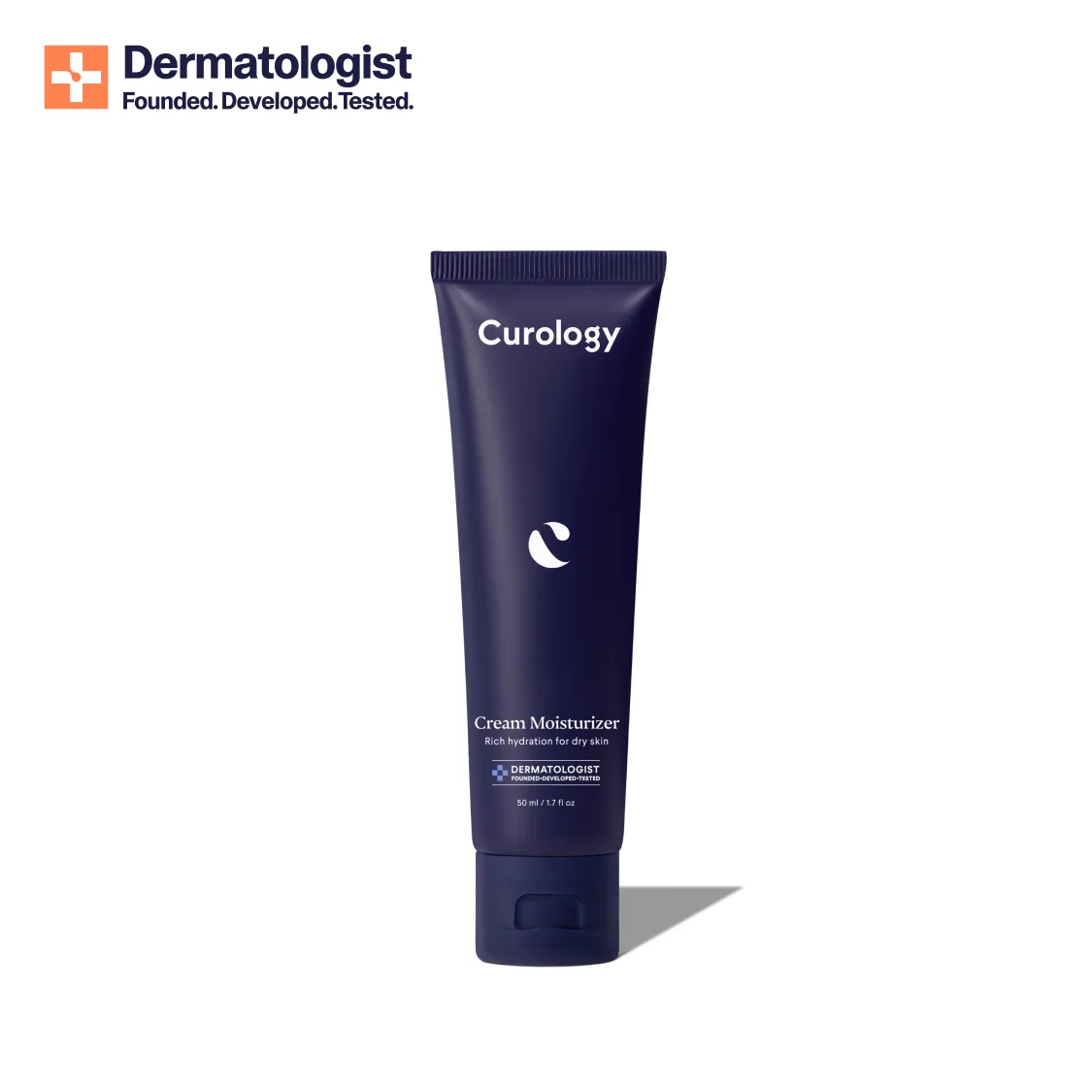
Specifically formulated by Curology's in-house dermatologists as a companion product for prescription-strength skincare — designed to support barrier function and hydration without introducing active ingredients that could conflict with tretinoin, azelaic acid, or other prescription treatments. The deliberately simple, no-frills formula is the point: every ingredient serves barrier support, and nothing is included for marketing appeal.
A deliberately boring moisturizer — and that is the highest compliment for a product designed to support skin under prescription treatment. The derm-formulated, fragrance-free barrier cream does exactly what it should: hydrate, soothe, and stay out of the way. Just wish the pump worked as reliably as the formula.
The case for it
Same rule for everyone. “Good choice” is the verdict on 9,564 of 45,024 concern verdicts across the catalog; rule R5 decided 9,072 of them. Unchanged since September 5, 2026, engine 5.1.1.
Brand or formulator? Disclose a concentration or correct a fact →
The studies behind the evidence row
The case for it
Same rule for everyone. “Good choice” is the verdict on 9,564 of 45,024 concern verdicts across the catalog; rule R5 decided 9,072 of them. Unchanged since September 5, 2026, engine 5.1.1.
Brand or formulator? Disclose a concentration or correct a fact →
The studies behind the evidence row
The case for it
What would change this: A researched evidence row for the lead active would replace this with a verdict.
Same rule for everyone. “Good choice” is the verdict on 1,938 of 45,024 concern verdicts across the catalog; rule F2 decided 1,938 of them. Unchanged since September 5, 2026, engine 5.1.1.
Brand or formulator? Disclose a concentration or correct a fact →
The case for it
What would change this: A researched evidence row for the lead active would replace this with a verdict.
Same rule for everyone. “Supporting role” is the verdict on 8,197 of 45,024 concern verdicts across the catalog; rule R8 decided 4,250 of them. Unchanged since September 5, 2026, engine 5.1.1.
Brand or formulator? Disclose a concentration or correct a fact →
Does the jobDoes what a moisturizer is for: draws in water, softens and smooths.
A verdict is DermApproved’s assessment of how well a product’s ingredients fit a concern — never a claim about what the product treats. Evidence dots and collected reviews sit beside it and are never blended in. Rules 0.5.1 · evidence table ev-2026.09-r228 · how we decide
There is a particular kind of product design that looks easy from the outside but requires real discipline to execute: making something intentionally simple. The Curology Rich Moisturizer is that kind of product. In a market obsessed with active ingredients, hero concentrations, and transformative claims, Curology's in-house dermatologists created a cream whose primary design goal was to not get in the way.
This makes more sense when you understand where the product came from. Curology built its business on prescription-strength custom formulas — compounded blends of tretinoin, azelaic acid, niacinamide, and other actives tailored by licensed dermatology providers to each patient's skin. Patients using these prescriptions needed a moisturizer that would support their compromised, treatment-stressed barriers without introducing additional actives that could interact with or dilute the prescription. The Rich Moisturizer was the answer: a barrier cream designed by dermatologists specifically to partner with the treatments they were prescribing.
The ingredient list reads like a textbook on moisture retention. Caprylic/capric triglyceride and squalane provide the emollient backbone — lightweight oils that integrate with the skin's lipid matrix rather than sitting heavily on the surface. Glycerin, sodium hyaluronate, and sodium PCA create a layered humectant system that draws water into the epidermis from three different molecular angles. Shea butter and dimethicone provide the occlusive seal. Allantoin, an FDA-recognized skin protectant, soothes and supports epithelial recovery. Aloe and argan oil round out the formula.
Notice what is not there. No retinol. No vitamin C. No AHAs or BHAs. No peptides. No niacinamide. No fragrance. No essential oils. For a product launching into a market where every new moisturizer tries to pack in as many actives as possible, this restraint is the most interesting formulation decision Curology made. Every ingredient serves one of three purposes: hydrate, protect, or soothe. Nothing competes for attention.
The texture is genuinely rich — thick and creamy out of the pump, but it spreads smoothly and absorbs faster than its initial density suggests. The dimethicone gives it a velvety, slip-finished feel that is pleasant without being greasy. On skin that has been dried and sensitized by tretinoin, the cream provides immediate relief — that tight, flaky feeling subsides within minutes of application. On healthy, non-treated skin, it serves as a perfectly competent daily moisturizer that happens to be exceptionally gentle.
The Olivem 1000 emulsifier system — cetearyl olivate and sorbitan olivate — deserves a quiet nod. This olive-derived emulsifier mimics the skin's natural lipid structure, forming liquid crystalline phases that may enhance ingredient delivery and barrier repair beyond what conventional emulsifiers achieve. It is the same system used in the Cocokind Resurrection Cream, and its presence here suggests Curology's dermatologist-formulators made a deliberate choice for biocompatibility over cost.
Now for the elephant in the airless pump. The packaging is this product's genuine weakness, and it is a frustrating one because the formula inside is so good. The airless pump mechanism requires extensive priming on first use — multiple reviewers report pumping ten to twenty times before product begins dispensing. Once operational, the pump can clog or stop working mid-bottle, and product trapped at the bottom of the container is effectively wasted. For a brand that positions itself on clinical precision, the pump's unreliability is a conspicuous quality control gap.
The retail expansion from subscription-only to Target and Walmart in late 2022 was a smart move that made the product accessible without requiring a Curology account. At roughly seventeen dollars for 1.7 ounces, the price positions it fairly in the derm-developed moisturizer space — less than CeraVe's specialty creams, more than their basic moisturizer, and well below the luxury barrier creams that cost three to five times more for similar ingredient profiles.
For the audience this cream was designed to serve — people using prescription retinoids, azelaic acid, or other active treatments — it is close to ideal. The fragrance-free, irritant-free formula will not aggravate sensitized skin. The robust emollient and humectant system counteracts the transepidermal water loss that prescription retinoids cause. And the absence of competing actives means there is zero risk of interaction with whatever your dermatology provider has prescribed.
The cream's limitations mirror those of any rich, shea butter-containing formula: oily skin types will find it too heavy, and acne-prone individuals may experience congestion from the fatty alcohols and shea butter. The product is also not fungal acne safe due to several ingredients that feed Malassezia. These are expected trade-offs for a cream in this texture category, not formulation flaws.
Curology built something quietly excellent here. The Rich Moisturizer will never go viral on TikTok — it has no dramatic color, no luxury texture to film in slow motion, no revolutionary ingredient to generate headlines. It is a cream that does its job with the competence of a medical product and the wearability of a cosmetic one. For skin that needs support rather than stimulation, that is exactly what good skincare looks like.
The hero actives that drive this product's performance.
| Ingredient | Function | Evidence |
|---|---|---|
| Squalane | A plant-derived biomimetic lipid that integrates seamlessly into the skin's own lipid matrix, providing emollient moisture without occlusive heaviness. In this formula designed to pair with prescription retinoids and actives, squalane helps maintain barrier integrity under the stress of prescription-strength exfoliation without interfering with the active ingredients' penetration. | Established mechanism for Dryness · established mechanism |
| Sodium Hyaluronate | Provides humectant hydration within the cream's multi-layered moisture system, drawing water into the epidermis while the heavier emollients (squalane, shea butter, dimethicone) create the occlusive seal. Particularly important for skin using prescription retinoids, which increase transepidermal water loss. | Established mechanism for Dehydration · established mechanism |
| Allantoin | An FDA-recognized skin protectant that provides soothing and conditioning benefits specifically relevant to skin undergoing prescription treatment. Allantoin supports cell proliferation and epithelial recovery — a meaningful inclusion for patients experiencing retinoid-induced dryness or peeling. | Not yet assessed |
| Argania Spinosa Kernel Oil (Argan Oil) | Rich in vitamin E and essential fatty acids, argan oil contributes to the formula's emollient layer while providing antioxidant support. Works alongside meadowfoam seed oil and shea butter to create a comprehensive lipid-replenishing system for dehydrated, treatment-stressed skin. | Not yet assessed |
| Sodium PCA | A component of the skin's natural moisturizing factor (NMF) that provides humectant hydration at the cellular level. Its inclusion alongside glycerin and sodium hyaluronate creates a multi-mechanism hydration approach that mimics the skin's own moisture-retention chemistry — particularly valuable when prescription actives have disrupted the NMF. | Established mechanism for Dehydration · established mechanism |
Ingredient standings describe the active at treatment-level doses and vehicles; this product's own condition grades weigh its actual formula.
Water, Caprylic/Capric Triglyceride, Cetearyl Alcohol, Cetyl Alcohol, Aloe Barbadensis Leaf Juice, Squalane, Glycerin, Dimethicone, Hydroxyethyl Acrylate/Sodium Acryloyldimethyl Taurate Copolymer, Limnanthes Alba (Meadowfoam) Seed Oil, Sodium Hyaluronate, Butyrospermum Parkii (Shea) Butter, Cetearyl Olivate, Sorbitan Olivate, Argania Spinosa Kernel Oil, Sodium PCA, Allantoin, Isohexadecane, Cetearyl Glucoside, Polysorbate 60, Sorbitan Isostearate, Phenoxyethanol, Ethylhexylglycerin, Citric Acid, Sodium Hydroxide
moisturizer
AM & PM
Apply as the final moisturizing step after serums and treatments. Specifically designed to layer over prescription actives like tretinoin — apply your treatment first, wait 5-10 minutes, then apply this cream to lock everything in and buffer potential irritation. At night, can serve as an occlusive seal over active ingredients.
Immediate relief from dryness and tightness on first application. Noticeable improvement in skin comfort and reduced flaking within 3-5 days of consistent use alongside prescription actives. Sustained barrier support and hydration balance at 2-4 weeks.
The Curology Rich Moisturizer's formulation strategy centers on three-layer moisture retention: humectants to draw water into the epidermis, emollients to fill intercellular lipid gaps, and occlusives to prevent transepidermal water loss (TEWL). This architecture is directly relevant to its primary use case — supporting skin on prescription retinoids, which are documented to increase TEWL by disrupting the stratum corneum's lipid organization.
Squalane, the formula's primary emollient, has been studied for its exceptional biocompatibility with human skin. A review published in Molecules (PMC6253993) documented squalane's emollient, antioxidant, and barrier-repair properties, noting its structural similarity to human sebum allows it to integrate into the skin's lipid matrix without disrupting its organization — a critical property for skin whose barrier has been compromised by prescription actives.
A 2024 study published in PMC examined a moisturizer containing humectants (glycerin, hyaluronic acid), emollients (shea butter, squalane), and occlusives (dimethicone) — an ingredient profile closely matching this formula — in patients with atopic dermatitis. The study demonstrated significant improvement in skin hydration and barrier function metrics, validating the multi-mechanism approach.
Allantoin, included as a soothing agent, is recognized by the FDA as an active ingredient in OTC skin protectant products. Its mechanism involves stimulating cell proliferation and promoting epithelial tissue recovery, making it particularly relevant for skin experiencing the controlled irritation of retinoid therapy. Sodium PCA, a component of the skin's natural moisturizing factor (NMF), provides humectant activity that mimics the skin's endogenous hydration chemistry — NMF depletion is a documented consequence of retinoid use, making its supplementation through topical application biologically logical.
From a dermatological standpoint, this moisturizer reflects sound clinical thinking. Working dermatologists would recognize the formulation as a well-designed vehicle for maintaining skin hydration during prescription retinoid therapy — the multi-humectant, multi-emollient, occlusive layering approach directly addresses the increased TEWL and barrier disruption that tretinoin causes. The absence of potentially competing active ingredients is a deliberate and clinically sound choice. Dermatologists would note that the squalane, allantoin, and sodium PCA combination specifically addresses the NMF depletion and lipid disorganization associated with retinoid use. The primary clinical limitation is the comedogenic potential of shea butter and fatty alcohols, which may be problematic for patients with concurrent acne — a meaningful consideration given that many retinoid users are being treated for acne.
Apply one to two pumps to clean skin as the final moisturizing step. When using with prescription treatments (tretinoin, azelaic acid), apply the prescription first, wait 5-10 minutes for absorption, then layer this cream on top. For morning use, apply before sunscreen. Prime the pump with multiple presses on first use — this is normal for airless packaging. Store at room temperature.
At $16.99 for 1.7 oz at Target, the Curology Rich Moisturizer sits in the accessible derm-developed tier. The formulation quality — biomimetic emulsifiers, multiple well-studied humectants, plant-derived emollients — matches or exceeds products at two to three times the price point. For patients using prescription retinoids, the value is particularly strong: this cream was literally designed for their specific needs, rather than being a general moisturizer retrofitted for the purpose. The 2-3 month lifespan at twice-daily use keeps the daily cost around 19-28 cents. The subscription 25 ml size is less compelling value-wise — the retail 50 ml version is the better buy for standalone purchasers.
This cream is ideal for anyone using prescription-strength retinoids, azelaic acid, or other active treatments who needs a reliable barrier-support moisturizer. It is also excellent for dry and sensitive skin types who want a fragrance-free, dermatologist-formulated cream with no unnecessary actives or irritants.
Oily and acne-prone skin types may find this cream too heavy and risk congestion from the shea butter and fatty alcohols. Those with fungal acne should avoid due to multiple Malassezia-feeding ingredients. If you want a moisturizer with active anti-aging or brightening ingredients, this deliberately simple formula will feel incomplete.
Ultra-creamy, thick cream that appears rich when dispensed but applies surprisingly smooth and absorbs without heaviness. The dimethicone provides a velvety, silky slip that helps the cream spread evenly over treated skin.
Completely unscented — no fragrance, no essential oils, no noticeable smell from the natural ingredients. A genuinely neutral sensorial experience designed for skin that may be sensitized by prescription treatments.
White airless pump bottle with clean Curology branding. The airless design is intended to minimize product oxidation and contamination, but the pump mechanism has been a persistent complaint — requiring extensive priming on first use (up to 20 pumps) and occasionally clogging during use.
On first use, expect to prime the airless pump with multiple pumps before product dispenses. Once flowing, the cream feels thick and rich but melts into skin quickly, leaving a velvety finish. No tingling or irritation. If you are using prescription retinoids, applying this cream afterwards provides immediate relief from tightness and dryness.
twice a day makes one last about 2-3 months to the face
fall winter
The Rich Moisturizer was created in 2019 as part of Curology's three-step subscription system — cleanser, custom prescription formula, and moisturizer. It was designed to solve a specific problem: patients using prescription retinoids and actives needed a moisturizer that would support their compromised barriers without any ingredients that could interfere with their treatment. The 2022 retail launch at Target brought the product to consumers who may not use Curology's prescription service but want a dermatologist-formulated barrier cream.
Curology was founded in 2014 by board-certified dermatologist Dr. David Lortscher, who pioneered the teledermatology-to-doorstep model combining licensed dermatology providers with custom-compounded prescriptions. The brand received Leaping Bunny certification in 2020 and expanded from subscription-only to major retail in late 2022.
You need to be a Curology subscriber to benefit from this moisturizer.
While originally subscription-only, the Rich Moisturizer (sold as Cream Moisturizer at retail) has been available standalone at Target, Walmart, and Amazon since late 2022. You do not need a Curology account or prescription to purchase it.
A moisturizer without active ingredients is just expensive lotion.
For skin undergoing prescription treatment, a moisturizer without competing actives is exactly what's needed. The squalane, sodium hyaluronate, allantoin, and sodium PCA in this formula are all well-documented barrier-support ingredients. The absence of trendy actives is a feature, not a limitation — it ensures the cream supports prescription treatments rather than interfering with them.
Yes — the Rich Moisturizer (subscription name) and Cream Moisturizer (retail name) share the same core formula. Minor labeling differences exist, but the formulations are functionally identical. The retail version at Target ($16.99/1.7 oz) offers a larger size than the subscription version (0.8 oz).
This is exactly what the product was designed for. The fragrance-free, soothing formula with squalane, allantoin, and hyaluronic acid supports the skin barrier without introducing actives that could conflict with prescription retinoids. Apply your tretinoin first, wait 5-10 minutes, then layer this cream on top.
The airless pump requires priming on first use — pump up to 20 times before product will dispense. If it stops working mid-use, try pressing firmly and consistently, or gently tap the bottom of the bottle. This is a known and common complaint about the packaging, not a product defect.
This cream is formulated for dry to normal skin and may feel too heavy for oily skin types, especially in warm weather. If you have oily skin and use Curology's prescription treatment, consider their lighter moisturizer option or use the Rich Moisturizer only at night.
Curology received Leaping Bunny certification in 2020, confirming no animal testing on finished products, ingredients, or by suppliers. The brand is also 100% vegan. However, it's worth checking the brand's current Leaping Bunny recommitment status, as certification requires periodic renewal.
Recurring themes our editors read across retailer reviews of this product — summaries in our words, not quotations, and not a substitute for your own patch test.
Rich creamy texture absorbs well without leaving a greasy residue
Excellent hydration that soothes skin irritated by prescription retinoids
Fragrance-free and gentle enough for the most reactive skin types
Dermatologist-formulated adds genuine trust to the purchase
Affordable price point for a derm-developed barrier cream
Works well as a base under makeup without pilling
Pump mechanism frequently clogs or stops working requiring excessive priming
Product gets trapped at the bottom of the container and is wasted
Too heavy and rich for oily or combination skin types
Some users experienced clogged pores from the shea butter and fatty alcohols
Small subscription size (25 ml) feels inadequate for the price
Verified answers from our questions library — the nuance a product page cannot carry.