

You Can Mix L-Ascorbic Acid at Home. Keeping It Alive Is the Hard Part.
The one home formulation with a genuinely coherent case, taken apart on its own terms: the pH window, the oxidation clock, and what a browning serum has actually become.
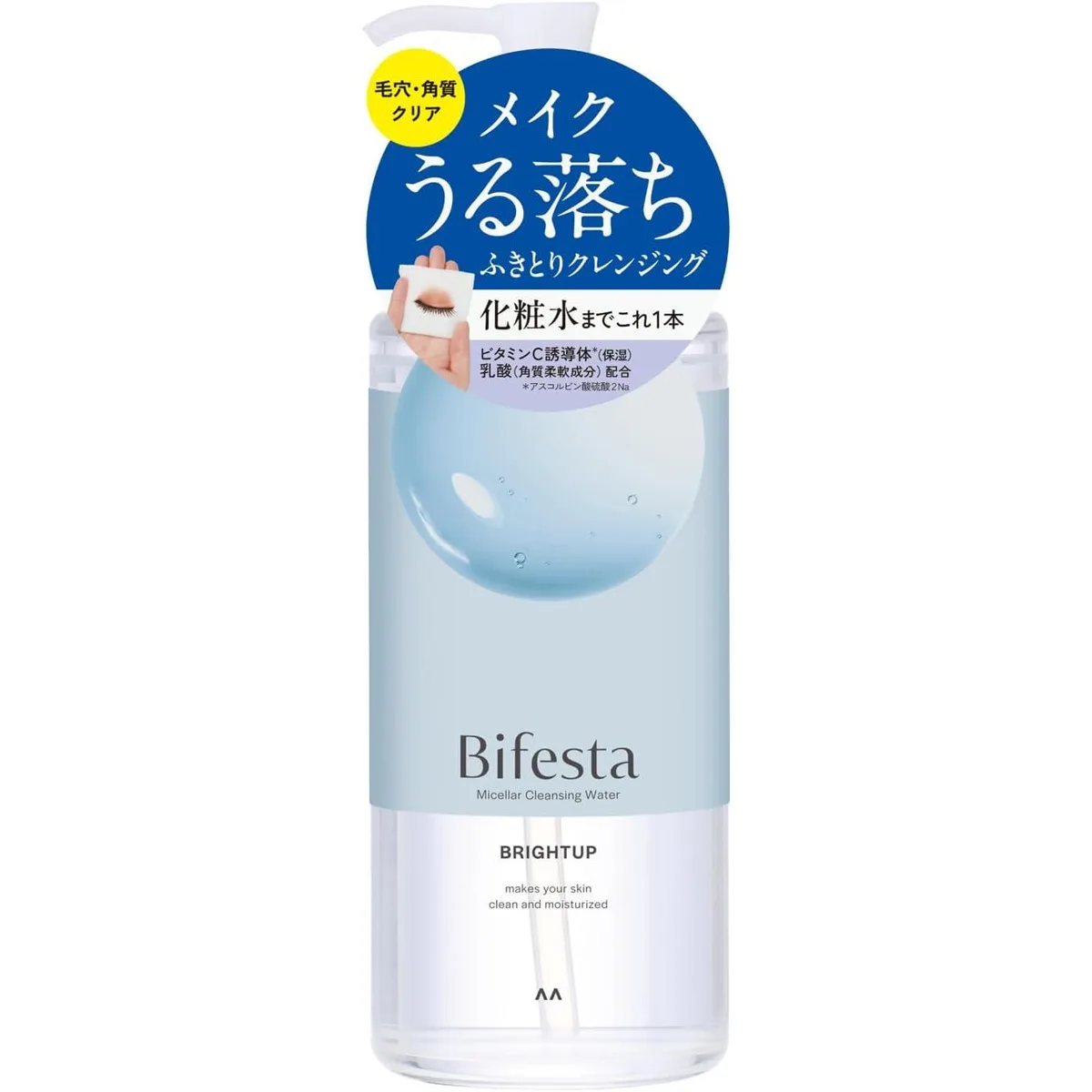
This is the brightening member of Bifesta's micellar family: it bundles a stable disodium ascorbyl sulfate vitamin C and a low dose of lactic acid into a no-rinse makeup remover, so a single daily swipe both takes off the day and gently chips away at the dead-cell buildup and dullness that flat micellar waters ignore. It's a brightening step disguised as a cleansing one.
Bifesta's Bright Up micellar water is the multitasker of the lineup: it removes makeup like the rest of the range but folds in a stable vitamin C derivative and a whisper of lactic acid for a gradual brightening, pore-clearing edge. The effect is subtle, not dramatic, but at twelve dollars for 400ml of fragrance-free formula, it's a low-stakes way to bundle two mild actives into your first cleanse.
The case for it
What would change this: The same active in a leave-on form would be judged on its evidence rather than its contact time.
Same rule for everyone. “Supporting role” is the verdict on 8,197 of 45,024 concern verdicts across the catalog; rule R6 decided 2,017 of them. Unchanged since September 5, 2026, engine 5.1.1.
Brand or formulator? Disclose a concentration or correct a fact →
The studies behind the evidence row
The case for it
What would change this: The same active in a leave-on form would be judged on its evidence rather than its contact time.
Same rule for everyone. “Supporting role” is the verdict on 8,197 of 45,024 concern verdicts across the catalog; rule R6 decided 2,017 of them. Unchanged since September 5, 2026, engine 5.1.1.
Brand or formulator? Disclose a concentration or correct a fact →
The studies behind the evidence row
The case for it
What would change this: The same active in a leave-on form would be judged on its evidence rather than its contact time.
Same rule for everyone. “Supporting role” is the verdict on 8,197 of 45,024 concern verdicts across the catalog; rule R6 decided 2,017 of them. Unchanged since September 5, 2026, engine 5.1.1.
Brand or formulator? Disclose a concentration or correct a fact →
The studies behind the evidence row
The case for it
What would change this: The same active in a leave-on form would be judged on its evidence rather than its contact time.
Same rule for everyone. “Supporting role” is the verdict on 8,197 of 45,024 concern verdicts across the catalog; rule R6 decided 2,017 of them. Unchanged since September 5, 2026, engine 5.1.1.
Brand or formulator? Disclose a concentration or correct a fact →
The studies behind the evidence row
Also listed for Large Pores — the actives here (Emulsifiers, Vitamin C, Lactic Acid, Hyaluronic Acid) are in our research queue for that concern; there is no verdict until their evidence rows are written. That is a gap in our table, not a mark against the product.
Excellent at the jobDoes what a cleanser is for, on every measure we can take from the label: pH match to skin, surfactant mildness.
A verdict is DermApproved’s assessment of how well a product’s ingredients fit a concern — never a claim about what the product treats. Evidence dots and collected reviews sit beside it and are never blended in. Rules 0.5.1 · evidence table ev-2026.09-r228 · how we decide
Most brightening lives in a serum you have to remember to apply, on a step you quietly skip the moment you are tired enough. Bifesta's Bright Up takes the opposite, very Japanese-drugstore tack: bolt the actives onto the one step nobody ever skips. Everyone takes their makeup off. So the logic goes, why not let that nightly swipe of micellar water also ferry a little vitamin C and a whisper of exfoliating acid across the skin while it works? That single idea is the entire reason this variant exists, and judged on those deliberately modest terms, it delivers exactly what it promises and not a milligram more.
The cleansing engine is the same gentle micellar chemistry that runs through the whole Bifesta range, which traces back to Mandom Corporation, a Japanese personal-care company that has been making this sort of thing since 1927. Mild non-ionic surfactants, polyglyceryl-10 laurate and polyglyceryl-3 caprylate, form micelles that trap and lift makeup, sunscreen, and sebum onto a cotton pad without the friction or stripping of a foaming wash. That part is unremarkable in the best sense. What separates Bright Up from its plainer Moist and Sebum siblings is what rides along in the water. Disodium ascorbyl sulfate is a water-soluble, unusually stable vitamin C derivative, and stability is precisely the trait you want in a thin watery formula where pure ascorbic acid would oxidize into uselessness almost on contact with air. It contributes a gentle, gradual antioxidant and tone-evening nudge rather than a high-potency dose. Beside it sits a low concentration of lactic acid, the largest and mildest of the alpha-hydroxy acids, dosed for a brief-contact, no-rinse format to loosen the dead-cell and keratin buildup that dulls the complexion and clouds the look of pores. Glycerin and hydrolyzed hyaluronic acid keep the formula from drying despite that acid, so the finish stays comfortable rather than tight.
In the hand and on the face, the experience is nearly identical to any plain micellar water, with one bonus you notice in the mirror: skin looks a shade clearer and brighter afterward, not merely clean. The water itself is thin, clear, and slightly slippery, the formula essentially scentless, fragrance-free, and alcohol-free, which keeps the irritation profile low and makes it friendly to a wider range of faces than its acid content might suggest. The result reads instantly cleaner with a faint freshness, and over four to six weeks of nightly use, that small per-swipe benefit compounds into a smoother, less congested, slightly more luminous look. It is the kind of quiet, accumulating payoff that suits people who want a little more from their routine without actually adding a step to it, and it sits at the heart of why this variant exists in the first place: Bifesta built its range around skin concern rather than offering one generic formula, with Moist chasing hydration, Sebum tackling oil, and Bright Up answering the very common demand for clearer, more luminous skin by folding mild actives into a step that was already happening.
Honesty about expectations is where this review has to earn its keep, because the gap between what the product is and what an optimistic reading of the name implies is the whole story. This is a no-rinse cleanser, not a treatment serum, and the actives sit at gentle, brief-contact levels by design. If you are fighting serious hyperpigmentation or chasing dramatic glow, a dedicated vitamin C serum and a proper leave-on exfoliant will outperform it comfortably, and that is not a knock, it simply is not what this is for. The brightening here is subtle and cumulative, and anyone expecting a transformation will come away underwhelmed. Bifesta's own derivative vitamin C also carries less robust clinical backing than pure L-ascorbic acid, which is exactly why the brightening claim earns a promising rather than well-established footing. The added lactic acid nudges this slightly more active than the plain Moist version, so very sensitive skin should patch test and may prefer the simpler formula. And because both an acid and a vitamin C derivative are involved, daytime sunscreen matters more than ever, both to protect the gradual work and because exfoliating acids can heighten sun sensitivity. Heavy waterproof makeup, finally, will need a dedicated remover or a cleansing oil first; this is a finishing and freshening cleanse, not a heavy-duty solvent.
The value math is the same easy win that runs through the rest of the line. Around twelve dollars buys a generous four-hundred-milliliter bottle that lasts two to three months of nightly use, with two mild actives folded in for roughly what a plain Western micellar water costs empty-handed. With a few thousand reviews and a 4.4 average behind it, the sentiment is settled enough to trust. For normal, combination, or oily skin troubled by dullness and congested-looking pores who want a fuss-free way to sneak a little brightening into a step they already do, it is an easy, low-stakes recommendation, provided you treat it as the gentle, gradual multitasker it genuinely is rather than a serum cleverly disguised as a cleanser. Dry, very reactive, or strongly active-sensitive skin, and anyone wanting visible results on a deadline, should look to the plain Moist version or a dedicated treatment instead.
The hero actives that drive this product's performance.
| Ingredient | Function | Evidence |
|---|---|---|
| Disodium Ascorbyl Sulfate (Vitamin C derivative) | A water-soluble, highly stable vitamin C derivative — the headline of the 'Bright Up' name — that survives in this watery formula far better than pure ascorbic acid would, lending a gentle, gradual antioxidant and tone-evening nudge as it's wiped on with makeup removal. | Limited for Dark Spots |
| Lactic Acid | The gentlest AHA, dosed low in a no-rinse cleanser to loosen the dead-cell and keratin buildup that dulls the complexion and clouds pores — the 'pore/keratin clear' angle that separates Bright Up from the plainer Moist version. | Established mechanism for Rough Texture · established mechanism |
| Polyglyceryl-10 Laurate + Polyglyceryl-3 Caprylate | The mild non-ionic micellar surfactants doing the actual cleansing — they trap and lift makeup, sunscreen, and sebum on a cotton pad, carrying the brightening actives across the skin in the same low-friction swipe. | Not yet assessed |
| Hydrolyzed Hyaluronic Acid + Glycerin | Humectants that keep the formula from drying despite the added acid, so the exfoliating Bright Up version still finishes comfortable rather than tight. | Plausible mechanism for Dullness |
Ingredient standings describe the active at treatment-level doses and vehicles; this product's own condition grades weigh its actual formula.
Water, Dipropylene Glycol, Polyglyceryl-10 Laurate, Polyglyceryl-3 Caprylate, PEG-6 Caprylic/Capric Glycerides, PEG-400, PPG-14 Polyglyceryl-2 Ether, Phenoxyethanol, Sodium Citrate, Glycerin, Sodium Myristoyl Glutamate, Disodium EDTA, Citric Acid, Disodium Ascorbyl Sulfate, Pullulan, Lactic Acid, PCA Ethyl Cocoyl Arginate, Hydrolyzed Hyaluronic Acid
cleanser
AM & PM
Sweep a saturated cotton pad over the face to remove makeup and lift dulling buildup as your first cleansing step. Because it carries a mild AHA and vitamin C, wear sunscreen during the day, and follow with a water cleanser at night after heavy makeup or sunscreen.
Skin looks instantly cleaner and a touch brighter; cumulative clarity and a smoother, less congested look build gradually over four to six weeks of daily use.
The brightening claim rests on two evidence-backed but deliberately gentle mechanisms. Disodium ascorbyl sulfate is a vitamin C derivative chosen specifically for stability: pure L-ascorbic acid degrades rapidly in water-based, non-airless formulas, whereas the sulfate derivative resists oxidation and converts to active ascorbic acid more slowly, trading peak potency for shelf-stable, gradual antioxidant and tyrosinase-inhibiting activity relevant to tone-evening. The catch is that derivative vitamin C generally has less robust clinical data than L-ascorbic acid, and in a brief-contact no-rinse format its delivered dose is modest — hence a 'promising' rather than 'well-established' rating for the brightening effect specifically. Lactic acid, the largest-molecule AHA, exfoliates more gently than glycolic and doubles as a humectant; at the low concentration appropriate for a leave-on-briefly cleanser, it loosens corneocyte adhesion enough to improve surface clarity and reduce the appearance of keratin buildup in pores without aggressive exfoliation. The mild non-ionic micellar surfactants and the glycerin/hyaluronic-acid humectants keep the barrier-disruption risk low, which is why the formula stays comfortable. The realistic scientific summary: sound, gentle cleansing with a genuine but understated brightening adjunct.
Dermatologists generally regard vitamin C derivatives like disodium ascorbyl sulfate as reasonable, well-tolerated options for gradual antioxidant support and tone-evening, while noting their clinical evidence is less extensive than that of L-ascorbic acid and their effect milder, particularly in a rinse-style format. Low-dose lactic acid is commonly endorsed for gentle exfoliation and improving dullness, with the standard caveat that AHAs increase photosensitivity, so daily sunscreen is advised. Clinicians typically frame a product like this as a convenient, low-irritation way to layer mild actives into an existing cleansing habit rather than a replacement for dedicated treatment products, and would steer anyone with significant hyperpigmentation toward higher-strength, longer-contact formulations.
Soak a cotton pad and sweep it gently across your face, eyes, and lips to dissolve and lift makeup and the day's buildup, repeating with fresh pads until clean. For light makeup, follow straight on with your toner and moisturizer; after heavy makeup or sunscreen, use a water cleanser as a second step. Because it carries a vitamin C derivative and lactic acid, apply a broad-spectrum sunscreen during the day. Suitable for daily morning and evening use.
At around $12 for 400ml, Bright Up is strong value, bundling a stable vitamin C derivative and a mild AHA into a large bottle that lasts two to three months of daily use — roughly the price of a plain Western micellar water with no actives at all. Coming from Mandom, an established Japanese manufacturer, the low cost reflects efficient drugstore positioning rather than a quality shortcut. The value caveat is one of expectation rather than price: you're paying drugstore money and getting drugstore-level active doses, so it's an efficient bonus on top of cleansing, not a substitute for a dedicated brightening serum if that's what your skin genuinely needs.
Normal, combination, or oily skin dealing with dullness, uneven tone, and congested-looking pores who want an effortless way to bundle gentle brightening actives into daily makeup removal. It suits anyone who likes the convenience of micellar water but wishes it did a little more.
Very sensitive or reactive skin may prefer the plain Moist version, since the added lactic acid makes Bright Up slightly more active. Anyone targeting serious hyperpigmentation or wanting a high-potency vitamin C should invest in a dedicated serum instead, as this delivers only a mild, gradual effect.
Ready to try Bifesta Micellar Cleansing Water Bright Up?
Buy at Amazon ♥Thin, clear, slightly slippery water
Essentially scentless
Tall pump bottle dispensing onto a cotton pad
Lifts makeup as easily as a basic micellar water but leaves skin looking a shade clearer and brighter; no sting for most users, though those very sensitive to acids may feel a faint tingle.
The 400ml bottle covers about 2 to 3 months of daily makeup removal
All Year
Bright Up grew out of Bifesta's move to differentiate its micellar range by skin concern rather than offer one generic formula. Where Moist targets hydration and Sebum targets oil, Bright Up answers the very common Asian-market demand for clearer, more luminous skin, folding mild actives into the convenience of micellar cleansing.
Bifesta is Mandom Corporation's makeup-cleansing line; Mandom is a Japanese personal-care company founded in 1927. The Bright Up variant extends the brand's long-running drugstore micellar range with a vitamin C derivative and mild AHA aimed at dullness and clogged pores.
A cleanser can't brighten skin because it washes off.
This is a no-rinse micellar water, so its vitamin C derivative and lactic acid stay in brief contact and aren't immediately washed away — the effect is mild and cumulative rather than dramatic, but it isn't nothing.
It carries a stable vitamin C derivative (disodium ascorbyl sulfate) and a low dose of lactic acid in a no-rinse formula, so wiping it on lifts dead-cell buildup and adds a gradual antioxidant, tone-evening effect. The result is subtle and cumulative, not an overnight transformation.
Bright Up adds vitamin C and lactic acid to target dullness, clogged-looking pores, and uneven tone, while Moist focuses purely on hydration with hyaluronic acid. Pick Bright Up for dull, congested-looking skin and Moist if your main concern is dryness.
It's still fragrance- and alcohol-free, but the added lactic acid makes it slightly more active than the Moist version, so very sensitive skin should patch test and may prefer the plainer formula.
Yes — it contains a mild AHA and vitamin C, both of which work best alongside daily sun protection, and AHAs can increase sun sensitivity, so a broad-spectrum SPF during the day is recommended.
It handles everyday and light makeup well, but stubborn waterproof mascara may need a dedicated remover, and heavy makeup or full sunscreen is best followed with a water cleanser as a second step.
Yes — at around twelve dollars for 400ml, it bundles brightening actives into a large, low-cost bottle, making it a cost-effective way to add a gentle vitamin C and AHA step to a routine.
Recurring themes our editors read across retailer reviews of this product — summaries in our words, not quotations, and not a substitute for your own patch test.
Removes makeup and leaves skin looking brighter
Helps with dull, congested-looking skin
No tight, dry feeling despite the acid
Generous 400ml bottle for the price
Brightening effect is subtle and gradual
Lactic acid can be too much for very sensitive skin
Not strong enough for heavy waterproof makeup alone
Verified answers from our questions library — the nuance a product page cannot carry.