Strawberry Legs: What Those Dark Dots Actually Are
The speckling isn't dirt trapped in your pores, which is exactly why scrubbing harder makes it worse — the real fix looks a lot like acne care, moved south.
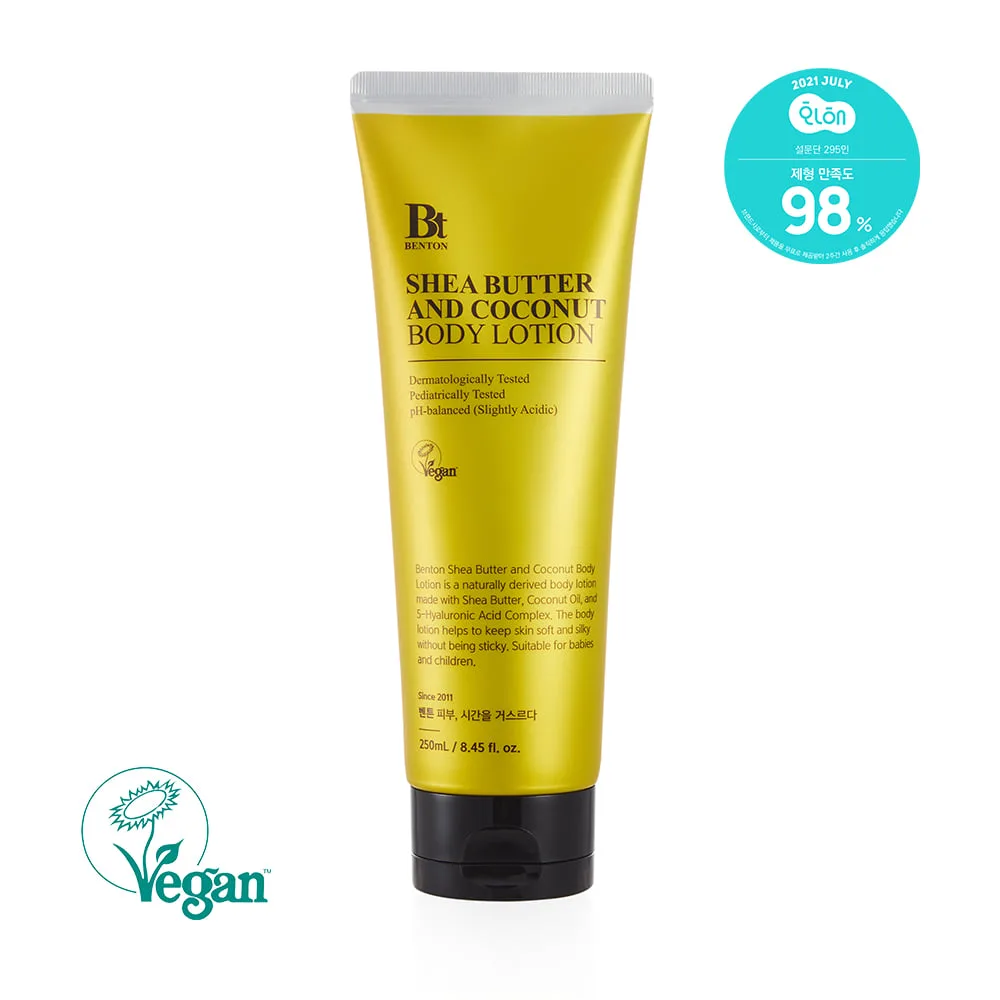
It is a genuinely plain, fragrance-free shea lotion in a category full of scented ones, with the fat and humectant content in the top ten to back its texture and a 2025 revision that finally put the coconut oil of the name into the bottle and took the essential oils out. The tube's talk of avoiding 'controversial' ingredients like silicones is the one thing about it that is not straightforward.
A plain, fragrance-free shea lotion that does what its name says, which for years it did not: the 2025 reformulation put the coconut oil in and took the essential oils out, and the result is a rich, gentle, family-safe body moisturiser with real fat and humectant content. It is priced a little high for its size and dressed in 'no controversial ingredients' marketing it does not need, but the tube itself is one of Benton's more honest products.
The current formula dates from 2025, so most of the sixty or seventy reviews visible on Korean exporters describe the earlier, essential-oil-scented version and cannot be read straight across. The assessment rests on the reformulated ingredient list confirmed from Benton's own page, on the well-established behaviour of shea, glycerin and coconut in a lotion base, and on the brand's own irritation test; how the new formula wears over a winter and on children's skin in practice is still being learned by its first buyers.
The case for it
Same rule for everyone. “Good choice” is the verdict on 9,564 of 45,024 concern verdicts across the catalog; rule R5 decided 9,072 of them. As of September 25, 2026, engine 5.1.1.
Brand or formulator? Disclose a concentration or correct a fact →
The studies behind the evidence row
The case for it
What would change this: A researched evidence row for the lead active would replace this with a verdict.
Same rule for everyone. “Good choice” is the verdict on 1,938 of 45,024 concern verdicts across the catalog; rule F2 decided 1,938 of them. As of September 25, 2026, engine 5.1.1.
Brand or formulator? Disclose a concentration or correct a fact →
Also listed for Winter Skin and Rough Texture — the actives here (Chamomile Extract, Shea Butter, Emulsifiers, Glycerin) are in our research queue for those concerns; there is no verdict until their evidence rows are written. That is a gap in our table, not a mark against the product.
As a body productNot judged: what a body product is for — real substance, not just slip, realistic to use daily — cannot yet be measured from the ingredient list (only fragrance load can).
A verdict is DermApproved’s assessment of how well a product’s ingredients fit a concern — never a claim about what the product treats. Evidence dots and collected reviews sit beside it and are never blended in. Rules 0.5.1 · evidence table ev-2026.09-r228 · how we decide
For the first five years of its life, the Benton Shea Butter and Coconut Body Lotion contained no coconut. The oil in the old formula was olive, at two percent, and the scent came from mandarin, rosemary and geranium essential oils, which is a strange set of choices for a brand whose reputation rests on fragrance-free skincare. In 2025 Benton quietly rebuilt it: the essential oils went, chamomile water came in third, coconut oil arrived at ninth, and a ceramide and a hyaluronic acid set were added to the lower half. The current tube is, for the first time, the product the name describes, and it is worth knowing that older reviews praising a citrus scent or complaining about irritation are describing a lotion that no longer exists.
What exists now is a straightforward, well-built shea lotion. Shea butter sits fourth in the list, which in a water-based lotion is a real dose, and it is what gives the cream its faintly waxy body and the protected feel it leaves behind; caprylic/capric triglyceride, cetyl ethylhexanoate, coconut and jojoba oils round out the occlusive side with slip. Glycerin is in the top seven, backed by betaine, panthenol and polyglutamic acid, so the lotion hydrates as well as it seals, and the olive-derived emulsifier pair holds all of that fat in a texture that spreads with a little warmth from the hands and sinks in within a minute or two. On dry arms and shins the effect is exactly what a shea lotion should do: tightness gone at once, flaking gone in a week or two, comfort that lasts most of the day. The few dozen reviewers on the exporters that carry it say rich without greasiness, and that is fair.
The skincare accents of the 2025 revision deserve a calm word. Ceramide NP and a five-weight hyaluronic acid set sit in the lower half of the list at cosmetic levels; they update the label's vocabulary and do not change what the lotion is. The soothing extracts below them, centella, skullcap, licorice, green tea, chamomile, are the same. A reader should buy this for the shea, the coconut and the glycerin, which do the work, and regard the rest as garnish.
Where the tube gets less straightforward is in what it says about itself. The brand's page promises a lotion 'without 20 cautious ingredients, volatile alcohols, and harmful controversial ingredients such as silicones'. Leaving out fragrance and drying alcohol is a genuine service to sensitive skin and children, who are the stated audience. Calling silicones harmful is not: dimethicone and its relatives are among the best-studied and least allergenic ingredients in skincare, sit in most dermatologist-recommended barrier creams, and their absence here is a texture choice, not a safety one. Benton makes a good lotion and then sells it with a fear it does not need to invoke, and a skeptical reader is right to notice the difference between the formula's honesty and the marketing's.
The one real caution is coconut oil, and it is a matter of where the lotion goes rather than whether to use it. Coconut is comedogenic on skin that breaks out, which for most people means the face, chest and upper back; Benton suggests the lotion as an all-in-one for face and body, and that advice suits dry, clear skin and not acne-prone skin. Chamomile, likewise, is a daisy-family plant and worth a patch test on children or adults with known ragweed or Asteraceae allergies.
Price is the honest weakness. Twenty-five dollars for 250 mL on the brand's site, and nearly twenty-nine on YesStyle, is a premium for a body lotion in a tube that a full-body user empties in about six weeks; comparable fragrance-free shea lotions from Western pharmacy brands sell for less per millilitre in bigger bottles. What the money buys is a well-chosen fat and humectant profile, a fragrance-free formula that is actually fragrance-free now, and the tidiness of a tube over a pump, which keeps a shea-rich cream cleaner. For a family with sensitive skin that is a fair trade; for someone who just wants a lot of body lotion, it is not the economical choice.
Two small practical notes that the tube does not give you. The first is timing: this is a lotion that rewards damp skin far more than most, because its humectants are generous and its shea layer is exactly what is needed to trap the water a shower leaves behind, so the two minutes between towelling off and dressing are the whole window. The second is the tube itself, which at 250 mL is on the small side for a body product and stiffens a little in a cold bathroom as the shea firms; a few seconds under warm water, or a squeeze held in the palm, brings it back to spreadable without changing anything else about it.
It also helps to know what the reformulation did not change. The texture, the absorption time and the all-day comfort are much as they were, so anyone who liked the old lotion's feel and disliked its scent has essentially been given the same product without the oils, and anyone who bought it for the citrus will find nothing to replace it. That is the right trade for a family lotion, and it is the one Benton's own face range made from the start.
So the recommendation is warm and slightly qualified. Dry, normal and sensitive body skin, including children's, will do well with this and will appreciate that it smells of nothing. Oily or breakout-prone chest and back skin should keep it to arms and legs. And everyone should read the ingredient list rather than the tube's warnings about other people's ingredients, because the list is where this lotion makes its case, and it makes it well.
The hero actives that drive this product's performance.
| Ingredient | Function | Evidence |
|---|---|---|
| Butyrospermum Parkii (Shea) Butter | Fourth in the list and the ingredient that gives this lotion its cushion: a semi-solid plant fat rich in oleic and stearic acids and unsaponifiable triterpenes, which slows water loss from the skin surface and leaves the faintly waxy, protective feel that distinguishes a shea lotion from a glycerin-and-ester one. | Established mechanism for Dryness · established mechanism |
| Cocos Nucifera (Coconut) Oil | Ninth in the list, restored to the formula in the 2025 revision after the earlier version named it and did not contain it; a lauric-acid-rich oil that adds slip and a light occlusive layer, and the one ingredient here that breakout-prone skin on the chest or back may want to watch. | Not yet assessed |
| Chamomilla Recutita Flower Water + Extract | Chamomile water replaces part of the water phase in third place, with the extract further down; it gives the lotion its faint herbal note in the absence of any added fragrance and a modest soothing gesture that suits a product marketed to children and sensitive skin. | Not yet assessed |
| Glycerin + Betaine + Panthenol + Polyglutamic Acid | The humectant side of the formula, glycerin in the top seven with betaine and panthenol behind it and polyglutamic acid, a large water-binding polymer, in the lower half; together they are why the lotion hydrates as well as it seals. | Established mechanism for Dryness · established mechanism |
| Cetearyl Olivate + Sorbitan Olivate | The olive-derived emulsifier pair that holds a shea-heavy oil phase in a spreadable lotion without the PEG surfactants the brand advertises leaving out; it is a mild system that leaves a soft, slightly dewy finish rather than a slick one. | Not yet assessed |
| Ceramide NP + Sodium Hyaluronate + Hyaluronic Acid | The skincare accents added in the 2025 reformulation, a single ceramide and a five-weight hyaluronic acid set in the lower half of the list; they let the tube speak the language of barrier care, while the shea, coconut and glycerin above them do the actual work. | Established mechanism for Dryness · established mechanism |
Ingredient standings describe the active at treatment-level doses and vehicles; this product's own condition grades weigh its actual formula.
Aqua (Water), Butylene Glycol, Chamomilla Recutita (Matricaria) Flower Water, Butyrospermum Parkii (Shea) Butter, Cetearyl Alcohol, Caprylic/Capric Triglyceride, Glycerin, Cetyl Ethylhexanoate, Cocos Nucifera (Coconut) Oil, Pentylene Glycol, 1,2-Hexanediol, Cetearyl Olivate, Sorbitan Olivate, Betaine, Arginine, Simmondsia Chinensis (Jojoba) Seed Oil, Panthenol, Butyrospermum Parkii (Shea) Butter Extract, Polyglutamic Acid, Ceramide NP, Sodium Hyaluronate, Hydrolyzed Sodium Hyaluronate, Hyaluronic Acid, Centella Asiatica Extract, Polygonum Cuspidatum Root Extract, Scutellaria Baicalensis Root Extract, Camellia Sinensis Leaf Extract, Glycyrrhiza Glabra (Licorice) Root Extract, Rosmarinus Officinalis (Rosemary) Leaf Extract, Chamomilla Recutita (Matricaria) Flower Extract, Tocopherol, Caprylyl Glycol, Carbomer, Xanthan Gum, Hydrogenated Lecithin
moisturizer
AM & PM
Apply to skin that is still damp from the shower, when the humectants have water to hold and the shea seals it in. It is rich enough to stand alone through most of the year; in deep winter Benton's own tip of mixing a drop of facial oil into a palmful is sensible for shins and elbows. Keep it off breakout-prone chest and back skin, where the coconut oil is a risk, and patch-test if chamomile or other daisy-family plants have caused reactions before.
Softness and relief from post-shower tightness are immediate, and the shea film keeps skin comfortable for most of the day. Rough, flaky patches on shins and arms smooth out over one to two weeks of daily use; it is a maintenance lotion for dry skin rather than a treatment for any condition.
The formula follows the textbook structure of an effective moisturiser: humectants to draw water into the stratum corneum, occlusives to slow its loss, and emollients to smooth the surface. Glycerin, betaine, panthenol and polyglutamic acid are the humectants; glycerin in particular has the strongest evidence of any, raising stratum corneum hydration and reducing transepidermal water loss for hours after a single application. Shea butter provides the occlusive layer, a plant fat whose stearic and oleic triglycerides form a semi-occlusive film and whose unsaponifiable fraction, rich in triterpene esters, has shown modest anti-inflammatory activity in vitro; coconut oil, caprylic/capric triglyceride and jojoba oil add lighter emollient slip. This architecture, rather than any single named ingredient, is why the lotion works, and the 2017 Cochrane review of emollients and moisturisers for eczema found that regular use of such products reduces flares and topical steroid use without any one formulation type proving superior, a finding that applies to dry skin generally.
The formula's specific choices have specific implications. Coconut oil is comedogenic in rabbit-ear and human back-patch models and is best kept off acne-prone areas, though it is unproblematic on the limbs; its lauric acid content has some antibacterial activity that is irrelevant at this dose. Chamomile, present as flower water and extract, contains bisabolol and apigenin with mild anti-inflammatory data and is also a recognised Asteraceae allergen, relevant to the children the lotion is marketed for. Ceramide NP and the hyaluronic acid fractions in the lower half of the list are at cosmetic concentrations; ceramide creams with clinical data use far higher levels in defined lipid ratios, and hyaluronic acid on the body surface acts as a humectant comparable to the glycerin already present.
The absence of silicones has no evidentiary basis as a benefit. Dimethicone is a Category I skin protectant in the US over-the-counter monograph, non-comedogenic and non-sensitising in decades of use, and its omission here affects the lotion's slip and finish rather than its safety.
For dry skin that is not inflamed, the guidance that has held for decades is simple: moisturise daily, generously, with a product that is fragrance-free and pleasant enough to keep using, and this lotion meets that description more cleanly now than it did before its reformulation. Practitioners advising families with sensitive-skinned children look first for the absence of fragrance and essential oils, both satisfied here, and next for a real occlusive content, which the shea butter supplies; the chamomile is the one line they would flag for a patch test in anyone with a daisy-family allergy. The coconut oil prompts the usual advice to keep the product off the face, chest and back of anyone who breaks out, and the brand's suggestion that it doubles as a facial moisturiser is not one dermatologists would extend to acne-prone patients. On the marketing, the clinical view of silicones is settled enough that a claim describing them as harmful is regarded as misinformation rather than caution, and patients are told plainly that dimethicone-based barrier creams remain among the most recommended in dermatology. For eczema, the lotion is a reasonable between-flare maintenance product and not a substitute for prescribed treatment on active skin.
Pat the skin damp after showering, then squeeze a walnut-sized amount of lotion into the palm, warm it briefly between the hands so the shea softens, and smooth it over arms, legs and torso in long strokes, working a little extra into elbows, knees and shins. It sinks in within a couple of minutes. Use it once a day, or morning and evening in cold weather; for very dry patches Benton suggests mixing a drop of facial oil into a palmful rather than reaching for a heavier cream, and a thin layer of petrolatum over cracked heels at night does the rest. Keep it off breakout-prone chest, back and facial skin, and patch-test on the inner arm before first use on a child or on anyone with a daisy-family allergy.
Twenty-five dollars for 250 mL puts this at roughly ten cents a millilitre, which is a premium for a body lotion; fragrance-free shea and glycerin lotions from Western pharmacy brands run at half that in larger bottles, and YesStyle's near-twenty-nine-dollar price widens the gap. A full-body user empties the tube in about six weeks, an arms-and-legs user in three months. What justifies the premium is a well-proportioned fat and humectant profile, a genuinely fragrance-free formula since 2025, and a tube format that suits a family bathroom; what does not is the ceramide and hyaluronic acid garnish or the anti-silicone marketing. For sensitive-skinned households that value an unscented Korean lotion in a clean tube it is fair value, and for anyone buying body lotion by the litre it is not.
Dry, normal and sensitive body skin, families looking for a fragrance-free lotion that children and adults can share, and anyone who wants a shea-based moisturiser with enough fat in it to last the day without a scented, slick finish. It suits winter use and people who have reacted to essential oils in other body products.
Oily or acne-prone skin on the chest, back or face should keep this to the limbs or choose an oil-free lotion, given the coconut oil. Anyone with a daisy-family allergy should patch-test for the chamomile, and buyers who want a lot of body lotion for the money will find larger, cheaper fragrance-free options elsewhere.
Ready to try Benton Shea Butter and Coconut Body Lotion?
Buy at Amazon ♥A thick white cream-lotion with a faint waxy body from the shea, spreading smoothly with a little warmth from the hands and settling to a soft, cushioned, slightly dewy finish that is not slick.
No fragrance added; a faint natural chamomile-and-shea note that fades within minutes of application.
A 250 mL squeeze tube with a flip cap, in a bamboo-paper carton; the tube keeps the shea-rich cream cleaner than a jar would and travels well, though it is small for a body product.
It feels richer than a typical Korean body lotion and takes a minute to sink in, leaving a comfortable, protected feel rather than a dry-touch one. There is no scent, no tingling and no adjustment period. Very oily or breakout-prone chest skin may find it heavy; everyone else will simply find their shins stop flaking within a week or two.
Around six weeks of daily full-body use, or three months on arms and legs; the 250 mL tube is on the small side for a body lotion.
fall winter
Benton's Shea Butter line arrived around 2020 as a family body range, a lotion and a hand cream built on shea and coconut for the dry-skin market that Korean pharmacies serve with children in mind. The original lotion carried mandarin, rosemary and geranium essential oils and, oddly, olive oil where the name promised coconut; the 2025 reformulation dropped the oils, added chamomile water, a ceramide and a hyaluronic acid set, and restored the coconut, making the current tube both truer to its name and more consistent with the brand.
Benton has made fragrance-free, short-list skincare in Seoul since 2011 and publishes brand-commissioned Korea Intertek tests for its products. The Shea Butter line is its older body range, reformulated in 2025 to drop the essential oils the original carried, which brought it back in line with the house rules.
A lotion without silicones is safer or better for the skin than one with them.
Silicones such as dimethicone are among the best-studied, least allergenic ingredients in skincare and are in most dermatologist-recommended barrier creams. Leaving them out is a formulation choice that affects texture, not safety; Benton's 'without controversial ingredients' claim trades on a fear the evidence does not support, and the lotion is good for reasons that have nothing to do with it.
Coconut oil in a body lotion will clog pores everywhere it is applied.
Coconut oil is comedogenic on skin that breaks out, which for most people means the face, chest and upper back. On arms, legs and hands it is an ordinary emollient, and at ninth position in a water-based lotion it is present at a modest level. Keep the lotion off acne-prone areas and the rest of the body is fine.
The ceramide and hyaluronic acid in the 2025 formula make it a barrier-repair lotion.
They sit in the lower half of the list at cosmetic levels and were added to update the label's vocabulary. The lotion's ability to hold water in dry skin comes from shea butter, coconut oil, glycerin and betaine in the top half; it is a good moisturiser, not a clinical barrier product.
Yes, the current formula has no added fragrance and, since the 2025 reformulation, no essential oils either. The faint natural scent comes from chamomile water and the shea itself. The earlier version contained mandarin, rosemary and geranium oils, so older reviews mentioning a citrus scent describe the previous tube.
Benton suggests it as an all-in-one lotion for body and face, and on dry, non-acne-prone facial skin it works as a simple night moisturiser. The coconut oil and cetyl ethylhexanoate make it a poor choice for breakout-prone faces, where a lighter, oil-free moisturiser is safer.
It is marketed for the whole family and is fragrance-free, alcohol-free and free of essential oils in its current form, which are the main things to look for. Chamomile can trigger reactions in children with daisy-family allergies, so a patch test on the inner arm is sensible before the first full application.
The 2025 revision removed the mandarin, rosemary and geranium essential oils, added chamomile water, ceramide NP and a hyaluronic acid set, and replaced the olive oil of the old formula with the coconut oil the name always promised. It brought the lotion in line with the brand's fragrance-free house style and made it more suitable for sensitive skin.
It is a reasonable everyday lotion for dry, eczema-prone skin between flares, because it is fragrance-free with real occlusive content, but it is not a treatment. On active patches use a prescribed anti-inflammatory and a plain emollient, and watch for chamomile sensitivity.
It is a lotion with shea butter fourth in the list, so it is richer than a typical Korean body milk but lighter than a whipped body butter, and it absorbs within a minute or two. For very dry winter skin Benton suggests adding a drop of oil to it rather than switching to a heavier product.
Recurring themes our editors read across retailer reviews of this product — summaries in our words, not quotations, and not a substitute for your own patch test.
Rich without greasiness and absorbs well
No fragrance, safe for children and sensitive skin
Keeps skin soft through the day
Pricey for the size
Tube is small for a body lotion
Older version's essential oils bothered some skin