Industry & Trends News
The Collagen Supplement Question: Does Drinking It Actually Do Anything?
Your stomach dismantles collagen into rubble before it reaches your skin — so why do the human trials keep finding a small, real effect?
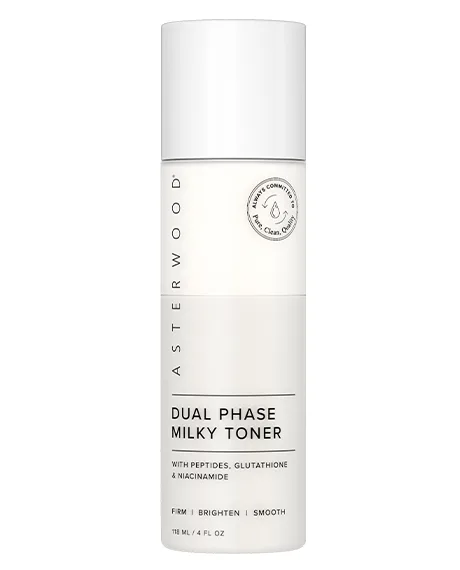
It is a two-layer, shake-to-combine emulsion — a K-beauty format Asterwood had never used — that carries the brand's Matrixyl 3000 sixth in the list and niacinamide fourth, placed above the emulsifiers, in a toner step where most brands offer only humectants. The castor-oil phase gives it a richer slip than a typical milky toner, and the glutathione on the label is the newest and least evidenced thing in the bottle.
A shake-to-mix emulsion that puts niacinamide fourth and Matrixyl 3000 sixth in a toner — more active than most serums at twenty dollars — under a cushiony castor-oil phase and a glutathione headline that is mostly a name. Dewy, fragrance-free, richer than a typical milky toner, oddly scented for a minute, and four months old. A good step for dry-to-normal skin; skip it if you are oily, vegan or shopping for the glutathione.
Eight reviews four months after launch — two of them low and about the smell — and Amazon and TikTok Shop counts that could not be retrieved this session leave this toner with no meaningful user record. The glutathione evidence is thin even at doses far above what this list implies, and the peptide claims rest on supplier data; the assessment is a reading of ingredient order against the literature, not a report on results the brand has never tested.
The case for it
What would change this: A declared concentration would move this to a firmer reading of the dose.
Same rule for everyone. “Promising” is the verdict on 7,858 of 45,024 concern verdicts across the catalog; rule R9p decided 7,858 of them. As of September 25, 2026, engine 5.1.1.
Brand or formulator? Disclose a concentration or correct a fact →
The studies behind the evidence row
The case for it
What would change this: A declared concentration would move this to a firmer reading of the dose.
Same rule for everyone. “Good choice” is the verdict on 9,564 of 45,024 concern verdicts across the catalog; rule R5 decided 9,072 of them. As of September 25, 2026, engine 5.1.1.
Brand or formulator? Disclose a concentration or correct a fact →
The studies behind the evidence row
The case for it
What would change this: A declared concentration would move this to a firmer reading of the dose.
Same rule for everyone. “Promising” is the verdict on 7,858 of 45,024 concern verdicts across the catalog; rule R9p decided 7,858 of them. As of September 25, 2026, engine 5.1.1.
Brand or formulator? Disclose a concentration or correct a fact →
The studies behind the evidence row
The case for it
What would change this: A declared concentration would move this to a firmer reading of the dose.
Same rule for everyone. “Good choice” is the verdict on 9,564 of 45,024 concern verdicts across the catalog; rule R5 decided 9,072 of them. As of September 25, 2026, engine 5.1.1.
Brand or formulator? Disclose a concentration or correct a fact →
The studies behind the evidence row
Also listed for Rough Texture — the actives here (Castor Oil, Niacinamide, Peptides, Hyaluronic Acid) are in our research queue for that concern; there is no verdict until their evidence rows are written. That is a gap in our table, not a mark against the product.
Does the jobDoes what a toner is for: not alcohol-driven, adds something real. Not measured from the label: restores skin pH, plays well with what follows.
A verdict is DermApproved’s assessment of how well a product’s ingredients fit a concern — never a claim about what the product treats. Evidence dots and collected reviews sit beside it and are never blended in. Rules 0.5.1 · evidence table ev-2026.09-r228 · how we decide
Every use begins with a shake. Two layers sit in the bottle — a clear watery one below, a cloudy oily one on top, a neat line between them — and the instruction is to shake until they combine into something the brand calls cloud-like, tip a little into the palm, and press it on. It is a small ritual and it is the product's whole personality. Bi-phase toners had a good year on TikTok in 2025 as the 'skin flooding' step between cleanser and serum, and Asterwood — an Amazon peptide-serum brand until its 2025 rebrand sent it looking for K-beauty formats — launched its own in May 2026. The question the ritual raises is what the two layers are keeping apart, and the answer is more interesting than the format: an oil phase that makes this richer than most milky toners, and a water phase that carries more active than most toners bother with.
Read the list. Water, then caprylic/capric triglyceride and castor seed oil — the oil phase, and the castor is the choice that matters, because it is viscous and glossy where most milky toners use a thin ester, and it is why the shaken emulsion has a cushioned slip rather than a watery one. Then niacinamide, fourth, above the glycol and the emulsifier: in a seventeen-line formula that is a working placement, and niacinamide is the ingredient here with independent evidence for the tone-and-texture claims on the bottle. Then Matrixyl 3000, declared by name as the brand always does, at sixth — high for a toner, and a sensible place to put a peptide, since a toner is patted over the whole face twice a day and gets more skin than a serum dotted on lines. Further down: a silicone for slip, gluconolactone as a gentle polyhydroxy acid and chelator, milk protein, glutathione at fourteenth, sodium hyaluronate near the end.
Glutathione is the word on the front, and it is the weakest thing in the bottle. The tripeptide has an antioxidant role in cells and a theoretical one in melanin synthesis, and it has become a lightening buzzword through oral and intravenous use in some markets; the reviews of that evidence describe the hype as running well ahead of the data, and topical glutathione has only a few small trials at concentrations this toner does not approach. Fourteenth in the list, behind the milk protein, it is a name doing marketing. The brightening the bottle promises, if you see it, will be the niacinamide's.
In use, once shaken, it is a genuinely pleasant step. The emulsion is thin but slippery, spreads with the hands in a few presses, and sets in about a minute to a soft, dewy glow with no tackiness — the castor oil gives it a richness that a dry face in October recognises immediately as a good thing. On normal skin it can stand in for a light serum; on dry skin it wants the brand's cream over it; on oily skin, by the second day, the castor oil is a mistake, and fungal-acne-prone skin should note the esters. It is fragrance-free and alcohol-free and does not sting.
It is not odourless, and this is the complaint that appears in the lower-rated reviews. Fragrance-free products smell of their raw materials, and here the milk protein and the oils produce a faint sour, milky note on application — not spoilage, and gone within a minute, but noticeable enough that a quarter of the tiny review pool mentions it. The milk protein also makes this the rare Asterwood product that is not vegan, which the brand is not loud about.
The format has its own tax. Shake insufficiently and you get a dose that is mostly oil or mostly water, both of which feel wrong; use a cotton pad and it drinks the oil phase; pour carelessly from the screw-cap bottle and you waste a week's worth. A dropper or pump would have suited it better. And with four months on sale and eight reviews, the product has no record — the enthusiasm is for a texture, not for any brightening or firming anyone has yet measured.
Twenty dollars for four ounces is fair for what the list shows: a leave-on with a real niacinamide dose and a properly placed licensed peptide, in a cushioned fragrance-free emulsion, from a brand that has been transparent about its peptides for a decade and has never run a trial. It is better value than the glutathione on the front suggests, because the glutathione is not what you are buying. Buy it as a rich, active milky toner for dry-to-normal skin, shake it like you mean it, forgive the first minute's smell, and give the niacinamide a month. Or, if you are oily, vegan, or came for the lightening, put the money toward the serum with the same peptides and none of the castor oil.
The hero actives that drive this product's performance.
| Ingredient | Function | Evidence |
|---|---|---|
| Niacinamide | Fourth in the list, directly after the two oils that make up the milky phase — a placement that in a seventeen-line formula points to a working dose in the low single digits; it is the ingredient carrying the tone-and-texture claim with real evidence, and the reason this toner does something a plain hydrating one would not. | Emerging for Hyperpigmentation |
| Palmitoyl Tetrapeptide-7 + Palmitoyl Tripeptide-1 (Matrixyl 3000) | The brand's flagship peptide pair, declared by trade name and placed sixth — high for a toner and consistent with the supplier's blend used at its intended dose; in a leave-on that is patted over the whole face twice a day it gets more contact time than a serum dotted on problem spots, which is the sensible logic of putting peptides in this step. | Limited for Aging |
| Glutathione | The brightening headline, sitting fourteenth behind the milk protein, where it contributes antioxidant thiol activity and a theoretical nudge on tyrosinase; topical glutathione has thin evidence and this dose is low, so the 'brightens' on the bottle belongs mostly to the niacinamide above it, with glutathione as the name that sells it. | Not yet assessed |
| Caprylic/Capric Triglyceride + Castor Seed Oil | The second and third ingredients form the oil phase that floats on top before shaking — a light fractionated coconut ester and a glossy, viscous castor oil that give the mixed emulsion its cloud-like, cushioned slip; castor is the choice that makes it feel richer than a typical milky toner and the one that oily skin may find a touch too much. | Not yet assessed |
| Milk Protein | A hydrolysed dairy protein placed thirteenth that adds a soft film and some amino-acid humectancy — the 'milky' in the name is partly literal — and it is the ingredient the several reviewers who mention an off smell are most likely reacting to; it also means the toner is not vegan, unlike most of the range. | Not yet assessed |
| Sodium Hyaluronate + Gluconolactone | The humectant tail: sodium hyaluronate near the end for surface water-binding, and gluconolactone — a gentle polyhydroxy acid doing double duty as a chelator and a mild hydrating exfoliant — placed above the preservative; together they supply the 'bouncier' feel and keep the water phase from feeling like plain water once the oils are shaken in. | Established mechanism for Dehydration · established mechanism |
Ingredient standings describe the active at treatment-level doses and vehicles; this product's own condition grades weigh its actual formula.
Water, Caprylic/Capric Triglyceride, Ricinus Communis (Castor) Seed Oil, Niacinamide, Butylene Glycol, Palmitoyl Tetrapeptide-7, Palmitoyl Tripeptide-1 (Matrixyl 3000), Polyglyceryl-10 Oleate, Phenyl Trimethicone, Gluconolactone, Sodium Benzoate, Triethylhexanoin, C13-15 Alkane, Milk Protein, Glutathione, Sodium Gluconate, Sodium Hyaluronate, Sodium Hydroxide
toner
AM & PM
Shake hard until the layers turn uniformly milky, then press it onto clean skin with the hands rather than a cotton pad, which soaks up the oil phase. Let it settle for a minute before serum; because it already carries oils and peptides, it can stand in for a light hydrating serum on normal skin, and dry skin can follow with the brand's cream. Keep strong acids and pure L-ascorbic acid to another time of day so a low-pH layer does not sit under the peptides.
Immediate: a dewy, cushioned feel and a soft glow from the oil phase. Two to four weeks: the niacinamide's smoothing of texture and evening of tone begins to show. Eight to twelve weeks: the peptides' subtle effect on fine lines, if any, becomes visible. Meaningful lightening of dark spots from the glutathione should not be expected at this dose.
The headline ingredient deserves the most scrutiny and supports the least. Glutathione is a thiol tripeptide central to intracellular redox balance, and its antimelanogenic reputation rests on its capacity to inhibit tyrosinase directly and indirectly and to shift melanin synthesis from eumelanin toward the lighter phaeomelanin. In their 2016 review in the Indian Journal of Dermatology, Venereology and Leprology, Sonthalia, Daulatabad and Sarkar assessed the evidence for glutathione as a lightening agent across oral, intravenous and topical routes and were blunt about the gap: intravenous use, though popular, has no evidence of efficacy and enough adverse events that the Philippine FDA issued a public warning; the topical and oral routes had, at the time, three randomised controlled trials supporting a lightening effect with a good safety profile; and the authors described the depigmentary hype as potentially 'a marketing gimmick' pending larger, longer, placebo-controlled trials. Those topical trials used concentrations around two percent applied as a lotion or cream. In this toner glutathione is fourteenth of seventeen ingredients, behind the milk protein and the sodium benzoate, and no concentration is stated; the fair conclusion is that it functions, at most, as a minor antioxidant here.
The active with evidence and placement is niacinamide. At fourth position, above the emulsifier, its concentration is plausibly in the two-to-five-percent range in which controlled trials have shown reductions in hyperpigmented spots, blotchiness, sallowness and fine lines, along with improved barrier function through increased ceramide synthesis — the outcomes the toner's front label actually lists. Matrixyl 3000, at sixth, follows the brand's usual signal-peptide mechanism — palmitoyl tripeptide-1 as a collagen-fragment mimic and palmitoyl tetrapeptide-7 as an interleukin-6 suppressor — with supplier data describing modest wrinkle-depth changes over two to three months at defined doses; a toner's twice-daily whole-face application is a reasonable vehicle for it.
The bi-phase format is a delivery choice with a rationale. Keeping the oil phase — caprylic/capric triglyceride and castor oil with a light polyglyceryl emulsifier — separate from the water phase until shaking avoids a heavy emulsifier load and lets the oils deposit as a thin, glossy emollient film over the hydrated surface, which is where the dewy finish and the barrier comfort come from; castor oil's ricinoleic acid is unusually viscous and humectant among plant oils, and is why the emulsion feels richer than the format usually does. Gluconolactone is a polyhydroxy acid that hydrates and chelates without the irritation of alpha-hydroxy acids, and sodium hyaluronate near the end adds surface humectancy. Milk protein contributes a film and amino acids, and is the likely source of the sour note reviewers describe.
Clinically the interesting thing about this toner is that its most evidenced ingredient is not the one on the front. Dermatology regards niacinamide as one of the better-supported cosmetic actives for tone, texture and barrier function, and at fourth in the list it is placed to work; the peptides draw the usual low-risk, supplier-evidenced shrug. Glutathione is where skin specialists would push back — its lightening reputation is largely driven by oral and intravenous marketing in some markets, its topical data are thin and use concentrations far above what a fourteenth-position ingredient implies, and a patient with genuine hyperpigmentation would be directed toward a retinoid, azelaic acid, a stable vitamin C or, where appropriate, hydroquinone, with this toner as a hydrating support at best. The castor-oil richness would be flagged for acne-prone patients, the milk protein for those with dairy allergy, and the smell as harmless. For dry-to-normal skin wanting a fragrance-free hydrating step with a real niacinamide dose, it is a reasonable choice; for lightening, it is not the tool.
Shake the bottle vigorously — ten seconds or so — until the clear and milky layers turn into a uniform cloudy liquid; do this before every single use, since the layers separate within minutes. Pour a small amount, about a coin's worth, into your palm and press it over clean, dry skin with your hands, avoiding cotton pads, which soak up the oil phase. Let it settle for a minute, during which the faint sour smell fades. Follow with a serum if you use one, and with moisturizer and sunscreen in the morning. Normal skin can go straight to moisturizer; oily skin should test it on one cheek for a few days before committing. Keep strong exfoliating acids and pure L-ascorbic acid to a different time of day. Store it out of direct light and use it within a few months of opening.
Twenty dollars for four ounces of a fragrance-free leave-on carrying niacinamide at fourth position and a named peptide blend at sixth is fair value — more active than most toners and many serums at the price, and a bottle lasts about two months at twice-daily use. There is no larger size. The value is best for dry-to-normal skin that treats it as a toner-and-light-serum in one and cares nothing for the glutathione; it is worse for anyone who paid for the lightening headline, since the dose does not support it, and zero for oily, fungal-acne-prone or vegan buyers, who cannot use it. Asterwood's decade of clear peptide labelling counts in its favour; a four-month-old product with eight reviews and no testing counts against paying for anything beyond what the ingredient order shows. Priced against what is verifiable, it is about right.
People with dry, normal or combination skin who want a fragrance-free toner that behaves like a light serum — a real niacinamide dose, a named peptide blend and a cushioned, dewy oil phase — and who enjoy a small ritual and can forgive an odd smell for a minute. It suits anyone already using Asterwood's serums who wants the same peptides in an earlier step.
Oily, acne-prone or fungal-acne-prone skin will find the castor-oil phase too rich; vegans and anyone with a dairy allergy should note the milk protein; and anyone buying it for the glutathione's lightening promise should know the dose does not deliver it. Those who dislike shake-to-mix formats or prefer a product with a track record have better options.
Ready to try Asterwood Dual Phase Milky Toner?
Buy at Amazon ♥Two visible layers — a clear watery phase below, a milky oil phase above — that shake into a thin, cloud-like emulsion with a glossy, cushioned slip that sets to a soft, dewy finish in about a minute
Fragrance-free, but not odourless: a faint sour, slightly milky note from the milk protein and oils on application that several reviewers dislike and that dissipates within a minute
White four-ounce bottle with a screw cap and a visible dual-phase separation line — attractive, but a pump or dropper would waste less product than pouring into the palm
The first application is a small ritual: shake until the two layers turn uniformly milky, tip a little into the palm, press it on, and notice a soft glow and a cushioned feel within a minute. The faint sour smell on application is the most common first-week surprise; it fades quickly and does not signal spoilage. No sting, no purge and no adjustment period; oily skin will notice by day two whether the castor oil is too much.
About two months used twice daily on the face; three months if used once a day
fall winter
After a 2025 rebrand and a move onto TikTok Shop, Asterwood began releasing formats that look more like Seoul than Amazon: a vegan PDRN serum, a cica gel-cream, copper peptide creams, and, in May 2026, this dual-phase toner. Milky and bi-phase toners were trending through 2025 as the 'skin flooding' step between cleanser and serum, and the brand built one around its own peptide blend and a glutathione headline to give it a brightening angle.
Asterwood, an Amazon peptide-serum brand since 2014 that rebranded from 'Asterwood Naturals' in 2025, has been launching K-beauty-styled formats through 2026, of which this shake-to-mix toner is one. It declares its licensed peptide blend by name on the label and publishes no research; a decade of retail reviews and legible ingredient lists are its credentials, not clinical or dermatological backing.
Glutathione in a toner will lighten skin or fade dark spots.
Topical glutathione has only a handful of small trials behind it, the reviews of the evidence describe the lightening hype as running well ahead of the data, and in this toner it sits fourteenth in the list behind the milk protein. Any brightening you see will come from the niacinamide placed fourth; the glutathione is the name that sells it.
The two layers mean the toner is unstable or has separated by mistake.
The separation is by design — a water phase and an oil phase held apart without a heavy emulsifier so they can be shaken together fresh each time. It must be shaken vigorously before every use; applying it unshaken gives a dose that is mostly oil or mostly water, and both feel wrong.
It is fragrance-free, so nothing masks the raw materials: the milk protein and the castor and triglyceride oils give a faint sour, milky note on application that several reviewers notice. It fades within a minute and does not mean the product has spoiled. If the smell bothers you, applying a serum straight over it covers it.
Not meaningfully at this dose. Glutathione is fourteenth in the list, and topical glutathione's lightening evidence is thin even at higher concentrations. The toner's tone and texture benefits come from niacinamide, which sits fourth and is at a plausible working level.
No. It contains milk protein, a dairy-derived ingredient, which sets it apart from most of the brand's vegan range. Anyone avoiding dairy in skincare, or with a milk allergy, should choose one of the brand's serums instead.
Shake the bottle hard until the clear and milky layers combine into a uniform cloudy liquid, then pour a small amount into your palm and press it over clean skin. Use your hands rather than a cotton pad, which absorbs the oil phase, and let it settle for a minute before serum. Shake before every single use.
Probably not. Castor oil is the third ingredient and a fractionated coconut ester the second, so the shaken emulsion is richer than most milky toners; it suits dry, normal and combination skin best. Oily and fungal-acne-prone skin will find it heavy and may prefer a watery niacinamide toner.
On normal skin, often yes. It carries Matrixyl 3000 sixth in the list and niacinamide fourth, plus oils and hyaluronate, which is more than many serums offer. Dry skin will still want a cream over it; anyone using a retinol or vitamin C serum can layer that on top after it settles.
Recurring themes our editors read across retailer reviews of this product — summaries in our words, not quotations, and not a substitute for your own patch test.
Cloud-like milky texture that leaves a soft dewy glow
Feels like a toner and a light serum in one step
No fragrance or sting
Hydrating enough to skip a serum on normal skin
An off, sour smell on application that fades within a minute
Must be shaken vigorously every time or the oil phase dominates
Too rich for oily skin
Too few reviews to confirm brightening or firming