1,2-Hexanediol
Products with 1,2-Hexanediol
 Kid-Approved Quick Moisturizer
 Kids Sensitive Skin Face & Body Gel Cream
A fast, cool, oat-forward gel-cream that a squirming child will actually let you finish applying, with a preservative system more considered than most of the children's aisle. It hydrates well for its weight, costs eight dollars, and is let down by one decision: there is fragrance in a tube labelled for sensitive skin. Great for ordinary kid skin, a caveat for eczema.
 K-Beauty HA Serum
 Hyaluronics Serum
Mary & May's Hyaluronics Serum is a minimalist 6-form hyaluronic acid serum with sodium hyaluronate at substantial 5050ppm (0.5%) concentration plus five additional HA molecular weight forms. At $18.90 for 30ml the value is exceptional. Fragrance-free, vegan, fungal-acne safe — genuinely suits all skin types including very sensitive.
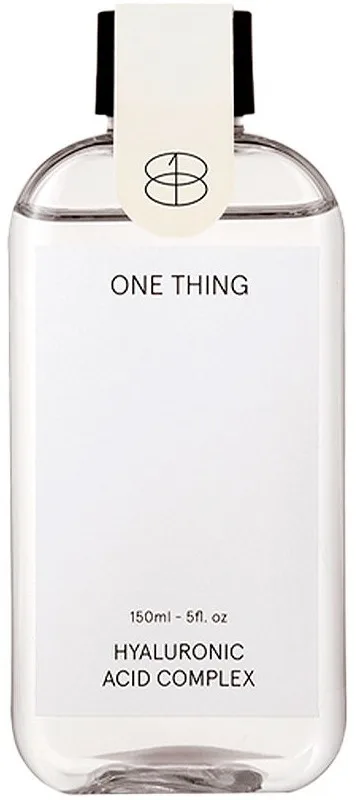 Minimalist Hydration MVP
 Hyaluronic Acid Complex
One Thing's Hyaluronic Acid Complex is the minimalist K-beauty essence that proved a $14 bottle of nothing-but-HA could out-perform fancier competitors. Five molecular weights of hyaluronic acid in a watery, fragrance-free base — nothing flashy, nothing irritating, and almost impossible to layer wrong. A genuinely excellent hydrator for any skin type.
 Honey-Gel Moisturizer
 Balancing Gel
A minimalist seven-ingredient gel that moisturizes far more than its name and format imply — around 91% milk vetch root with jojoba, in a distinctive honey-like texture that melts to a bouncy, non-greasy finish. Gentle, fragrance-free, fungal-acne-safe, and a strong value. The 'balancing' label is a touch misleading: it's a gel-cream for combination-to-dry skin, not a light oil-control gel.
 Four-Ingredient Cooling Splash
 Green Tea Soothing Water
Ninety percent green tea water, 3 percent green tea extract, a glycol and a preservative, and that is the whole product. It cools flushed skin, gives reactive faces something with nothing in it to react to, and costs about as much as a decent bag of tea. It does not hydrate and does not pretend to; as a compress water and pre-serum splash for oily, sensitive or overheated skin, it is a small, honest, useful thing.
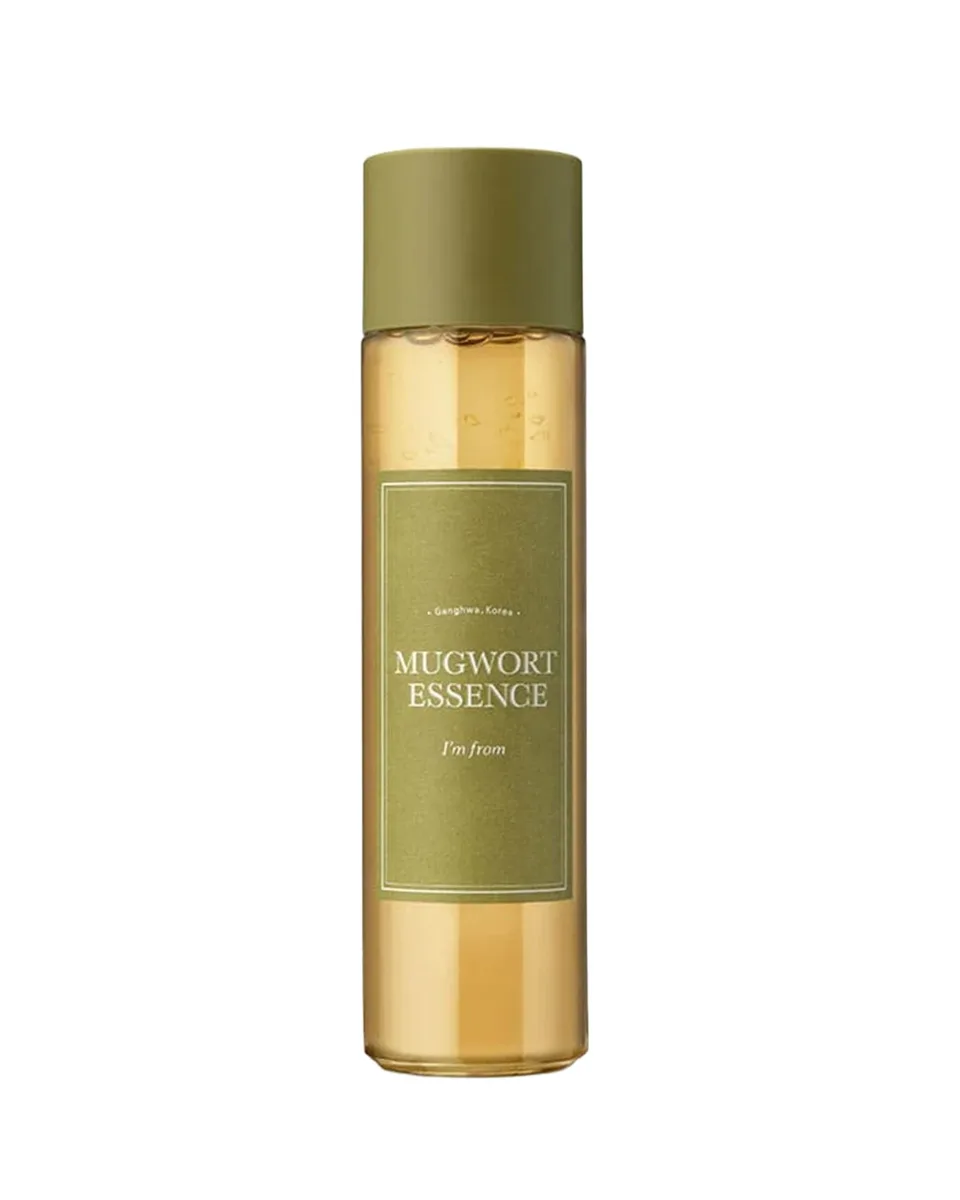 Single-Ingredient Calming Essence
 Mugwort Essence
A near-radical exercise in restraint: two ingredients, one of them Korean mugwort sourced from a named island, the other a minimal preservation aid. For reactive, rosacea-prone, or post-procedure skin that recoils from complex formulas, this watery essence is one of the few products that delivers minimalism structurally rather than just in marketing. The herbal scent and premium price are the trade-offs.
 Resveratrol Root Water
 Polygonum Cuspidatum Ampoule
Japanese knotweed root water at 97 percent with a pinch of resveratrol and a preservative, in a 210 ml bottle that Sidmool calls an ampoule and that is really a toner for splashing and compressing. It calms flushed and spotty skin, it has nothing in it to react to, and it is fairly priced for the volume. It does not hydrate, the resveratrol is a trace by necessity, and anyone buying it for the polyphenol's reputation will get a good bland water and little else.
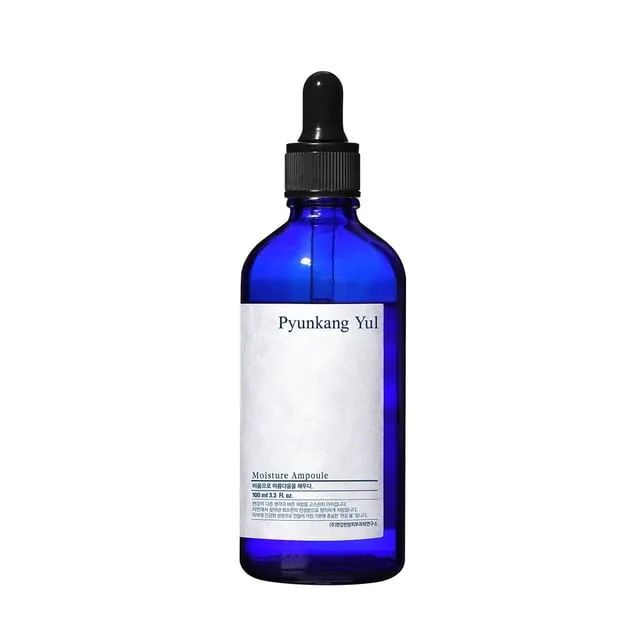 Minimalist Cult Classic
 Moisture Ampoule
A cult-classic exercise in restraint: six ingredients, ~91% of them a single soothing root extract, in a watery ampoule that hydrates and calms without a single thing to react to. It's nearly perfect for oily, combination, and sensitive skin, fungal-acne-safe, and a genuine bargain. Just don't expect dramatic 'active' results — gentle, reliable hydration is the entire, well-executed point.
 Thirteen Ingredients, One Bath
 ATO Wash & Shampoo Blue Label
A thirteen-ingredient, fragrance-free, gently preserved head-to-toe wash that does what a family with reactive skin needs from a bath product, at a price that makes daily use painless. The one real reservation is the surfactant: an olefin sulfonate is stronger than the glucosides the mildest atopic washes use, and on a child mid-flare that difference shows. For everyday bathing of intact, sensitive skin, with a moisturiser after, it is a very sensible bottle.
 Minimalist Niacinamide Standout
 Undiluted Serum Niacinamide
Five-ingredient minimalist niacinamide serum delivering 5% niacinamide in a water-and-preservation-only formula. The honest single-ingredient approach is exceptionally well-suited to sensitive skin, fragrance-reactive routines, and users assembling custom multi-active routines from focused products. The small 10ml size and J-beauty retailer-only US availability are the only meaningful caveats.
 Minimalist HA Standout
 Undiluted Serum Hyaluronic Acid
Five-ingredient minimalist hyaluronic acid serum delivering pure HA work in a water-glycerin vehicle with no fragrance, no fillers, no compromises. Universal skin-type suitability and exceptional formulation honesty make this among the cleanest HA serums currently available globally. The small 10mL size and J-beauty retailer-only US availability are the only meaningful caveats.
 High-Dose Ectoin, Five Ingredients
 Ectoin Derma 10% Ampoule
Ectoin at a declared 10 percent, water, one humectant, one preservative, one thickener, and nothing else, for about thirteen dollars. It is the most direct way on the market to add a genuinely studied barrier-protecting molecule to a routine, it is safe for the most reactive skin, and it calms stinging within minutes. The bottle is tiny, the dose is above anything trialed, and it does nothing without a moisturizer over it.
The full 1,2-hexanediol guide
Most of the preservation happening in a modern skincare formula never announces itself, and 1,2-hexanediol is a big reason for that quiet competence.
It's a short-chain diol with three overlapping jobs — mild antimicrobial, humectant, and solvent — that lands near the tail end of an INCI list and does its work without fanfare. You won't see it trending, but it's what lets a lightweight Korean toner or a clinical peptide serum stay stable, hydrate a little, and keep its actives evenly dispersed. Its safety has been formally reviewed, its role is genuinely multi-functional, and understanding it explains a lot of what's happening on the labels you read.
How it's regulated in the US
FDA does not classify ingredients — it classifies products, by what they are sold to do. The same molecule can be a drug active in one product and a cosmetic ingredient in the next, and only the claim on the label decides which. What follows is a statement about that legal standing, not about whether it works — the evidence question is answered separately above.
Cosmetic 1,2-Hexanediol is a cosmetic ingredient in the US: no OTC monograph covers it and it is not an active in any FDA-approved drug, so a product built around it is a cosmetic rather than a drug.
The Cosmetic Ingredient Review (CIR) Expert Panel assessed 1,2-hexanediol within its 2012 safety review of 1,2-glycols and concluded these ingredients are safe in the present practices of use and concentration, citing low oral toxicity and negative genotoxicity data; the panel noted high estimated dermal absorption but did not flag significant irritation at cosmetic use levels. Its antimicrobial behavior — disrupting microbial cell membranes while lowering the water activity of the formula — is described in formulation literature, and it is widely used as a preservative booster alongside phenoxyethanol or caprylyl glycol. Published work on alternative preservative systems supports the general value of such combinations, though head-to-head efficacy data specific to 1,2-hexanediol is more limited. Its humectant and emollient effects follow from its diol chemistry. The ingredient is generally well-tolerated, but a 2023 Dermatitis case report (Han and Kang) documented facial contact urticaria attributed to a 1,2-hexanediol-containing moisturizer, indicating a rare but real potential for immediate-type allergic reactions in sensitized individuals.
How it works
Two hydroxyl (-OH) groups sitting on a six-carbon chain account for the range of things this molecule does. The hydroxyls are polar and hygroscopic, forming hydrogen bonds with water both in the product and in the upper skin layers, which pulls moisture toward the surface and modestly slows transepidermal water loss — that's the humectant side. The six-carbon backbone, longer than simpler diols such as propylene glycol, gives the molecule enough lipophilicity to interact with lipid bilayers. It can therefore disturb the membranes of bacteria and fungi, letting cell contents leak and stalling microbial growth. That amphiphilic character is what makes it useful as a preservative booster: it both nudges at membranes and lowers the formula's water activity, leaving microbes with a harder environment to multiply in. At the low concentrations typical of leave-on cosmetics (roughly 0.5–2%), it rarely preserves a formula on its own. Paired with phenoxyethanol or caprylyl glycol, though, it lets formulators dial back those primary preservatives without losing microbial control — a meaningful tweak for products aimed at reactive or sensitive skin. The same chemistry gives it solvent activity. It can improve how well polar actives like peptides and certain antioxidants dissolve and stay dispersed, keeping them evenly distributed through the product. The practical upshot for skin is a little extra hydration, a softer surface feel, and more uniform delivery of the ingredients sharing the bottle.
Key benefits
- Boosts a preservative system so formulators can use less of stronger antimicrobials
- Acts as a humectant, drawing water into the upper skin layers
- Softens skin texture without leaving a greasy or heavy film
- Provides mild antimicrobial activity against bacteria and fungi via membrane disruption
- Works as a co-solvent that keeps polar actives evenly dispersed in the formula
- Stays effective across the wide pH range found in serums, toners, and treatments
Concentration & usage
Cosmetic use typically falls between 0.5% and 5%, with most leave-on products sitting around 1–3%; levels near 5% appear when more antimicrobial muscle is wanted. The CIR's 2012 review found 1,2-glycols safe as used, and the ingredient is well-tolerated across this range. The label gives a rough sense of its role: when 1,2-hexanediol sits after the preservatives and fragrance section, it's most likely a humectant and preservative booster rather than a headline active. It works across a broad pH range, so it's comfortable in acidic exfoliant formulas (around pH 3–4), vitamin C products, and pH-neutral moisturizers alike — its antimicrobial function isn't pH-gated the way some traditional preservatives are.
Who it's for & who should be cautious
Who it's for
If you reach for K-beauty or indie serums marketed around "no traditional preservatives," you're very likely already using this ingredient. It suits oily, combination, and normal skin especially well, since it hydrates lightly and leaves no film. Dry and sensitive types still benefit from its gentle humectant pull within a layered routine, particularly with a richer ceramide moisturizer on top.
Who should be cautious
Anyone who has reacted with hives or rapid facial flushing after using otherwise well-formulated Korean or clean-beauty serums should patch-test carefully, since the 2023 case report shows rare immediate contact urticaria is possible. Some caution near the eyes is reasonable too, as 1,2-hexanediol combined with caprylyl glycol has shown eye-irritation potential in testing.
Pairs with & conflicts
Myths & facts
Myth: 1,2-hexanediol is a 'natural' preservative, which is why 'preservative-free' products can use it
Reality: It's a synthetically produced compound; even bio-based (corn-derived) versions are molecularly identical to petroleum-derived ones. Products containing it aren't preservative-free — they're free of traditional preservatives like parabens, often using hexanediol as part of an alternative preservation system instead.
Myth: It works as a complete standalone preservative, so a formula using it needs nothing else
Reality: At the 0.5–2% levels typical in leave-on products, 1,2-hexanediol is a booster, not a full preservative system. It amplifies partner antimicrobials such as caprylyl glycol, ethylhexylglycerin, or phenoxyethanol rather than replacing them, and a formula leaning on it alone at low levels risks being under-preserved.
Myth: Because it sits at the end of the INCI list, it isn't doing anything for your skin
Reality: Boosters, humectants, and co-solvents are functional at low concentrations by design. Its low spot on the list reflects a small effective dose, not low importance — at 1–3% it still contributes to moisture retention, microbial stability, and even distribution of the actives around it.
Frequently asked questions
Will 1,2-hexanediol bother sensitive skin?
For most sensitive-skin users, no — it's commonly included in products made for reactive or compromised skin, and isn't a typical irritant at cosmetic levels. The rare exception is people who develop contact urticaria to it, which the 2023 Han and Kang case report confirmed can happen; if certain serums or toners leave you flushed or hived within minutes, this ingredient is worth ruling out.
Why does it turn up in so many K-beauty toners and serums?
Korean formulators lean on multi-functional preservation that sidesteps parabens, and 1,2-hexanediol fits neatly — one ingredient brings antimicrobial support, a touch of humectant hydration, and solvent stability. That efficiency, plus a clean safety record, makes it a natural fit for a market whose shoppers read ingredient lists closely.
Is it safe to use products with 1,2-hexanediol around the eyes?
That depends on the full formula and intended use area. In face serums and toners it's generally well-tolerated, but testing shows 1,2-hexanediol — especially combined with caprylyl glycol — can irritate the eyes. Anything meant for the eyelid or periorbital zone should be checked, and if a product stings when it drifts near your eyes, keep it away from that area.
Does it actually hydrate, or is the role purely antimicrobial?
Both happen at once. Its two hydroxyl groups grab and hold water much as glycerin or butylene glycol do, nudging up short-term hydration and slowing water loss. The humectant effect is modest next to bigger humectant molecules, but it adds meaningfully to the feel and performance of lightweight, water-based formulas.
Is it the same as the hexanediol diacrylate I've seen flagged as an allergen?
No — different molecules. Hexanediol diacrylate (1,6-hexanediol diacrylate) is a reactive monomer used in adhesives, nail gels, and industrial coatings, and is a documented contact allergen in cases ranging from ski boots to medical devices. The cosmetic ingredient 1,2-hexanediol is a simple diol with no acrylate chemistry and a much gentler profile.
How can I tell roughly how much of it is in a product?
INCI lists run in descending order of concentration, so position is your clue. When 1,2-hexanediol appears after thickeners and texture agents, it usually signals under 2%, matching its booster-and-humectant role. Listed earlier — after the main actives but before fragrance or colorant — it's more likely present at a higher level aimed at stronger antimicrobial performance.
Sources
- https://journals.sagepub.com/doi/10.1089/derm.2022.0091
- https://journals.sagepub.com/doi/10.1177/1091581812460409
- https://www.cosmeticsinfo.org/ingredient/12-hexanediol/
- https://pubchem.ncbi.nlm.nih.gov/compound/1_2-Hexanediol
- https://www.researchgate.net/publication/319335929_Efficacy_tests_of_alternative_preservatives_in_combination_with_phenoxyethanol_for_development_of_safe_cosmetic_products_for_children