Butylene Glycol
Products with Butylene Glycol
 Minimalist Hydration Cult Pick
 Essence Toner
The cult minimalist toner: 91.3% milk vetch root extract in a seven-ingredient, fragrance-free formula that's essentially a soothing herbal infusion for the skin. It hydrates fast, calms reactive skin, layers beautifully, and costs very little — a deserved sensitive-skin favorite. The trade-off is exactly its appeal: it does one thing, hydration-and-soothe, and very dry skin will still want a moisturizer over it.
 Non-Sticky Aloe Multitasker
 Aloe Revitalizing Soothing Gel
A fragrance-free, alcohol-free aloe gel that has fixed the one thing wrong with the category, the stickiness, and thrown in a little madecassoside for good measure. It is a hydrating, cooling comfort product, not a treatment, and dry skin will need a cream over it. For seventeen dollars and 300 mL, it is one of the more pleasant ways to buy aloe.
 K-Beauty Cica Essential
 Madagascar Centella Ampoule
Seven ingredients. One of K-beauty's biggest success stories. This radically minimalist centella ampoule proves that sometimes the most powerful thing a skincare product can do is get out of your skin's way — offering pure, gentle soothing with virtually zero risk of irritation.
 K-Beauty HA Serum
 Hyaluronics Serum
Mary & May's Hyaluronics Serum is a minimalist 6-form hyaluronic acid serum with sodium hyaluronate at substantial 5050ppm (0.5%) concentration plus five additional HA molecular weight forms. At $18.90 for 30ml the value is exceptional. Fragrance-free, vegan, fungal-acne safe — genuinely suits all skin types including very sensitive.
 Simple Hydrating Booster
 Olive Virgin Oil Crystal Skin Essence
A weightless 'crystal' gel hydrating booster with a genuinely lovely jiggly texture and a touch of olive oil and vitamin E — pleasant, gentle, and fast-absorbing as a pre-moisturizer step. The catch is the formula: it's strikingly simple (mostly water and gelling gums), so the romantic 'precious flor de aceite essence' marketing dresses up a barebones product, and $36 is steep for what amounts to a light olive-and-vitamin-E hydrating gel. Nice texture, minimal substance.
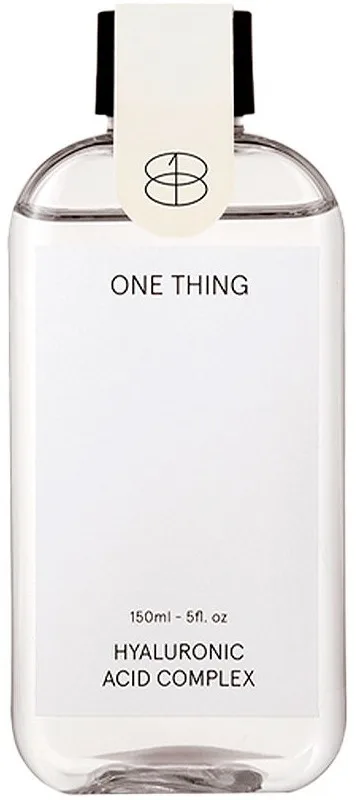 Minimalist Hydration MVP
 Hyaluronic Acid Complex
One Thing's Hyaluronic Acid Complex is the minimalist K-beauty essence that proved a $14 bottle of nothing-but-HA could out-perform fancier competitors. Five molecular weights of hyaluronic acid in a watery, fragrance-free base — nothing flashy, nothing irritating, and almost impossible to layer wrong. A genuinely excellent hydrator for any skin type.
 Drugstore Fragrance-Free Hydration MVP
 Hatomugi Skin Conditioning Milk
The emulsion step that completes Naturie's cult Hatomugi routine — genuinely fragrance-free, generously sized, and priced at the kind of drugstore tier that makes daily repurchase guilt-free. The mineral-oil-and-glycerin architecture is competent rather than sophisticated, but for hydration-focused users who want a hatomugi-line moisturizer without prestige markup, this delivers exactly what the name promises.
 K-Beauty Cult Favorite
 Bifida Ferment Essence
mixsoon iconic Bifida Ferment Essence with 4-ingredient minimalist formula (bifida ferment + butylene glycol + water + glycerin). The single-ingredient philosophy at its purest with substantial K-beauty cult following. Exceptional suitability breadth and irritation risk scores due to the minimal formulation.
 Four-Ingredient Cooling Splash
 Green Tea Soothing Water
Ninety percent green tea water, 3 percent green tea extract, a glycol and a preservative, and that is the whole product. It cools flushed skin, gives reactive faces something with nothing in it to react to, and costs about as much as a decent bag of tea. It does not hydrate and does not pretend to; as a compress water and pre-serum splash for oily, sensitive or overheated skin, it is a small, honest, useful thing.
 Mochi-Skin Drugstore BHA
 2% BHA Exfoliating Hydra Serum
A declared 2 percent salicylic acid in a twelve-ingredient, fragrance-free, oil-free gel that Kao has built as a texture play, bouncy, bubble-flecked and cushiony, so the acid stays on the skin while a glycerin, butylene glycol and sorbitol trio keeps the finish soft. It unclogs and smooths oily, congested skin well for seventeen dollars and is one of the cleanest drugstore BHAs on the shelf; denatured alcohol second is what dissolves the acid and what will tighten drier faces, and a month-old product has no track record yet.
 China's Ferment-Water Flagship
 Himalayan Essence
A six-ingredient ferment water that does the first-treatment-essence job well: instant softness, a smoother surface inside a few weeks, and nothing in the bottle to upset reactive skin. The anti-aging promises on the label outrun the evidence, and the value is fair rather than generous, but as a gentle hydrating first step it earns its shelf space.
 Clinical-Grade AHA Workhorse
 Focus Care Youth+ Concentrated Alpha Hydroxy Acid Serum
A refreshingly minimalist, clinical-grade glycolic acid toner that strips away every unnecessary ingredient to let the active work unimpeded — the skincare equivalent of a surgeon's scalpel in a world of Swiss Army knives.
 French Pharmacy Sensitive-Skin Staple
 Make-up Remover Water with Soothing Cornflower
A six-ingredient micellar water from one of France's oldest botanical pharmacy brands — fragrance-free, gentle around the eyes, and priced for daily use. Three months of cleansing for less than the cost of a single luxury serum.
 Seven Ingredients, Thirty Years
 Gentle Eye Makeup Remover
Seven ingredients, one mild coconut-derived surfactant, no oil, no fragrance, no alcohol, and thirty years of doing exactly one thing: lifting everyday eye makeup without a sting or a film so that makeup can go straight back on. It will not shift waterproof mascara and it costs three times what its formula does at the drugstore, but for sensitive lids and contact-lens wearers it is one of the most dependable removers sold, and the reviews have said so for decades.
 Sink-Side Hand Lotion
 Eight Hour Cream Intensive Moisturizing Hand Treatment
A light, quick, silky hand lotion that people love keeping by the sink, and one of the emptiest formulas in prestige hand care: fatty alcohol, a light ester, dimethicone and allantoin, with no glycerin, oils, butters or petrolatum, emulsified with sulfates and preserved with five parabens under the Eight Hour perfume. For mildly dry office hands it is pleasant; for the cracked hands the word 'intensive' implies, it is the wrong product, and $47 for 200 ml buys mostly the name.
 Step-Up Glycolic for Oily Skin
 Isdinceutics Glicoisdin 15 Moderate Exfoliating Peeling Gel
A blunt, transparent 6.1% free glycolic gel that does real work on congested, oily skin and tells you its strength honestly. The denatured alcohol base makes it sting and dry, the jar is small for $85, and 'moderate' undersells how much it asks of your skin; buy it as a step up, not a starting point.
 Instant Pore Eraser
 Zero Pore Serum
A silicone-based pore primer dressed up as a serum. It delivers instant optical blurring that genuinely smooths the look of pores, but there's almost nothing here that will improve your skin over time. Honest about what it is, this is a cosmetic quick-fix — not a treatment.
 Top-Rung Home Glycolic
 Isdinceutics Glicoisdin 25 Intense Exfoliating Peeling Gel
The strongest home glycolic ISDIN makes, and it behaves like it: 9.5% free acid in a bare alcohol gel that stings, flakes for a week and then rewards oily, sun-roughened skin with a genuinely smoother, clearer surface over months. It is a tool for the adapted and the disciplined, too strong for most faces, and $85 for a small jar of ten ingredients.
The full butylene glycol guide
Pick up almost any serum, toner, or essence and you'll find butylene glycol sitting quietly in the first few lines of the INCI list — not because brands are padding the formula, but because this four-carbon diol earns its place three ways at once.
It hydrates, it dissolves difficult actives into stable solutions, and it gently coaxes those actives a little deeper into skin. It's the ingredient that makes other ingredients work better, and its safety record across decades of cosmetic use is about as clean as they come.
Where the evidence stands, by concern
Evidence for an ingredient is not one grade — it differs concern by concern. Each row below was researched separately against regulatory approvals, clinical guidelines, and trials our team opened and verified; the band and dots rank how central butylene glycol is to treating that concern, from first-line therapy down to supportive care, at treatment-level doses and vehicles. A product's own grade weighs its actual formula.
How it's regulated in the US
FDA does not classify ingredients — it classifies products, by what they are sold to do. The same molecule can be a drug active in one product and a cosmetic ingredient in the next, and only the claim on the label decides which. What follows is a statement about that legal standing, not about whether it works — the evidence question is answered separately above.
Cosmetic Butylene Glycol is a cosmetic ingredient in the US: no OTC monograph covers it and it is not an active in any FDA-approved drug, so a product built around it is a cosmetic rather than a drug.
The Cosmetic Ingredient Review (CIR) Expert Panel has assessed butylene glycol — both in its 1985 report and the later alkane diols review — and concluded it is safe as used in cosmetics, with no meaningful sensitization signal at the concentrations found in real products. A small number of published case reports (Aizawa et al., Journal of Dermatology 2014; Blomberg et al., Contact Dermatitis 2020) document allergic contact dermatitis in rare individuals, establishing that true contact allergy is possible but uncommon. The humectant and solvent functions are well established in formulation science, and there is reasonable support for a mild, temporary penetration-enhancing effect, though that role is more modest than marketing sometimes implies. Overall, the safety evidence is strong and spans several decades; the functional claims are well supported for hydration and solubilization and more limited for absorption enhancement.
How it works
Chemically, butylene glycol is 1,3-butanediol — a short-chain diol carrying two hydroxyl (–OH) groups on a four-carbon backbone. Those hydroxyls do most of the work: they hydrogen-bond readily to water, pulling moisture from the surrounding air and from deeper skin layers up into the stratum corneum. The hydration effect is genuine but gentler than glycerin, which binds far more water per molecule. Where butylene glycol wins is feel — it skips glycerin's characteristic tackiness, leaving a lighter, more fluid slip that formulators lean on in serums and essences. As a solvent it dissolves a range of cosmetic actives that would otherwise resist blending into water-based systems, keeping the finished product stable and uniform. Because it also lowers water activity, it can act as a mild antimicrobial helper — not strong enough to preserve a formula on its own, but enough to ease the total preservative load. Its least-appreciated trick is penetration enhancement. By reversibly loosening the lipid packing of the stratum corneum, butylene glycol can widen the intercellular pathways that small actives use to reach viable skin. The effect appears modest and short-lived — the barrier rebounds quickly — and the supporting evidence is thinner than for its humectant role. Still, it's a plausible reason sophisticated formulas pair it with hero actives rather than treating it as inert filler.
Key benefits
- Draws moisture into the stratum corneum without leaving tacky residue
- Solubilizes hard-to-dissolve actives into stable, uniform water-based formulas
- May mildly improve penetration of small actives like vitamin C and acids
- Can lower required preservative levels by reducing a formula's water activity
- Imparts a light, fluid slip that improves serum and toner texture
- Carries an exceptionally low sensitization rate across decades of safety data
Concentration & usage
Works across a wide range — commonly 1–10% in serums, toners, and essences, with some solvent-heavy formulas reaching the high teens. On an INCI list, position is a rough guide: butylene glycol in the top five or six entries usually signals a functional humectant-solvent level rather than a trace amount, while a listing far down the list points to a minor role. The CIR has reviewed it as safe at the concentrations seen in marketed products, and it carries no specific pH dependence — it performs across the full pH range used in skincare.
Who it's for & who should be cautious
Who it's for
Most skin types do well with butylene glycol, especially anyone chasing lightweight hydration without the heaviness of glycerin-dominant formulas. It slots naturally into oily and combination routines where richer humectants can feel occlusive — the non-greasy finish keeps gel serums and watery essences feeling weightless. Normal and dry skin benefit too, typically when it sits alongside stronger water-binders like hyaluronic acid or polyglutamic acid that compensate for its comparatively lighter humectant pull.
Who should be cautious
Anyone with a confirmed contact allergy to butylene glycol should steer clear of products listing it at any level — the published case reports describe patch-test-positive individuals reacting across multiple product types, from serums to topical medicaments. Though rare, that allergy can be persistent and hard to pin down, so avoidance is the only reliable strategy. People juggling several cosmetic contact allergies, or actively patch-testing an unexplained facial reaction, should ask their dermatologist to include butylene glycol in the panel, since it's often overlooked next to better-known culprits like fragrance and preservatives.
Pairs with & conflicts
Myths & facts
Myth: Butylene glycol is basically antifreeze and therefore unsafe on skin
Reality: This conflates two different chemicals. Automotive antifreeze is ethylene glycol — a structurally distinct compound with real toxicity when ingested. Butylene glycol shares none of that toxicity profile; the CIR Expert Panel has assessed it as safe across decades of use, and the body metabolizes it into ordinary metabolic intermediates rather than anything hazardous.
Myth: It irritates sensitive skin and should be avoided
Reality: Human safety testing reviewed by the CIR found no sensitization signal for the general population, and butylene glycol does not carry propylene glycol's reputation — the latter was the American Contact Dermatitis Society's Allergen of the Year in 2018. True allergy to butylene glycol exists but is genuinely rare, documented in scattered case reports rather than broad epidemiological data.
Myth: It's just a cheap filler that does nothing for skin
Reality: Formulators reach for butylene glycol for three concrete jobs: holding water, dissolving actives, and possibly nudging absorption along. Finding it high on a well-built serum's INCI list usually reflects an intentional functional level — it helps the actives around it stay dissolved, stay stable, and disperse evenly, rather than padding out volume.
Frequently asked questions
Is it safe to use butylene glycol on my face every day?
Yes — the Cosmetic Ingredient Review Expert Panel reviewed butylene glycol and found it safe as used in cosmetics, including leave-on facial products at real-world concentrations, and decades of human testing back that up. The only people who should pause are those with a diagnosed contact allergy to the ingredient itself, which is uncommon but documented.
Why does butylene glycol show up so high on the INCI list of Korean toners and essences?
K-beauty formulas often chase lightweight, watery textures, and butylene glycol delivers that slip without the stickiness glycerin alone would leave. Its possible absorption-helping effect also fits the layering philosophy — a butylene-glycol-forward base can give the layers on top a smoother path in. It's a deliberate texture-and-function choice, not a way to cut costs.
How is butylene glycol different from propylene glycol in a formula?
Both are short-chain glycols doing humectant and solvent duty, but butylene glycol tends to be better tolerated in practice. Propylene glycol has a longer trail of contact-allergy reports and was named Allergen of the Year by the American Contact Dermatitis Society in 2018; butylene glycol's sensitization rate runs lower. It also tends to feel lighter, and people who find propylene glycol irritating often do fine with it.
Could butylene glycol still trigger a reaction in a clean-label or hypoallergenic product?
It can. Published case reports describe patients reacting specifically to butylene glycol in products marketed as gentle or hypoallergenic — partly because it's so rarely patch-tested proactively. If you're stuck with unexplained facial dermatitis that won't clear despite swapping products, it's worth asking your dermatologist to add butylene glycol to an extended patch-test panel.
Does butylene glycol genuinely help other actives absorb better?
The evidence points to a modest, real-but-limited effect. It reversibly loosens the lipid packing of the stratum corneum, which can widen the diffusion path for small actives like vitamin C and certain acids. Don't expect it to turn a gentle formula into a clinical-strength treatment — but it's a reasonable reason formulators keep it next to hero actives instead of swapping in a neutral humectant.
Is butylene glycol natural or synthetic?
Conventional butylene glycol is synthesized from petroleum-derived precursors, which is why some 'clean beauty' brands skip it or swap in bio-based 1,3-butanediol fermented from sugars. Both routes yield a chemically identical molecule with identical safety and function — the sourcing changes the sustainability story, not how it behaves on skin.