The Twenties Skip List: What You Can Ignore for a Decade Without Regret
Skincare marketing discovered that anxiety monetises best when installed early. Here is what a twenty-four-year-old can safely not buy — and the two boring things that genuinely compound.
Read the preview
From the DermApproved blog, in Skincare in Your 20s: a meta-analysis of collagen supplement trials found they work — until you look only at studies the manufacturers did not pay for. Then the effect disappears entirely. Most of what is sold to twenty-four-year-olds is like that, and the two things that genuinely compound are boring and cheap. For the full breakdown, visit dermapproved.com/blog.
What skin in your twenties is actually doing
The honest picture is undramatic. Through most of the twenties, collagen production is declining slowly and steadily rather than falling off a cliff, dermal thickness is near its peak, barrier function is generally intact, and cell turnover is efficient. What is happening — and this is the part that matters — is that photodamage is accumulating silently. The pigment irregularity, texture change and deep lines that appear in the forties and fifties are largely the record of ultraviolet exposure received decades earlier.
So prevention in your twenties is a real concept. It just has a very short and specific product list attached to it, because the thing being prevented has one dominant cause.
What is not happening yet: meaningful volume loss, laxity, or the dermal changes that firming and lifting products claim to address. Those problems arrive later, they arrive gradually, and buying products aimed at them a decade early does not bank progress against them.
The more common actual problems in this decade are acne that has not resolved, barrier damage from over-treating, and post-inflammatory pigment. Those are worth spending on. They are also not what most of the marketing aimed at this age group is selling.
The skip list, with reasons
Firming and lifting creams. No topical contracts skin. Products in this category deliver hydration and film-forming effects that temporarily improve the look of fine lines, which is a real cosmetic result and is not firming. In a decade with intact dermal structure there is nothing for them to firm. Skip until you have a specific complaint they could plausibly address, which will not be in your twenties.
Most eye creams. The eye area is thinner and more mobile, which is a real anatomical difference, but the majority of eye creams are the brand's face moisturiser in a smaller container at several times the price per millilitre. The genuine reasons to buy a dedicated one are tolerability — a bland fragrance-free formula for skin that reacts, or an ophthalmologically tested product if you wear contacts — not a special ingredient. Dark circles in this decade are usually structural or vascular and do not respond to any cream.
Collagen supplements. This is the clearest case, because it has been examined properly. A meta-analysis of 23 randomised controlled trials with 1,474 participants found that pooled across all trials, collagen supplements significantly improved hydration, elasticity and wrinkles. Then the authors split the data. Studies without pharmaceutical company funding showed no effect on hydration, elasticity or wrinkles. High-quality studies showed no significant effect in any category. Their stated conclusion: there is currently no clinical evidence to support the use of collagen supplements to prevent or treat skin ageing. That is not a hedge, and it is the kind of finding that only appears when someone bothers to stratify by who paid.
Antioxidant supplements generally. The same randomised trial discussed below also tested beta-carotene against placebo and found no overall effect on skin ageing.
Home LED masks and preventative procedures. In-office energy devices have real evidence; consumer LED devices are a much weaker proposition, and in any case they target laxity and remodelling that has not yet begun. Preventative injectables in this decade are a genuinely contested area even among practitioners, and the honest position is that the evidence for starting early is thin and the commercial incentive to say otherwise is enormous.
Twelve-step routines. Every additional product is another chance to irritate a barrier that is currently working fine. Over-treating is one of the most common causes of the problems this age group actually presents with.
The mechanism behind the marketing
It is worth naming how this works, because recognising the pattern is more durable than memorising a list.
The category discovered something specific: anxiety about a future problem converts better than a solution to a present one, and it converts best when installed early, because it produces a customer with decades of purchasing ahead rather than a course of treatment with an endpoint. A product that treats acne stops being needed when the acne clears. A product that prevents an unfalsifiable future never does.
The language follows from that. "Preventative" is doing enormous work, because prevention claims cannot be disproved on any timescale a customer can evaluate. So is "supports" — supports collagen, supports barrier function — which sounds mechanistic and commits to nothing measurable. And so is starting the conversation about ageing earlier each year, which is a marketing decision rather than a dermatological one.
None of this makes the industry uniquely villainous, and plenty of products aimed at this age group are perfectly good. But the specific claim that you must start now or fall behind is a sales mechanism, and the two interventions that genuinely do compound are both cheap, boring, and nobody's growth strategy.
The two things that actually compound
Daily sunscreen. This is the one with a proper randomised trial behind it, and it is unusually good evidence for a cosmetic question. In Nambour, Australia, 903 adults under 55 were randomised to daily broad-spectrum sunscreen use or discretionary use, with beta-carotene or placebo alongside, and photoageing was graded from skin microtopography by blinded assessors over four and a half years.
The daily sunscreen group showed no detectable increase in skin ageing across the trial period. Skin ageing was 24% less than in the discretionary group. Beta-carotene did nothing.
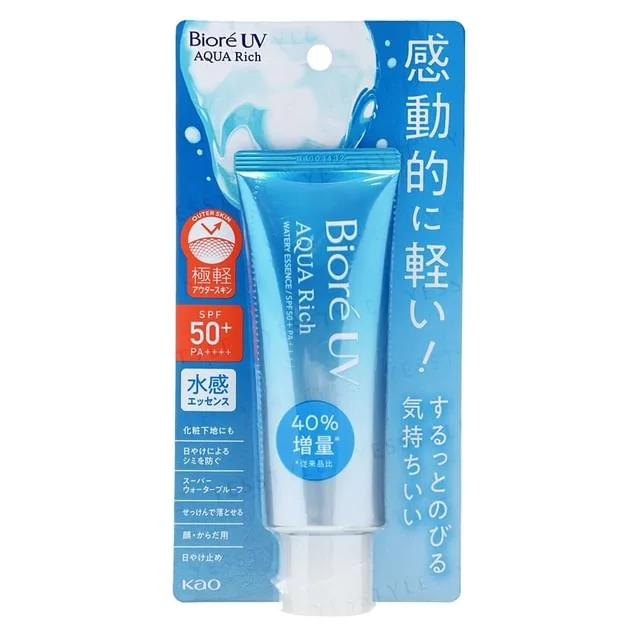
No detectable increase over four and a half years is a remarkable result, and it is the single strongest argument in this entire article. Compounded across a decade in your twenties, it is the difference the firming creams are pretending to sell. The product barely matters as long as you like using it enough to apply enough — COSRX Ultra-Light Invisible Sunscreen, Bioré UV Aqua Rich Watery Essence and Blue Lizard Sport Mineral SPF 50+ span the textures most people get on with, and the Sun Safety tool covers the exposure picture a bottle cannot.
A retinoid, when you are ready. The retinoid class has decades of controlled evidence for photoageing, acne and texture, and it is the only topical category that does what the firming creams claim. There is no urgency to start at twenty-two, and starting badly — too strong, too often, alongside three other things — is worse than starting at twenty-eight. But it is the second and last item on the list. Differin Adapalene Gel is the best-tolerated over-the-counter option, The Ordinary Retinol 0.5% in Squalane is a low-cost cosmetic-retinol route, and the Retinoid Ladder tool maps the strengths against each other. The retinol entry covers what the evidence actually supports.
A twenties budget, allocated honestly
If you have around fifty a month to spend on skin, here is where it belongs, in order.
Sunscreen first, and enough of it. This is the only line item where quantity matters more than quality, and where running out is a real failure. Buy a texture you like and use twice as much as you think.
A cleanser and a moisturiser that keep the barrier intact. Boring, and the foundation everything else sits on. La Roche-Posay Toleriane Double Repair and CeraVe Moisturizing Cream are as good as anything at several times the price, and our affordable moisturiser ranking has the rest.
Whatever treats the problem you actually have. Acne, pigment from old acne, or reactivity. This is where a genuine complaint deserves real money, and where the budget routine template is a reasonable starting structure. If something in this decade looks like persistent central-face redness and flushing rather than acne, rosacea in your twenties is worth reading before you treat it as acne, because the two are routinely confused and the treatments differ.
A retinoid, once the above is stable. Not before.
Nothing else. Not a serum for a problem you do not have, not an eye cream, not a supplement, not a device.
That allocation is genuinely liberating rather than austere, and it leaves most of the fifty unspent in most months. The Routine Finder builds the structure from your actual skin state rather than from your age, which is the right variable — the twenties are a decade, not a diagnosis, and a twenty-six-year-old with rosacea has more in common with a fifty-year-old with rosacea than with the person sitting next to them.
The thing worth internalising: prevention is real, and it is almost entirely photoprotection. Everything else being sold under that heading is optional, most of it is early, and some of it — as the collagen data shows — does not survive contact with a properly stratified analysis.
Products mentioned
Independently reviewed and scored — the real products behind this piece.



- Routine The INKEY List Skincare Routine: Every Step in Plain English A reasonable budget routine structure.
- Ranked list Best Affordable Moisturizers The boring foundation, ranked.
- Ingredient Retinol The only topical class that does what firming creams claim.
- Question Can you get rosacea in your twenties? Routinely mistaken for acne in this decade, and treated wrongly.
References
- Effects of Collagen Supplements on Skin Aging: A Systematic Review and Meta-Analysis of Randomized Controlled Trials — The American Journal of Medicine, 2025
- Sunscreen and prevention of skin aging: a randomized trial — Annals of Internal Medicine, 2013
- Sustained improvement with prolonged topical tretinoin (retinoic acid) for photoaged skin — Journal of the American Academy of Dermatology, 1990
Every cited link is verified to resolve to the paper named. Where a source could not be independently confirmed, it is listed without a link rather than pointing you somewhere wrong.
Frequently asked
Do collagen supplements do anything for skin?
The best current answer is no. A meta-analysis of 23 randomised trials found significant improvements when all studies were pooled — but no effect at all in studies without pharmaceutical company funding, and no significant effect in high-quality studies. The authors concluded there is currently no clinical evidence supporting their use for preventing or treating skin ageing. That split by funding source is the whole story.
Is it too early to start a retinoid in my twenties?
No, and there is also no urgency. The retinoid class has decades of controlled evidence for photoageing, texture and acne, and starting somewhere in this decade is sensible. What matters far more than the start date is starting properly — one active at a time, ramped from twice weekly, with a moisturiser and sunscreen already in place. Starting badly at twenty-two is worse than starting well at twenty-eight.
Do I need an eye cream?
Usually not. The eye area is genuinely thinner and more mobile, but most eye creams are a brand's face moisturiser in a smaller jar at a much higher price per millilitre. Buy one if you specifically need a bland fragrance-free or ophthalmologically tested formula for reactive skin or contact lens wear. Dark circles in this decade are usually structural or vascular and do not respond to any cream.
How much difference does daily sunscreen actually make?
More than anything else on the list, and it has a randomised trial behind it. In a community trial of 903 adults, the group assigned to daily sunscreen showed no detectable increase in skin ageing over four and a half years, and 24% less ageing than the discretionary-use group. Compounded over a decade, that is the effect the firming creams are marketed on and cannot deliver.
What should I actually spend money on in my twenties?
Sunscreen you like enough to apply generously, a cleanser and moisturiser that keep your barrier intact, and treatment for whatever problem you actually have — usually acne, post-acne pigment or reactivity. A retinoid once that is stable. Nothing else. Most months that leaves a modest budget substantially unspent, which is the correct outcome rather than a missed opportunity.