Oil Cleanser vs Balm vs Micellar Water: The First Step, Compared
Three formats, one job, and three completely different mechanisms for doing it. The one that fails most often fails for a reason printed on its own bottle — which almost nobody follows.
Read the preview
From the DermApproved blog, in Routines and Myths: three first-step formats, one apparent job, three different mechanisms — which is why each one fails in its own way. One fails for a reason printed on its own bottle, in an instruction almost nobody follows, with published work on what skipping it does to a compromised barrier. For the full breakdown, visit dermapproved.com/blog.
The problem all three are solving
Water-based cleansers are built around surfactants, and surfactants have a well-documented trade-off: the same properties that let them lift oils also let them interact with the proteins and lipids of the outer skin. The literature on mild cleansing is essentially a fifty-year effort to keep the first property while minimising the second — which is why modern synthetic detergent systems sit at a skin-compatible pH and use gentler surfactant classes than true soap, and why true soap does the most damage to stratum corneum integrity of anything commonly applied to a face.
That compromise has a consequence. A cleanser mild enough to use daily on facial skin is often not aggressive enough to remove modern sunscreen filters, silicone-heavy makeup, or a full day of sebum in one pass. Those materials are hydrophobic and engineered to survive water, sweat and rubbing — which is the entire point of them.
So a first step exists to handle what a gentle water-based cleanser can't, without making the water-based cleanser harsher. Three formats do that job by three different mechanisms, and the mechanisms determine what each is good at.
Whether you need one at all is a separate question with a simple answer, and it comes at the end.
Oils and balms: like dissolves like
Cleansing oils and balms work on the oldest principle in the category. Hydrophobic materials dissolve readily in other hydrophobic materials, so an oil phase applied to dry skin solubilises sunscreen filters, silicones, waxes and sebum in a way no amount of water-based surfactant achieves at the same gentleness.
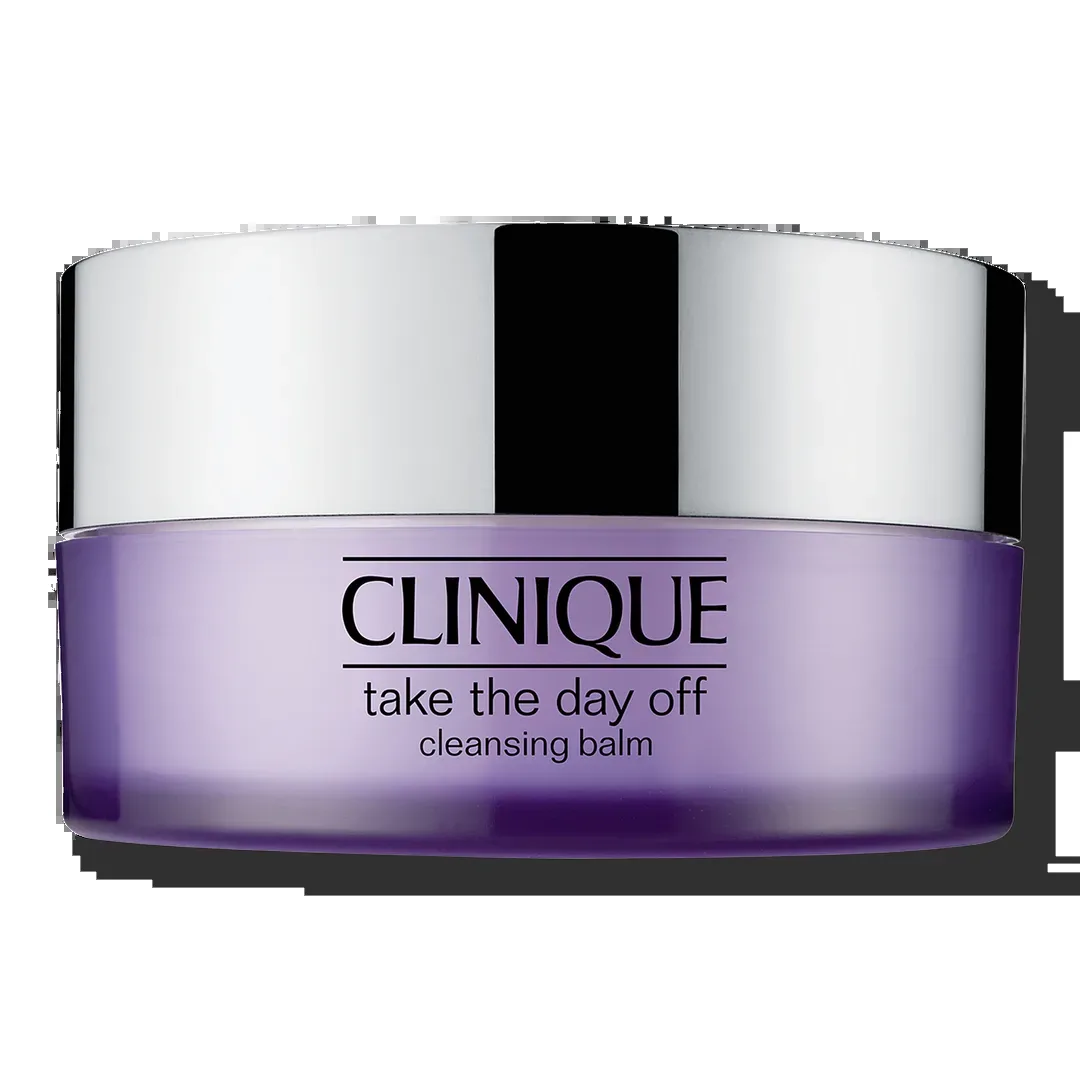
The difference between an oil and a balm is largely physical state and, therefore, control. A balm is a solid or semi-solid that melts on contact — Clinique's Take The Day Off and Farmacy's Green Clean are the archetypes — which makes it easier to keep on the face and around the eyes without running. An oil like The Ordinary's Squalane Cleanser spreads faster and rinses a little more readily.
Both contain emulsifiers, and this is the part that decides whether they work. Applied to dry skin they dissolve; add water and the emulsifiers convert the mixture into something rinsable, which carries the dissolved material away. That emulsification step is where most people go wrong. Wiping an oil or balm off with a tissue removes the bulk and leaves a film of residue and everything suspended in it — which is precisely how a product marketed as gentle produces congestion and gets blamed for being comedogenic.
The correct sequence is short and non-negotiable: apply to dry skin, work for long enough to actually dissolve what's there, add water and keep massaging until the texture turns milky, then rinse thoroughly.
Micellar water is a different mechanism entirely
Micellar water is not a diluted oil cleanser, and treating it as one explains most of the disappointment it causes.
It is water containing a low concentration of mild surfactant, arranged into micelles — spherical clusters with water-attracting surfaces facing outward and oil-attracting cores facing inward. Dragged across skin on a cotton pad, those cores trap oils and lift them. Formulation reviews of the category are explicit that the whole design depends on keeping surfactant concentration low and the surfactant type mild, precisely because the product is intended to be left on skin.
And there is the problem. Micellar water genuinely can be formulated to leave no meaningful irritation when unrinsed, and much of it is. But work on mild surfactants applied without rinsing found that on skin whose barrier is already compromised, skipping the rinse increased markers of mild irritation with repeated use. The bottle usually says to rinse. Almost nobody does, because not rinsing is the entire convenience proposition.
Garnier's SkinActive Micellar Water is the format's most familiar example and a perfectly competent one. The honest framing is that it is excellent at what it is actually for — a quick lift of light makeup, a pass before the gym, a travel option — and less suited to removing a full day of modern sunscreen, which is the job people most often hand it.
The friction is worth naming too: dragging a cotton pad repeatedly across facial skin is mechanical stress, and on reactive skin it can matter more than the surfactant does.
What each one is actually best at
Balm — the strongest performer on heavy sunscreen, long-wear foundation and waterproof eye makeup, and the easiest to control around the eyes. Slowest, messiest, and the most dependent on emulsifying properly. If you wear a mineral sunscreen daily, this is the format that removes it.
Oil — nearly the same removal performance with faster spread and an easier rinse. Better for people who find balms cloying, and generally the better choice for larger areas.
Micellar water — best for light makeup, quick cleanses, travel, and anyone who cannot rinse conveniently. Weakest on modern sunscreen and long-wear products. Rinse it when you can, and treat the no-rinse claim as a convenience allowance rather than an instruction.
All three are then followed by a water-based cleanser if you were wearing something substantial — a low-strip formula like The INKEY List's Glycerin Gentle Purifying Cleanser or CeraVe's Hydrating Cream-to-Foam does that job without undoing the gentleness you just bought.
One cross-cutting point that matters more than the format choice: pH. Skin surface pH rises after any wash, including a rinse with plain water, and recovers on its own over a few hours. Cleansers formulated near skin pH shift it less than alkaline soap does — and given that a first step means two cleansing passes rather than one, the mildness of what follows the oil matters more, not less.
Whether you need a first step at all
The honest answer is narrower than the category would like, and it has nothing to do with how many steps a routine should have.
What is on your face decides this. Modern sunscreen filters and long-wear makeup are engineered to resist water and rubbing, and a gentle water-based cleanser genuinely struggles to remove them in one pass. If you wear either daily, a first step is doing real work.
If you wear neither — no sunscreen that day, no makeup, just a face and its own sebum — a single pass with a well-formulated cleanser is sufficient, and adding an oil cleanse in front of it is a ritual rather than a mechanism. That is allowed. It is just worth knowing which one you are buying.
The failure mode at both extremes is the same: over-cleansing. Two thorough passes every night on skin that only needed one, especially with anything harsh at the second stage, produces exactly the tight, reactive, low-grade irritation that people then attribute to their actives.
So the rule that survives contact with reality: match the first step to what you actually wore that day, not to what your routine is supposed to contain. Sunscreen and makeup days get the balm or the oil, properly emulsified. Bare days get one gentle pass. And whichever you use, the step after it should be the mildest thing that still leaves your face clean — which for most people is a considerably milder cleanser than the one they own.
Products mentioned
Independently reviewed and scored — the real products behind this piece.


References
- Cleansing without compromise: the impact of cleansers on the skin barrier and the technology of mild cleansing — Dermatologic Therapy, 2004
- The Relation of pH and Skin Cleansing — Current Problems in Dermatology, 2018
- Effects of soap and detergents on skin surface pH, stratum corneum hydration and fat content in infants — Dermatology, 1997
- Not all marketed skin cleansers' pH is optimal for atopic dermatitis — Allergy and Asthma Proceedings, 2024
Every cited link is verified to resolve to the paper named. Where a source could not be independently confirmed, it is listed without a link rather than pointing you somewhere wrong.
Frequently asked
Do I have to rinse micellar water off?
It is formulated to be left on, and much of it genuinely can be. But work on mild surfactants applied without rinsing found increased irritation markers with repeated use on already-compromised barriers, and most bottles instruct a rinse. Treat no-rinse as a convenience allowance for when you can't, not as the default.
Is a cleansing balm better than a cleansing oil?
For heavy sunscreen and waterproof eye makeup, usually — a balm stays where you put it and gives more control. An oil spreads faster and rinses more easily, which suits larger areas and people who find balms cloying. Removal performance is close; handling is what differs.
Why does my cleansing oil break me out?
Most often because it wasn't emulsified. Wiping an oil or balm off with a tissue removes the bulk and leaves a residue film carrying everything it dissolved. Add water and keep massaging until the texture turns milky, then rinse thoroughly — that step is what makes the product rinsable at all.
Can micellar water remove sunscreen?
Not reliably, and this is the job it's most often handed. Modern filters are engineered to resist water and rubbing, and a low-surfactant water dragged on a cotton pad struggles with them. An oil or balm dissolves them properly; micellar water is better suited to light makeup and quick cleanses.
Do I need a first cleansing step every night?
Only if you wore something that needs it. Sunscreen and long-wear makeup genuinely resist a single gentle pass; a bare face and its own sebum do not. Two thorough passes on skin that needed one is a common route to the tight, reactive irritation people usually blame on their actives.