Your Gel Manicure Comes With a UVA Tan You Never Asked For
The lamp that cures your gels emits real UVA onto the one patch of skin you never protect — and while the cancer risk is small, the thirty-second fix is one almost nobody bothers with.
Read the preview
From the DermApproved blog, in Hands and Nails: the gel manicure and its little glowing secret. That lamp your hand slides into doesn't dry your polish. It bathes the backs of your hands in UVA — the same deep, aging light as the sun — on the one patch of skin you never protect. In 2023, a lab study lit up the headlines by showing that light mutating cells in a dish. But here's the twist the scary version skips: what happens in a dish isn't what happens on a hand. There's a thirty-second fix that erases the whole debate — and almost nobody uses it. What the science really says, at dermapproved.com/blog.
It's not a 'drying' lamp — it's a UVA source
The device your hand slides into at the nail salon is often called a dryer, which quietly misrepresents what it does. Gel polish doesn't air-dry; it photo-cures. The lamp emits ultraviolet light — historically UVA-heavy fluorescent tubes, now mostly UV-LED units peaking somewhere around 365 to 405 nanometers — and that light triggers the chemical reaction that hardens the gel. In other words, you are deliberately shining UVA onto the backs of your hands for a couple of minutes, several times a session, every few weeks.
UVA matters because it's the long-wavelength end of the spectrum that penetrates deep into the dermis. It's the band most responsible for photoaging — the crepey skin and sunspots that show up on the backs of the hands years before most people think to protect them — and it contributes to skin-cancer risk over a lifetime of exposure. The dose from one manicure is small. But it lands on skin that gets essentially no sunscreen, ever, and it repeats on a schedule. That combination — low dose, unprotected site, indefinite repetition — is exactly why dermatologists keep circling back to the question.
What the 2023 study actually showed (and didn't)
The debate reignited because of a striking paper. In a 2023 Nature Communications study, UC San Diego researchers exposed cultured cells — human skin keratinocytes and fibroblasts, plus mouse cells — to a UV nail-polish dryer. The result was unambiguous at the cellular level: the light generated reactive oxygen species, damaged DNA, and produced a dose-dependent pattern of mutations, with the authors concluding the radiation can "permanently engrave mutations on the genomes" of the cells.
That sounds alarming, and it's worth taking seriously — but read it precisely. This was an in vitro study: cells in a dish, exposed directly, without the layers of protection real skin has. It demonstrates a plausible mechanism by which nail-lamp UVA could contribute to cancer. It does not measure how often that translates into an actual tumor on an actual hand, because it wasn't a study of people. Mechanism is not incidence.
On the incidence side, the picture is reassuring but incomplete. Earlier modeling — including a 2014 JAMA Dermatology analysis — estimated the per-session UVA dose as roughly equivalent to a few extra minutes of daily sunlight, with the number of sessions needed to meaningfully raise keratinocyte-cancer risk running into the thousands. A 2025 scoping review in the International Journal of Dermatology pulled the whole literature together and found the same tension: consistent evidence of in-vitro DNA damage and a handful of case reports of hand cancers in very heavy users, but no large epidemiological study showing elevated risk from normal use. The honest synthesis is 'small but not zero, and genuinely uncertain at the heavy-use tail.'
The thirty-second fix nobody uses
Here's the part that makes the whole debate almost moot for an individual: the exposure is trivially easy to block, and hardly anyone does it. Two options, both cheap.
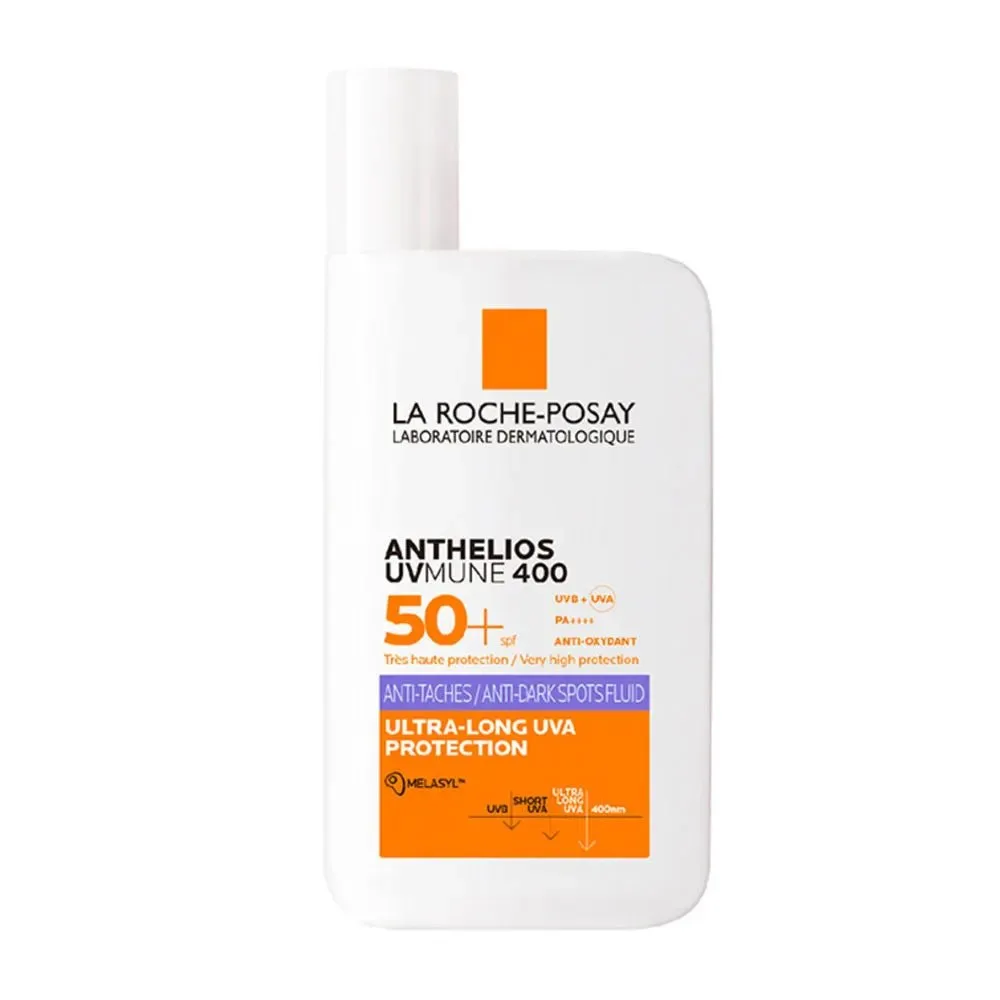
First, sunscreen. Apply a broad-spectrum SPF to the backs of your hands about fifteen minutes before the lamp, the same as you would before sun. Because nail-lamp light is specifically long-wave UVA, a formula with modern UVA coverage is the smart pick — filters like the Mexoryl 400 in La Roche-Posay Anthelios UVMune 400 SPF 50+ are built to absorb exactly the 380–400nm range these lamps sit in, and it doubles as an anti-dark-spot treatment for hands that already show sun damage. A dedicated hand formula like Ducray Melascreen Anti-Spots Hand Cream SPF 50+ is purpose-built for the job, and a swipe-on Isntree Hyaluronic Acid Airy Sun Stick SPF 50+ is the low-friction option you can keep in a bag and run over your hands in the salon chair without greasing up your phone. If you're not sure which texture or filter system fits, a sunscreen finder narrows it fast.
Second, gloves. UV-protective manicure gloves with the fingertips snipped off cover the entire back of the hand while leaving the nails exposed to cure. They're the most complete option, blocking essentially all the light, and they cost less than a single gel manicure. Either move takes under a minute and removes the variable entirely.
And the nails themselves
The lamp isn't the only cost of the gel habit. The bigger, better-documented downside is mechanical: the repeated soak-off-and-scrape removal process thins and weakens the nail plate over time, leaving nails brittle, peeling, and rough — a condition dermatologists sometimes see as onychoschizia after chronic gel wear. The gel itself isn't the problem so much as the acetone soaks and the scraping to get it off.
So the sensible posture isn't fear — it's small, cheap hedges. Protect the skin with thirty seconds of sunscreen or a pair of cut-off gloves. Give your nails an occasional break from the cure-and-scrape cycle to recover. Skip the temptation to peel gel off, which takes layers of nail with it. None of this requires giving up a manicure you enjoy. It just closes the one gap — unprotected skin under a UVA source — that the science keeps pointing at, while we wait for the large human study that would actually settle the cancer question.
Products mentioned
Independently reviewed and scored — the real products behind this piece.


References
- DNA damage and somatic mutations in mammalian cells after irradiation with a nail polish dryer — Nature Communications, 2023
- Further investigation into the risk of skin cancer associated with the use of UV nail lamps — JAMA Dermatology, 2014
- Assessing the Health Implications of UV/LED Nail Lamp Radiation Exposure During Manicure and Pedicure Procedures: A Scoping Review — International Journal of Dermatology, 2025
Every cited link is verified to resolve to the paper named. Where a source could not be independently confirmed, it is listed without a link rather than pointing you somewhere wrong.
Frequently asked
Do gel manicure lamps really cause skin cancer?
The evidence says the risk is real but small and still uncertain. Lab studies show the lamps' UVA can damage DNA and mutate cultured cells, and there are rare case reports of hand cancers in very heavy users, but no large study has shown elevated cancer risk from ordinary use. Modeling puts a typical session's UVA dose at roughly a few extra minutes of daily sun.
Is it UVA or UVB coming out of a nail lamp?
Primarily UVA — the long-wavelength band, with modern LED units peaking around 365 to 405 nanometers. That matters because UVA penetrates deep into the skin and is the main driver of photoaging on the backs of the hands, and because it sits at wavelengths some older sunscreens under-protect against.
What's the easiest way to protect my hands during a gel manicure?
Apply a broad-spectrum sunscreen with strong long-UVA coverage to the backs of your hands about fifteen minutes before the lamp, or wear UV-protective manicure gloves with the fingertips cut off. Gloves block essentially all the light; sunscreen is nearly as effective and takes under a minute.
Are gels bad for the nails themselves, separate from the lamp?
Yes, and this is the better-documented harm. The repeated acetone soaks and scraping used to remove gel thin and weaken the nail plate over time, leaving nails brittle and peeling. Taking occasional breaks from the cure-and-remove cycle and never peeling gel off helps the nails recover.
Does a higher SPF matter more than the type of UVA filter for nail lamps?
The filter type matters more here. Because nail lamps emit long-wave UVA around 380 to 405 nanometers, a sunscreen with modern long-UVA coverage protects the relevant wavelengths better than a high number alone. Look for broad-spectrum products that specifically tout long-UVA or 'UVA400' protection.