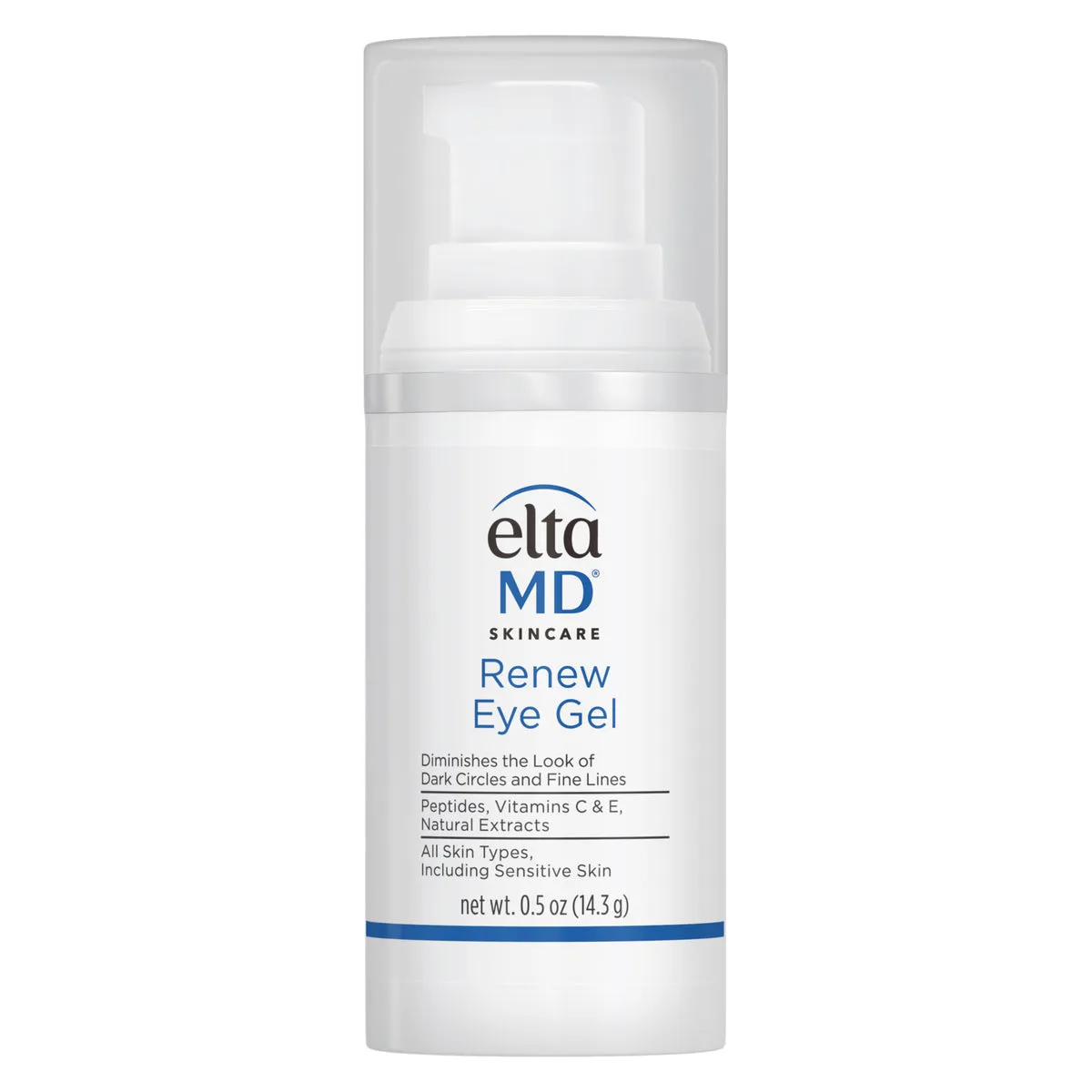
Rather than building around retinol or caffeine like most eye treatments, this leans on a dual-peptide system — Argireline plus palmitoyl tripeptide-5 — inside an oil-free silicone gel that blurs and smooths on contact. It's the rare physician-dispensed eye product that prioritizes gentleness and immediate cosmetic smoothing over an aggressive active, which is exactly why it shows up in offices treating sensitive, easily-irritated eye areas.
A gentle, lightweight peptide eye gel that smooths and blurs on contact and plays beautifully under makeup, with a sensible antioxidant cast for delicate skin. The headline peptides deliver subtle, gradual results rather than dramatic ones, and $65 for half an ounce makes it a comfort buy more than a value one.
Promisingfor AgingIn your profileYou chose · Peptides has trial-level evidence for aging but no guideline or regulatory standing yet — promising, short of a recommendation; the other actives here are not yet assessed for it.Moderate evidenceGentleNo reviews collected yet
The case for it
Acetyl Hexapeptide-8 has trial-level evidence for this concern but no guideline or regulatory standing yet.
It is plausibly present at a working level, though the concentration is not declared.
The formula carries none of the triggers this concern is sensitive to.
What would change this: A declared concentration would move this to a firmer reading of the dose.
Same rule for everyone. “Promising” is the verdict on 7,858 of 45,024 concern verdicts across the catalog; rule R9p decided 7,858 of them.
Unchanged since September 5, 2026, engine 5.1.1.
R9p — 0.5.0: 'Unproven' beside three filled dots read as one question answered twice with opposite words (7,018 rows). The chip measures standing, the dots measure trial volume; where the row carries at least one RCT or a tier-2 source (moderate dots) and the active is present at a working level, the honest word is Promising. Unproven is reserved for plausible-standing rows with limited or weak evidence, or an under-dosed form. Same rank as Unproven — a bet either way; the dots order them. · the full register
Carrying active
Acetyl Hexapeptide-8
Standing
plausible — trials support it
Form
plausible — studied range 0.0003%, from the trials on the row; needs leave-on contact
Tolerability
gentle
Row checked
against its sources on July 17, 2026 (evidence table ev-2026.09-r228)
Supporting rolefor Dark CirclesIn your profileYou chose · Peptides has early evidence for dark circles, and hydration of the periorbital area is the recognised companion to treating it — a reasonable supporting choice, short of a recommendation.Limited evidenceGentleNo reviews collected yet
The case for it
Acetyl Hexapeptide-8 has early or mechanistic evidence for this concern, not trial-backed standing.
It is plausibly present at a working level, though the concentration is not declared.
The formula carries none of the triggers this concern is sensitive to.
What would change this: A declared concentration would move this to a firmer reading of the dose.
Same rule for everyone. “Supporting role” is the verdict on 8,197 of 45,024 concern verdicts across the catalog; rule R8a decided 1,489 of them.
Unchanged since September 5, 2026, engine 5.1.1.
R8a — A plausible-tier active in a category with a supportive job: the sentence names the active instead of saying nothing targets the concern (the AmLactin / CeraVe SA case for keratosis pilaris, where no guideline and single trials leave the keratolytics at early evidence). · the full register
Carrying active
Acetyl Hexapeptide-8
Standing
plausible — trials support it
Form
plausible
Tolerability
gentle
Row checked
against its sources on July 17, 2026 (evidence table ev-2026.09-r228)
Good choicefor DehydrationIn your profileYou chose · Hyaluronic Acid is a reference standard by mechanism for dehydration; this gel carries it.Moderate evidenceGentleNo reviews collected yet
The case for it
Glycosaminoglycans & Sodium Hyaluronate has trial-supported standing for this concern.
It is plausibly present at a working level, though the concentration is not declared.
The formula carries none of the triggers this concern is sensitive to.
What would change this: A declared concentration would move this to a firmer reading of the dose.
Same rule for everyone. “Good choice” is the verdict on 9,564 of 45,024 concern verdicts across the catalog; rule R5 decided 9,072 of them.
Unchanged since September 5, 2026, engine 5.1.1.
R5 — Trial-supported or guideline-supported active, adequately or plausibly dosed. · the full register
Carrying active
Glycosaminoglycans & Sodium Hyaluronate
Standing
supported — its mechanism is established
Form
plausible — studied range 0.1%, from the trials on the row; needs leave-on contact; judge it after ~1 weeks
Tolerability
gentle
Row checked
against its sources on July 17, 2026 (evidence table ev-2026.09-r228)
The studies behind the evidence row
Draelos ZD, Cosmetic Dermatology: Products and Procedures — hyaluronic acid classified as a humectant water-binding agent holding many times its weight in water — reference work
Good choicefor SensitivityIn your profileYou chose · No fragrance, drying alcohol, declarable allergens or sensitising preservatives in this gel — the profile sensitive skin looks for.Not yet assessedGentleNo reviews collected yet
The case for it
Acetyl Hexapeptide-8 has no evidence row yet for this concern — it is in the research queue.
The formula carries none of the triggers this concern is sensitive to.
What would change this: A researched evidence row for the lead active would replace this with a verdict.
Same rule for everyone. “Good choice” is the verdict on 1,938 of 45,024 concern verdicts across the catalog; rule F2 decided 1,938 of them.
Unchanged since September 5, 2026, engine 5.1.1.
Does the jobDoes what a eye cream is for: safe for eye skin, targets a real eye concern. Not measured from the label: hydrates without heaviness, stays where it's put.
Where our review and the verdict differ. The review below was written on the formulation and the published trials; the verdicts above apply the stricter standing test in our methodology — an active earns a recommendation only with guideline or regulatory standing for the concern. Where the two disagree, the verdict is DermApproved’s position.
A verdict is DermApproved’s assessment of how well a product’s ingredients fit a concern — never a claim about what the product treats. Evidence dots and collected reviews sit beside it and are never blended in.
Rules 0.5.1 · evidence table ev-2026.09-r228 · how we decide
Assessment
Pros & Cons
Pros
✓ Gentle, fragrance-free formula suited to reactive eye skin
✓ Lightweight gel absorbs instantly with a blurred finish
✓ Dual peptides target expression lines without irritation
✓ Glides cleanly under concealer without creasing
✓ Air- and light-protective pump preserves the actives
✓ Niacinamide and antioxidants support tone and defense
✓ A little product covers both eyes per use
Cons
✗ Premium $65 price for just 0.5 ounces
✗ Peptide results are subtle and slow to appear
✗ Underwhelming on true pigmented dark circles
✗ Retinyl palmitate too weak to act like retinol
✗ Last of the product can be hard to dispense
Review
Full Review
Walk into a dermatology or plastic-surgery office and you'll often find this little pump bottle on the shelf next to the sunscreens, which tells you most of what you need to know about its philosophy. The eye area is the most reactive real estate on the face — thin skin, no oil glands, quick to flush and flake — and EltaMD built the Renew Eye Gel around that fragility rather than around the trendiest active. Where so many eye treatments now lead with potent retinol or a caffeine jolt, this one quietly bets on peptides and hydration, prioritizing the kind of tolerability you want when you're also recommending it to someone three days out from a laser.
The formula's engine is a pair of peptides. Acetyl hexapeptide-8, better known as Argireline, is the marquee ingredient, positioned to relax the micro-expressions that etch crow's feet into thin skin. It's joined by palmitoyl tripeptide-5, a signaling peptide that nudges collagen support. Peptides occupy an honest middle ground in the evidence world: more than wishful thinking, less than the gold-standard data behind retinoids. The studies that exist are often small and manufacturer-adjacent, so the right expectation is gradual, subtle softening over a couple of months, not a visible rewind. What you feel immediately is something different and arguably more satisfying day to day — the silicone-and-silica base gives an instant blurred, smoothed finish, and a generous helping of glycosaminoglycans and sodium hyaluronate plumps the look of fine lines on contact. That instant cosmetic payoff is a big part of why peptide eye gels feel like they work.
The supporting cast is thoughtful. Niacinamide sits lower in the list at a brightening-assist dose, where it can help nudge the look of dark circles and even tone, though it's not concentrated enough to be the dark-circle hero some shoppers hope for. Oil-soluble antioxidant esters — ascorbyl palmitate and tocopheryl acetate — offer gentle free-radical defense well suited to the eye area, where straight ascorbic acid would be needlessly harsh. There's a sprinkle of retinyl palmitate near the bottom, which sometimes leads people to treat this as a retinol product. It isn't. Retinyl palmitate is a weak ester present mainly for antioxidant support, and the gel behaves like a peptide treatment, not a retinoid one — which, for sensitive eyes, is a feature rather than a shortcoming.
In use, the texture is the quiet star. It's an oil-free gel that dispenses from a small protective pump and flashes almost instantly to a dry, smooth touch, leaving a faintly blurred surface that makeup glides over without pilling or creasing. There's no tingle, no stinging, no fragrance — exactly the neutral, uneventful experience you want for skin this delicate. People with oily lids appreciate that it never feels heavy or migratory, and dry types can comfortably layer a richer cream on top at night. A little goes a long way, which matters given the size.
And the size is the crux of the honest conversation. You get half a fluid ounce for $65. Even applied sparingly to both eyes twice a day, that works out to a few months and a per-ounce cost that lands firmly in the prestige bracket. The packaging is genuinely good — an airless-style pump that shields the light- and air-sensitive peptides and retinyl palmitate, which is the right call for these ingredients — but a handful of users find the very last of the product hard to coax out. None of this makes the gel bad; it makes it a comfort purchase. You're paying for a gentle, well-formulated, physician-trusted gel that feels lovely and won't irritate, not for a transformative active you couldn't find at any price point.
The most realistic way to frame the results is this: the gel reliably delivers the immediate stuff — smoothing, blurring, hydration, a flawless makeup base — and offers a slow, modest improvement in the look of fine lines from the peptides if you stay consistent for eight to twelve weeks. What it won't do is dramatically lighten true dark circles caused by pigment or vasculature, or substitute for a prescription retinoid if visible wrinkle reduction is your non-negotiable goal. Set against those honest expectations, it's a pleasant, dependable product that earns its spot in clinical settings precisely because it almost never causes a problem.
Who ends up loving this? People with reactive, easily-irritated eye areas who've been burned by stronger eye products, anyone who wants a smooth, fast-absorbing base under concealer, and shoppers who value gentleness and a trusted physician brand over chasing the strongest active on the shelf. If you instead want measurable wrinkle reduction and your skin tolerates it, a dedicated retinoid will give you more for your money, and if your dark circles are the main event, this isn't the targeted fix. But for what it sets out to do — smooth, hydrate, and protect delicate skin without drama — it does it gracefully.
Formula
Key Ingredients
The hero actives that drive this product's performance.
The signature peptide in this gel, marketed to soften the look of expression lines around the eyes by interfering with the micro-movements that crease the thin skin there. It works alongside the second peptide rather than alone — this is a peptide-driven gel, not a retinoid one.
A signaling peptide paired with the Argireline to nudge collagen support and firmness in the orbital area; together the two peptides are the formula's primary anti-aging engine, supported rather than led by the antioxidant cast.
Sits low in the list at a supporting dose, where it helps with tone and the look of dark circles — useful in an under-eye context, though here it's a brightening assist rather than the headline active.
The hydration backbone of the gel — these humectants plump the look of fine lines and crepiness immediately, which is much of what makes a peptide eye gel appear to work in the short term.
Established mechanismfor Dehydration · established mechanism
Oil-soluble antioxidant esters that offer gentle free-radical defense suited to delicate eye-area skin; they're a milder, more stable choice than straight ascorbic acid for this region rather than potent brighteners.
Limitedfor Aging
Ingredient standings describe the active at treatment-level doses and
vehicles; this product's own condition grades weigh its actual formula.
Smooth a small amount around the orbital bone after serums and before moisturizer. Because the silicone base gives a smooth slip, it sits nicely under eye-area sunscreen in the morning and under richer creams at night.
Results Timeline
An immediate smoothing, slightly tightened feel from the silicone-and-humectant base. Peptide-driven softening of fine lines is gradual and subtle, generally judged over 8-12 weeks of twice-daily use.
Pairs Well With
Hydrating serumsEye-safe sunscreenGentle night moisturizers
The science here is a study in modest, honest claims. The hero peptide, acetyl hexapeptide-8 (Argireline), is theorized to interfere with neurotransmitter release at the neuromuscular junction, softening the repetitive micro-contractions that crease thin eye-area skin; small studies, several manufacturer-sponsored, have reported measurable reductions in wrinkle depth with topical use, but independent, large-scale confirmation remains limited, which is why the evidence sits in the promising-not-proven tier. Palmitoyl tripeptide-5 is a matrikine-type signaling peptide intended to stimulate collagen synthesis, again supported by mostly in-vitro and supplier data rather than robust clinical trials. The more dependable performers are the humectants: glycosaminoglycans and sodium hyaluronate are well established to bind water in the stratum corneum, and the immediate plumping of fine lines they produce is real if temporary. Niacinamide has solid evidence for improving skin tone and reducing the appearance of hyperpigmentation, though at the low position it occupies here, its contribution is supportive. The antioxidant esters ascorbyl palmitate and tocopheryl acetate are more stable but less potent than their parent vitamins, a sensible trade for the delicate eye area. The honest synthesis: hydration and cosmetic smoothing are well supported, peptide-driven anti-aging is plausible and gentle but not strongly proven, and this gel succeeds by combining a reliable immediate effect with a low-risk, slow-burn active strategy.
References
Anti-wrinkle effects of topical acetyl hexapeptide-8 — International Journal of Cosmetic Science (2013)
Niacinamide: a review of its use in the treatment of pigmentary disorders — Journal of Cosmetic Dermatology (2011)
Dermatologist Perspective
In clinical practice, gentle peptide-based eye gels are often suggested for patients who can't tolerate retinoids around the eyes or who are recovering from procedures and need a low-irritation option. Dermatologists generally frame products like this one as supportive rather than corrective — useful for hydration, smoothing, and maintenance, but not a replacement for prescription retinoids when measurable wrinkle reduction is the goal. The oil-free, fragrance-free design and the air-protective packaging tend to be viewed favorably, since the eye area reacts poorly to irritants and unstable actives degrade quickly. Standard guidance is to apply a small amount along the orbital bone and to pair any eye treatment with diligent daily sun protection, which does more to prevent crow's feet than any topical can reverse.
Guidance
Usage & Recommendations
How to Use
Dispense a small amount — about the size of a grain of rice for both eyes — onto a ring finger and gently pat it along the orbital bone, from the inner corner outward, avoiding the lash line so it doesn't migrate into the eyes. Use it morning and night, after any serums and before your moisturizer. In the morning, follow with an eye-safe sunscreen, since sun exposure drives crow's feet far more than any topical can undo. Because the base is silicone-smooth, it doubles as a primer that helps concealer sit without creasing. Give it a few weeks of consistent use before judging the peptide effects.
Value Assessment
At $65 for 0.5 ounces, this is priced like the physician-dispensed product it is, and the honest read is that you're paying for gentleness, formulation polish, and brand trust more than for a uniquely powerful active. The peptides and antioxidants are sensible but not exclusive to this gel, and comparable smoothing-and-hydration can be had for less. Where the price earns some justification is the protective airless-style packaging, which genuinely matters for the light-sensitive ingredients, and the reassurance of a formula that almost never irritates. There's only one size, so no bulk-buy discount softens the math. It's a defensible splurge for sensitive eyes, not a value standout.
Who Should Buy
Reach for this if you have a reactive, easily-irritated eye area and want a gentle, fragrance-free treatment that smooths and hydrates without any sting. It's ideal for makeup wearers who want a creaseless base under concealer, and for anyone who trusts a physician-dispensed brand and values tolerability over chasing the strongest active on the shelf.
Who Should Skip
Look elsewhere if you want measurable wrinkle reduction and your skin tolerates retinoids, since a dedicated retinoid delivers more per dollar. Anyone whose main concern is genuine pigmented or vascular dark circles will likely find this underwhelming, and bargain-minded shoppers may balk at $65 for half an ounce of a gentle, subtle gel.
A featherlight, silicone-slip gel that flashes to a dry, smooth touch almost instantly, leaving a faintly blurred surface.
Scent
No added fragrance; essentially scentless on application.
Packaging
Small airless-style pump bottle that protects the retinyl palmitate and peptides from light and air, though the last bit can be tricky to coax out.
Finish
lightweightfast-absorbinginvisible
What to Expect on First Use
From the first use it feels cooling and smoothing, with a soft blurring effect on fine lines thanks to the silica and silicone. There's no tingle or adjustment period; the anti-aging payoff is the slow, subtle kind rather than anything dramatic out of the gate.
How Long It Lasts
Around 3-4 months with twice-daily application to both eyes, given how little product each use requires.
EltaMD added the Renew Eye Gel to round out its physician-dispensed range with a treatment gentle enough to recommend alongside its sunscreens and post-procedure care. The eye area is notoriously reactive, so the brand opted for a peptide-and-antioxidant approach rather than a retinoid-forward one, betting that tolerability would matter more than potency for its clinical audience.
About EltaMD Established Brand (5–20 years)
EltaMD has been a physician-dispensed skincare and sunscreen brand since 1988, widely stocked in US dermatology and plastic-surgery offices. Its eye gel has been in the catalog for roughly a decade, giving it a longer track record than most of the brand's recent launches.
Brand founded: 1988 · Product launched: 2014
Myth vs. Reality
Common Myths
Myth
An eye gel with peptides will erase wrinkles.
Reality
Peptides like Argireline and palmitoyl tripeptide-5 can soften the look of fine lines over time, but the evidence points to modest, gradual smoothing — not erasure. Much of the instant improvement comes from the hydrating, light-blurring base.
Myth
The retinyl palmitate makes this a retinol treatment.
Reality
Retinyl palmitate sits low in the formula and is a weak retinoid ester, included mainly for antioxidant support. This is a peptide gel, not a retinol eye cream, and it won't behave like one.
FAQ
Frequently Asked Questions
Does EltaMD Renew Eye Gel actually reduce wrinkles?
It can soften the look of fine lines gradually through its dual peptides, but expect subtle smoothing over 8-12 weeks rather than dramatic wrinkle reduction. Much of the immediate improvement comes from the hydrating, light-blurring gel base.
Is EltaMD Renew Eye Gel good for dark circles?
It contains niacinamide that can help with the look of tone, but at a supporting dose. It's better at smoothing and hydrating than at treating true pigmented or vascular dark circles, which often need targeted ingredients or in-office treatment.
Can I use EltaMD Renew Eye Gel with retinol?
Yes. The gel itself is peptide-based and very gentle, so it layers comfortably with a separate retinol routine — apply the eye gel first, then your retinoid elsewhere on the face, and use sunscreen in the morning.
Does EltaMD Renew Eye Gel contain retinol?
Only a small amount of retinyl palmitate, a weak retinoid ester low in the ingredient list included mainly for antioxidant support. It does not function like a true retinol eye treatment, so don't expect retinol-level results.
How long does one bottle of EltaMD Renew Eye Gel last?
Because only a tiny amount is needed per use, the 0.5 oz pump typically lasts around 3-4 months with twice-daily application to both eyes. The airless-style packaging also keeps the actives stable over that period.
Is EltaMD Renew Eye Gel safe for sensitive skin?
Yes — it's specifically formulated to be gentle, with no added fragrance, an oil-free base, and no harsh actives. That tolerability is why it's commonly dispensed in dermatology offices for reactive or post-procedure eye areas.
Reviews
What Reviewers Tend to Say
Recurring themes our editors read across retailer reviews of this product — summaries in our words, not quotations, and not a substitute for your own patch test.
Common Praise
Lightweight and non-greasy
Smooths under-eye texture immediately
No irritation or stinging
Sits well under makeup
Common Complaints
Pricey for the small size
Effects on lines are subtle
Wish it did more for dark circles
Pump can be hard to dispense at the end
Notable Endorsements
Frequently dispensed in dermatology and plastic-surgery practices
The collagen in your 'collagen cream' is far too big to enter skin. But a short list of actives genuinely convinces your skin to build its own — and telling the two apart is the entire game.
Products, answers, therapy guides, tools and articles in one search. Brand names,
slang and abbreviations all work — accutane finds isotretinoin, bacne finds truncal acne.