Schisandra (Wu Wei Zi)
Products with Schisandra (Wu Wei Zi)
 Ten-Ingredient Reactive-Skin Wash
 Soothing Cleansing Gel
Ten ingredients, one very mild glucoside, glycerin in second place and no fragrance: this is the Mustela wash for the baby whose skin reacts to the others, and it does that one job as well as any pharmacy cleanser. It barely lathers, feels like slightly slippery water and costs $17 for a formula this plain — all of which is the point, and none of which will please a parent who wanted bubbles.
 Light Fragrance-Free Baby Face Cream
 Soothing Moisturizing Face Cream
A light, fragrance-free baby face cream that gets the texture right — fast-absorbing esters and phospholipid emulsifiers instead of a waxy balm — and backs its 'soothing' name with a real anti-irritant in dipotassium glycyrrhizate. It calms chapped, drool-dried cheeks well and suits eczema-prone faces as a daily layer. The tube is small, the price is high, and a fragrance-free cream smells faintly of what it's made of, which not every parent expects.
 Sensitive-Skin No-Rinse Pick
 No Rinse Soothing Cleansing Water
The very-sensitive-skin version of Mustela's no-rinse water, adding a schisandra-derived soothing complex to an already ultra-gentle, fragrance-free micellar formula. It cleans face, body, and diaper area with a wipe and leaves reactive skin calm rather than tight — genuinely useful for changing tables and travel, with the premium price its only real drawback.
 First-Essence Workhorse
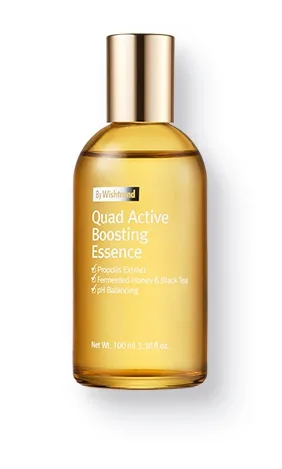
 Quad Active Boosting Essence
A first-step prep essence that names four botanical actives at honest percentages on the front of the bottle and actually delivers them on the back. Willow bark at 10%, cornflower water at 9%, schisandra at 9%, and mulberry plus lotus at nearly 18% combined — almost no other essence at this price point comes close to this density.
 Barrier-Nourishing Clean Cream
 GOOPGENES All-in-One Nourishing Face Cream
Don't be put off by the cellular-sounding name: this is a genuinely good, fragrance-free nourishing cream. Quality plant butters, squalane, jojoba, and ceramide-like lipids make it a real barrier-supporting treat for dry, tight, or sensitive skin. It won't touch your genes or replace a retinoid, and it's priced at a clean-beauty premium — but as a comforting moisturizer, it delivers.
 Desert-Rose Glow Budget Pick
 Halloasis Brightening Hill Mask
One of SNP's quiet successes: an alcohol-free, humectant-rich sheet with niacinamide fourth in the list and polyglutamic acid for a smooth, glowy finish, all for about two dollars a mask. The desert rose is mostly story, the fragrance is unnecessary, and fungal-acne-prone skin should pass, but for dull, dehydrated skin this is an easy recommendation.
 Adaptogen Restorative Cream
 Ashwagandha Ultra-Rich Restorative Cream
Eminence's Ashwagandha Ultra-Rich Restorative Cream layers Ayurvedic adaptogen ashwagandha onto a contemporary multi-mechanism stack — bakuchiol, complete CER:CHOL:FA framework, niacinamide, two peptides, tulsi and schisandra. Pregnancy-safe and well-formulated at 122 dollars for 60ml of upper-mid clean-beauty cream.
 Alpine Luxury Day Cream
 Nourishing Day Cream
A genuinely well-built rich emollient day cream from Susanne Kaufmann's Austrian Alpine brand, with rosehip seed oil at meaningful concentration and a thoughtful humectant pair. The luxury price and natural fragrance complex with multiple EU-recognized allergens are the consistent drawbacks — best for dry, non-reactive skin in cool weather, hard to recommend for sensitive users at $110.
The full schisandra (wu wei zi) guide
A fruit with a long record in Traditional Chinese Medicine, schisandra has quietly migrated from herbalist formularies into modern moisturizers and toners — particularly in K-beauty — where it pulls double duty as an antioxidant and barrier-support botanical.
The science is real but still catching up to the tradition: peer-reviewed work shows strong tyrosinase inhibition in cell-free assays and measurable anti-inflammatory effects in animal and cell models, while controlled human trials on skin remain essentially absent.
How it's regulated in the US
FDA does not classify ingredients — it classifies products, by what they are sold to do. The same molecule can be a drug active in one product and a cosmetic ingredient in the next, and only the claim on the label decides which. What follows is a statement about that legal standing, not about whether it works — the evidence question is answered separately above.
Cosmetic Schisandra (Wu Wei Zi) is a cosmetic ingredient in the US: no OTC monograph covers it and it is not an active in any FDA-approved drug, so a product built around it is a cosmetic rather than a drug.
Most of the supporting data is preclinical. A 2023 study in Medicina (PMC10385087) found that a topical ethanolic schisandra extract reduced skin lesions, improved water-holding capacity, and reversed histopathological changes in an MC-903 atopic dermatitis mouse model, alongside lower levels of pro-inflammatory cytokines. A 2022 paper in Molecules (PMC9786222) reported that aqueous schisandra extracts inhibited mushroom tyrosinase by roughly 96–98% in cell-free assays. A 2026 Frontiers in Immunology study showed that schisandra stem extract and schisandrin B suppressed NF-κB signaling in a DNCB atopic dermatitis mouse model — though that work used oral dosing and stem material, not topical fruit extract. Anti-melanogenic activity of gomisin N has been demonstrated in B16 melanoma cells (PubMed 28695326). Collagen-synthesis and "adaptogen-for-skin" claims lack human confirmation. Classify as emerging: the mechanisms are plausible and early data is encouraging, but no human RCT evidence exists.
How it works
The bioactive heart of schisandra is its dibenzocyclooctadiene lignans — principally schisandrin, schisandrin B, schisandrin C, and a family of gomisins — and these appear to act through several overlapping pathways rather than one headline mechanism. On the antioxidant front, schisandrin B has been shown in lab models to stimulate the skin's own glutathione production, reinforcing endogenous free-radical defenses rather than simply depositing antioxidants from outside. That distinction matters because photoaging and pollution continuously drain native defenses, and ingredients that nudge the skin to make more of its own can, in principle, have steadier effects than electron donors that are spent on contact. For pigmentation, the lignans and phenolic acids inhibit tyrosinase, the rate-limiting enzyme in melanin synthesis, at low concentrations in cell-free assays. Gomisin N has shown anti-melanogenic activity in B16 melanoma cell lines — promising as a mechanism, though this is in-dish data rather than human proof. The anti-inflammatory side runs largely through suppression of NF-κB signaling, which lowers pro-inflammatory cytokines (IL-4, IL-13, TSLP among them) that drive barrier disruption in reactive, eczema-prone skin. In the atopic dermatitis mouse model, that translated into reduced immune-cell infiltration and a measurable recovery of the epidermal barrier. There are also hints that schisandra compounds slow peroxidation of the unsaturated lipids holding the barrier together. Taken together, the extract reads as a multi-target botanical — moderating oxidative stress, calming inflammation, and lightly braking melanin overproduction — which is why it lands in both soothing moisturizers and tone-evening toners.
Key benefits
- Inhibits mushroom tyrosinase by roughly 96–98% in cell-free assays, a mechanism linked to more even tone
- Lowers pro-inflammatory cytokines tied to eczema-like barrier disruption in animal models
- Appears to boost the skin's endogenous glutathione, supporting its own antioxidant capacity
- Improved water-holding capacity and barrier recovery in a topical atopic dermatitis study
- Lignans and phenolic acids scavenge free radicals generated by UV and pollution stress
- Gomisin N shows anti-melanogenic activity in cell studies, suggesting potential for fading dark spots
Concentration & usage
No minimum effective topical concentration has been established in controlled human trials. In cosmetic formulas schisandra extract usually sits at low-percentage levels — figures around 0.3% turn up for anti-aging uses, while some preparations run higher (roughly 1–6%) depending on solvent and standardization. On a label, look for SCHISANDRA CHINENSIS FRUIT EXTRACT or SCHIZANDRA CHINENSIS FRUIT EXTRACT. Because it is a whole-plant extract rather than a single molecule, potency swings widely with extraction method (aqueous, ethanolic, or CO2) and lignan standardization, so a standardized extract delivers more predictable results. Ingredient-list position offers a rough read: a mid-list placement points to meaningful inclusion, while a spot near the fragrance and preservative tail usually signals a trace, marketing-driven amount.
Who it's for & who should be cautious
Who it's for
Schisandra suits anyone chasing antioxidant support with a slightly different fingerprint than vitamin C or green tea — useful for dullness, mild reactivity, or uneven tone. It is also a sensible routine addition for dry or eczema-prone skin, given the barrier-recovery and anti-inflammatory signals seen in preclinical work. Without the irritation profile of actives like retinol or AHAs, it layers comfortably and fits routines at any experience level.
Who should be cautious
There are no widely documented contact-allergen concerns for schisandra, but, as with any botanical, anyone prone to plant-based sensitivities should patch-test first — especially people who react to related Magnoliaceae plants. Those with very oily or fungal-acne-prone skin should vet the whole formula rather than the ingredient itself, since schisandra often travels in richer toner or moisturizer bases. And it should not be treated as a replacement for better-evidenced brightening actives like tranexamic acid, alpha-arbutin, or azelaic acid when pigmentation is the main goal — the human efficacy data simply is not there yet.
Pairs with & conflicts
Myths & facts
Myth: Schisandra is an 'adaptogen for skin' that lowers cortisol in the dermis when applied topically
Reality: The adaptogen label comes from schisandra's internal, systemic use. There is no confirmed evidence that topical application modulates cortisol in the skin. Its relevant topical signals — antioxidant activity and NF-κB-mediated anti-inflammatory effects — come from preclinical data and have nothing to do with stress-hormone pathways.
Myth: Near-total tyrosinase inhibition in a test tube means strong brightening on real skin
Reality: Schisandra extracts hit roughly 96–98% inhibition against mushroom tyrosinase in cell-free assays, which sounds dramatic, but cell-free potency rarely maps cleanly onto human results. Penetration, extract stability, in-formula concentration, and the messy biology of human melanocytes all sit between the assay and your face. Promising, yes; proof of clinical brightening, no.
Myth: Thousands of years in TCM means schisandra is a well-understood skincare ingredient
Reality: The berry's long history is as an internal tonic for liver, vitality, and lung function. Topical skincare use is far more recent and rests on a much thinner evidence base. The mechanisms overlap in interesting ways, but centuries of oral tradition do not validate the specific claims now stamped on serums and toners.
Frequently asked questions
How long before a schisandra toner or moisturizer might even out my tone?
No human trial has defined a brightening timeline for topical schisandra, so any exact figure would be a guess. Going by how other tyrosinase-inhibiting botanicals behave, visible tone-evening usually takes consistent use across 8–12 weeks — and the effect will be gentler than what you'd get from clinically validated brighteners like tranexamic acid or azelaic acid at therapeutic strengths.
Can schisandra calm skin that flares with stress or environmental triggers?
Preclinical signals point that way — its NF-κB inhibition and antioxidant activity hit two common mechanisms behind reactive responses. But that evidence is from animal and cell studies, not human trials on stress-reactive skin. It's worth trying in a well-built formula, with expectations kept proportional to an emerging evidence level.
Is a schisandra product safe to use while pregnant?
There's no established safety data for topical schisandra extract in pregnancy. Used at the low concentrations typical of leave-on products and with no documented systemic toxicity at cosmetic doses, the topical risk is probably low — but gestational studies specific to it don't exist. Checking with an OB or dermatologist before adding it is the prudent move.
How does schisandra differ from K-beauty antioxidants like green tea or ginseng?
Green tea carries far more human-trial data, especially around photoprotection and sebum control. Ginseng has a well-mapped ginsenoside profile and broader anti-aging research. Schisandra is the more specialized of the three — its lignan-heavy makeup skews toward anti-inflammatory and tyrosinase-inhibiting effects, making it most relevant in barrier-calming and tone-evening contexts rather than as a general-purpose antioxidant. They complement rather than duplicate each other.
Does the type of schisandra extraction actually change what I get?
More than most brands let on. Aqueous, ethanolic, and CO2 extracts differ in lignan and phenolic-acid content, which shifts both potency and which benefits show up. The Molecules study (PMC9786222) found its tested aqueous extracts strongly antioxidant and tyrosinase-inhibiting — but without standardization details on a label, it's hard to know what type or strength a given product actually delivers.
Could schisandra stand in for niacinamide or vitamin C in a brightening routine?
Not on current evidence. Niacinamide has solid human data for tone-evening around 5%, and vitamin C has decades of photoprotection and brightening research behind it. Schisandra works best as a complement to those validated actives — potentially reinforcing overall antioxidant defense or easing inflammatory flares that worsen pigmentation — rather than carrying a brightening routine on its own.