Lotus (Nelumbo nucifera Extract)
Products with Lotus (Nelumbo nucifera Extract)
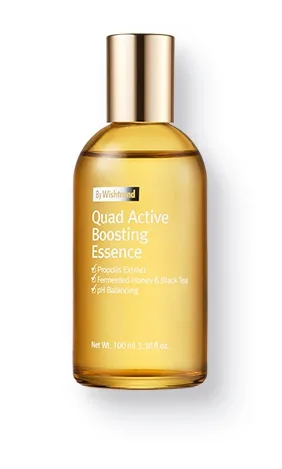 First-Essence Workhorse
 Quad Active Boosting Essence
A first-step prep essence that names four botanical actives at honest percentages on the front of the bottle and actually delivers them on the back. Willow bark at 10%, cornflower water at 9%, schisandra at 9%, and mulberry plus lotus at nearly 18% combined — almost no other essence at this price point comes close to this density.
 Fragrance-Free Heat-Set Anti-Frizz
 Humidity Hero Anti-Frizz Styling Spray
A nine-dollar heat-activated anti-humidity spray built on the same cross-linking silicone polymer as the thirty-dollar prestige versions, in a thirteen-ingredient list with no fragrance and no alcohol. Used exactly as the label says, sprayed on damp hair and blow-dried hot under tension, it delivers sleek blow-outs that survive humid days; used any other way it does very little, and the reviews split along precisely that line.
 Spa-Day Firming Mask
 Intensive Firming Sauce Modeling Mascream
A genuinely fun, affordable take on the salon modeling mask: a collagen-and-peptide ampoule you blend with a moisture cream into a 'sauce' that sets on the skin and peels away to a plumped, firmer-looking glow. The effect is immediate and real but temporary, the ritual is pleasantly messy, and the added fragrance means sensitive skin should tread carefully. As an occasional spa-day treat, it delivers.
 K-Beauty Daily Cream Workhorse
 Rich Moist Soothing Cream
The richer, jar-format face cream sibling of the better-known Klairs Supple Preparation Toner — a thoughtfully built K-beauty daily cream with a credible ceramide-and-shea barrier backbone, a real soothing botanical complex, and a layered humectant system. The essential oil scent is the formula's main compromise and the reason it does not work universally on reactive skin.
 K-Beauty Vitamin-Rich Gel-Cream
 Vitamin Tree Water Gel
A lightweight K-beauty gel-cream built around sea buckthorn — a botanical genuinely dense in vitamins and a rare omega-7 fatty acid — backed by a vitamin C derivative and a multi-botanical antioxidant layer. It is a versatile, fragrance-free daily moisturizer for normal-to-oily skin in warm weather. The witch hazel, silicones, and premium price are the considerations.
 K-Beauty Pore Serum
 Lotus Pore Tightening Serum
Ma:nyo Lotus Pore Tightening Serum combines lotus complex with niacinamide, tannic acid, and adenosine in fragrance-free vegan K-beauty pore serum at 35 dollars.
 Derm-Brand Daily Glycolic Pad
 Even & Correct Brightening Treatment Pads
A daily glycolic pad with more thought behind it than most: a declared 10 percent acid, partially neutralised, on an alcohol-free witch-hazel base, carrying tranexamic acid, niacinamide and lotus extract as a three-route brightening complex. It is the accessible entry to SkinMedica's hydroquinone-free pigment line and a fair value at a dollar a pad, provided you respect the acid and start once a day.
 Clarity Glow Sheet
 Mediu Amino Clearing Mask
Despite the name, this is a radiance mask, not an acne mask: Leaders' Mediu amino acid base with a stable vitamin C derivative, lotus flower and vitamin E, in an oil-free essence. It gives a reliable, pleasant glow and fair value at about $2.80 a sheet. Fragrance and a few potent botanicals make it less suited to sensitive skin.
 Gen Z Gateway Moisturizer
 Dreamy Dew Moisturizer
Florence by Mills Dreamy Dew is a perfectly adequate lightweight moisturizer that does exactly what a basic gel-cream should — hydrate, absorb quickly, and get out of the way. The extensive botanical extract list is more fragrance than function, but at $18 from a celebrity brand, the pricing is honest even if the formulation is unexciting.
 K-Beauty Double Cleanse Icon
 Gentle Cleansing Oil
An award-winning cleansing oil that dissolves makeup like butter and leaves skin feeling genuinely nourished rather than stripped. The hanbang botanical blend and luxury plant oils elevate the double-cleanse ritual, though the fragrance and comedogenic ingredients mean it is not universally suitable. A worthy first step for those who want their cleansing to feel like skincare.
 Boryeong Mud Peel-Off
 Relief Mud Peel Off Mask
A satisfying occasional peel-off pore mask carrying the brand's Boryeong mud — a film you apply, let dry, and peel away to lift surface debris and the tops of blackhead plugs. It refreshes texture and makes pores look cleaner in the moment. But be clear-eyed: despite the 'Relief' name, it's the harsher product in the line, with high alcohol, eucalyptus oil, and the inherently aggressive peel format, making it a resilient-oily-skin-only, occasional-use product.
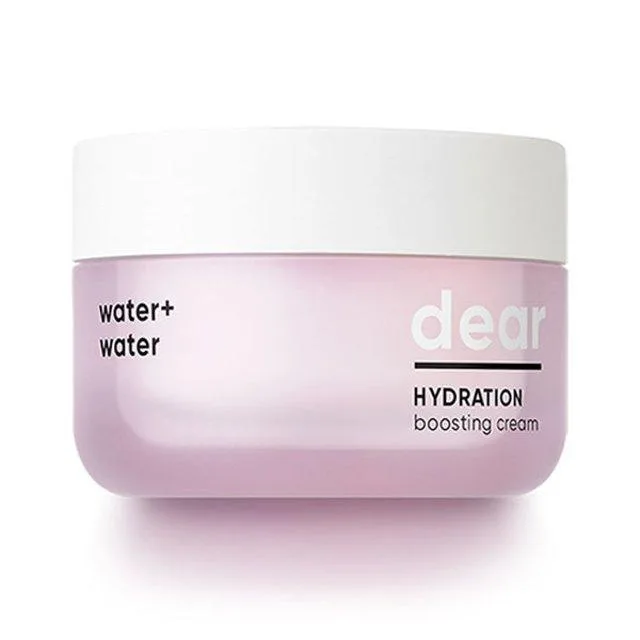 K-Beauty Hydration Workhorse
 Dear Hydration Boosting Cream
A genuinely well-built K-beauty hydration gel-cream that delivers a strong glycerin and acetyl glucosamine humectant backbone, real niacinamide, and a comfortable lightweight texture for under thirty dollars. The fragrance is the only meaningful caveat — for everyone except the most reactive skin, this is one of the best affordable Korean hydration creams on the market.
 Gentle Luxury Acid Toner
 Lotus Youth Preserve Exfoliating Face Toner
A competent, gentle daily exfoliating toner — glycolic and succinic acids in a soothing, botanically-styled formula. It works, mildly and gradually. But a steep luxury price for fairly ordinary acid chemistry, and the questionable choice to add fragrance and lemon peel oil to an exfoliating product, hold it back.
 Budget Body Toner
 Skin Firming & Toning Body Gel-Cream with Q10
The bestselling body firming gel-cream in the US drugstore channel delivers on its fast-absorbing, non-greasy promise and offers modest but real toning results with consistent use. The Q10 science is legitimate; the expectations should be realistic. At $11 with 32,000+ glowing reviews, the experiment is nearly risk-free.
 The Routine's Engine
 Lotus Enzyme Exfoliator
The genuine workhorse of Pharrell's routine: a meaningful glycolic acid dose paired with fruit enzymes, buffered by panthenol and glycerin into a fragrance-free exfoliator that actually resurfaces. It's effective and well-built — the catches are the premium price and a real risk of over-exfoliating if you stack it with the brand's also-exfoliating cleanser. Used with restraint and sunscreen, it earns its keep.
 Pore-Purifying Cleanser
 Purifying Shot Cream Cleanser
A cheap, effective pore-purifying cream cleanser that uses porous volcanic ash and egg-white albumin to genuinely absorb oil and deep-clean congested skin, with blue lotus and Poncirus extracts for a soothing-astringent note. For oily and combination skin it delivers a satisfying matte clean. The catch is a soap base plus citrus-oil fragrance that make it strictly an oily-skin wash and a poor fit for dry or sensitive types.
 Allure Award Winner
 Lotus Youth Preserve Moisturizer
A lightweight, pleasant daily moisturizer that hydrates well and includes adenosine for evidence-backed anti-wrinkle support, but leans too heavily on proprietary botanical claims that lack independent validation. The reformulated silicone-free formula is a nice touch; the lemon peel oil is not.
 Luxe Bedtime Treat
 Lotus Anti-Aging Night Moisturizer
A genuinely pleasant, well-built luxury night cream that hydrates, softens, and leaves skin looking rested by morning. Its humectant-emollient-antioxidant base is solid, but the headline Super Lotus claims are lightly evidenced and the fragrance load makes it a poor fit for sensitive skin. You are paying largely for the experience and the LVMH polish.
 Deep-Clean Foam
 Crème Radiance Clarifying Cream-to-Foam Cleanser
A pleasant, effective deep-cleaning cream-to-foam wash that lathers richly and removes makeup well, with extra glycerin to soften the after-feel of its soap base. It's genuinely nice to use, but it's a fairly classic fatty-acid cleanser with fragrance and an alkaline finish, priced at a premium that's hard to defend for a product you rinse off. Good for oily skin, optional for everyone else.
 Five-Minute Luxury Facial
 Lotus Youth Preserve Rescue Mask
A luxurious five-minute facial that genuinely manages to exfoliate without stripping, thanks to its polyglutamic acid and kombu seaweed backbone. The triple-particle system delivers real smoothing results, but the luxury price and citrus fragrance load make it a tough recommendation over simpler, more affordable physical exfoliants.
 Upgraded Brightening Powerhouse
 GenOptics Ultraura Essence
A genuinely improved successor to the Aura Essence with a more sophisticated brightening complex, but at $265 it doubles down on SK-II's most persistent challenge: asking luxury prices for actives that aren't exclusive to luxury formulas. Beautiful to use, effective for mild pigmentation, but the cost-per-result ratio remains hard to defend.
 K-Beauty Luxury Icon
 Essential Comfort Moisturizing Cream
A beautifully textured luxury moisturizer that delivers on hydration and sensorial experience but asks a steep price for a formula built primarily on silicones and standard humectants. The hanbang botanical blend is charming rather than transformative, and the heavy fragrance load limits its audience. Best for dry-skinned devotees of Korean luxury who value ritual as much as results.
 Smooth-Canvas Eye Pick
 Lotus Youth Preserve Eye Cream
A likeable, lightweight eye cream that delivers a real soft-focus smoothing effect and gentle depuffing, helped by adenosine, squalane, and horse chestnut. It is genuinely good as makeup prep and broadly tolerable, but the tiny 0.5-ounce jar at a luxury price and a faint citrus note mean you are paying prestige money for a competent, not miraculous, product.
The full lotus (nelumbo nucifera extract) guide
Sacred lotus has been pressed into beauty rituals across Ayurvedic and TCM traditions for millennia, but modern cosmetic chemistry has only recently started building a case for why those traditions had a point.
The plant's flavonoids, alkaloids, and polyphenols show measurable tyrosinase inhibition, collagenase suppression, and antioxidant activity in cell and computational studies, with limited but real human data on brightening. It turns up most often in K-beauty and luxury formulas, working as an antioxidant-brightening-soothing multi-tasker rather than a single-mechanism hero.
How it's regulated in the US
FDA does not classify ingredients — it classifies products, by what they are sold to do. The same molecule can be a drug active in one product and a cosmetic ingredient in the next, and only the claim on the label decides which. What follows is a statement about that legal standing, not about whether it works — the evidence question is answered separately above.
Cosmetic Lotus (Nelumbo nucifera Extract) is a cosmetic ingredient in the US: no OTC monograph covers it and it is not an active in any FDA-approved drug, so a product built around it is a cosmetic rather than a drug.
Most lotus research sits in vitro or in silico, with a few studies pinning down specific mechanisms. Water extracts of Nelumbo nucifera leaf, seed, and flower produced DOPA-oxidase inhibition of 59%, 57%, and 50% respectively in laboratory assays, suggesting genuine tyrosinase-inhibiting potential. Nuciferine, a characteristic lotus alkaloid, was flagged as a strong tyrosinase binder in a 2023 molecular docking study — a computational prediction, not a wet-lab confirmation. A 2022 study found lotus root polyphenols suppressed UV-induced MMP-1 (collagenase) in dermal cells, pointing to anti-collagenase and anti-inflammatory activity. On brightening, a small split-face randomized trial in 21 women using a Nelumbo nucifera callus extract reported statistically significant melanin reduction and increased skin brightness from week six, with no adverse reactions. In silico flavonoid work identified kaempferol-3-O-robinobioside as inhibiting tyrosinase by roughly 70% in screening assays. Separately, lotus germ extract was shown to trigger autophagy in aging fibroblasts via the DAPK1-Beclin1 pathway — early mechanistic work, not a clinical outcome. What is largely missing is large-scale, placebo-controlled human data on standardized commercial extracts. The picture is plausible mechanisms plus one positive human trial, which is why lotus reads as promising rather than proven.
How it works
Lotus earns its formula slot through several overlapping pathways rather than one dominant one. Its flavonoid fraction — led by kaempferol, quercetin derivatives, and kaempferol-3-O-robinobioside — scavenges free radicals and dampens oxidative stress from UV and pollution. The same flavonoids intersect with pigment control: kaempferol and quercetin can inhibit tyrosinase, the enzyme that drives the rate-limiting step of melanin synthesis, which over time may temper excess pigmentation. Nuciferine, the alkaloid concentrated in the leaf, has been predicted in docking studies to bind tyrosinase as well, offering a second possible route to the same target. The anti-aging angle comes from lotus polyphenols' ability to suppress matrix metalloproteinase-1 (MMP-1), the UVA-induced collagenase that breaks down dermal collagen. In cell studies, lotus root polyphenol treatment lowered UV-triggered MMP-1 and IL-1α, hinting at both collagen-protective and calming effects — consistent with the proanthocyanidins found in seed fractions. There is also early work showing lotus germ extract activating autophagy in aging fibroblasts through the DAPK1-Beclin1 signaling pathway, a kind of cellular housekeeping that helped restore collagen production in lab models. That finding is genuinely intriguing but remains mechanistic groundwork, not a confirmed in-use benefit. Pulled together, lotus behaves as a multi-angle botanical: gentle antioxidant cover, modest brightening support, early collagen defense, and soothing activity from one plant-derived complex.
Key benefits
- Flavonoids and the nuciferine alkaloid show tyrosinase-inhibiting activity that may support a more even tone over time
- Lotus polyphenols suppressed UV-induced MMP-1 in cell studies, suggesting some protection against collagen breakdown
- Antioxidant flavonoids like kaempferol and quercetin help neutralize free radicals from UV and pollution
- Reduced IL-1α signaling in keratinocyte studies points to a calming effect on reactive skin
- Proanthocyanidins in the seed fractions add further antioxidant and soothing activity
- Plant-derived compounds offer light hydration support without a heavy feel
Concentration & usage
Lotus extract is used at trace to moderate levels in finished products, and formulators rarely disclose exact percentages. Because these are unstandardized botanical extracts, a stated percentage tells you little without knowing the extract's potency. On the INCI list, watch for Nelumbo Nucifera Flower Extract, Nelumbo Nucifera Leaf Extract, or Nelumbo Nucifera Seed Extract — the leaf tends to carry more alkaloid (nuciferine) and the seed more proanthocyanidins. Nymphaea Lotus Flower Extract is a different plant (white water lily), not the sacred lotus. No clinically established minimum effective concentration exists for topical use; the one human whitening trial used a callus-derived extract at an unspecified concentration. If brightening is your goal, choose a product where lotus sits higher in the INCI list and ideally pairs it with a stronger companion like niacinamide or alpha-arbutin.
Who it's for & who should be cautious
Who it's for
Anyone dealing with uneven tone, early hyperpigmentation, or dullness is the natural fit — lotus offers several brightening pathways without the sting that AHAs or stronger actives can bring. It also suits skin caught in the antioxidant-protection gap: not so sensitive it needs only barrier actives, but not ready for high-strength vitamin C or retinol. Oily and combination types may appreciate lotus's traditional reputation for sebum balance, and its calming profile makes it a sensible option for reactive skin that struggles with more aggressive brighteners.
Who should be cautious
With a low irritation profile and no widely documented contraindications for normal cosmetic use, true avoidance cases are rare. Still, anyone with a known allergy to Nelumbo nucifera or related aquatic plants should patch-test first, and people with broad botanical sensitivities should introduce it slowly. Lotus is not a stand-in for clinically validated actives — if you are managing moderate-to-severe hyperpigmentation, leaning on it instead of azelaic acid, kojic acid, or tranexamic acid would leave real results on the table. Pregnant users should apply their usual botanical-caution approach, since reproductive-safety data specific to topical lotus fractions is limited.
Pairs with & conflicts
Myths & facts
Myth: Lotus extract is just botanical filler — it doesn't really do anything in a formula.
Reality: Specific lotus compounds, including nuciferine and kaempferol-3-O-robinobioside, have shown tyrosinase inhibition and collagenase suppression in cell and computational studies, and a 21-person split-face trial reported visible brightening. It is no replacement for an anchor brightener like tranexamic acid, but calling it inert ignores a real and growing body of mechanistic data.
Myth: All lotus-derived ingredients are interchangeable — flower, leaf, root, and seed work the same way.
Reality: Different plant parts carry different active profiles. The leaf is richer in nuciferine, the seed fraction in proanthocyanidins, and lotus root polyphenols carry the clearest MMP-1 suppression data. The INCI name matters, so Flower Extract and Leaf Extract should not be treated as equals.
Myth: Lotus is purely a traditional-use ingredient with no modern scientific backing.
Reality: Peer-reviewed studies have now characterized tyrosinase inhibition, MMP-1 suppression, IL-1α modulation, and antioxidant activity for lotus fractions in skin-relevant systems, and one small human trial supports the brightening claim. The evidence base is still emerging and lacks large RCTs, but the mechanistic groundwork is no longer speculative.
Frequently asked questions
How soon might a lotus extract product visibly brighten my skin?
The single human trial on a Nelumbo nucifera callus extract reported measurable melanin reduction and increased brightness starting around week six of twice-daily use. That timing fits how tyrosinase inhibitors generally behave — you're slowing new pigment production rather than lifting existing spots — so give any lotus product at least 8 to 12 weeks before judging it.
Is lotus extract the same as lotus water or lotus flower water?
No. Lotus water (a floral hydrosol) is the aromatic water byproduct of steam distillation and is mostly used for scent and light hydration. Lotus extract (INCI: Nelumbo Nucifera Flower/Leaf/Seed Extract) is a concentrated preparation carrying the flavonoids, alkaloids, and polyphenols studied for brightening and antioxidant effects. If you want the active compounds, the extract — not the hydrosol — is what does the work.
Can a lotus serum sit in the same routine as retinol?
Yes, and they complement each other well. Lotus adds antioxidant cover and gentle brightening while retinol drives turnover and collagen synthesis through a separate mechanism, with no known antagonism between them. If your skin is still adjusting to retinol, lotus's calming character may even take a little edge off the irritation.
Does it matter whether a product uses Nelumbo nucifera or Nymphaea lotus?
It does — these are two different plants that share the common name 'lotus.' Nelumbo nucifera is the sacred lotus and the species behind nearly all the studied skin benefits, including the tyrosinase and MMP-1 work. Nymphaea lotus is the Egyptian white water lily, botanically distinct and far less studied for skincare, so the Latin name on the label is worth checking.
Is lotus extract safe for fungal-acne-prone skin?
Lotus extract itself is not a known feeder for Malassezia, the yeast behind fungal acne, and its calming profile may even suit reactive, breakout-prone skin. The bigger question is what surrounds it in the formula — oils and certain fermented ingredients in the same product matter far more for fungal-acne safety than the lotus does.
Does lotus extract offer any sun protection?
Not in any way that could stand in for SPF. Some lab work has looked at lotus fractions absorbing certain UV wavelengths, but cosmetic-use concentrations are nowhere near photoprotective levels. Where lotus genuinely helps is antioxidant support — limiting the oxidative damage that follows sun exposure — which complements sunscreen rather than replacing it.
Sources
- https://pmc.ncbi.nlm.nih.gov/articles/PMC10708243/
- https://pmc.ncbi.nlm.nih.gov/articles/PMC10584639/
- https://pmc.ncbi.nlm.nih.gov/articles/PMC8975922/
- https://pmc.ncbi.nlm.nih.gov/articles/PMC10706394/
- https://pmc.ncbi.nlm.nih.gov/articles/PMC9596218/
- https://link.springer.com/article/10.1007/s11814-010-0357-6