The Lunchtime Procedure Audit: Real Downtime, Procedure by Procedure
'No downtime' is usually a true statement about a category of downtime you don't care about. Here is the bruise-and-peel calendar for each procedure, and how to schedule backwards from a date that matters.
Read the preview
From the DermApproved blog, in Procedure Costs and Value: no downtime is usually a true statement about a kind of downtime you do not care about. There are three kinds, and clinics quote whichever flatters the procedure — which is how people book the pigment treatment that makes their spots darker for a week first. For the full breakdown, visit dermapproved.com/blog.
Three kinds of downtime, and the one being quoted
The reason 'lunchtime procedure' keeps producing people who cancel dinner is that the phrase measures the wrong thing. Downtime is not one quantity. It is three, and every clinic quotes whichever one flatters the procedure.
Clinical downtime is how long before you can resume normal activity — exercise, heat, sun exposure, your usual actives. It is the shortest of the three, it is medically defined, and it is what 'no downtime' almost always refers to.
Social downtime is how long before you would sit in a meeting or a restaurant without feeling the need to explain your face. It is longer, it is entirely subjective, and it is what most people actually mean when they ask.
Photographic downtime is how long before you would happily appear in a photograph you do not control — a wedding, a headshot, a passport, someone else's phone. It is the longest, and it is the standard by which people judge whether they were misled.
A procedure can honestly have zero clinical downtime, two days of social downtime and ten days of photographic downtime. Nobody was lying to you; you were answering a different question from the one being priced. So for the rest of this article every estimate is given as all three, and the ranges are what a reasonable person should plan for rather than the best case a brochure can find.
Injectables: a bruise lottery with a fixed clock
Neurotoxin. Clinical downtime: essentially none — stay upright for a few hours and skip the gym that day. Social: none, unless you bruise. Photographic: none for the injection itself.
But the neurotoxin scheduling problem is not downtime at all — it is onset. The effect appears over days five to seven and peaks at about two weeks, so booking the week before an event gives you a face midway through changing. The relevant rule has nothing to do with recovery: three weeks ahead, minimum, so that what you see is what will be photographed.
Filler. Clinical downtime: minimal. Social and photographic: a lottery. Injection puncture sites bruise, and whether yours do depends on the area (lips and the under-eye region are the worst offenders), the technique (a blunt cannula generally bruises less than a needle), your vascularity, and luck. A bruise on a lip can take a week to ten days to clear and does not cover well with makeup because the tissue is mobile and mucosal.
Filler also swells, and swelling peaks in the first 24 to 72 hours. What you see two days after a lip treatment is not the result, and the number of people who panic at day two about a result that settles by day ten is very large.
The controllable part: non-essential blood thinners — including over-the-counter anti-inflammatories, fish oil and high-dose vitamin E — and alcohol in the days beforehand all increase bruising, and stopping them is a reasonable precaution. Prescribed anticoagulants are a different matter entirely and are never stopped without the prescribing clinician's instruction; the correct move there is to tell your injector, not to adjust your medication.
Plan on three weeks for anything injected before an event. Not one.
Peels: depth writes the calendar, not the label
The single most useful thing to understand about peels is that the recovery is determined by how deep the peel went, which is a function of the agent, its concentration, the volume applied, the pressure and friction used and the number of passes — not by the name of the acid on the bottle. The same acid at two strengths in two hands is two different procedures.
Superficial peels — glycolic, salicylic, lactic, mandelic, low-strength trichloroacetic acid. Clinical downtime: none. Social: mild tightness and a flush on the day, then light, dusty flaking around days two to four that is generally coverable. Photographic: two to four days if you are fussy. This is the genuinely lunchtime category, and it is also the category that requires a course rather than a single session to do much.
Medium-depth peels — typically TCA-based. Expect frosting during the procedure, then erythema and swelling for the first two to three days, followed by visible peeling in sheets across roughly days three to seven. Makeup does not rescue this phase: foundation sits badly on lifting skin and tends to emphasise it. Residual pinkness persists a further one to two weeks. Social downtime is realistically seven to ten days; photographic, two to three weeks.
Deep peels — phenol-croton oil. This is not a cosmetic afternoon. Recovery is measured in weeks with prolonged erythema for months afterwards, and it is performed with genuine depth mapping across facial regions precisely because the margin is narrow: too superficial and wrinkles are not removed, too deep and scarring or permanent hypopigmentation can result. Anyone describing a deep peel as low-downtime is describing something else.
A related risk worth knowing before any peel on deeper skin tones: a procedure can leave a permanent light patch, and that possibility scales with depth.
Microneedling: less than feared, more than promised
Microneedling sits in an unusual position — people arrive expecting it to be brutal and leave surprised, then get caught out by the second day.
On the day: pinpoint bleeding during treatment, then an intense flush that looks like a severe windburn, often with mild swelling. Clinical downtime: no exercise, heat or sun that day, and no actives for several days.
Social downtime is generally one to two days, with the redness settling substantially within 24 to 48 hours and becoming coverable around day two. At greater needle depths or with more passes, redness and a rough, sandpapery texture can run to three or four days.
Adding radiofrequency changes the arithmetic: swelling is more pronounced and lasts longer, and small grid marks from the electrode tips can be visible for several days.
Photographic downtime: three to five days is a safe plan. And a scheduling note that catches people out — microneedling is done as a course, typically several sessions weeks apart, so the question is not when one session clears but whether the whole course finishes with room to spare.
IPL and pigment lasers: the part nobody warns you about
This is the single most common 'nobody told me' in aesthetic dermatology, and it is not a complication. It is the mechanism.
When intense pulsed light or a pigment-targeting laser treats a lentigo or a patch of sun-induced pigment, the pigment does not fade on the way out. It coagulates and darkens — treated spots go noticeably darker, often coffee- or espresso-coloured, and stand out considerably more than they did before the appointment. They then work their way to the surface and flake off over roughly five to ten days, sometimes with a fine peppered texture across the treated area.
So the honest description of IPL for sun spots is: your spots get worse-looking for about a week, then better. Somebody who books it eight days before a wedding is not going to have the week they planned.
Social downtime is realistically five to ten days on the face, and longer on the chest, hands and arms, which heal more slowly than facial skin — the same treatment on the back of the hands can take two weeks or more to finish sloughing. Redness and mild swelling on the day are additional but minor by comparison.
Two cautions worth naming. Pigment-targeting devices interact badly with recent tanning, and treating tanned skin raises the risk of burning and paradoxical pigment change. And in deeper skin tones the risk calculus is genuinely different — a procedure causing new dark marks is a real outcome rather than a theoretical one, and device choice and settings matter more than the brand name on the machine.
Fractional lasers: bronzing, grid texture, and the long tail
Fractional devices split into two families with very different calendars, and they are frequently discussed as though they were one thing.
Non-ablative fractional leaves the surface intact and heats columns of tissue below it. Expect swelling for one to three days — worst on day two, and most pronounced around the eyes, where people routinely wake up on the morning after looking worse than they did on the evening of the treatment. Then a bronzed, tanned appearance with a sandpapery texture as the treated microscopic columns migrate out over roughly the first week. Social downtime: three to seven days. Photographic: a week to ten days.
Ablative fractional, including CO2 and erbium devices, removes tissue. This is genuine open healing: several days of oozing, crusting and swelling, then re-epithelialisation, then erythema that fades over weeks and — at higher densities and depths — can persist for a couple of months. One study of a hybrid device combining ablative CO2 with a non-ablative 1570 nm wavelength for periorbital treatment reported an average downtime of around six days, with adverse effects that were mostly mild to moderate and included erythema, crusting, itching, swelling and hyperpigmentation. That is a relatively gentle example of the ablative category; a full-face, high-density resurfacing is a substantially bigger commitment.
For the specifics of what to expect day by day, how long downtime after fractional laser actually runs goes into the detail this summary compresses.
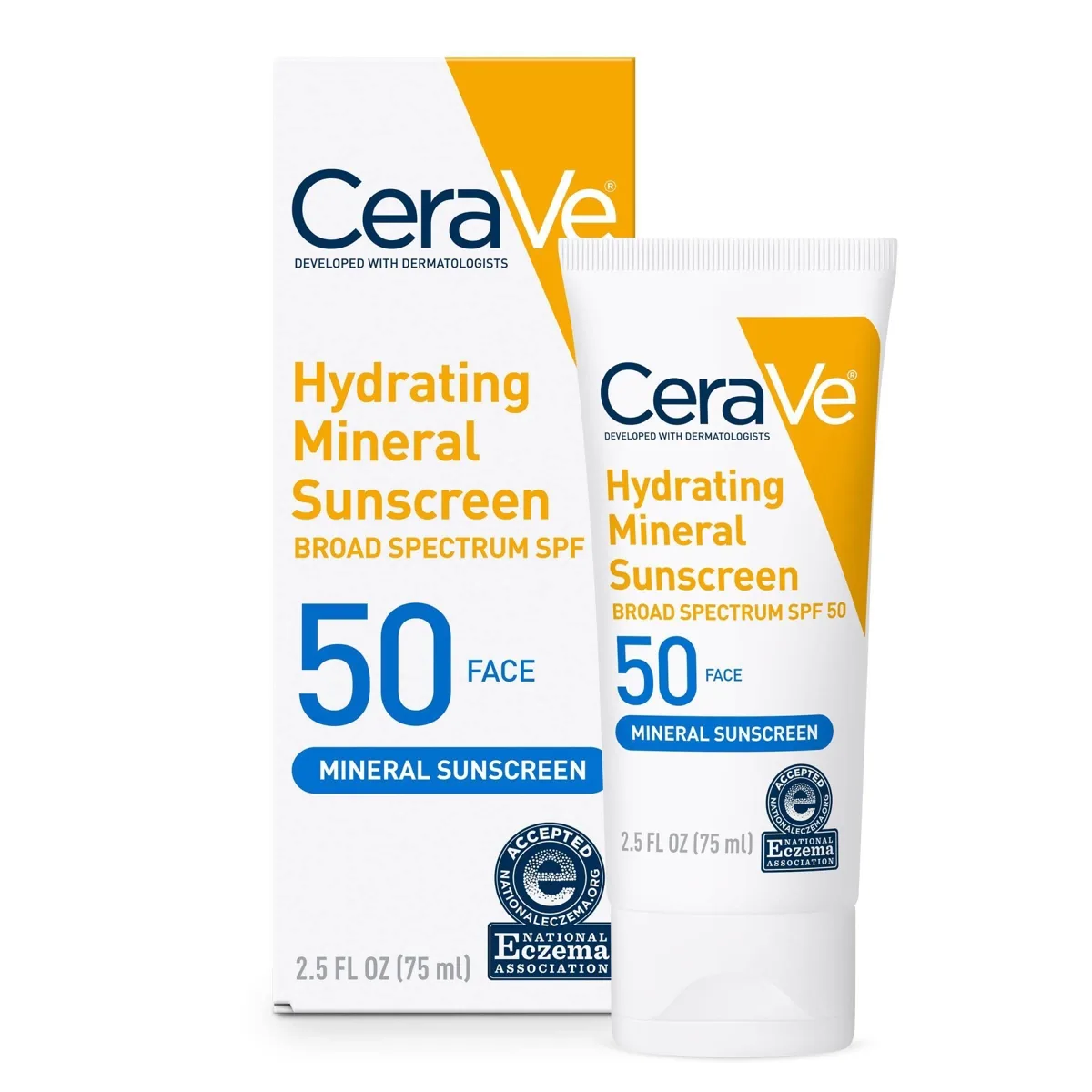
Aftercare across all of these is the same shape and it matters more than people expect: keep the skin bland, occluded and out of the sun. A repair cream such as Avène Cicalfate+ Restorative Protective Cream, a plain barrier moisturiser like Vanicream Moisturizing Skin Cream, something soothing and unfragranced for the first raw days such as Avène Thermal Spring Water Spray, a plain occlusive like CeraVe Healing Ointment where the skin is genuinely crusted, and, once tolerated, a mineral sunscreen such as CeraVe Hydrating Mineral Sunscreen SPF 50. Sun exposure on freshly treated skin is the fastest route to the pigmentation that undoes the result, and swimming and saunas have their own timeline that people routinely ignore.
How to schedule backwards from a date that matters
Stop planning forwards from when the clinic can fit you in. Start from the event and count back.
Anything with a bruise risk — filler, any injectable: three weeks. Enough for a bruise to clear fully and, for neurotoxin, for the result to arrive.
Anything that flakes — superficial peel, microneedling: two weeks. The flaking finishes well inside that, and the margin covers the session that goes slightly deeper than planned.
Medium peel: three weeks minimum, four if photographs matter, because residual pinkness outlasts the peeling.
IPL or pigment laser: three weeks. The darkening phase alone eats the first ten days.
Non-ablative fractional: three to four weeks. Ablative fractional: six to eight weeks at an absolute minimum, and realistically longer for a high-density treatment.
Then three rules that override all of the above.
Never have a first-ever treatment before an event. Not a first peel, not a first laser, not a first anything. The published ranges describe populations; you do not yet know where you personally sit in them, and the only way to find out is to have the treatment with nothing riding on it.
Never change provider before an event. A known injector producing a known result is worth more than a better one you have not tested.
Build in a buffer week. Something always heals more slowly than expected — a bruise that tracks downward, a patch that stays pink, a spot that takes an extra four days to slough. The buffer is the difference between a plan and a hope.
After the first round, track it. Photographing your own recovery daily — the photo tracker exists for this — converts every future booking from guesswork into arithmetic, because you will know that you bruise for nine days rather than the quoted five. That personal number is worth more than any published range, and it is the single most useful thing a first treatment produces. Ask for the downtime figures in writing at the consult, alongside the rest of the questions worth asking before any cosmetic procedure; the derm visit prep tool is a reasonable place to assemble that list, and the answers are a fair test of how straight a clinic is being with you.
Products mentioned
Independently reviewed and scored — the real products behind this piece.




- Question How long is the downtime after fractional laser? The day-by-day detail this summary compresses.
- Question Can a scar procedure leave me with new dark marks? A real rather than theoretical outcome in deeper skin tones.
- Question Can a scar procedure leave a permanent pale patch? The risk that scales with peel depth.
- Question Can I swim or use a sauna after a scar procedure? A post-procedure timeline people routinely ignore.
- Question What should I ask before booking a cosmetic procedure? Get the downtime figures in writing — the answers test how straight a clinic is being.
References
- The Safety and Efficacy of a Dual CO2 and 1570-nm Hybrid Laser for Periorbital Rejuvenation — Dermatologic Surgery, 2023
- Depth Map for Face and Neck Deep Chemical Peel Resurfacing — Dermatologic Surgery, 2020
- A Comparison of Microneedling versus Glycolic Acid Chemical Peel for the Treatment of Acne Scarring — Journal of Clinical and Aesthetic Dermatology, 2022
Every cited link is verified to resolve to the paper named. Where a source could not be independently confirmed, it is listed without a link rather than pointing you somewhere wrong.
Frequently asked
What does 'no downtime' actually mean?
Almost always that clinical downtime is zero — you can resume normal activity immediately. It rarely refers to social downtime, which is how long before you would sit in a meeting without explaining your face, or photographic downtime, the longest of the three. A procedure can honestly have no clinical downtime and ten days of photographic downtime, and both statements are true.
Why did my sun spots get darker after IPL?
Because that is how the treatment works. The pigment coagulates and darkens rather than fading, so treated spots go noticeably darker — often coffee-coloured — before working to the surface and flaking off over roughly five to ten days. Facial skin clears faster than the chest, hands and arms, which can take two weeks or more. Plan three weeks before any event.
How long before an event should I have filler or Botox?
Three weeks, minimum, for both — but for different reasons. Filler bruises and swells, with swelling peaking in the first 24 to 72 hours and lip bruises taking up to ten days to clear. Neurotoxin does not bruise much but takes five to seven days to appear and two weeks to peak, so booking close to a date means being photographed mid-change.
How much downtime does a chemical peel need?
It depends entirely on depth, not on the acid named. Superficial peels flake lightly for two to four days and are generally coverable. Medium-depth peels produce sheet peeling across days three to seven with pink skin for another one to two weeks — realistically seven to ten days of social downtime. Deep phenol-croton oil peeling is a weeks-long recovery with months of residual erythema.
What is the biggest scheduling mistake people make?
Having a first-ever treatment, or a first treatment with a new provider, in the run-up to something that matters. Published downtime ranges describe populations, and you do not yet know where you sit in them. Track your own recovery photographically the first time — knowing that you personally bruise for nine days rather than the quoted five is worth more than any published range.