Jessner, TCA, and the VI Peel: The Chemical Peel Ladder, Decoded
The same word covers a $12 toner and a procedure that leaves your face white and swollen. Knowing which rung matches your concern is how you avoid both under-treating and over-burning.
Read the preview
From the DermApproved blog, in Chemical Peels: one little word is doing way too much work. 'Peel' covers the gentle acid on your shelf and a procedure that turns your face frost-white and swells it shut for days. Same category, wildly different burn. Clinics love to sell you by brand name, Jessner's, TCA, the VI Peel, as if they were rival potions. They're not. They're three addresses on a single map, and the only thing that actually matters is how deep the acid travels. Here's the twist most before-and-afters skip: deeper is often the wrong answer, and for one large group of people the strongest peel is the one most likely to backfire into exactly the problem they were trying to fix. Which peel matches which concern, and who should never climb the top rung? That's the read. Find it at dermapproved.com/blog.
One word, wildly different burns
The word 'peel' has to stretch across an absurd range. It covers the eight-dollar bottle of mandelic acid on your bathroom shelf and it covers a procedure that turns your face frost-white, swells it shut for a few days, and takes a week or two to shed. Both are technically chemical exfoliation. Treating them as the same category is how people get hurt, or waste money on a treatment too gentle to touch their actual problem.
Every peel does one thing: it applies acid to create controlled injury, and the skin's repair response is what remodels pigment, texture, and collagen. The only variable that truly matters is how far down that injury reaches. Dermatology sorts peels into three depths, and every named protocol, Jessner's, TCA, VI, Baker-Gordon phenol, is just a tool for reaching a particular layer. Learn the ladder and the brand names stop being intimidating; they become addresses for a depth.
Superficial peels stay in the epidermis and the very top of the dermis. Medium-depth peels reach the papillary and upper reticular dermis, where collagen lives. Deep peels drive into the mid-reticular dermis. The concern you're treating decides which rung you need, and, crucially, which rungs you should never climb.
The frost tells you how deep you are
Watch a peel go on and you'll see the skin turn white. That whitening is the single most important signal in the room, and there are two very different kinds that novices confuse constantly.
With agents like salicylic acid and Jessner's solution, you get frosting: a fine white crystalline residue that sits on the surface and can be wiped away. It is precipitation, not damage, and it tells you the peel is superficial. With trichloroacetic acid, phenol, and high-strength acids, you get blanching, a solid white that cannot be wiped off because it is protein coagulation happening inside the tissue. That coagulation is the actual mechanism of a TCA peel; the depth of the blanch is how a skilled provider reads how far the acid has traveled in real time.
This is why the same active behaves differently in different formulas. Jessner's solution is a blend of keratolytics, classically salicylic acid, lactic acid, and resorcinol, that loosens the outer skin and, on its own, produces only wipe-away frost. Its job in a medium-depth protocol isn't to burn; it's to strip the barrier so the TCA that follows can penetrate evenly. Reading a peel is a skill, and it's most of what you're paying a good injector for.
Decoding the three names everyone drops
Start with Jessner's alone. As a standalone superficial peel it's a gentle, forgiving option for uneven tone, mild texture, and congestion, with minimal downtime and a low risk profile. It rarely does much for deeper problems, which is exactly why it's usually a first step rather than the whole treatment.
TCA is the workhorse of the medium-depth world, and it is concentration-dependent in a way that matters enormously. Low concentrations act superficially; 25-35% reaches the upper dermis; very high concentrations, 80% and up, are deep-peel territory used only for spot work by experts. The most cited medium-depth protocol is the Monheit peel, described by dermatologist Gary Monheit in a 1989 paper as Jessner's solution applied first, then 35% TCA, to treat photoaging, actinic damage, and wrinkles. The Jessner's primes; the TCA does the remodeling. That sequencing is the whole trick, and it's why 'a TCA peel' can mean anything from a lunchtime refresh to a serious procedure.
The VI Peel is the proprietary one people ask about most, and demystifying it helps. It's a medium-depth blend that combines TCA with phenol, salicylic acid, retinoic acid, and vitamin C, with the phenol doubling as a built-in numbing agent so it stings less than a raw TCA peel of similar depth. It's marketed heavily and priced accordingly, but mechanistically it's a well-designed medium-depth peel, not a different species. The vitamin C and retinoic acid components are why it skews toward pigment and tone rather than deep wrinkle correction.
Matching the peel to the actual problem
Depth should follow the concern, not the marketing. Superficial peels, glycolic, lactic, mandelic, salicylic, Jessner's, handle dullness, mild uneven tone, early texture, and congestion, and they're the safe entry point for almost everyone. For meaningful pigment correction, moderate photoaging, and shallow acne scarring, you step up to a medium-depth TCA or VI-type peel that reaches the upper dermis where collagen and the deeper pigment live. Deep peels, high-strength TCA or phenol-croton oil, are reserved for severe wrinkling and deep scars, and they come with anesthesia, real recovery, and cardiac monitoring for phenol.
The honest read on scars and deep lines is that a single medium peel rarely erases them; it softens. Pigment, especially superficial melasma and post-acne marks, tends to respond better and faster than texture does, which is why so many peel before-and-afters are really pigment stories. Set the expectation at 'a course of peels nudges this in the right direction,' not 'one peel fixes it.'
Before you book anything invasive, it's worth walking in with organized questions about depth, downtime, and your specific concern; our [derm-visit-prep](/tools/derm-visit-prep/) tool helps you build that list so you're choosing a depth on purpose rather than accepting whatever the clinic upsells.
Why deeper is often the wrong answer, especially in melanin-rich skin
The instinct that a stronger peel means a better result is exactly backwards for a large share of people. In Fitzpatrick IV-VI skin, the melanocytes are more reactive, and any inflammatory injury can trigger post-inflammatory hyperpigmentation, dark patches that can outlast and outweigh the original problem. A 2026 narrative review in Plastic and Reconstructive Surgery Global Open put it bluntly: the greatest risk of peeling in skin types IV-VI is PIH, with the remnant pigment often a bigger concern than what you were treating in the first place.
That review's depth guidance is the practical takeaway. Superficial peels are safe and satisfying in darker skin and should be the default; medium-depth peels require genuine caution and experience; and deep peels should be avoided altogether in dark skin, because excessive melanocyte destruction in the dermis can cause permanent hypopigmentation, white patches that don't come back. Many practitioners also pre-treat for a couple of weeks with a pigment suppressant before peeling deeper skin, precisely to blunt the melanocyte response.
One rule ties the whole thing together: after any peel, sun exposure is what converts a fresh, vulnerable surface into a new pigment problem, so diligent daily SPF isn't optional aftercare, it's part of the treatment. If you don't already have a sunscreen you'll actually reapply, our [sunscreen-finder](/tools/sunscreen-finder/) tool matches one to your skin type and finish preferences.
The at-home tier that does more than you think
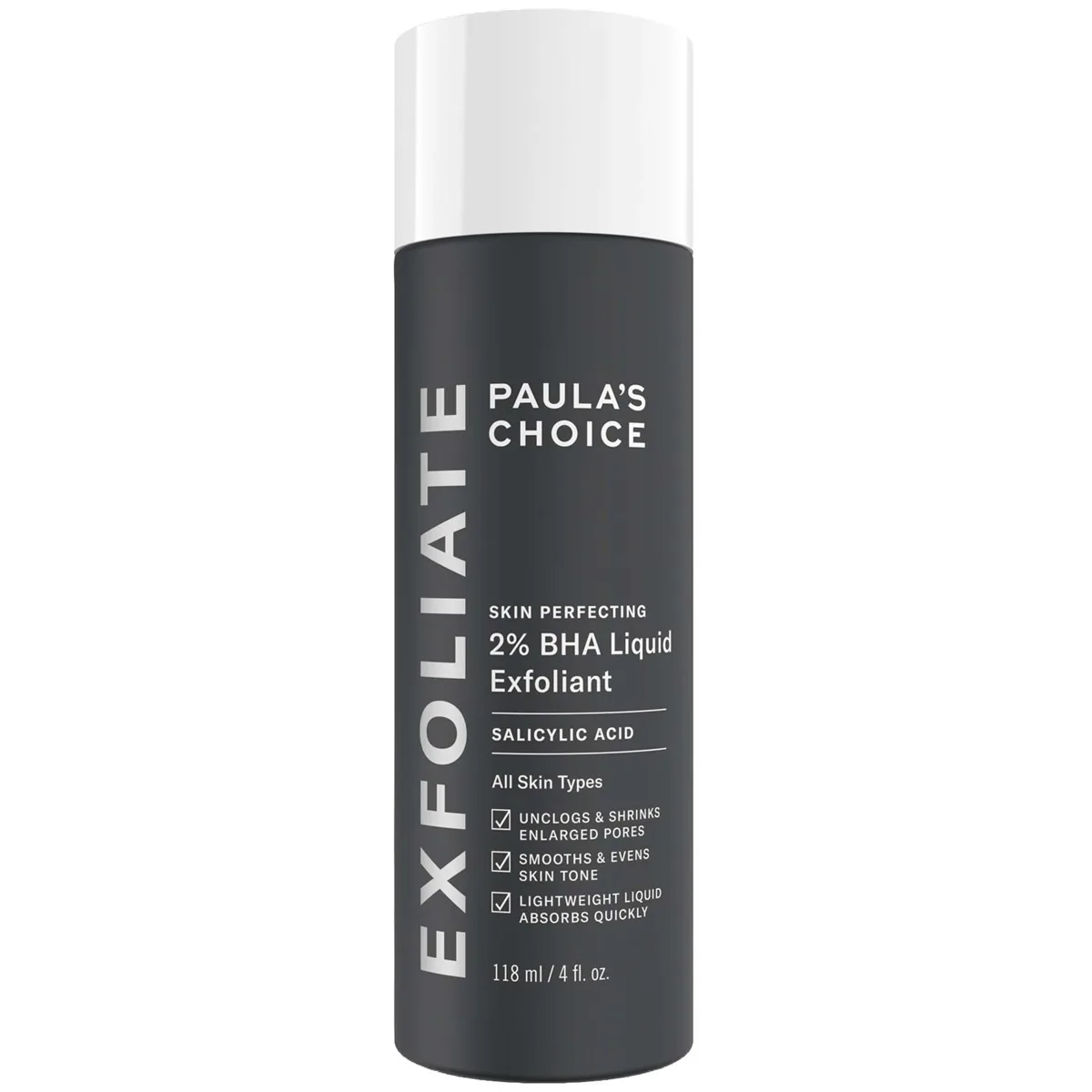
Not everyone needs a clinic. For dullness, mild uneven tone, and maintenance between professional treatments, well-formulated home acids do real work at a fraction of the cost and risk. A twice-weekly BHA like Paula's Choice 2% BHA Liquid Exfoliant keeps pores clear and smooths texture without ever approaching dermal depth. For anyone with reactive or melanin-rich skin who wants pigment support with a gentler footprint, mandelic acid is the standout, because its large molecule penetrates slowly and stirs up less inflammation than glycolic; The Ordinary Mandelic Acid 10% + HA is an inexpensive way to test that tolerance, and a prep step like By Wishtrend Mandelic Acid 5% Skin Prep Water eases skin into acids before you ever consider a stronger in-office peel.
Think of these as the bottom rungs of the same ladder, not a different ladder. They will not replace a medium-depth peel for real photoaging or entrenched pigment. But they're where most people should start, they build tolerance that makes a future professional peel safer, and for a lot of concerns they're genuinely enough.
The whole point of decoding the names is to stop shopping by brand and start shopping by depth. Jessner's, TCA, and the VI Peel aren't rival products so much as three addresses on a single map. Pick the rung your concern actually lives on, respect what your skin tone can safely tolerate, and treat 'deeper' as a cost to be justified, not a prize to be won.
Products mentioned
Independently reviewed and scored — the real products behind this piece.


References
- The Jessner's + TCA peel: a medium-depth chemical peel — Journal of Dermatologic Surgery and Oncology, 1989
- Noninvasive Cosmetic Treatments for Fitzpatrick IV-VI: A Narrative Review of Safety and Efficacy Guidelines — Plastic and Reconstructive Surgery Global Open, 2026
Every cited link is verified to resolve to the paper named. Where a source could not be independently confirmed, it is listed without a link rather than pointing you somewhere wrong.
Frequently asked
What's the difference between a Jessner's peel and a TCA peel?
Jessner's is a superficial keratolytic blend that loosens the outer skin and leaves a wipe-away white frost; on its own it's gentle with little downtime. TCA causes true protein coagulation in the tissue, the solid white 'blanching' that can't be wiped off and signals it has reached the dermis. In the classic Monheit protocol, Jessner's is applied first to help the 35% TCA that follows penetrate evenly.
Is the VI Peel stronger than a regular TCA peel?
Not really, it's a proprietary medium-depth blend that combines TCA with phenol, salicylic acid, retinoic acid, and vitamin C. The phenol acts as a built-in numbing agent so it stings less, and the vitamin C and retinoic acid tilt it toward pigment and tone. Mechanistically it reaches a similar depth to a well-done TCA peel rather than being a different, stronger category.
Are chemical peels safe for darker skin tones?
Superficial peels are safe and widely used in Fitzpatrick IV-VI skin and are the sensible default. Medium-depth peels require an experienced provider because the main risk is post-inflammatory hyperpigmentation, and deep peels should be avoided altogether in darker skin due to the risk of permanent pigment loss. Pre-treatment with a pigment suppressant and strict sun protection afterward both lower the risk.
Why isn't a deeper peel automatically better?
Depth should match the concern. Superficial issues like dullness and mild uneven tone resolve at superficial depth, so a deep peel just buys unnecessary downtime, cost, and pigment risk. Going deeper than your problem requires is how people trade a minor concern for weeks of recovery or, in darker skin, a new hyperpigmentation problem.
What does 'frosting' mean during a peel?
Frosting is the white appearance the skin takes on during a peel, and there are two types. Superficial frost from salicylic acid or Jessner's is a surface residue that wipes away. The solid white blanching from TCA or phenol is protein coagulating inside the skin and can't be wiped off; its depth is how a skilled provider judges, in real time, how far the acid has penetrated.