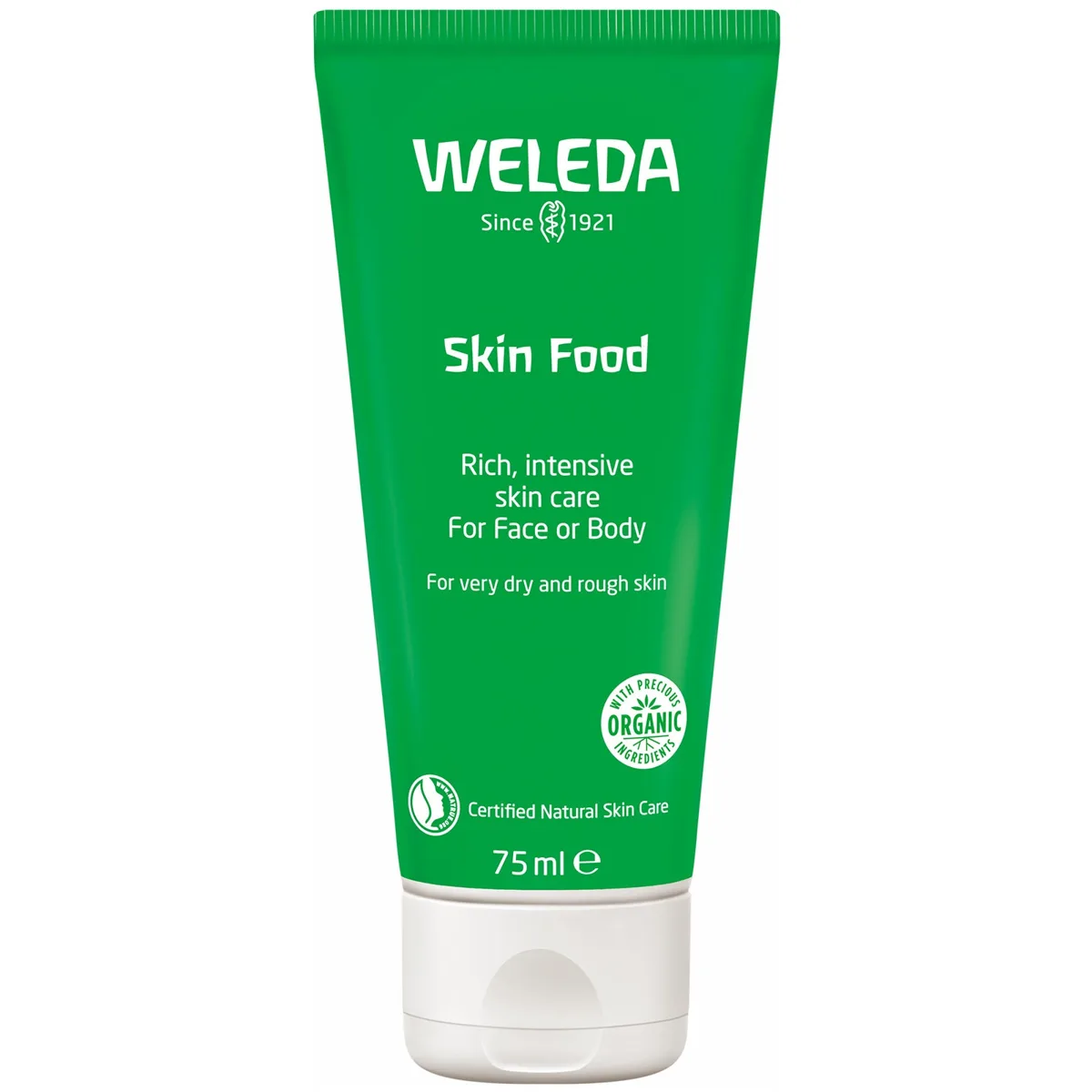
Few cosmetic products remain in continuous production with essentially unchanged formulation for 100 years. Weleda Skin Food's 1926 formula combines anthroposophic medicinal botanicals (viola, rosemary, chamomile, calendula) with substantial plant oils (sunflower, sweet almond), lanolin, and beeswax in a way that predates and outlasts almost every other product on shelves. The heritage isn't just marketing — the formula's longevity reflects genuine effectiveness for severely dry skin recovery.
A 100-year-old iconic anthroposophic skincare balm built around substantial plant oils (sunflower, sweet almond), lanolin and beeswax with anthroposophic medicinal botanicals (viola, rosemary, chamomile, calendula). The brand heritage and documented effectiveness for severely dry skin patches are genuine strengths. The substantial fragrance load (5 named EU fragrance allergens plus parfum) and lanolin content sharply limit suitability — this is a targeted dry-patch treatment rather than a broadly recommendable daily moisturizer. Within the specific audience it serves, Skin Food earns its century-long cult status.
Strong choicefor DrynessIn your profileYou chose · Lanolin is an approved or monograph active for dryness; this balm carries it high in the ingredient list.Moderate evidenceStandard tolerabilityNo reviews collected yet
The case for it
Lanolin is a first-line active — approved, monograph-listed or named in current guidelines — for this concern.
It is present at an effective concentration, declared or high in the ingredient list.
The formula carries no trigger this concern is sensitive to, with the cautions noted.
Cautions: fragrance.
Same rule for everyone. “Strong choice” is the verdict on 1,459 of 45,024 concern verdicts across the catalog; rule R2 decided 892 of them.
Unchanged since September 5, 2026, engine 5.1.1.
Supporting rolefor DehydrationIn your profileYou chose · Nothing here targets dehydration directly; humectant hydration is the recognised companion to treating it, and this balm does that without known triggers.Not yet assessedStandard tolerabilityNo reviews collected yet
The case for it
Lanolin has no evidence row yet for this concern — it is in the research queue.
The formula carries no trigger this concern is sensitive to, with the cautions noted.
What would change this: A researched evidence row for the lead active would replace this with a verdict.
Same rule for everyone. “Supporting role” is the verdict on 8,197 of 45,024 concern verdicts across the catalog; rule R8 decided 4,250 of them.
Unchanged since September 5, 2026, engine 5.1.1.
R8 — The category's job (barrier care, humectant hydration, gentle cleansing, photoprotection) is the documented supportive role for this concern. This is the honest verdict for a moisturizer on an acne page. · the full register
Avoidfor Compromised Skin BarrierIn your profileYou chose · This formula carries fragrance — a known trigger for compromised skin barrier — so it is not a fit however good its actives are.Not yet assessedCarries a triggerNo reviews collected yet
The case for it
Lanolin has no evidence row yet for this concern — it is in the research queue.
The formula carries a known trigger for this concern, which decides the verdict before any efficacy question.
What would change this: Removing the trigger named above would let the actives be judged on their own.
Same rule for everyone. “Avoid” is the verdict on 1,909 of 45,024 concern verdicts across the catalog; rule R1 decided 1,304 of them.
Unchanged since September 5, 2026, engine 5.1.1.
R1 — Safety outranks praise (MASTER-PLAN §1.7). A condition-weighted trigger (multiplier ≥ 2 in condition-fit-matrix) decides the verdict before any efficacy question. · the full register
Supporting rolefor Winter SkinIn your profileYou chose · Nothing here targets winter skin directly; occlusive hydration is the recognised companion to treating it, and this balm does that without known triggers.Not yet assessedStandard tolerabilityNo reviews collected yet
The case for it
Lanolin has no evidence row yet for this concern — it is in the research queue.
The formula carries no trigger this concern is sensitive to, with the cautions noted.
What would change this: A researched evidence row for the lead active would replace this with a verdict.
Same rule for everyone. “Supporting role” is the verdict on 8,197 of 45,024 concern verdicts across the catalog; rule R8 decided 4,250 of them.
Unchanged since September 5, 2026, engine 5.1.1.
R8 — The category's job (barrier care, humectant hydration, gentle cleansing, photoprotection) is the documented supportive role for this concern. This is the honest verdict for a moisturizer on an acne page. · the full register
Does the jobDoes what a moisturizer is for: seals moisture in, draws in water.
A verdict is DermApproved’s assessment of how well a product’s ingredients fit a concern — never a claim about what the product treats. Evidence dots and collected reviews sit beside it and are never blended in.
Rules 0.5.1 · evidence table ev-2026.09-r228 · how we decide
Assessment
Pros & Cons
Pros
✓ 100-year continuous production heritage with unchanged formulation
✓ Substantial plant oil and lanolin occlusive base for severely dry skin
✓ Genuinely effective for targeted dry-patch treatment use
✓ NATRUE Natural & Organic certified
✓ Cult status across decades and celebrity endorsements
Cons
✗ Substantial fragrance load with 5 named EU fragrance allergens
✗ Lanolin excludes lanolin-sensitive users
✗ Not appropriate as a daily full-face moisturizer
✗ Thick texture requires deliberate warming and spreading
Review
Full Review
Skincare evolves quickly. The category iterates constantly — new actives every season, formulation upgrades every few years, products discontinued and replaced within decades of launch. Very few products remain in continuous production with essentially unchanged formulation for 100 years. Weleda Skin Food is one of the rare exceptions. Launched in 1926 as part of Weleda's early natural cosmetics line, the formula has been continuously produced for 100 years through wars, technological revolutions, and complete generational shifts in cosmetic science. The brand celebrated the centenary in 2026. The longevity matters because it reflects either genuine effectiveness or remarkable inertia — and in Skin Food's case, the answer is genuine effectiveness for a specific narrow use case.
The formulation reads as anthroposophic skincare from 1926 unchanged. Water leads, then sunflower oil in slot two, lanolin in slot three, sweet almond oil in slot four, beeswax in slot five. That lipid stack — sunflower's linoleic acid, lanolin's skin-mimicking wool wax composition, sweet almond's oleic acid, beeswax's protective film — is the foundation of why the product works. Alcohol in slot six and polyglyceryl-3 polyricinoleate (an emulsifier) in slot seven help the lipids stay emulsified. Glycerin in slot eight provides humectant work. Then comes the anthroposophic medicinal botanical layer — viola tricolor (pansy) extract for gentle astringency, hydrolyzed beeswax for additional film-forming, rosemary leaf extract for antioxidant cover, chamomile flower extract for anti-inflammatory soothing, calendula flower extract for wound-healing support. Arginine, zinc sulfate, and the essential oil fragrance complex (sweet orange, lavender, rosemary, others) finish the formula.
The combination is genuinely effective for severely dry skin. The substantial occlusive lipid base provides barrier protection that modern lighter formulations rarely match. The lanolin is particularly notable — its molecular structure closely mimics human skin sebum, making it one of the most skin-compatible occlusive lipids in cosmetic chemistry. The medicinal botanical complex adds anti-inflammatory and wound-healing support that ordinary moisturizers lack. For severely dry patches, retinoid-irritated skin, post-procedure recovery zones, severely chapped lips and hands, or chronic winter dryness, Skin Food works as well as anything on shelves and better than most modern alternatives.
The limitations are equally clear. The fragrance load is substantial — five named EU fragrance allergens (limonene, linalool, geraniol, citral, coumarin) appear from the essential oils, plus the parfum disclosure. The 'natural fragrance from essential oils' marketing positioning doesn't override the safety reality: these compounds are documented sources of cosmetic contact dermatitis for fragrance-reactive users regardless of natural or synthetic origin. The lanolin is a documented allergen for users with sheep-wool sensitivity — a less common but real concern. The alcohol in slot six adds to potential irritation for very sensitive or compromised skin. The beeswax excludes vegan use.
These formulation choices are inherited from the 1926 formula and reflect the anthroposophic medical philosophy that prioritized natural plant-and-animal ingredients over synthetic alternatives. By modern dermatology standards, the formula would not be recommended for sensitive, rosacea-prone, eczema-prone, or fragrance-reactive skin — alternatives like Aquaphor Healing Ointment, CeraVe Healing Ointment, Avène Cicalfate+ or La Roche-Posay Cicaplast Baume B5 are fragrance-free options for similar severely-dry-skin use cases.
In use the product behaves like the thick anthroposophic balm it is. The dense pale-yellow texture requires deliberate warming between palms before application. The herbaceous-floral scent is immediate and distinctive — many users describe it as part of the product's identity and actively love it; fragrance-reactive users find it overwhelming. Once applied, the substantial occlusive film provides immediate visible barrier protection and substantially conditioning feel. For the dry-patch treatment use case, the effect is genuinely satisfying and lasting.
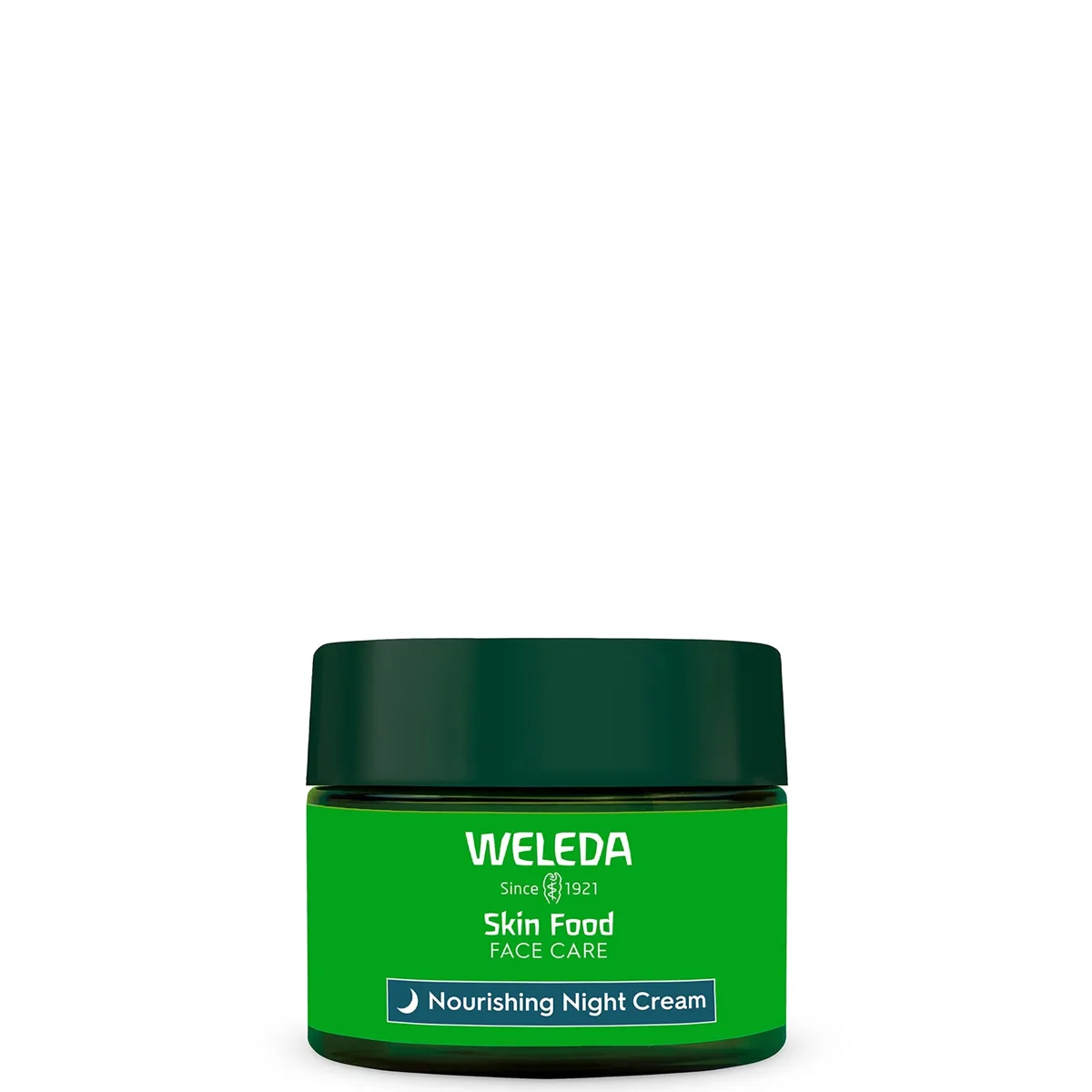
The right use case is specific. Skin Food is for spot treatment on severely dry patches — face, hands, elbows, heels, lips. It's for periodic intensive overnight treatment on chronic dry zones. It's a winter staple for skin needing maximum barrier protection. It's the lipid-rich answer to retinoid-irritated patches when more elegant cica balms aren't enough. It's not a daily full-face moisturizer for most users — the fragrance and texture make it inappropriate for that role. Weleda offers separate Skin Food Face Care Day Cream and Night Cream formulations that are lighter and more facial-appropriate for daily use.
The value calculation is fair. Twenty dollars for 75 mL at periodic targeted use lasts 6-12 months — exceptional per-application economics for the specific use case. The smaller 10 mL and 30 mL travel sizes offer affordable trial options. Comparable heavy-emollient balms for severely dry skin (CeraVe Healing Ointment at $11 for 142g, Aquaphor Healing Ointment at $14 for 198g) offer dramatically better per-volume value at fragrance-free formulations. The Skin Food pricing premium reflects the brand heritage, the anthroposophic botanical content, and the natural-cosmetic positioning — fair for users who value those factors, premium relative to clinical fragrance-free alternatives.
Buy this balm if you have severely dry skin patches needing maximum occlusive protection, you tolerate or love the herbaceous-floral natural fragrance, you appreciate brand heritage, and you understand the targeted spot-treatment use case. Particularly suited to fans of natural and anthroposophic skincare wanting cult-status legacy products. Skip if you have fragrance reactivity, lanolin sensitivity, eczema, rosacea, fungal acne, acne-prone tendency, or vegan dietary requirements — for those audiences, fragrance-free pharmacy alternatives deliver better results. As a 100-year-old continuously-produced iconic anthroposophic balm, Weleda Skin Food earns its cult status for the specific narrow audience it genuinely serves — but the audience is narrower than the brand's mass-market positioning suggests.
Formula
Key Ingredients
The hero actives that drive this product's performance.
Sits in slot two at meaningful concentration. High-linoleic-acid sunflower oil provides barrier-supportive emolliency through skin-mimicking fatty acid composition. Documented evidence for barrier function support and gentle nourishment without comedogenic concerns.
Sits in slot three as the substantial occlusive lipid. Lanolin is sheep's wool wax with the most skin-mimicking composition of any natural lipid — its molecular structure closely matches human skin sebum. Documented evidence for occlusive barrier protection and moisture retention; also a known potential allergen for users with sheep-wool sensitivity.
Regulator-approvedfor Dryness · established mechanism
Slot four — high-oleic-acid plant oil providing additional emollient delivery and a smooth conditioning film. Sweet almond oil has been used in cosmetic preparations for centuries with documented skin-softening and barrier-supportive properties.
Slot five plus hydrolyzed beeswax in slot eleven. The beeswax provides the formula's thick balm texture and adds an additional occlusive barrier layer. Has been used in cosmetic preparations for thousands of years with documented protective and emollient activity. Animal-derived (bee-sourced) — rules out vegan use.
Four traditional anthroposophic medicinal botanicals — viola (pansy) for gentle astringent action, rosemary for antioxidant cover, chamomile for anti-inflammatory soothing, and calendula for wound-healing support. The combination reflects Weleda's anthroposophic medical heritage and provides genuine botanical actives beyond pure cosmetic claims.
Not yet assessed
Ingredient standings describe the active at treatment-level doses and
vehicles; this product's own condition grades weigh its actual formula.
Apply as a targeted treatment on very dry patches — face, hands, elbows, heels, lips. Best used on areas needing maximum occlusive barrier protection. Warm a small amount between palms before application to soften the thick balm texture. The fragrance content and lanolin make full-face daily use unsuitable for most users; spot treatment is the appropriate use pattern.
Results Timeline
Immediate: visible occlusive barrier protection and substantial conditioning within minutes of application. Very dry patches typically feel immediately more comfortable. The barrier-protective effect holds for several hours; for severely dry winter skin, reapplication may be needed throughout the day. Cumulative use on chronic dry patches builds visible improvement over 1-2 weeks.
Pairs Well With
Hydrating toner (apply before)Regular moisturizer (apply before Skin Food as targeted top layer)Hand and body care alternative use
The barrier-protective mechanism here relies on substantial occlusive lipid coverage from the plant oils, lanolin, and beeswax in the formula. Lanolin is one of the most-studied occlusive lipids in cosmetic dermatology, with documented evidence for barrier protection and moisture retention through its skin-mimicking molecular composition. The compound naturally produced by sheep's sebaceous glands has fatty acid composition that closely matches human skin sebum, making it one of the most skin-compatible natural occlusives available.
Sunflower seed oil (high-linoleic-acid variety) provides barrier-supportive fatty acid delivery with documented evidence for skin barrier function support. Sweet almond oil contributes additional oleic-acid-rich emolliency. Beeswax provides occlusive film-forming protection — used in cosmetic preparations for thousands of years with documented efficacy.
The anthroposophic medicinal botanical complex has varying evidence support. Calendula officinalis has substantial documented evidence for wound-healing and anti-inflammatory activity through compounds including triterpenoid saponins. Chamomile (Matricaria) contains bisabolol with strong anti-inflammatory evidence. Rosemary (Rosmarinus officinalis) contains rosmarinic acid and carnosic acid with documented antioxidant activity. Viola tricolor extract has emerging evidence for gentle astringent and soothing effects.
The fragrance complex contains five named EU fragrance allergens (limonene, linalool, geraniol, citral, coumarin) — all from natural essential oils. These compounds are documented causes of fragrance contact dermatitis regardless of natural or synthetic origin.
Lanolin is a documented allergen for users with sheep-wool sensitivity, though the allergen prevalence is lower than for fragrance compounds.
The alcohol component (slot six) functions as solvent and emulsion stabilizer at meaningful concentration, contributing to potential drying effects on sensitive skin.
Dermatologist Perspective
Weleda Skin Food occupies an interesting position in dermatology. The substantial occlusive lipid base genuinely provides effective barrier protection for severely dry skin — dermatologists commonly include it in recommendations for chronic dry patches, retinoid-irritated areas, severely chapped lips and hands, and winter dryness recovery. The 100-year heritage and the anthroposophic medicinal botanical content add a sensory and cultural appeal beyond pure clinical assessment. The clinical caveats are familiar but pronounced: the substantial fragrance allergen load makes the product inappropriate for fragrance-reactive, rosacea-prone, eczema-prone or atopic-tendency skin where fragrance-free pharmacy alternatives (Aquaphor Healing Ointment, CeraVe Healing Ointment, Avène Cicalfate+) deliver the same barrier-protection function without the fragrance-induced inflammation risk. Lanolin is a less-common but real allergen concern. Skin-care professionals typically recommend Skin Food as a targeted dry-patch treatment rather than daily full-face moisturizer, and would steer reactive skin toward fragrance-free alternatives.
Guidance
Usage & Recommendations
How to Use
Use as a targeted treatment on severely dry skin patches — face, hands, elbows, heels, lips. Warm a small amount between palms to soften the thick balm texture before application. Apply to clean, dry skin and allow to absorb. For severe dryness or overnight intensive treatment, apply a generous layer before bed. Suitable for daily use on dry patches but not appropriate as a daily full-face moisturizer for most users. Weleda's separate Skin Food Face Care Day Cream and Night Cream are lighter and more facial-appropriate for daily face routine.
Value Assessment
At about $20 for 75 mL, the per-application cost works out to exceptional value for targeted dry-patch treatment use — a tube lasts 6-12+ months. The smaller 10 mL and 30 mL travel sizes offer affordable trial. Comparable severely-dry-skin balms (CeraVe Healing Ointment at $11 for 142g, Aquaphor Healing Ointment at $14 for 198g) deliver dramatically better per-volume value at fragrance-free formulations — and would be the clinical-recommended alternatives for reactive skin. The Weleda pricing premium reflects the brand heritage, anthroposophic positioning, and natural-cosmetic content — fair for users who value those factors. The brand also frequently offers limited-edition tube designs and gift packaging that contribute to gifting appeal.
Who Should Buy
Anyone with severely dry skin patches needing maximum occlusive barrier protection who tolerates or actively loves the herbaceous-floral natural fragrance. Particularly suited to fans of brand heritage and anthroposophic skincare, to users dealing with chronic dry hands, elbows, heels or seasonal dry patches, and to those who appreciate the 100-year cult-status iconic positioning.
Who Should Skip
Fragrance-reactive, rosacea-prone, eczema-prone, lanolin-sensitive or atopic-tendency skin should use fragrance-free pharmacy alternatives (Aquaphor, CeraVe Healing Ointment, Avène Cicalfate+). Skip too if you are vegan (lanolin and beeswax content), if you have acne-prone skin (the heavy lipid load may aggravate), if you are managing fungal acne (lipid composition incompatible), or if you want a daily full-face moisturizer (the brand's Skin Food Face Care formulations are more appropriate).
A thick, dense pale-yellow balm-cream that scoops with firm resistance — requires warming between palms before application to soften enough to spread. Once warmed, spreads with deliberate work and leaves a substantial visible film on the skin.
Scent
A pronounced herbaceous-floral scent from the natural essential oils (sweet orange, lavender, rosemary, and others). Distinctive and immediately recognizable — many users describe it as part of the product's appeal, while fragrance-reactive users find it overwhelming.
Packaging
A 75 mL aluminum tube in Weleda's signature green-and-white anthroposophic-design language. Smaller 10 mL and 30 mL travel sizes are also available; a larger 100 mL size launches 2026.
Finish
dewynon-greasy
What to Expect on First Use
First use centers on the thick texture (requires warming) and the immediately distinctive herbaceous scent. The application takes deliberate work but leaves an immediately conditioning, substantially protected feel on dry skin patches. The product is genuinely effective for the specific use case it's designed for — severely dry skin recovery.
How Long It Lasts
Highly variable — 6-12+ months as a spot treatment, much less as full-face moisturizer
Weleda was founded in 1921 by Rudolf Steiner (founder of anthroposophy) alongside physician Ita Wegman, around the principles of anthroposophic medicine — a holistic approach combining conventional medicine with herbalism, nutrition and lifestyle. Skin Food launched in 1926 as part of the brand's early natural cosmetics line and has been continuously produced with the same formulation for 100 years. The product's cult status was reinforced over decades by celebrity makeup artist endorsements and its inclusion in dermatology recommendations for very dry skin recovery.
About Weleda Legacy Brand (20+ years)
Weleda is one of the oldest natural cosmetics brands in continuous operation, founded in 1921 by Rudolf Steiner alongside Ita Wegman around the principles of anthroposophic medicine. Skin Food launched in 1926 and has been continuously produced with essentially the same formulation for 100 years — an unusually long product lifespan in cosmetics. A tube reportedly sells every 6 seconds worldwide; the product is distributed in 50+ countries.
Brand founded: 1921 · Product launched: 1926
Myth vs. Reality
Common Myths
Myth
100 years of continuous production means the formula must be obsolete.
Reality
Skin Food's century-long success reflects genuine effectiveness for the specific use case it targets — severely dry skin recovery through substantial occlusive lipid protection plus anti-inflammatory botanicals. The formula has not changed because it doesn't need to change for that use case. Newer formulations with modern actives target different concerns; for severe dry skin barrier protection, the 1926 chemistry remains as effective as anything on shelves.
Myth
Natural fragrance from essential oils is safer than synthetic fragrance for sensitive skin.
Reality
Both natural essential oils and synthetic fragrances are documented causes of cosmetic contact dermatitis. The five named EU fragrance allergens in this formula (limonene, linalool, geraniol, citral, coumarin) come from the natural essential oils used in the formula — they are no safer than synthetic equivalents for fragrance-reactive users. 'Natural fragrance' is a marketing claim, not a safety claim for fragrance-allergic skin.
FAQ
Frequently Asked Questions
What is Weleda Skin Food and how is it used?
Weleda Skin Food is a 100-year-old anthroposophic skincare balm with substantial lipid content (sunflower oil, lanolin, sweet almond oil, beeswax) plus traditional medicinal botanicals (viola, rosemary, chamomile, calendula). It's designed for severely dry skin recovery — best used as a targeted treatment on dry patches (face, hands, elbows, heels, lips) rather than a daily full-face moisturizer. Warm a small amount between palms to soften the thick texture before application.
Is Weleda Skin Food good for sensitive skin?
Generally no, despite the natural positioning. The formula contains five named EU fragrance allergens (limonene, linalool, geraniol, citral, coumarin) from the natural essential oils used, plus lanolin (a documented allergen for sheep-wool-sensitive users) and alcohol. For severe sensitive skin, eczema, or fragrance-reactive users, fragrance-free alternatives like CeraVe Healing Ointment or Aquaphor Healing Ointment are more appropriate.
Why does Weleda Skin Food have a strong scent?
The scent comes from natural essential oils included in the original 1926 formula — sweet orange peel oil, lavender oil, rosemary oil, and others. The brand has not changed the formula in 100 years, including the essential oil content. Many users actively love the distinctive herbaceous scent as part of the product's identity; fragrance-reactive users find it overwhelming.
Can I use Weleda Skin Food on my face daily?
For most users, no. The thick occlusive base and strong fragrance load make the cream inappropriate as a daily full-face moisturizer for most skin types. Use as a spot treatment on very dry patches, or as a periodic intensive overnight treatment for severely dry skin. For daily full-face moisturizing, Weleda offers separate Skin Food Face Care Day Cream and Night Cream formulations that are lighter and more appropriate for that use case.
Is Weleda Skin Food vegan?
No. The formula contains lanolin (sheep-derived wool wax) and beeswax (Cera Alba). For vegan natural alternatives in the heavy-emollient balm category, look at brands like Beauty Pie's Heavy Hand Cream or shea-butter-based balms from brands like Pai or Drunk Elephant. Weleda does offer some vegan products in its catalog, but Skin Food Original is not among them.
Reviews
What Reviewers Tend to Say
Recurring themes our editors read across retailer reviews of this product — summaries in our words, not quotations, and not a substitute for your own patch test.
Common Praise
Genuinely effective for very dry skin patches
Substantial occlusive lipid protection from lanolin and beeswax
Distinctive herbaceous scent that many users actively love
100-year heritage and brand trust
Versatile use across face, hands, body, lips, elbows, heels
Common Complaints
Strong fragrance load limits sensitive-skin use
Lanolin causes allergic reactions in lanolin-sensitive users
Thick texture requires deliberate warming and spreading
Not appropriate as a daily full-face moisturizer for most users
Beeswax excludes vegan use
Notable Endorsements
100-year continuous production heritageReportedly sells one tube every 6 seconds worldwideDistributed in 50+ countriesCelebrity makeup artist favorite (Victoria Beckham, Adele, and others publicly endorse)Featured in dermatology recommendations for very dry skin
Every word on a plant oil label describes what was left in — including the proteins that sensitise and the compounds that go rancid — and the variable that decided the one head-to-head trial isn't printed anywhere.
Occupational hand dermatitis is one of the most common work-related diseases on earth, it follows a script, and the cheapest fix works only if you start it before the skin splits.
Cutting a beard hair takes about a twentieth of a newton. You press with two and stretch your skin by a fifth — which is why almost every shaving problem is a technique problem wearing a hardware costume.
Every post that dismantles a home remedy owes the reader a replacement. The honest replacement list is embarrassingly cheap, and one item on it is cheaper still — it is a bath.
Products, answers, therapy guides, tools and articles in one search. Brand names,
slang and abbreviations all work — accutane finds isotretinoin, bacne finds truncal acne.