


Glycolic Is the Fastest Acid. That's Its Design Flaw.
The smallest AHA gets deepest and shows results soonest — which is precisely why routines built around it overshoot, and why the people who do best with it use it least.
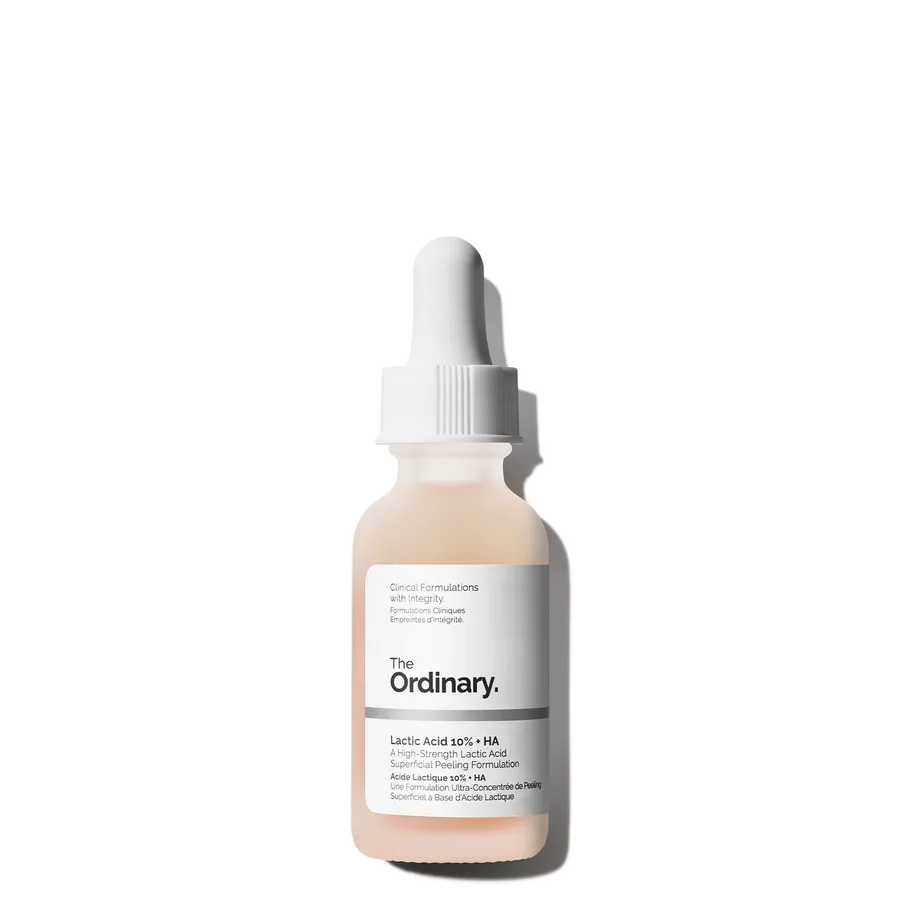
Most AHA exfoliants are formulated around glycolic acid, which penetrates deeply but can be aggressively drying. This product uses lactic acid — a larger molecule that exfoliates more gently at the surface while simultaneously functioning as a humectant, actively drawing moisture into the skin. Combined with glycerin at high concentration and a HA crosspolymer, this is an exfoliant that hydrates as it works — a genuinely different proposition for anyone whose skin can't tolerate the drying effects of glycolic acid.
The exfoliant that dry skin has been waiting for — a 10% lactic acid serum that genuinely hydrates while it exfoliates, wrapped in a minimalist formula with built-in irritation control. Proof that effective acid exfoliation doesn't have to leave your skin feeling stripped.
The case for it
What would change this: Guideline or regulatory standing for the active on this concern would move this from a promising bet to a recommendation.
Same rule for everyone. “Promising” is the verdict on 7,858 of 45,024 concern verdicts across the catalog; rule R9p decided 7,858 of them. Unchanged since September 5, 2026, engine 5.1.1.
Brand or formulator? Disclose a concentration or correct a fact →
The studies behind the evidence row
The case for it
Same rule for everyone. “Good choice” is the verdict on 9,564 of 45,024 concern verdicts across the catalog; rule R5 decided 9,072 of them. Unchanged since September 5, 2026, engine 5.1.1.
Brand or formulator? Disclose a concentration or correct a fact →
The studies behind the evidence row
The case for it
Cautions: a photosensitising active — use sun protection.
What would change this: Guideline or regulatory standing for the active on this concern would move this from a promising bet to a recommendation.
Same rule for everyone. “Promising” is the verdict on 7,858 of 45,024 concern verdicts across the catalog; rule R9p decided 7,858 of them. Unchanged since September 5, 2026, engine 5.1.1.
Brand or formulator? Disclose a concentration or correct a fact →
The studies behind the evidence row
The case for it
Same rule for everyone. “Good choice” is the verdict on 9,564 of 45,024 concern verdicts across the catalog; rule R5 decided 9,072 of them. Unchanged since September 5, 2026, engine 5.1.1.
Brand or formulator? Disclose a concentration or correct a fact →
The studies behind the evidence row
The case for it
Cautions: a photosensitising active — use sun protection.
What would change this: Guideline or regulatory standing for the active on this concern would move this from a promising bet to a recommendation.
Same rule for everyone. “Promising” is the verdict on 7,858 of 45,024 concern verdicts across the catalog; rule R9p decided 7,858 of them. Unchanged since September 5, 2026, engine 5.1.1.
Brand or formulator? Disclose a concentration or correct a fact →
The studies behind the evidence row
Also listed for Dark Spots and Sun Damage — the actives here (Lactic Acid, Glycerin, Hyaluronic Acid, Tasmannia Lanceolata (Pepper Berry) are in our research queue for those concerns; there is no verdict until their evidence rows are written. That is a gap in our table, not a mark against the product.
Where our review and the verdict differ. The review below was written on the formulation and the published trials; the verdicts above apply the stricter standing test in our methodology — an active earns a recommendation only with guideline or regulatory standing for the concern. Where the two disagree, the verdict is DermApproved’s position.
A verdict is DermApproved’s assessment of how well a product’s ingredients fit a concern — never a claim about what the product treats. Evidence dots and collected reviews sit beside it and are never blended in. Rules 0.5.1 · evidence table ev-2026.09-r228 · how we decide
The history of lactic acid in skincare stretches back further than any other chemical exfoliant — all the way to ancient Egypt, where Cleopatra reportedly bathed in sour milk for softer, more luminous skin. She was, without any idea of the chemistry, using lactic acid. The molecule that forms during milk fermentation is the same one in this frosted glass bottle, and the mechanism — dissolving the bonds between dead skin cells to reveal fresher ones beneath — hasn't changed in two thousand years. What has changed is the delivery.
The Ordinary's Lactic Acid 10% + HA takes that ancient ingredient and builds a formula around a specific person: someone whose skin needs exfoliation but cannot tolerate the aggressive drying that glycolic acid brings. The distinction matters more than it appears. Glycolic acid is the smallest AHA, penetrating deeply and exfoliating hard — excellent for resilient, oily skin and potentially punishing for anyone prone to dryness. Lactic acid is a larger molecule, and it works primarily at the surface, dissolving dead corneocytes without reaching the depths where glycolic acid provokes inflammation in reactive skin. And it has one property glycolic acid entirely lacks: it is a humectant. It draws water into the skin while it exfoliates.
That dual action is what genuinely separates this from the dozens of AHA products on the shelf, and the formula leans into it deliberately. Glycerin sits third on the INCI — an unusually prominent position that signals real concentration — and a sodium hyaluronate crosspolymer provides sustained water-binding that outlasts an ordinary humectant. The result is three hydration mechanisms running concurrently with the exfoliation: lactic acid pulls moisture in, glycerin holds it at the surface, the crosspolymer keeps holding it after the glycerin has done its work. You aren't choosing between exfoliating and hydrating; you're doing both in one step.
There's a deeper reason lactic acid behaves this way, and it's the most interesting thing about the molecule. Lactic acid and its salt are naturally present in the stratum corneum as components of natural moisturizing factor — the hygroscopic mixture the skin uses to hold onto water. Applying it topically doesn't introduce a foreign chemical; it supplements something the skin already manufactures. Published work has shown that topical lactic acid at cosmetic concentrations increases ceramide synthesis in the stratum corneum, which means it is quietly strengthening the barrier at the same time as it removes the dead layer sitting on top of it. Exfoliation that builds the barrier rather than taxing it is a rare thing, and it is exclusive to this acid.
The pH is a deliberate piece of engineering too. At 3.7, the formula sits almost exactly at lactic acid's pKa of 3.86 — the point at which roughly half the acid exists in its free, active, penetrating form. Enough free acid for meaningful exfoliation; not so much that it overwhelms the skin's own buffering capacity. That number is not an accident.
Tasmannia lanceolata extract — Tasmanian pepperberry, The Ordinary's signature sensory modifier — handles the sting. Its polygodial content modulates TRPV1 receptors, the same ones capsaicin and low-pH contact activate. It desensitizes the sensation without touching the acid's activity, so the exfoliation proceeds at full strength while the burning largely doesn't arrive. Reviewers consistently note that this product doesn't sting even on mildly reactive skin, which suggests the extract is doing real work rather than decorating the label.
The texture is a pleasant surprise for an acid: a lightweight, faintly viscous serum that spreads smoothly and absorbs without the tacky residue AHAs so often leave. There's a faint acidic note if you sniff the bottle and nothing at all once it's on the face. A mild tingle on application fades within a minute — enough to know something is happening, not enough to become unpleasant.
Results follow the usual AHA arc, with a distinctly dry-skin-friendly profile. Brightening from the first use, that fresh look that comes from clearing the dullest surface layer. One to two weeks in, tone evens and texture smooths. The four-to-eight-week mark brings the deeper payoff — faded dark spots, improved post-inflammatory pigment, a cumulative luminosity that reads as health rather than polish. And throughout it, skin doesn't enter the desert phase that glycolic users tend to endure.
The limitations are honest and predictable. Ten percent lactic acid at pH 3.7 is not a sensitive-skin product; the pepperberry reduces irritation without abolishing it, and genuinely reactive skin will still object. Plenty of people find daily application too much and settle into three or four nights a week, which is a perfectly good rhythm and delivers the same results more comfortably. Congested skin may purge briefly in the first fortnight. Sunscreen every morning is non-negotiable, because an AHA that brightens your skin while photosensitizing it is a bargain that only works if you hold up your end. And it is strictly leave-on, despite persistent confusion on that point — only much higher-concentration peels require timed removal. Apply it, let it absorb, carry on.
One pairing rule matters: don't stack it with retinoids, other acids, benzoyl peroxide, or L-ascorbic acid in the same routine. There is no prize for chemical maximalism, and the barrier will send you the invoice.
At $9.20 for 30ml — three to four months of evening use, roughly eight cents an application — the value calculation isn't close. A properly acidified 10% lactic acid serum with an HA crosspolymer, meaningful glycerin, and a real anti-irritant would be competitive at five times the price. The only genuine gripe is the absence of a larger size, which makes body use (where it works beautifully on rough texture) an expensive habit.
This isn't trying to replace glycolic acid. It's offering a different route to the same destination for the people who need one — smoother, brighter, more even skin without the moisture tax. Cleopatra would approve, though she'd probably be irritated that it costs less than lunch.
The hero actives that drive this product's performance.
| Ingredient | Function | Evidence |
|---|---|---|
| Lactic Acid (10%) | A larger-molecule AHA than glycolic acid that exfoliates at the surface level while simultaneously functioning as a humectant — a dual action that makes this formula uniquely suited for dry skin types that need exfoliation but can't afford to lose moisture in the process. At pH 3.6-3.8 (near lactic acid's pKa of 3.86), a meaningful proportion remains in free acid form for effective desmosome disruption. | Established mechanism for Rough Texture · established mechanism |
| Sodium Hyaluronate Crosspolymer | A cross-linked form of hyaluronic acid with enhanced water-binding capacity that provides sustained hydration alongside the exfoliation. In this context, it counterbalances any transient dryness from the lactic acid, ensuring the skin stays hydrated even as dead cells are being removed. | Plausible mechanism for Dullness |
| Tasmannia Lanceolata Fruit/Leaf Extract | The same Tasmanian Pepperberry derivative used in The Ordinary's Glycolic Acid toner, functioning as a sensory modifier that reduces stinging and redness by acting on TRPV1 vanilloid receptors. Its inclusion here makes the 10% lactic acid concentration more tolerable for daily use than the concentration alone would suggest. | Not yet assessed |
| Glycerin | Listed third in the INCI — an unusually high position that signals a meaningful concentration. Works alongside lactic acid's own humectant properties and the HA crosspolymer to create a triple-humectant system that keeps skin hydrated during and after exfoliation. | Established mechanism for Dryness · established mechanism |
Ingredient standings describe the active at treatment-level doses and vehicles; this product's own condition grades weigh its actual formula.
Aqua (Water), Lactic Acid, Glycerin, Pentylene Glycol, Propanediol, Sodium Hydroxide, Sodium Hyaluronate Crosspolymer, Tasmannia Lanceolata Fruit/Leaf Extract, Acacia Senegal Gum, Xanthan Gum, Isoceteth-20, Trisodium Ethylenediamine Disuccinate, Ethylhexylglycerin, 1,2-Hexanediol, Caprylyl Glycol
treatment
PM
Apply once daily in the evening after cleansing. Can be diluted with other serums or moisturizer during the initial tolerance-building period. Follow with a hydrating serum and moisturizer. Do not layer with other direct acids, retinoids, or vitamin C in the same routine.
Immediate brightening and smoother surface texture after first application. Within 1-2 weeks, more even skin tone and visibly reduced dullness. Fading of dark spots and post-inflammatory hyperpigmentation at 4-8 weeks. Long-term improvement in skin luminosity and firmness with continued use.
Lactic acid belongs to the alpha-hydroxy acid family but differs from glycolic acid in molecular size and mechanism. With a molecular weight of 90.08 g/mol (compared to glycolic acid's 76.03 g/mol), lactic acid penetrates more slowly and acts primarily at the stratum corneum surface. This is not a disadvantage — for surface-level concerns like dullness, texture, and mild hyperpigmentation, superficial exfoliation is precisely what's needed, with less risk of deep-layer irritation.
At pH 3.6-3.8, this formula sits near lactic acid's pKa of 3.86 — the pH at which exactly 50% of the acid exists in its free (protonated) form. This means roughly half the lactic acid is in its active, penetrating form at any given time. This is a deliberate formulation choice: enough free acid for meaningful exfoliation, but not so much that the product overwhelms the skin's buffering capacity.
What makes lactic acid biochemically unique among AHAs is its role as a natural moisturizing factor (NMF) component. Lactic acid and its salt, sodium lactate, are naturally present in the stratum corneum as part of the NMF — the collection of hygroscopic molecules that maintain skin hydration. A clinical trial reported in the Journal of the American Academy of Dermatology by Smith (1996) demonstrated that topical lactic acid at cosmetic concentrations increases ceramide synthesis in the stratum corneum, directly strengthening the moisture barrier while exfoliating. This dual mechanism — exfoliation plus barrier enhancement — is unique to lactic acid and not shared by glycolic acid.
The Tasmannia Lanceolata extract functions through its polygodial content, which acts as a TRPV1 receptor modulator. These are the same receptors activated by capsaicin and low-pH acid contact. By desensitizing these receptors, the extract reduces the subjective experience of stinging and burning without altering the acid's pharmacological activity — the exfoliation continues unimpeded while the perceived irritation diminishes.
Dermatologists frequently recommend lactic acid as the preferred AHA for patients with dry or mildly sensitive skin who need chemical exfoliation. Dermatologists in everyday practice generally observe that lactic acid's larger molecular size produces a more superficial exfoliation than glycolic acid, reducing the risk of post-inflammatory hyperpigmentation — particularly relevant for darker skin tones. The molecule's dual function as both exfoliant and humectant is widely cited in dermatological literature as a distinguishing advantage. This specific formulation is often recommended as a starting point for patients transitioning from physical to chemical exfoliation, with the Tasmannia Lanceolata extract providing an additional tolerance advantage that many dermatologists appreciate in patient-directed products.
Apply a small amount to clean, dry face in the evening. Start with every other day, gradually building to daily use as skin acclimates. Can be diluted by mixing with a hydrating serum or moisturizer during the tolerance-building phase. Follow with a hydrating serum and moisturizer. Apply broad-spectrum SPF 30+ every morning. Do not use with other direct acids, retinoids, or vitamin C in the same routine. Avoid the eye contour and any broken or compromised skin.
At $9.20 for 30ml, this serum offers a 10% lactic acid concentration at a properly acidic pH, fortified with glycerin, HA crosspolymer, and Tasmannia Lanceolata anti-irritant — for less than most brands charge for a basic toner. The per-use cost with daily application comes to approximately eight cents. The only value limitation is the absence of a larger size option, which means body application (where this product also excels for KP and texture) requires frequent repurchasing. For facial use alone, a single bottle lasts three to four months, making the cost-per-result ratio exceptional.
Anyone with dry, normal, or combination skin who wants the brightening and texture-refining benefits of AHA exfoliation without the moisture-stripping dryness that glycolic acid can cause. Particularly well-suited for those dealing with dullness, uneven tone, dark spots, or mild hyperpigmentation who've found glycolic acid too aggressive.
Those with sensitive, rosacea-prone, or eczema-affected skin should avoid this product. Anyone with a currently compromised barrier or active inflammation will likely experience irritation. If you prefer a deeper exfoliation or have very oily, resilient skin, glycolic acid may be more effective for your concerns.
Ready to try The Ordinary Lactic Acid 10% + HA?
Buy at Amazon ♥Lightweight, slightly viscous serum with a gel-like consistency — applies smoothly and absorbs relatively quickly without leaving a heavy residue
Faint, barely perceptible acidic note — essentially unscented
Frosted glass dropper bottle with white pipette cap, consistent with The Ordinary's clinical design language
Expect a mild tingling upon application that subsides within 30-60 seconds. The Tasmannia Lanceolata extract noticeably reduces the stinging compared to other 10% AHA products. Some users with congested skin may experience brief purging during the first 1-2 weeks — small breakouts as trapped debris is pushed to the surface. Start with every other day and build to daily use. If significant redness or discomfort occurs, dilute with moisturizer or reduce frequency.
3-4 months with daily evening use on face
All Year
Lactic acid has a fascinating origin story in skincare — it was used by Cleopatra in the form of sour milk baths, making it arguably the oldest chemical exfoliant in human history. The Ordinary's formulation modernizes this ancient ingredient with contemporary delivery technology, including the Tasmannia Lanceolata anti-irritant that makes a 10% concentration feasible for daily use. The product was part of The Ordinary's original 2017 lineup and has remained one of the brand's top sellers, particularly among users who found glycolic acid too aggressive.
The Ordinary launched in 2016 under parent company DECIEM and quickly became one of the most recognized names in affordable, ingredient-focused skincare. While the brand lacks proprietary clinical trials on its specific formulations, it builds products around well-studied actives at transparent concentrations, earning widespread dermatologist acknowledgment.
Lactic acid is weaker than glycolic acid and therefore less effective.
Lactic acid is a larger molecule that exfoliates at the surface rather than penetrating as deeply as glycolic acid. This isn't weakness — it's a different mechanism. For surface-level concerns like dullness, texture, and mild hyperpigmentation, lactic acid is equally effective with less irritation risk. Its added humectant properties make it superior for dry skin types.
You need to wash off a lactic acid serum after a certain time.
This is a leave-on treatment, not a wash-off peel. The pH and concentration are formulated for extended skin contact. Apply, let it absorb, and proceed with the rest of your routine. Only higher-concentration lactic acid peels (20%+) require timed removal.
It depends on your skin's sensitivity. The 10% concentration is moderate for an AHA, and the Tasmannia Lanceolata extract reduces stinging. If you're completely new to chemical exfoliants, start with The Ordinary's Lactic Acid 5% + HA and graduate to the 10% once your skin has built tolerance. If you've used other mild acids before, starting at 10% with every-other-day application is reasonable.
Not in the same routine. Both lactic acid and retinoids increase cell turnover and can over-exfoliate when combined. Alternate nights — lactic acid one evening, retinoid the next — or use the lactic acid 2-3 times per week on non-retinoid nights.
Lactic acid has a larger molecular size than glycolic acid, so it exfoliates primarily at the skin's surface rather than penetrating deeply. This makes it gentler and less likely to cause irritation. Uniquely, lactic acid also functions as a humectant — it draws moisture into the skin while exfoliating. This makes The Ordinary's Lactic Acid 10% particularly suited for dry or dehydration-prone skin.
It can. AHAs accelerate cell turnover, which can temporarily bring underlying congestion to the surface during the first 1-2 weeks. This is purging, not a breakout caused by the product. If new breakouts appear only in areas where you typically experience congestion, give it 4-6 weeks before deciding the product isn't working. If breakouts appear in new areas, discontinue use.
Yes. The 10% concentration and hydrating formula make this effective for body concerns like keratosis pilaris, rough texture on arms and legs, and uneven skin tone. Body skin generally tolerates AHAs better than facial skin, though you should still apply sunscreen to treated areas exposed to sun.
Recurring themes our editors read across retailer reviews of this product — summaries in our words, not quotations, and not a substitute for your own patch test.
Effectively clears blackheads and congestion without excessive dryness
Gentler than glycolic acid with comparable exfoliation results
Doesn't sting even on slightly reactive skin thanks to the Pepperberry extract
Visible improvement in skin texture and brightness within weeks
Excellent value at under $10 for a well-formulated AHA serum
Too strong for some users to use daily — many limit use to 1-2 times per week
Requires strict sunscreen compliance due to increased photosensitivity
Small 30ml bottle size with no larger option available
Can cause purging during the first 1-2 weeks in congested skin
Verified answers from our questions library — the nuance a product page cannot carry.