


Glycolic Is the Fastest Acid. That's Its Design Flaw.
The smallest AHA gets deepest and shows results soonest — which is precisely why routines built around it overshoot, and why the people who do best with it use it least.
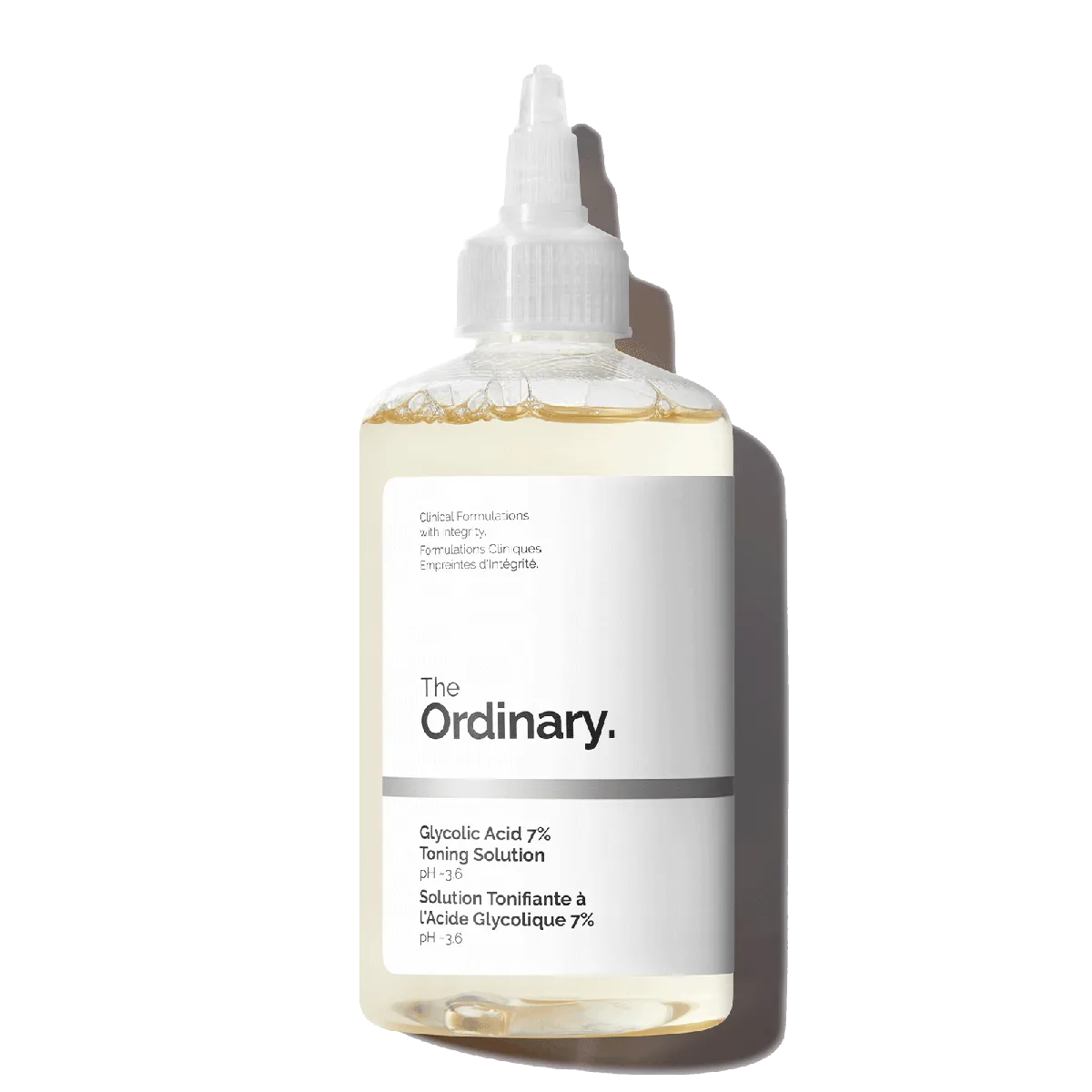
At $13.50 for 240ml, this delivers a clinically relevant 7% glycolic acid concentration at a properly acidic pH (3.5-3.9) — the same active and concentration range used in published studies — for a fraction of what most AHA toners cost. The inclusion of Tasmannia Lanceolata as a sensory modifier to reduce stinging is an unusually thoughtful formulation choice at this price point.
The gold standard for budget AHA exfoliation — a properly formulated 7% glycolic acid toner at a pH that actually works, delivered in a generous bottle for the price of a fancy coffee. It won't win any packaging awards, but your skin won't care.
The case for it
Same rule for everyone. “Good choice” is the verdict on 9,564 of 45,024 concern verdicts across the catalog; rule R5 decided 9,072 of them. Unchanged since September 5, 2026, engine 5.1.1.
Brand or formulator? Disclose a concentration or correct a fact →
The studies behind the evidence row
The case for it
Same rule for everyone. “Good choice” is the verdict on 9,564 of 45,024 concern verdicts across the catalog; rule R5 decided 9,072 of them. Unchanged since September 5, 2026, engine 5.1.1.
Brand or formulator? Disclose a concentration or correct a fact →
The studies behind the evidence row
The case for it
Cautions: a photosensitising active — use sun protection.
What would change this: Guideline or regulatory standing for the active on this concern would move this from a promising bet to a recommendation.
Same rule for everyone. “Promising” is the verdict on 7,858 of 45,024 concern verdicts across the catalog; rule R9p decided 7,858 of them. Unchanged since September 5, 2026, engine 5.1.1.
Brand or formulator? Disclose a concentration or correct a fact →
The studies behind the evidence row
The case for it
Cautions: fungal-acne triggers.
What would change this: A concentration inside the studied range would raise this a step.
Same rule for everyone. “Unproven” is the verdict on 1,111 of 45,024 concern verdicts across the catalog; rule R9 decided 1,111 of them. Unchanged since September 5, 2026, engine 5.1.1.
Brand or formulator? Disclose a concentration or correct a fact →
The studies behind the evidence row
The case for it
Same rule for everyone. “Not for this” is the verdict on 488 of 45,024 concern verdicts across the catalog; rule R10 decided 488 of them. Unchanged since September 5, 2026, engine 5.1.1.
Brand or formulator? Disclose a concentration or correct a fact →
The studies behind the evidence row
The case for it
Cautions: a photosensitising active — use sun protection.
What would change this: Trial evidence for the active on this concern would move this from a bet to a recommendation.
Same rule for everyone. “Unproven” is the verdict on 1,111 of 45,024 concern verdicts across the catalog; rule R9 decided 1,111 of them. Unchanged since September 5, 2026, engine 5.1.1.
Brand or formulator? Disclose a concentration or correct a fact →
The studies behind the evidence row
The case for it
What would change this: Trial evidence for the active on this concern would move this from a bet to a recommendation.
Same rule for everyone. “Unproven” is the verdict on 1,111 of 45,024 concern verdicts across the catalog; rule R9 decided 1,111 of them. Unchanged since September 5, 2026, engine 5.1.1.
Brand or formulator? Disclose a concentration or correct a fact →
The studies behind the evidence row
The case for it
Cautions: fungal-acne triggers.
What would change this: Guideline or regulatory standing for the active on this concern would move this from a promising bet to a recommendation.
Same rule for everyone. “Promising” is the verdict on 7,858 of 45,024 concern verdicts across the catalog; rule R9p decided 7,858 of them. Unchanged since September 5, 2026, engine 5.1.1.
Brand or formulator? Disclose a concentration or correct a fact →
The studies behind the evidence row
Where our review and the verdict differ. The review below was written on the formulation and the published trials; the verdicts above apply the stricter standing test in our methodology — an active earns a recommendation only with guideline or regulatory standing for the concern. Where the two disagree, the verdict is DermApproved’s position.
A verdict is DermApproved’s assessment of how well a product’s ingredients fit a concern — never a claim about what the product treats. Evidence dots and collected reviews sit beside it and are never blended in. Rules 0.5.1 · evidence table ev-2026.09-r228 · how we decide
There is a particular kind of skincare product that transcends its original purpose so completely that it becomes something else entirely — a folk remedy passed between friends, a hack traded in Reddit threads, a solution to problems its creators never intended it to solve. The Ordinary's Glycolic Acid 7% Toning Solution is that product.
When DECIEM launched this toner in 2017 as part of The Ordinary's original lineup, it was straightforward enough: a 7% glycolic acid exfoliating toner in a big bottle at a small price. But nearly a decade later, it has become a Swiss Army knife of skincare — people use it on their faces for texture and dark spots, on their arms and legs for keratosis pilaris, on their feet for rough patches, and even under their arms as a deodorant alternative. The fact that a single product inspired this many off-label uses says something about both its formulation quality and the trust users place in it.
The formula itself is deceptively simple but genuinely well-constructed. Glycolic acid sits at the top of the INCI list at 7%, and the pH hovers between 3.5 and 3.9 — this matters enormously. Glycolic acid's effectiveness depends on having enough free acid available to actually penetrate the stratum corneum and dissolve the bonds between dead skin cells, and this pH range ensures a meaningful percentage of the acid remains in its active, un-ionized form. Many toners claim AHA concentrations that sound impressive on the label but buffer them to a pH where they're essentially expensive water. This one doesn't play that game.
What elevates the formula beyond basic glycolic acid in water is the supporting cast. Tasmannia Lanceolata extract — derived from Tasmanian Pepperberry — functions as a sensory modifier, interfering with the pain receptors in your skin that would otherwise scream about the acid sitting on your face. It doesn't reduce the exfoliation; it reduces the sensation. This is a genuinely clever formulation choice, and it's one reason why many people can tolerate daily use of a toner that, on paper, sounds aggressive. Alongside this, a complex of ten amino acids replenishes components of the skin's natural moisturizing factor that glycolic acid strips during exfoliation. It's the equivalent of a renovation team that cleans up after themselves — the acid removes what needs to go, and the amino acids replace what shouldn't have been lost in the process.
The texture is essentially water with a barely perceptible thickness. Applied on a cotton pad — which is the intended method, though some users just pat it on with their hands — it glides over the skin and absorbs within seconds. There's a slight tingling that ranges from "am I imagining this?" to "okay, that's definitely something" depending on your skin's current state and how new you are to the product. This tingling fades quickly and diminishes with regular use as your skin builds tolerance.
Results appear on a satisfying timeline. After the first use, there's an immediate brightening — that fresh, slightly luminous look that comes from removing the dullest surface cells. Within a week or two of consistent evening use, texture improves noticeably. Rough patches smooth out, pores look less congested, and skin takes on an evenness that wasn't there before. The longer game — fading dark spots, evening out post-inflammatory hyperpigmentation, genuinely transforming skin texture — plays out over four to eight weeks. This isn't a product that works overnight, but it also isn't one that makes you wait months wondering if anything is happening.
The limitations are real and worth acknowledging. It's not a product for sensitive skin, full stop. The pH is low enough and the glycolic acid concentration high enough that reactive skin will protest, and no amount of Tasmannia Lanceolata will override a genuinely irritated barrier. If you have rosacea, eczema, or a currently compromised barrier, this toner will set you back rather than move you forward. It also demands sunscreen compliance — using an AHA at this pH without daily broad-spectrum SPF is like washing your car and then driving it through a mud pit. The exfoliation removes the dead cell layer that provides some natural UV protection, so you're more vulnerable to sun damage.
The packaging is as utilitarian as The Ordinary gets — a clear plastic bottle with a screw cap. It's not elegant, it's not particularly easy to dispense (the opening is wide enough that you can accidentally pour out more than you need), and it doesn't look like anything special on your bathroom shelf. But the generosity of the 240ml bottle, combined with the fact that you only need a small amount per use, means this product lasts four to six months at a cost that barely registers.
At $13.50, the value proposition is almost absurd. You're getting a properly formulated, properly pH'd glycolic acid toner with thoughtful supporting ingredients for less than what many brands charge for a single-use sheet mask. The formulation would be impressive at three times the price. At this price, it's the reason people trust The Ordinary — because when a brand delivers this level of quality at this price point, you stop questioning their other products too.
The Glycolic Acid 7% Toning Solution is not trying to be luxurious or Instagram-worthy. It's trying to exfoliate your skin effectively, affordably, and without unnecessary irritation. After nearly a decade and millions of bottles sold, it's clear that it succeeds. Whether you use it for its intended purpose or you've discovered it as a secret weapon for some completely different skin concern, this is one of those rare products that genuinely earns every ounce of its reputation.
The hero actives that drive this product's performance.
| Ingredient | Function | Evidence |
|---|---|---|
| Glycolic Acid (7%) | The primary exfoliating active in this toner, delivered at a pH of 3.5-3.9 where it remains partially free acid — effective enough to dissolve desmosomes between dead corneocytes while the amino acid complex and Tasmannia Lanceolata extract buffer the irritation potential, making daily use feasible for most skin types. | Established mechanism for Rough Texture · established mechanism |
| Tasmannia Lanceolata Fruit/Leaf Extract | A Tasmanian Pepperberry derivative that acts as a sensory modifier in this formula — it reduces the stinging and redness typically associated with glycolic acid at this pH by interfering with TRPV1 receptor activation, allowing the acid to exfoliate without the usual burn. | Not yet assessed |
| Panax Ginseng Root Extract | Provides antioxidant support to freshly exfoliated skin in this formula, helping to protect newly revealed cells from oxidative stress while the glycolic acid increases cell turnover and exposes more vulnerable layers. | Not yet assessed |
| Amino Acid Complex | A blend of ten amino acids (aspartic acid, alanine, glycine, serine, valine, isoleucine, proline, threonine, histidine, phenylalanine) that mimic the skin's natural moisturizing factor — critical in this formula because glycolic acid can strip NMF components, and these amino acids replenish what the exfoliation removes. | Not yet assessed |
| Aloe Barbadensis Leaf Water | Used as a functional water base alongside rose and cornflower waters to provide immediate soothing and anti-inflammatory activity, counterbalancing the irritation potential of glycolic acid applied at a low pH. | Not yet assessed |
Ingredient standings describe the active at treatment-level doses and vehicles; this product's own condition grades weigh its actual formula.
Aqua (Water), Glycolic Acid, Rosa Damascena Flower Water, Centaurea Cyanus Flower Water, Aloe Barbadensis Leaf Water, Propanediol, Glycerin, Triethanolamine, Aminomethyl Propanol, Panax Ginseng Root Extract, Tasmannia Lanceolata Fruit/Leaf Extract, Aspartic Acid, Alanine, Glycine, Serine, Valine, Isoleucine, Proline, Threonine, Histidine, Phenylalanine, Glutamic Acid, Arginine, PCA, Sodium PCA, Sodium Lactate, Fructose, Glucose, Sucrose, Urea, Hexyl Nicotinate, Dextrin, Citric Acid, Polysorbate 20, Gellan Gum, Trisodium Ethylenediamine Disuccinate, Sodium Chloride, Hexylene Glycol, Potassium Sorbate, Sodium Benzoate, 1,2-Hexanediol, Caprylyl Glycol
toner
PM
Apply to clean, dry skin with a cotton pad before serums and moisturizer. Wait until fully absorbed before layering. Do not use with other direct acids, retinoids, or vitamin C in the same routine to avoid over-exfoliation.
Immediate brightening and smoother texture after first use. Within 1-2 weeks, noticeably more even skin tone and reduced dullness. Full benefits including faded dark spots, refined pores, and improved overall clarity at 4-8 weeks of consistent use.
Glycolic acid is the smallest alpha-hydroxy acid by molecular weight, which gives it superior penetration into the stratum corneum compared to larger AHAs like lactic or mandelic acid. At 7% concentration and a pH between 3.5 and 3.9, a significant proportion of the glycolic acid in this toner exists in its free acid (protonated) form — the form that can actually penetrate skin and disrupt the desmosomes holding dead corneocytes together.
A foundational study by Fartasch et al. published in the Archives of Dermatological Research (1997) demonstrated that glycolic acid acts on desmosomes in the lower stratum corneum without disrupting the barrier structures of the epidermis — meaning it promotes exfoliation of dead cells while leaving the functional barrier intact. This selective action explains why well-formulated glycolic acid products can improve texture and brightness without the barrier damage associated with physical scrubs.
More recently, Fichenor et al. published in Clinical, Cosmetic and Investigational Dermatology (2021) showed that glycolic acid at a pH near 4 stimulates collagen production and epidermal renewal in human skin explants without increasing levels of pro-inflammatory TNF-alpha. This suggests that the anti-aging benefits of glycolic acid extend beyond simple exfoliation — it actively promotes dermal remodeling.
The inclusion of Tasmannia Lanceolata extract is pharmacologically interesting. This Tasmanian Pepperberry derivative contains polygodial, a compound shown to act on TRPV1 vanilloid receptors — the same receptors responsible for the burning and stinging sensation triggered by capsaicin and, relevantly, by low-pH acid contact. By modulating these receptors, the extract reduces the perception of irritation without altering the acid's exfoliating activity.
The amino acid complex (ten amino acids including glycine, serine, and proline) serves a specific function in this context: glycolic acid exfoliation depletes components of the skin's natural moisturizing factor (NMF), and these amino acids are direct NMF constituents. Their inclusion is a targeted replenishment strategy rather than generic hydration.
Dermatologists frequently recommend glycolic acid as a first-line chemical exfoliant for patients seeking to address dullness, texture, mild acne, and post-inflammatory hyperpigmentation. This particular formulation is often cited in clinical settings as an affordable over-the-counter option that delivers a meaningful AHA concentration at an appropriately acidic pH — two factors that many dermatologists emphasize as critical for efficacy. Dermatologists in everyday practice have also noted its utility for keratosis pilaris, with some recommending daily application to affected areas on the arms and legs. The Tasmannia Lanceolata extract is recognized as a thoughtful inclusion that improves tolerability without compromising the exfoliating action, making this toner a practical choice for patients who might otherwise struggle with AHA sensitivity.
Apply once daily in the evening to clean, dry skin. Saturate a cotton pad and sweep across face and neck, avoiding the eye area. Do not rinse off. Wait until fully absorbed before applying serums and moisturizer. Beginners should start at 2-3 times per week, gradually increasing to daily use as tolerance builds. Can also be applied to body areas for keratosis pilaris or texture concerns. Always apply broad-spectrum SPF 30 or higher the following morning. Do not use alongside retinoids, other AHAs, BHAs, or vitamin C in the same routine.
At $13.50 for 240ml (and a smaller 100ml option available), this toner sits in a pricing tier that almost defies comparison. A single bottle lasts four to six months of daily facial use, bringing the per-use cost to roughly seven cents. For a 7% glycolic acid formulation at a properly acidic pH with supporting ingredients like Tasmannia Lanceolata and an amino acid complex, this kind of value is nearly impossible to find elsewhere. The Ordinary's ability to deliver this quality at this price stems from their parent company DECIEM's vertically integrated manufacturing and commitment to minimal marketing overhead. The result is a product where virtually every dollar goes toward the formula rather than the branding.
Anyone dealing with dull, textured, or congested skin who wants an effective AHA exfoliant without paying luxury prices. Particularly well-suited for oily and combination skin types looking to improve pore appearance, fade dark spots, or address keratosis pilaris on the body.
Those with sensitive, rosacea-prone, or eczema-affected skin should avoid this toner entirely. Anyone with a currently compromised skin barrier, or those unwilling to commit to daily sunscreen use, will likely experience more harm than benefit from regular AHA exfoliation at this concentration.
Ready to try The Ordinary Glycolic Acid 7% Toning Solution?
Buy at Amazon ♥Watery, lightweight liquid with a very slight viscosity — feels like a slightly thicker toner water
Virtually unscented with a faint, barely perceptible chemical note from the glycolic acid itself
Tall, clear plastic bottle with a twist-off cap — functional but basic, consistent with The Ordinary's no-frills approach
Expect a mild tingling or slight stinging sensation during the first few applications — this is normal and typically subsides within a minute. Some users experience mild redness that fades within 30 minutes. If stinging is intense, reduce frequency to every other day while your skin acclimates. No purging is typical, though those with congested skin may see a brief increase in breakouts during the first week.
4-6 months with daily evening use on face and neck
All Year
This toner arrived as part of The Ordinary's original 2017 lineup that upended the skincare industry by stripping away luxury branding and selling concentrated actives at near-commodity prices. The Glycolic Acid Toning Solution became one of the brand's bestsellers almost immediately, proving that consumers were willing to trade elegant packaging for transparent, effective formulations. It has since expanded beyond its intended facial use, becoming a viral solution for body texture, underarm odor, and keratosis pilaris.
The Ordinary launched in 2016 under parent company DECIEM and quickly became one of the most recognized names in affordable, ingredient-focused skincare. While the brand lacks proprietary clinical trials on its specific formulations, it builds products around well-studied actives at transparent concentrations, earning widespread dermatologist acknowledgment.
You need to use this toner every day to see results.
Many users see excellent results using it 3-4 times per week. Daily use is fine for resilient skin, but less frequent application often delivers the same exfoliation benefits with reduced irritation risk — especially when starting out.
This toner is too strong for beginners because it's 7% glycolic acid.
At 7%, this sits in the moderate range for over-the-counter AHA products — professional peels use 20-70%. The formula's Tasmannia Lanceolata extract actively reduces the stinging sensation, and the amino acid complex helps buffer the exfoliation. Beginners can start at 2-3 times per week and build up safely.
Yes, but build up gradually. This toner is formulated for daily evening use, but starting at 2-3 times per week allows your skin to acclimate to the 7% glycolic acid concentration. The Tasmannia Lanceolata extract helps reduce stinging, but your skin's tolerance level is individual — increase frequency only when you no longer experience tingling.
Not in the same routine. Glycolic acid at pH 3.5-3.9 and retinoids can over-exfoliate when layered together, leading to irritation, dryness, and a compromised barrier. Alternate nights — glycolic toner one evening, retinoid the next — or use the toner in the evening and retinoid on a different schedule.
Yes — glycolic acid accelerates cell turnover, which helps fade post-inflammatory hyperpigmentation and sun-induced dark spots over 4-8 weeks of consistent use. This toner's 7% concentration at a low pH is effective enough to promote meaningful exfoliation of pigmented surface cells.
Absolutely. This toner has become popular for treating keratosis pilaris on arms and legs, smoothing rough body texture, and even reducing underarm odor. The 240ml bottle makes body application practical, and body skin generally tolerates AHAs better than facial skin.
Glycolic acid is generally considered safe during pregnancy as it is not systemically absorbed in meaningful amounts at cosmetic concentrations. However, skin can be more sensitive during pregnancy, so patch test first and consult your OB-GYN if you have any concerns.
The stinging is caused by the glycolic acid at pH 3.5-3.9 interacting with your skin. This is normal and typically mild — the formula includes Tasmannia Lanceolata extract specifically to reduce this sensation. If stinging is severe or persistent, reduce frequency or discontinue use. Stinging usually decreases as skin builds tolerance over 1-2 weeks.
Yes, absolutely. AHAs like glycolic acid increase photosensitivity by removing the outer layer of dead skin cells that provides some UV protection. Apply a broad-spectrum SPF 30 or higher every morning when using this toner — even on cloudy days — and for one week after discontinuing use.
Recurring themes our editors read across retailer reviews of this product — summaries in our words, not quotations, and not a substitute for your own patch test.
Visibly smoother and brighter skin after consistent use
Exceptional value for a well-formulated AHA product
Multi-use versatility including face, body, and underarms
Noticeable reduction in pore appearance and texture
Helps fade dark spots and post-inflammatory hyperpigmentation
Can cause stinging or irritation for those with sensitive skin
Takes time to build tolerance — initial use may cause redness
Not suitable for those already using retinoids without careful scheduling
Large bottle can be difficult to dispense precisely
Verified answers from our questions library — the nuance a product page cannot carry.