



You Can Mix L-Ascorbic Acid at Home. Keeping It Alive Is the Hard Part.
The one home formulation with a genuinely coherent case, taken apart on its own terms: the pH window, the oxidation clock, and what a browning serum has actually become.
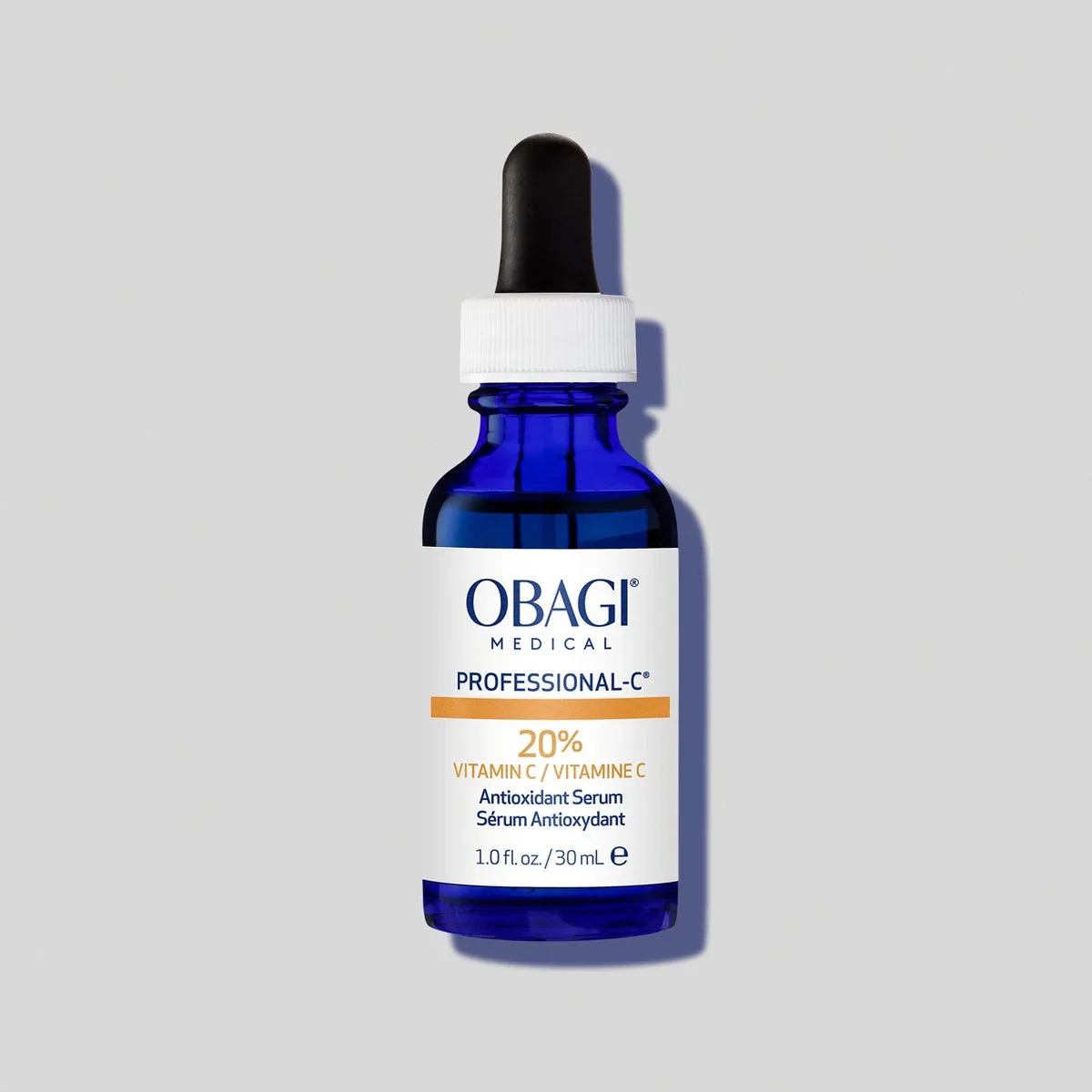
The most fully realized formula in the Professional-C range — 12 ingredients including sodium hyaluronate, sorbitol, and zinc chloride that the simpler 10% and 15% versions lack. This is Obagi's acknowledgment that maximum-strength vitamin C needs a more sophisticated support system to remain wearable for daily use.
The most potent and most popular vitamin C serum in Obagi's Professional-C line, with the most complete supporting formula including sodium hyaluronate. Delivers dramatic brightening for oily and normal skin types — but the continued absence of ferulic acid prevents it from being the definitive clinical vitamin C serum.
The case for it
What would change this: A declared concentration would move this to a firmer reading of the dose.
Same rule for everyone. “Promising” is the verdict on 7,858 of 45,024 concern verdicts across the catalog; rule R9p decided 7,858 of them. Unchanged since September 5, 2026, engine 5.1.1.
Brand or formulator? Disclose a concentration or correct a fact →
The studies behind the evidence row
The case for it
What would change this: Guideline or regulatory standing for the active on this concern would move this from a promising bet to a recommendation.
Same rule for everyone. “Promising” is the verdict on 7,858 of 45,024 concern verdicts across the catalog; rule R9p decided 7,858 of them. Unchanged since September 5, 2026, engine 5.1.1.
Brand or formulator? Disclose a concentration or correct a fact →
The studies behind the evidence row
The case for it
What would change this: Guideline or regulatory standing for the active on this concern would move this from a promising bet to a recommendation.
Same rule for everyone. “Promising” is the verdict on 7,858 of 45,024 concern verdicts across the catalog; rule R9p decided 7,858 of them. Unchanged since September 5, 2026, engine 5.1.1.
Brand or formulator? Disclose a concentration or correct a fact →
The studies behind the evidence row
The case for it
What would change this: Guideline or regulatory standing for the active on this concern would move this from a promising bet to a recommendation.
Same rule for everyone. “Promising” is the verdict on 7,858 of 45,024 concern verdicts across the catalog; rule R9p decided 7,858 of them. Unchanged since September 5, 2026, engine 5.1.1.
Brand or formulator? Disclose a concentration or correct a fact →
The studies behind the evidence row
The case for it
What would change this: Guideline or regulatory standing for the active on this concern would move this from a promising bet to a recommendation.
Same rule for everyone. “Promising” is the verdict on 7,858 of 45,024 concern verdicts across the catalog; rule R9p decided 7,858 of them. Unchanged since September 5, 2026, engine 5.1.1.
Brand or formulator? Disclose a concentration or correct a fact →
The studies behind the evidence row
Where our review and the verdict differ. The review below was written on the formulation and the published trials; the verdicts above apply the stricter standing test in our methodology — an active earns a recommendation only with guideline or regulatory standing for the concern. Where the two disagree, the verdict is DermApproved’s position.
A verdict is DermApproved’s assessment of how well a product’s ingredients fit a concern — never a claim about what the product treats. Evidence dots and collected reviews sit beside it and are never blended in. Rules 0.5.1 · evidence table ev-2026.09-r228 · how we decide
There's a particular kind of product that dermatologists keep reaching for not because it's perfect, but because it's been reliably doing one job for so long that recommending it feels like muscle memory. Obagi's Professional-C 20% is that product in the vitamin C aisle — the maximum-strength variant in a line that's been on physician shelves since 2008, the one most often handed to patients who can handle the strongest dose. And the frustrating thing about reviewing it honestly is that the conversation keeps circling back to a single missing ingredient that would have made it genuinely great instead of merely effective.
First, the strength. This delivers L-ascorbic acid at 20%, the highest concentration in the Professional-C range, and that's a meaningful number. There's a well-cited saturation threshold for vitamin C in skin around 15% — beyond that, the tissue's reservoirs are essentially full, and absorption doesn't climb proportionally with concentration. So the extra 5% here doesn't multiply uptake. What it does, per the research on higher concentrations, is extend the duration of vitamin C availability and provide more aggressive surface-level antioxidant activity, which translates in practice to the most dramatic visible brightening of the three Professional-C strengths. Users who tolerate it consistently report exactly that — the strongest glow and the clearest improvement in dark spots and uneven tone of the line.
What makes the 20% the most fully realized formula in the range isn't only the higher dose, though. Obagi meaningfully expanded the ingredient list for this version. The standout addition is sodium hyaluronate, which is genuinely welcome: at 20% L-ascorbic acid, the serum is potent enough to cause transient tightness and dryness, and the hyaluronic acid provides a hydration buffer that draws moisture in and makes the product noticeably more comfortable for daily use than its strength would suggest. It also lends a plumper, more luminous finish the simpler 10% and 15% formulas lack. Backing it up is ascorbyl glucoside, a stabilized vitamin C derivative that undergoes enzymatic conversion to active L-ascorbic acid in the skin, effectively acting as a slower-release secondary source. That dual-form approach matters most precisely at 20%, where pure L-ascorbic acid's inherent instability means a real portion can oxidize before it reaches target cells. Sorbitol joins as an additional humectant, smoothing the feel, and zinc chloride contributes mild astringent and anti-inflammatory properties that suit the normal-to-oily skin this version targets. The texture is thin and liquid, absorbs quickly, and dries down cleanly, with the hyaluronate giving it a slightly more comfortable slip than the lower strengths.
Used consistently, the timeline is straightforward: a visible glow and improved luminosity within the first week, noticeable brightening and dark-spot improvement by three to four weeks, and the larger gains in tone evenness, fine lines, and overall radiance settling in across eight to twelve weeks. It works, and it works with the unbothered confidence of a formula that's been validated in physician channels for over a decade — Obagi Medical itself dates to 1988, founded by a board-certified dermatologist, so the clinical pedigree is real.
Now the harder truths, and there are several. The higher concentration brings higher irritation potential, and stinging on application is common during the first one to two weeks. The combination of 20% L-ascorbic acid and denatured alcohol produces a formula that normal and oily skin can handle but sensitive or dry skin will likely find uncomfortable — building up from the 10% or 15% is wiser than jumping straight in, and even then a good moisturizer is non-negotiable to offset the drying tendency. There's also fragrance in the formula, which is an unnecessary inclusion in a serum positioned as clinical-grade, and a needless sensitization risk. But the most significant gap is what's still not here: ferulic acid. The well-known vitamin C paradigm pairs L-ascorbic acid with ferulic acid and vitamin E to stabilize the formula and roughly double its photoprotective benefit, and that's been the premium standard for well over a decade. Obagi's continued omission means this serum delivers less photoprotective value per percentage point of vitamin C than formulas that include it — not a fatal flaw, since 20% L-ascorbic acid with ascorbyl glucoside and sodium hyaluronate is still potent and effective, but a real opportunity cost that keeps it from being the definitive clinical vitamin C serum it's positioned as.
That brings us to value, which is the serum's weakest column and the reason its overall score lands where it does. At $155 retail for a single ounce, this is one of the most expensive vitamin C serums on the market, and you're paying a premium for a formula that's missing the very ingredients modern competitors include for less. Sale pricing improves the math considerably, and at a discount it competes far more reasonably against other clinical brands — so if you're going to buy it, buy it on sale. The honest read is that the price reflects the Obagi name and physician-channel pedigree as much as the formula itself.
Who's this for? Normal and oily skin that wants maximum-strength vitamin C with a clinical track record, can tolerate the sting, and ideally catches it at a sale price — those buyers will get the genuine brightening and dark-spot improvement this delivers. Who should skip it: sensitive or dry skin that will struggle with the alcohol and acid combination, anyone bothered by added fragrance in a treatment serum, and value-focused shoppers who'd rather have ferulic acid and vitamin E in the bottle than the Obagi logo on it. It does its one job well. It just costs more than a formula with this many omissions ought to.
The hero actives that drive this product's performance.
| Ingredient | Function | Evidence |
|---|---|---|
| L-Ascorbic Acid (20%) (20%) | Maximum-strength vitamin C at 20%, delivering the most aggressive brightening and collagen-stimulating effects in the Professional-C line. While skin tissue saturates at approximately 15%, the additional 5% extends the duration of vitamin C availability and provides more potent surface-level antioxidant activity — resulting in the most dramatic visible brightening of the three concentrations. | Limited for Sun Damage |
| Ascorbyl Glucoside | A stabilized vitamin C derivative that supplements the primary L-ascorbic acid with a slower-release form, extending total vitamin C availability in the skin beyond what the pure form delivers alone. This dual-form approach is particularly valuable at the 20% level where the L-ascorbic acid's inherent instability is more pronounced. | Limited for Sun Damage |
| Sodium Hyaluronate | A critical addition unique to the 20% formula — provides hydration that buffers the drying and potentially irritating effects of the high-concentration L-ascorbic acid and alcohol. Draws moisture into the skin to counteract the transient tightness that 20% vitamin C can cause, making the formula more comfortable for daily use. | Plausible mechanism for Dullness |
| Sorbitol | A sugar alcohol humectant that complements the sodium hyaluronate in providing moisture retention. In this high-strength vitamin C formula, sorbitol adds a smoothing, skin-conditioning effect that improves the serum's feel and helps mitigate the potential drying effects of the L-ascorbic acid and alcohol. | Not yet assessed |
Ingredient standings describe the active at treatment-level doses and vehicles; this product's own condition grades weigh its actual formula.
Propylene Glycol, Water (Aqua), L-Ascorbic Acid, Alcohol, Ascorbyl Glucoside, Ethoxydiglycol, Phenoxyethanol, Sorbitol, Sodium Hyaluronate, Zinc Chloride, Calcium Hydroxide, Fragrance.
serum
AM
Apply to clean, dry skin every morning before moisturizer and sunscreen. Allow 1-2 minutes for full absorption. The sodium hyaluronate makes this more comfortable than lower-concentration versions. Always follow with broad-spectrum SPF 30+. If stinging is significant during the first week, apply over a light moisturizer to buffer.
Visible glow and improved luminosity within the first week. Noticeable brightening and dark spot improvement within 3-4 weeks. Significant improvement in tone evenness, fine lines, and overall skin radiance by 8-12 weeks.
At 20% L-ascorbic acid, this serum exceeds the tissue saturation threshold identified by Pinnell et al. (Dermatologic Surgery, 2001) at approximately 15%. However, research published in the British Journal of Dermatology (2003) by Farris demonstrated that concentrations up to 20% continue to provide incremental benefits in terms of collagen synthesis stimulation and photoprotection duration, even beyond the point of tissue saturation. The excess vitamin C provides a longer-lasting reservoir of antioxidant activity.
The dual-form vitamin C approach amplifies this reservoir effect. Ascorbyl glucoside undergoes enzymatic conversion to L-ascorbic acid via glucosidases in the skin, providing a secondary, slower-release source of active vitamin C. This is particularly relevant at 20% where the inherent instability of L-ascorbic acid means a significant portion may oxidize before it reaches target cells.
The inclusion of sodium hyaluronate is supported by extensive evidence for its hydrating and skin-plumping effects. A clinical trial reported in the Journal of Clinical and Aesthetic Dermatology (2012) demonstrated that topical hyaluronic acid significantly improves skin hydration and elasticity, making it an appropriate companion for high-concentration vitamin C that can cause transient dehydration.
Zinc chloride contributes mild antimicrobial and astringent properties. Research in the Journal of Dermatological Science has documented zinc's anti-inflammatory effects and its role in wound healing and sebum regulation, supporting its inclusion in a formula targeted at normal-to-oily skin types.
Skin-care clinicians consider the Professional-C 20% appropriate for patients with normal-to-oily skin who have established tolerance to topical vitamin C and seek maximum antioxidant protection and brightening. Dermatologists note that the expanded formula with sodium hyaluronate represents an improvement over the simpler lower-concentration versions. However, many dermatologists acknowledge that the formula would be significantly enhanced by the addition of ferulic acid and vitamin E — a combination that most competing clinical vitamin C serums now include as the evidence-based standard.
Apply 5-7 drops to clean, dry face and neck every morning. Spread quickly and evenly, avoiding the eye area. Expect mild stinging during the first 1-2 weeks — this is normal and diminishes as skin adjusts. Allow 1-2 minutes for absorption before applying moisturizer and broad-spectrum SPF 30+. If stinging is uncomfortable, apply over a thin layer of light moisturizer to buffer. Use within 3-4 months of opening.
At $155 retail, this is among the most expensive vitamin C serums available. Sale prices around $85 bring it to a more competitive level. The most complete formula in the Professional-C line — with sodium hyaluronate, dual-form vitamin C, and additional humectants — partially justifies the premium. However, SkinCeuticals CE Ferulic (at a similar price) includes the synergistic antioxidant network that this serum lacks. For budget-conscious shoppers, Timeless 20% Vitamin C + E + Ferulic Acid offers similar concentration with better supporting ingredients at under $30.
This serum is for people with normal-to-oily skin who want maximum-strength vitamin C from a physician-channel brand. Best for those already comfortable with active ingredients who want the most dramatic brightening and antioxidant protection the Professional-C line offers. Particularly well-suited for oily and acne-prone skin.
Anyone with dry, sensitive, or rosacea-prone skin — the 20% concentration with alcohol will likely cause persistent irritation. First-time vitamin C users should start with 10% or 15%. Budget shoppers can find equally effective 20% vitamin C serums with better supporting ingredients for a fraction of the price.
Thin, liquid consistency that absorbs quickly. The sodium hyaluronate gives it a slightly smoother, more comfortable feel than the 10% and 15% versions. Dries down cleanly.
Light fragrance, consistent with the Professional-C line. Not overpowering.
Dark amber glass bottle with dropper. Essential for protecting the 20% L-ascorbic acid from light degradation.
Noticeable warmth and mild stinging upon first application — stronger than the 10% or 15% versions. This is normal at 20% concentration and typically subsides within 30-60 seconds. Skin may feel slightly tight initially; the sodium hyaluronate helps offset this. Stinging typically diminishes after the first 1-2 weeks of consistent use as skin acclimates.
2-3 months with daily morning use
All Year
The Professional-C 20% is the most popular product in the line and the one most frequently recommended in dermatology offices for patients who can handle maximum-strength vitamin C. Over 200 reviews and a 4.6 rating make it the highest-engagement product in the Professional-C range. The expanded ingredient list compared to the 10% and 15% versions reflects years of feedback that high-concentration vitamin C needs hydrating and soothing companions.
Obagi Medical was founded in 1988 by board-certified dermatologist Dr. Zein Obagi. The Professional-C 20% is the flagship of the line, with over 200 reviews and the highest user satisfaction among the three concentrations.
20% vitamin C delivers twice the results of 10%.
Skin tissue saturates with vitamin C at approximately 15%. The 20% provides more sustained availability and more aggressive surface-level antioxidant activity, but not proportionally twice the skin-level benefits. The difference is meaningful but not linear.
Stinging means the serum is damaging your skin.
Mild stinging from L-ascorbic acid at 20% is a normal pH-related reaction — the low pH needed for vitamin C absorption triggers transient TRPV1 receptor activation. If stinging subsides within 60 seconds and skin is not persistently red, the serum is working as intended.
If you have normal-to-oily skin and have used vitamin C serums before, 20% is likely tolerable. Expect mild stinging during the first 1-2 weeks as skin adjusts. If you have dry, sensitive, or rosacea-prone skin, start with the 10% or 15% and work up. Apply over a thin layer of moisturizer to buffer if stinging is uncomfortable.
At 20% L-ascorbic acid, the potential for dryness and irritation increases significantly. Obagi added sodium hyaluronate for hydration, sorbitol as an additional humectant, and zinc chloride for skin conditioning to make the formula more comfortable for daily use. The simpler 10% formula does not need these buffers at its lower concentration.
Use within 3-4 months of opening. L-ascorbic acid at 20% is particularly susceptible to oxidation from air and light exposure. Store in a cool, dark place with the cap tightly closed. If the serum turns from clear/pale yellow to dark orange or brown, it has oxidized beyond usefulness.
Yes — the oil-free, silicone-free formula is non-comedogenic and well-suited for oily, acne-prone skin. The zinc chloride in this version also provides mild astringent and antimicrobial properties. Vitamin C's anti-inflammatory effects may complement acne treatments, though it should not be applied simultaneously with benzoyl peroxide.
This is a longstanding formulation choice that predates the widespread adoption of the CE Ferulic paradigm. While research clearly shows that ferulic acid doubles vitamin C's photoprotective capacity, Obagi has not updated the Professional-C formulas to include it. This remains the formula's most significant limitation compared to modern competitors.
Recurring themes our editors read across retailer reviews of this product — summaries in our words, not quotations, and not a substitute for your own patch test.
Delivers the most dramatic brightening effect in the Professional-C line
Visible glow within the first few days of use
Sodium hyaluronate makes it more comfortable than expected at 20%
Has significantly improved dark spots and uneven tone over months
Stinging upon application common during first 1-2 weeks
Alcohol and 20% vitamin C can be drying without adequate moisturizer
Still lacks ferulic acid that would enhance photoprotection
Premium price at $155 retail though sale prices are more reasonable
Verified answers from our questions library — the nuance a product page cannot carry.