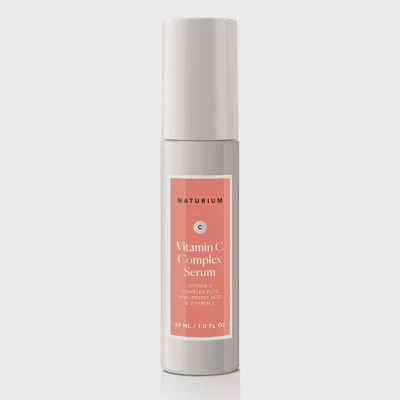
Rather than relying on a single high-concentration L-ascorbic acid (which oxidizes quickly and stings sensitive skin), this serum uses a dual vitamin C system — stabilized sodium ascorbyl phosphate plus pure ascorbic acid — paired with glutathione, which recycles spent vitamin C back to its active form. This approach prioritizes formula stability and gentleness over raw potency, making it accessible to vitamin C beginners and sensitive skin types.
Naturium's Vitamin C Complex Serum is a refreshingly sensible take on the most overhyped category in skincare — delivering real antioxidant protection through a stable, gentle, multi-form vitamin C system at $21. It won't compete with clinical-grade L-ascorbic acid serums for raw potency, but it outperforms most of them in stability, user experience, and sheer value.
Promisingfor DullnessIn your profileYou chose · Hyaluronic Acid has trial-level evidence for dullness but no guideline or regulatory standing yet — promising, short of a recommendation; the other actives here are not yet assessed for it.Moderate evidenceGentle250 reviews collected
The case for it
Sodium Hyaluronate has trial-level evidence for this concern but no guideline or regulatory standing yet.
It is present at an effective concentration, declared or high in the ingredient list.
The formula carries none of the triggers this concern is sensitive to.
What would change this: Guideline or regulatory standing for the active on this concern would move this from a promising bet to a recommendation.
Same rule for everyone. “Promising” is the verdict on 7,858 of 45,024 concern verdicts across the catalog; rule R9p decided 7,858 of them.
Unchanged since September 5, 2026, engine 5.1.1.
R9p — 0.5.0: 'Unproven' beside three filled dots read as one question answered twice with opposite words (7,018 rows). The chip measures standing, the dots measure trial volume; where the row carries at least one RCT or a tier-2 source (moderate dots) and the active is present at a working level, the honest word is Promising. Unproven is reserved for plausible-standing rows with limited or weak evidence, or an under-dosed form. Same rank as Unproven — a bet either way; the dots order them. · the full register
Carrying active
Sodium Hyaluronate
Standing
plausible — trials support it
Form
adequate
Tolerability
gentle
Row checked
against its sources on July 17, 2026 (evidence table ev-2026.09-r228)
Promisingfor HyperpigmentationIn your profileYou chose · Vitamin C has trial-level evidence for hyperpigmentation but no guideline or regulatory standing yet — promising, short of a recommendation; the other actives here are not yet assessed for it.Moderate evidenceGentle250 reviews collected
The case for it
Sodium Ascorbyl Phosphate has trial-level evidence for this concern but no guideline or regulatory standing yet.
It is plausibly present at a working level, though the concentration is not declared.
The formula carries none of the triggers this concern is sensitive to.
What would change this: A declared concentration would move this to a firmer reading of the dose.
Same rule for everyone. “Promising” is the verdict on 7,858 of 45,024 concern verdicts across the catalog; rule R9p decided 7,858 of them.
Unchanged since September 5, 2026, engine 5.1.1.
R9p — 0.5.0: 'Unproven' beside three filled dots read as one question answered twice with opposite words (7,018 rows). The chip measures standing, the dots measure trial volume; where the row carries at least one RCT or a tier-2 source (moderate dots) and the active is present at a working level, the honest word is Promising. Unproven is reserved for plausible-standing rows with limited or weak evidence, or an under-dosed form. Same rank as Unproven — a bet either way; the dots order them. · the full register
Carrying active
Sodium Ascorbyl Phosphate
Standing
plausible — trials support it
Form
plausible — studied range 5–6%, from the trials on the row; needs leave-on contact; judge it after ~12 weeks
Tolerability
gentle
Row checked
against its sources on July 17, 2026 (evidence table ev-2026.09-r228)
Promisingfor Sun DamageIn your profileYou chose · Vitamin C has trial-level evidence for sun damage but no guideline or regulatory standing yet — promising, short of a recommendation; the other actives here are not yet assessed for it.Moderate evidenceGentle250 reviews collected
The case for it
Sodium Ascorbyl Phosphate has trial-level evidence for this concern but no guideline or regulatory standing yet.
It is plausibly present at a working level, though the concentration is not declared.
The formula carries none of the triggers this concern is sensitive to.
What would change this: A declared concentration would move this to a firmer reading of the dose.
Same rule for everyone. “Promising” is the verdict on 7,858 of 45,024 concern verdicts across the catalog; rule R9p decided 7,858 of them.
Unchanged since September 5, 2026, engine 5.1.1.
R9p — 0.5.0: 'Unproven' beside three filled dots read as one question answered twice with opposite words (7,018 rows). The chip measures standing, the dots measure trial volume; where the row carries at least one RCT or a tier-2 source (moderate dots) and the active is present at a working level, the honest word is Promising. Unproven is reserved for plausible-standing rows with limited or weak evidence, or an under-dosed form. Same rank as Unproven — a bet either way; the dots order them. · the full register
Carrying active
Sodium Ascorbyl Phosphate
Standing
plausible — trials support it
Form
plausible
Tolerability
gentle
Row checked
against its sources on July 17, 2026 (evidence table ev-2026.09-r228)
The studies behind the evidence row
Use of topical ascorbic acid and its effects on photodamaged skin topography — Archives of Otolaryngology–Head & Neck Surgery — PubMed type includes 'Randomized Controlled Trial'; n=19 evaluable; active AND vehicle supplied by Cellex-C International; private facial plastic surgery practice (1999), opened July 16, 2026
Promisingfor AgingIn your profileYou chose · Vitamin C has trial-level evidence for aging but no guideline or regulatory standing yet — promising, short of a recommendation; the other actives here are not yet assessed for it.Moderate evidenceGentle250 reviews collected
The case for it
Sodium Ascorbyl Phosphate has trial-level evidence for this concern but no guideline or regulatory standing yet.
It is plausibly present at a working level, though the concentration is not declared.
The formula carries none of the triggers this concern is sensitive to.
What would change this: A declared concentration would move this to a firmer reading of the dose.
Same rule for everyone. “Promising” is the verdict on 7,858 of 45,024 concern verdicts across the catalog; rule R9p decided 7,858 of them.
Unchanged since September 5, 2026, engine 5.1.1.
R9p — 0.5.0: 'Unproven' beside three filled dots read as one question answered twice with opposite words (7,018 rows). The chip measures standing, the dots measure trial volume; where the row carries at least one RCT or a tier-2 source (moderate dots) and the active is present at a working level, the honest word is Promising. Unproven is reserved for plausible-standing rows with limited or weak evidence, or an under-dosed form. Same rank as Unproven — a bet either way; the dots order them. · the full register
Carrying active
Sodium Ascorbyl Phosphate
Standing
plausible — trials support it
Form
plausible — studied range 5%, from the trials on the row; needs leave-on contact; judge it after ~12 weeks
Tolerability
gentle
Row checked
against its sources on July 17, 2026 (evidence table ev-2026.09-r228)
Promisingfor Dark SpotsIn your profileYou chose · Vitamin C has trial-level evidence for dark spots but no guideline or regulatory standing yet — promising, short of a recommendation; the other actives here are not yet assessed for it.Moderate evidenceGentle250 reviews collected
The case for it
Sodium Ascorbyl Phosphate has trial-level evidence for this concern but no guideline or regulatory standing yet.
It is plausibly present at a working level, though the concentration is not declared.
The formula carries none of the triggers this concern is sensitive to.
What would change this: A declared concentration would move this to a firmer reading of the dose.
Same rule for everyone. “Promising” is the verdict on 7,858 of 45,024 concern verdicts across the catalog; rule R9p decided 7,858 of them.
Unchanged since September 5, 2026, engine 5.1.1.
R9p — 0.5.0: 'Unproven' beside three filled dots read as one question answered twice with opposite words (7,018 rows). The chip measures standing, the dots measure trial volume; where the row carries at least one RCT or a tier-2 source (moderate dots) and the active is present at a working level, the honest word is Promising. Unproven is reserved for plausible-standing rows with limited or weak evidence, or an under-dosed form. Same rank as Unproven — a bet either way; the dots order them. · the full register
Carrying active
Sodium Ascorbyl Phosphate
Standing
plausible — trials support it
Form
plausible — studied range 1–28%, from the trials on the row; needs leave-on contact; judge it after ~12 weeks
Tolerability
gentle
Row checked
against its sources on July 17, 2026 (evidence table ev-2026.09-r228)
Good choicefor DehydrationIn your profileYou chose · Hyaluronic Acid is a reference standard by mechanism for dehydration; this serum carries it.Moderate evidenceGentle250 reviews collected
The case for it
Sodium Hyaluronate has trial-supported standing for this concern.
It is plausibly present at a working level, though the concentration is not declared.
The formula carries none of the triggers this concern is sensitive to.
What would change this: A declared concentration would move this to a firmer reading of the dose.
Same rule for everyone. “Good choice” is the verdict on 9,564 of 45,024 concern verdicts across the catalog; rule R5 decided 9,072 of them.
Unchanged since September 5, 2026, engine 5.1.1.
R5 — Trial-supported or guideline-supported active, adequately or plausibly dosed. · the full register
Carrying active
Sodium Hyaluronate
Standing
supported — its mechanism is established
Form
plausible — studied range 0.1%, from the trials on the row; needs leave-on contact; judge it after ~1 weeks
Tolerability
gentle
Row checked
against its sources on July 17, 2026 (evidence table ev-2026.09-r228)
The studies behind the evidence row
Draelos ZD, Cosmetic Dermatology: Products and Procedures — hyaluronic acid classified as a humectant water-binding agent holding many times its weight in water — reference work
Where our review and the verdict differ. The review below was written on the formulation and the published trials; the verdicts above apply the stricter standing test in our methodology — an active earns a recommendation only with guideline or regulatory standing for the concern. Where the two disagree, the verdict is DermApproved’s position.
A verdict is DermApproved’s assessment of how well a product’s ingredients fit a concern — never a claim about what the product treats. Evidence dots and collected reviews sit beside it and are never blended in.
Rules 0.5.1 · evidence table ev-2026.09-r228 · how we decide
Assessment
Pros & Cons
Pros
✓ Dual-form vitamin C system prioritizes stability — no rapid oxidation or bottle browning
✓ Glutathione inclusion recycles vitamin C and adds independent brightening properties
✓ Gentle, sting-free formula accessible for sensitive skin and vitamin C beginners
✓ Lightweight gel texture absorbs instantly and layers beautifully under moisturizer and SPF
✓ Exceptional $21 price point with jumbo size available for further savings
✓ Vitamin E synergy creates well-documented enhanced antioxidant protection
Cons
✗ Less potent than clinical-grade 15-20% L-ascorbic acid serums for deep pigmentation
✗ Gold in the formula is cosmetic filler with no proven skincare benefit
✗ Standard 1 oz bottle may feel small for daily morning application to face and neck
✗ Fruit extracts could potentially irritate extremely reactive skin types
✗ Exact vitamin C concentration is not disclosed on the label
Review
Full Review
There is a dirty secret in the vitamin C serum world that nobody talks about at the beauty counter: most people's expensive L-ascorbic acid serum has already started oxidizing by the time they are halfway through the bottle. That amber-tinted liquid turning orange? Those brown streaks on the dropper? That is your twenty-percent concentration becoming a twelve-percent concentration becoming an eight-percent concentration. You paid for potency but received a time bomb in a glass bottle.
Naturium's Vitamin C Complex Serum sidesteps this problem entirely by rethinking the approach. Instead of chasing the highest possible L-ascorbic acid concentration — the skincare equivalent of a horsepower war — it uses a dual-form system anchored by sodium ascorbyl phosphate, one of the most stable vitamin C derivatives available. This phosphate-ester form resists oxidation at neutral pH, maintaining its potency weeks and months after opening. Pure ascorbic acid is also included in the formula, but in a supporting role rather than as the sole star, giving you both immediate free-radical scavenging and sustained delivery.
Then there is the glutathione, and this is where the formulation gets genuinely clever. Glutathione is the body's master antioxidant — a tripeptide that exists in virtually every cell and plays a crucial role in recycling other antioxidants back to their active form. When vitamin C neutralizes a free radical, it becomes oxidized and spent. Glutathione can reduce that spent vitamin C back to its active state, effectively extending its working life on the skin. It also independently inhibits tyrosinase for added brightening. Finding glutathione alongside a vitamin C complex in a $21 serum is the kind of formulation choice that suggests someone was actually paying attention to the biochemistry rather than just loading up on headline ingredients.
Vitamin E, present as tocopheryl acetate, completes the antioxidant trio. The synergy between vitamins C and E is one of the most well-documented partnerships in skincare science — they regenerate each other in a redox cycle, and their combined photoprotective effect exceeds what either achieves alone. When you layer this serum under SPF in the morning, you are getting antioxidant protection that meaningfully amplifies your sunscreen's UV defense.
The fruit extract complex — pineapple, papaya, mango, Kakadu plum, and several Australian native fruits — adds natural vitamin C and enzymatic exfoliation in trace amounts. Kakadu plum (Terminalia ferdinandiana) deserves a specific mention: it contains one of the highest natural concentrations of vitamin C of any fruit, approximately 100 times that of an orange. Whether these extracts contribute meaningfully at the concentrations present in this formula is debatable, but they certainly are not harmful and may provide mild additional antioxidant and brightening support.
The texture is one of this serum's strongest selling points. It has a lightweight, slightly gel-like consistency with a beautiful golden hue that absorbs in seconds. No stickiness, no tackiness, no pilling when you layer moisturizer and sunscreen over it. For a morning product that needs to play well with the rest of your routine, this ease of use is invaluable. Compare this to the notoriously finicky application of many pure L-ascorbic acid serums — which can pill, sting, and require careful pH-dependent layering — and the user experience gap becomes apparent.
Perhaps most importantly for sensitive skin types: this serum does not sting. The stabilized vitamin C derivatives work at a skin-friendly pH rather than the acidic pH 2.5-3.5 that pure L-ascorbic acid requires for efficacy. If you have ever applied a vitamin C serum and winced, wondering whether the burning means it is working, this product offers the same category of benefits without the sensory assault.
The honest limitation is potency. A well-formulated 15-20% L-ascorbic acid serum at pH 3.0 will deliver stronger collagen synthesis stimulation and faster pigmentation correction than this formula. If you have significant sun damage, deep hyperpigmentation, or advanced photoaging, you may want that clinical-grade punch. But here is the counterpoint: a vitamin C serum that does not irritate you, does not oxidize before you finish it, and that you actually enjoy using every morning will outperform a more potent product that sits in your cabinet because it stings, or that turns brown after three weeks of erratic use.
At $21 for an ounce (with a jumbo size available at a further discount), the value calculation is almost absurd. Comparable multi-form vitamin C serums from clinical brands cost $40-80 or more. The gold leaf is purely cosmetic — a visual flourish that adds to the luxurious appearance without contributing functional skincare benefits — but at this price, even a cosmetic indulgence is forgivable.
Naturium has built their vitamin C offering around a pragmatic philosophy: stability and consistency beat raw potency that degrades before delivery. For the vast majority of consumers who want daily antioxidant protection, gradual brightening, and a serum that does not make their morning routine feel like a chemistry experiment, this is the right trade-off. It is the vitamin C serum for people who want results without drama — and at this price, it is very hard to argue with.
Formula
Key Ingredients
The hero actives that drive this product's performance.
A highly stable vitamin C derivative that converts to ascorbic acid on the skin surface. As the primary vitamin C form in this complex, it provides antioxidant protection and collagen synthesis support without the oxidation instability that plagues pure L-ascorbic acid serums — meaning this serum maintains potency longer in the bottle.
Pure L-ascorbic acid included alongside the stabilized derivative to provide direct, immediate antioxidant activity. The dual vitamin C approach in this formula gives both instant free-radical scavenging from the pure form and sustained delivery from the phosphate derivative.
A master antioxidant tripeptide that recycles vitamin C back to its active form after it neutralizes free radicals. In this formula, glutathione extends the effective lifespan of both vitamin C forms while independently inhibiting tyrosinase for added brightening — a synergistic pairing rarely seen at this price point.
Vitamin E derivative that works synergistically with vitamin C — the two antioxidants regenerate each other in a well-documented recycling mechanism. In this serum, it amplifies the photoprotective benefits of the vitamin C complex while adding emollient moisture.
Provides a hydration foundation that supports the vitamin C actives, plumping the skin to create a smoother surface that reflects light more evenly — enhancing the visible brightening effect of the antioxidant complex.
Established mechanismfor Dehydration · established mechanism
Ingredient standings describe the active at treatment-level doses and
vehicles; this product's own condition grades weigh its actual formula.
Apply in the morning after cleansing and before moisturizer and SPF. Vitamin C and sunscreen work synergistically for enhanced UV protection. Can be layered with hyaluronic acid serum. Avoid mixing directly with niacinamide at high concentrations or strong acids in the same routine to prevent potential flushing.
Results Timeline
Immediate brightening glow from first application. Visible improvement in overall radiance and skin tone evenness within 2-3 weeks. Dark spots begin to lighten at 4-6 weeks. Maximum antioxidant and collagen-stimulating benefits develop over 8-12 weeks of consistent daily use.
Sodium ascorbyl phosphate (SAP) is a water-soluble, stable vitamin C derivative that resists oxidation at neutral to slightly acidic pH — unlike L-ascorbic acid, which requires pH below 3.5 for optimal absorption and begins degrading immediately upon exposure to air and light. Research reported in the International Journal of Pharmaceutics (Austria et al., 1997) demonstrated that SAP is converted to ascorbic acid by skin phosphatases after topical application, providing a reservoir-release mechanism. Research in the Journal of Cosmetic Science (Ochiai et al., 2006) showed that 5% SAP produced significant improvement in acne vulgaris while demonstrating antioxidant activity comparable to L-AA at equivalent concentrations.
The inclusion of glutathione creates a well-documented antioxidant recycling system. Glutathione reduces the dehydroascorbic acid (oxidized vitamin C) back to ascorbic acid through the glutathione-ascorbate cycle, as described extensively in biochemical literature. A study in the Journal of Clinical and Aesthetic Dermatology (Weschawalit et al., 2017) demonstrated that oral glutathione supplementation improved skin brightness and reduced melanin index, supporting its brightening claims in topical application as well.
The vitamin C-vitamin E synergy is supported by the landmark Pinnell et al. study (Journal of the American Academy of Dermatology, 2001) showing that the combination of vitamins C and E provides synergistic photoprotection superior to either antioxidant alone, with up to fourfold greater protection against UV-induced erythema and sunburn cell formation when applied topically.
Dermatology professionals recognize stabilized vitamin C derivatives as a valid alternative to pure L-ascorbic acid for patients who cannot tolerate the low pH and irritation of traditional vitamin C serums. Dermatologists frequently recommend sodium ascorbyl phosphate for sensitive skin, rosacea-prone skin, and patients new to vitamin C in their routines. The glutathione and vitamin E additions align with evidence-based antioxidant synergy principles that dermatologists reference when building photoprotective regimens. While this formula may not deliver the same level of collagen stimulation as a high-concentration L-ascorbic acid serum, dermatologists note that consistent daily use of a well-tolerated vitamin C product provides more real-world benefit than intermittent use of a potent but irritating one.
Guidance
Usage & Recommendations
How to Use
Apply 4-5 drops to clean, dry skin every morning. Spread evenly across the face and neck, avoiding the eye area. Allow 30-60 seconds to absorb before applying moisturizer and SPF 30+. Vitamin C works synergistically with sunscreen, so always pair them for maximum photoprotection. Store in a cool, dark place to preserve potency — though the stabilized formula is more forgiving than pure L-ascorbic acid serums.
Value Assessment
At $21 for 1 oz, this is one of the best value propositions in the vitamin C serum category. The SkinCeuticals C E Ferulic — the gold standard — costs $182 for 1 oz. Drunk Elephant C-Firma runs $78. Even budget competitors like The Ordinary's Vitamin C Suspension 23% at $6.50 present trade-offs in texture and stability. Naturium delivers a stable, elegant, multi-active vitamin C complex with glutathione and vitamin E at a price that makes daily, generous application guilt-free. The jumbo 2 oz size at a 10% discount makes the math even better.
Who Should Buy
Perfect for anyone looking for daily antioxidant protection, gradual brightening, and environmental defense at a budget-friendly price. Especially well-suited for sensitive skin types who have struggled with L-ascorbic acid serums, vitamin C beginners, and anyone frustrated by expensive serums that oxidize before the bottle is finished.
Who Should Skip
Look elsewhere if you need maximum-strength vitamin C for advanced photoaging or deep hyperpigmentation — a well-formulated 15-20% L-ascorbic acid serum will deliver faster, stronger results. Also not the best choice for those who specifically want a pure L-AA formula with documented concentration percentages.
Lightweight, slightly gel-like serum with a watery-golden consistency. Absorbs quickly and completely without any tackiness, residue, or greasy film. Feels hydrating on application.
Scent
No added fragrance. Very faint, barely perceptible fruity note from the natural extracts that dissipates immediately.
Packaging
Frosted glass bottle with dropper dispenser. Also available in a jumbo 2 oz size at a 10% per-ounce savings.
Finish
lightweightglowynon-greasy
What to Expect on First Use
On first application, the serum feels lightweight and hydrating with an immediate subtle glow. No stinging, tingling, or irritation for most users — a notable departure from pure L-ascorbic acid serums that often cause discomfort. The product absorbs within 30 seconds and leaves skin feeling soft and primed for moisturizer. Results are cumulative; expect visible brightening within the first 2-3 weeks.
How Long It Lasts
2-3 months with daily morning application to face and neck
The vitamin C serum category is dominated by expensive products that oxidize in weeks and sting on application. Naturium's Vitamin C Complex was designed to solve both problems — using stabilized derivatives that maintain potency longer and a complex approach that delivers multiple antioxidant pathways without the harsh sting. It became one of the brand's best-selling products and a gateway for many consumers into their first vitamin C routine.
About Naturium Established Brand (5–20 years)
Naturium was co-founded in 2020 by beauty journalist and influencer Susan Yara alongside brand accelerator The Center. The brand was acquired by e.l.f. Beauty in 2023 for $355 million. While its formulations use well-studied ingredients at effective concentrations, Naturium's track record is still relatively short and independent clinical validation of its specific products is limited.
Brand founded: 2019 · Product launched: 2020
Myth vs. Reality
Common Myths
Myth
Vitamin C serums must contain 15-20% L-ascorbic acid to be effective.
Reality
While high-concentration L-AA serums have strong clinical evidence, stabilized vitamin C derivatives like sodium ascorbyl phosphate have shown efficacy for brightening and antioxidant protection at lower concentrations. The trade-off is less raw potency for significantly better stability, shelf life, and skin tolerance — which matters if a product oxidizes before you finish the bottle.
Myth
You cannot use vitamin C and niacinamide together.
Reality
This outdated advice stemmed from a 1960s study using conditions not relevant to modern skincare. Vitamin C and niacinamide can be used in the same routine safely. Some people may experience temporary flushing, but this is harmless and can be avoided by allowing each product to absorb before layering.
FAQ
Frequently Asked Questions
Is Naturium Vitamin C Complex Serum good for sensitive skin?
Yes — this serum is specifically designed to be gentler than traditional pure L-ascorbic acid serums. The primary vitamin C form (sodium ascorbyl phosphate) is a stabilized derivative that causes significantly less stinging and irritation. Most sensitive skin users report no adverse reactions, though those with extreme reactivity should patch test first due to the fruit extract content.
Can I use Naturium Vitamin C with retinol?
Yes, but use them at different times of day. Apply this vitamin C serum in the morning to take advantage of its antioxidant protection alongside SPF, and use retinol in the evening. This separation ensures optimal efficacy for both products and minimizes any potential irritation from combining actives.
How does Naturium Vitamin C compare to SkinCeuticals C E Ferulic?
They take different approaches. SkinCeuticals uses 15% pure L-ascorbic acid at a low pH for maximum potency, but it is seven times the price and oxidizes faster. Naturium uses stabilized vitamin C derivatives with glutathione for better shelf stability and gentleness at a fraction of the cost. For raw potency, SkinCeuticals wins. For value, stability, and sensitive skin compatibility, Naturium is the smarter buy.
What does the gold in the ingredient list do?
The colloidal gold in this formula is primarily cosmetic — it contributes to the serum's golden appearance and is sometimes marketed for anti-inflammatory properties, though clinical evidence for topical gold in skincare is limited. It is present at a very low concentration and is not a functional active ingredient in this product.
When should I apply Naturium Vitamin C Complex Serum?
Apply in the morning after cleansing, before moisturizer and sunscreen. Vitamin C provides antioxidant protection against UV-generated free radicals, making it most beneficial during daytime when sun exposure occurs. The serum amplifies your sunscreen's protective effects for enhanced photoprotection throughout the day.
Reviews
What Reviewers Tend to Say
Recurring themes our editors read across retailer reviews of this product — summaries in our words, not quotations, and not a substitute for your own patch test.
Common Praise
Lightweight texture absorbs quickly without stickiness
Visible brightening effect within weeks
No stinging or irritation unlike pure vitamin C serums
Affordable alternative to luxury vitamin C products
Hydrating formula that works well under makeup
Common Complaints
May not be potent enough for those accustomed to high-strength L-AA serums
Small bottle size for daily use
Rare allergic reactions reported by some users
Gold in the ingredient list is cosmetic rather than functional
Notable Endorsements
Multiple beauty blog editor picksInfluenster community reviews
The open-jar symbol certifies that nothing will grow in the bottle. It makes no promise at all about whether the active inside still works — and those two clocks run at completely different speeds.
The percentage on the front of the bottle is the number readers most want us to rank on, and the one number our scoring system deliberately refuses to treat as a measure of strength.
The one home formulation with a genuinely coherent case, taken apart on its own terms: the pH window, the oxidation clock, and what a browning serum has actually become.
Aug 28, 2026· 9 min
Questions people ask about Hyperpigmentation
Verified answers from our questions library — the nuance a product page cannot carry.
Products, answers, therapy guides, tools and articles in one search. Brand names,
slang and abbreviations all work — accutane finds isotretinoin, bacne finds truncal acne.