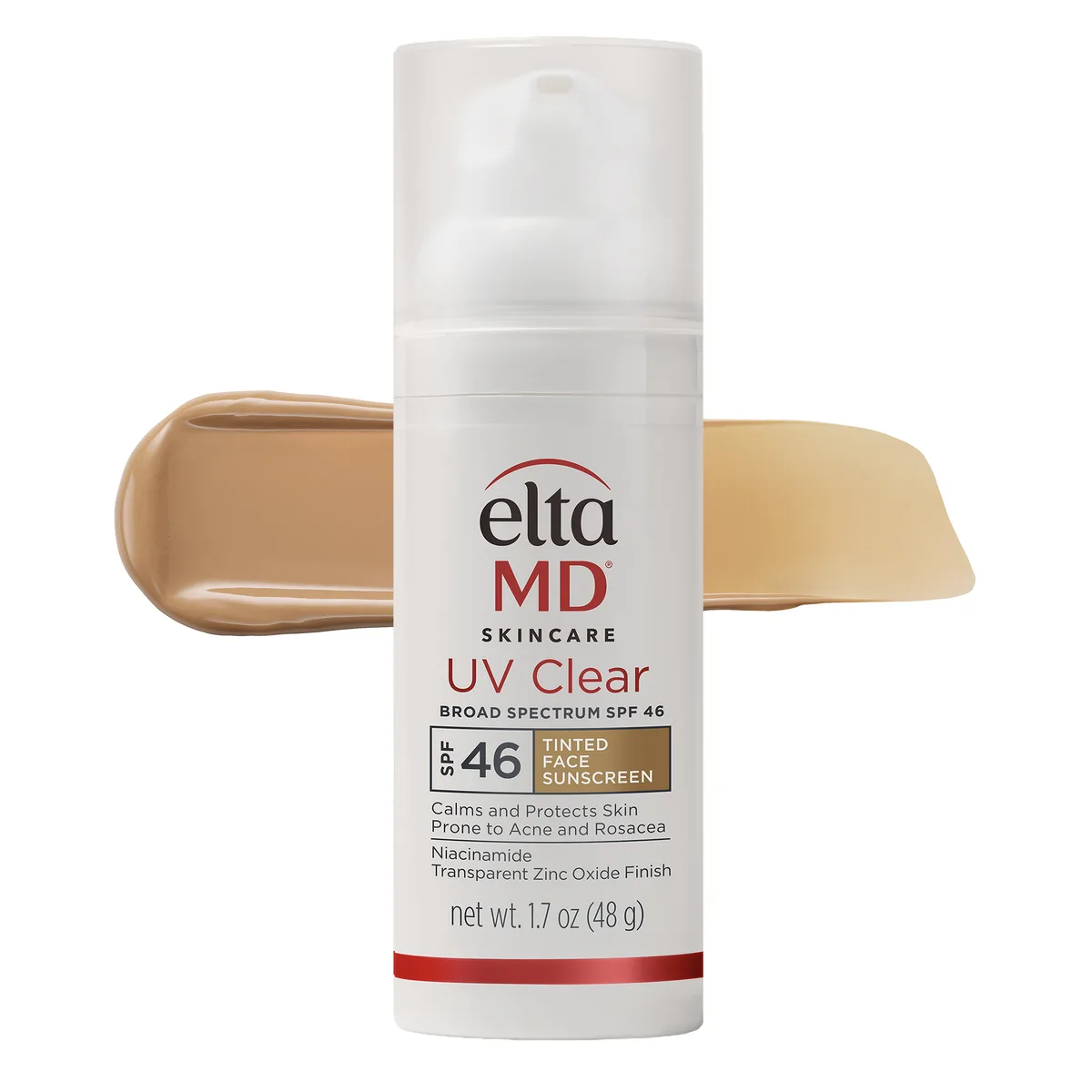
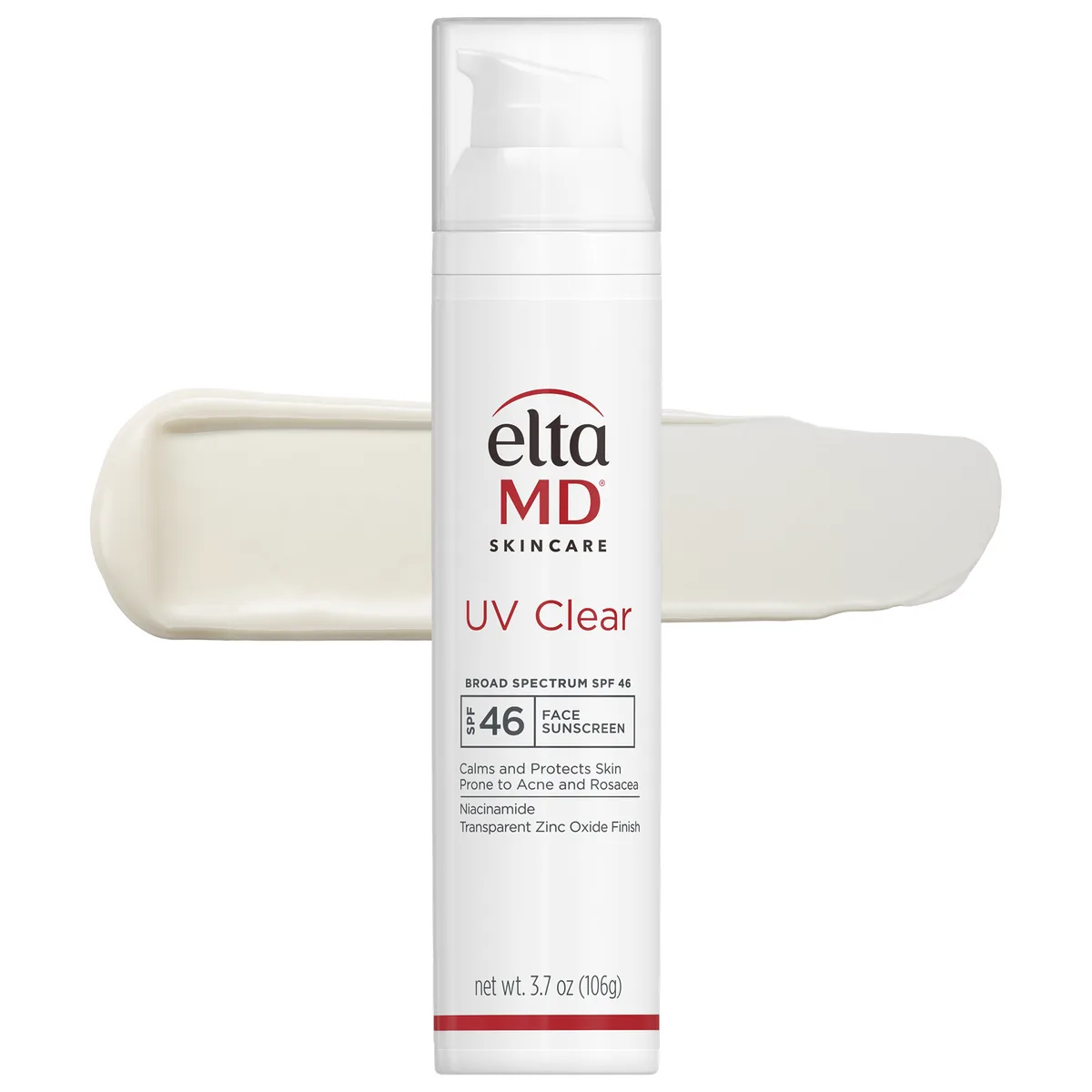
The original UV Clear formulation plus iron oxides — which sounds like a small change but is actually the defining feature for the melasma and pigmentation-prone population. Iron oxides provide documented visible-light and HEV protection that pure mineral and chemical filters alone cannot deliver, and pairing them with the 5% niacinamide load gives this product a multi-mechanism approach to pigmentation: prevention via UV-plus-visible-light blocking, plus active fading via topical niacinamide.
Effectively UV Clear with the addition of iron oxides — which sounds like a minor change but is the defining feature for the melasma and pigmentation-prone population. The combination of the 5% niacinamide load, the hybrid filter system, and the iron oxide visible-light blocking makes this the single best consumer sunscreen choice for melasma management. The $47 price is the only real friction; the 3.7 oz size dramatically improves the per-ounce value.
Supporting rolefor AcneIn your profileYou chose · Niacinamide has early evidence for acne, and photoprotection for post-inflammatory marks is the recognised companion to treating it — a reasonable supporting choice, short of a recommendation.Moderate evidenceStandard tolerability3 reviews collected
The case for it
Niacinamide has early or mechanistic evidence for this concern, not trial-backed standing.
It is present at an effective concentration, declared or high in the ingredient list.
The formula carries no trigger this concern is sensitive to, with the cautions noted.
Cautions: fungal-acne triggers.
What would change this: Trial evidence for the active on this concern would move this from a bet to a recommendation.
Same rule for everyone. “Supporting role” is the verdict on 8,197 of 45,024 concern verdicts across the catalog; rule R8a decided 1,489 of them.
Unchanged since September 5, 2026, engine 5.1.1.
R8a — A plausible-tier active in a category with a supportive job: the sentence names the active instead of saying nothing targets the concern (the AmLactin / CeraVe SA case for keratosis pilaris, where no guideline and single trials leave the keratolytics at early evidence). · the full register
Carrying active
Niacinamide
Standing
plausible — trials support it
Form
adequate (declared 5%) — studied range 4–5%, from the OTC monograph or label; needs leave-on contact; judge it after ~8 weeks
Tolerability
standard — fungal triggers
Row checked
against its sources on July 17, 2026 (evidence table ev-2026.09-r228)
Full protectionfor MelasmaIn your profileYou chose · Broad-spectrum SPF 46 with iron oxides for visible light — what melasma needs from a sunscreen.Moderate evidenceStandard tolerability3 reviews collected
The case for it
Niacinamide has early or mechanistic evidence for this concern, not trial-backed standing.
It is present at an effective concentration, declared or high in the ingredient list.
The formula carries no trigger this concern is sensitive to, with the cautions noted.
Cautions: a photosensitising active — use sun protection.
What would change this: Trial evidence for the active on this concern would move this from a bet to a recommendation.
Same rule for everyone. “Full protection” is the verdict on 2,288 of 45,024 concern verdicts across the catalog; rule P2 decided 56 of them.
Unchanged since September 5, 2026, engine 5.1.1.
Latin American consensus on the treatment of melasma — International Journal of Dermatology — Delphi regional expert consensus (9 dermatologists), NOT GRADE, NOT a tier-1 guideline body (2024), opened July 16, 2026
Full protectionfor HyperpigmentationIn your profileYou chose · Broad-spectrum SPF 46 with zinc oxide: the protection hyperpigmentation calls for.Moderate evidenceStandard tolerability3 reviews collected
The case for it
Niacinamide has trial-supported standing for this concern.
It is present at an effective concentration, declared or high in the ingredient list.
The formula carries no trigger this concern is sensitive to, with the cautions noted.
Cautions: a photosensitising active — use sun protection.
Same rule for everyone. “Full protection” is the verdict on 2,288 of 45,024 concern verdicts across the catalog; rule P1 decided 2,232 of them.
Unchanged since September 5, 2026, engine 5.1.1.
P1 — Photoprotection standing is regulatory (M020 / Annex VI filters; 21 CFR 201.327 attaches the early-skin-aging claim to tested broad-spectrum SPF 15+). SPF 30 is the AAD daily-use bar. · the full register
Carrying active
Niacinamide
Standing
supported — trials support it
Form
adequate (declared 5%) — studied range 2–5%, from the trials on the row; needs leave-on contact; judge it after ~8 weeks
Tolerability
standard — photosensitization
Row checked
against its sources on July 17, 2026 (evidence table ev-2026.09-r228)
Supporting rolefor RosaceaIn your profileYou chose · Niacinamide has early evidence for rosacea, and photoprotection against a known trigger is the recognised companion to treating it — a reasonable supporting choice, short of a recommendation.Limited evidenceStandard tolerability3 reviews collected
The case for it
Niacinamide has early or mechanistic evidence for this concern, not trial-backed standing.
It is present at an effective concentration, declared or high in the ingredient list.
The formula carries no trigger this concern is sensitive to, with the cautions noted.
Cautions: a photosensitising active — use sun protection.
What would change this: Trial evidence for the active on this concern would move this from a bet to a recommendation.
Same rule for everyone. “Supporting role” is the verdict on 8,197 of 45,024 concern verdicts across the catalog; rule R8a decided 1,489 of them.
Unchanged since September 5, 2026, engine 5.1.1.
R8a — A plausible-tier active in a category with a supportive job: the sentence names the active instead of saying nothing targets the concern (the AmLactin / CeraVe SA case for keratosis pilaris, where no guideline and single trials leave the keratolytics at early evidence). · the full register
Carrying active
Niacinamide
Standing
plausible — trials support it
Form
adequate (declared 5%) — studied range 2%, from the OTC monograph or label; needs leave-on contact; judge it after ~8 weeks
Tolerability
standard — photosensitization
Row checked
against its sources on July 17, 2026 (evidence table ev-2026.09-r228)
Good choicefor SensitivityIn your profileYou chose · No fragrance, drying alcohol, declarable allergens or sensitising preservatives in this lotion — the profile sensitive skin looks for.Not yet assessedGentle3 reviews collected
The case for it
Zinc Oxide has no evidence row yet for this concern — it is in the research queue.
The formula carries none of the triggers this concern is sensitive to.
What would change this: A researched evidence row for the lead active would replace this with a verdict.
Same rule for everyone. “Good choice” is the verdict on 1,938 of 45,024 concern verdicts across the catalog; rule F2 decided 1,938 of them.
Unchanged since September 5, 2026, engine 5.1.1.
Promisingfor Excess OilinessIn your profileYou chose · Niacinamide has trial-level evidence for excess oiliness but no guideline or regulatory standing yet — promising, short of a recommendation; the other actives here are not yet assessed for it.Moderate evidenceStandard tolerability3 reviews collected
The case for it
Niacinamide has trial-level evidence for this concern but no guideline or regulatory standing yet.
It is present at an effective concentration, declared or high in the ingredient list.
The formula carries no trigger this concern is sensitive to, with the cautions noted.
Cautions: fungal-acne triggers.
What would change this: Guideline or regulatory standing for the active on this concern would move this from a promising bet to a recommendation.
Same rule for everyone. “Promising” is the verdict on 7,858 of 45,024 concern verdicts across the catalog; rule R9p decided 7,858 of them.
Unchanged since September 5, 2026, engine 5.1.1.
R9p — 0.5.0: 'Unproven' beside three filled dots read as one question answered twice with opposite words (7,018 rows). The chip measures standing, the dots measure trial volume; where the row carries at least one RCT or a tier-2 source (moderate dots) and the active is present at a working level, the honest word is Promising. Unproven is reserved for plausible-standing rows with limited or weak evidence, or an under-dosed form. Same rank as Unproven — a bet either way; the dots order them. · the full register
Carrying active
Niacinamide
Standing
plausible — trials support it
Form
adequate (declared 5%) — studied range 2%, from the trials on the row; needs leave-on contact; judge it after ~8 weeks
Tolerability
standard — fungal triggers
Row checked
against its sources on July 17, 2026 (evidence table ev-2026.09-r228)
Full protectionfor Post-ProcedureIn your profileYou chose · Broad-spectrum SPF 46 with zinc oxide: the protection post procedure calls for.Not yet assessedStandard tolerability3 reviews collected
The case for it
Zinc Oxide has no evidence row yet for this concern — it is in the research queue.
The formula carries no trigger this concern is sensitive to, with the cautions noted.
Cautions: a photosensitising active — use sun protection.
What would change this: A researched evidence row for the lead active would replace this with a verdict.
Same rule for everyone. “Full protection” is the verdict on 2,288 of 45,024 concern verdicts across the catalog; rule P1 decided 2,232 of them.
Unchanged since September 5, 2026, engine 5.1.1.
P1 — Photoprotection standing is regulatory (M020 / Annex VI filters; 21 CFR 201.327 attaches the early-skin-aging claim to tested broad-spectrum SPF 15+). SPF 30 is the AAD daily-use bar. · the full register
Full protectionfor Dark SpotsIn your profileYou chose · Broad-spectrum SPF 46 with zinc oxide: the protection dark spots calls for.Moderate evidenceStandard tolerability3 reviews collected
The case for it
Niacinamide has early or mechanistic evidence for this concern, not trial-backed standing.
It is present at an effective concentration, declared or high in the ingredient list.
The formula carries no trigger this concern is sensitive to, with the cautions noted.
Cautions: a photosensitising active — use sun protection.
What would change this: Trial evidence for the active on this concern would move this from a bet to a recommendation.
Same rule for everyone. “Full protection” is the verdict on 2,288 of 45,024 concern verdicts across the catalog; rule P1 decided 2,232 of them.
Unchanged since September 5, 2026, engine 5.1.1.
P1 — Photoprotection standing is regulatory (M020 / Annex VI filters; 21 CFR 201.327 attaches the early-skin-aging claim to tested broad-spectrum SPF 15+). SPF 30 is the AAD daily-use bar. · the full register
Carrying active
Niacinamide
Standing
plausible — trials support it
Form
adequate (declared 5%)
Tolerability
standard — photosensitization
Row checked
against its sources on July 17, 2026 (evidence table ev-2026.09-r228)
Does the jobDoes what a sunscreen is for: UVA coverage, kind to the skin wearing it. Not measured from the label: pleasant enough to actually use.
Where our review and the verdict differ. The review below was written on the formulation and the published trials; the verdicts above apply the stricter standing test in our methodology — an active earns a recommendation only with guideline or regulatory standing for the concern. Where the two disagree, the verdict is DermApproved’s position.
A verdict is DermApproved’s assessment of how well a product’s ingredients fit a concern — never a claim about what the product treats. Evidence dots and collected reviews sit beside it and are never blended in.
Rules 0.5.1 · evidence table ev-2026.09-r228 · how we decide
Assessment
Pros & Cons
Pros
✓ Iron oxides provide documented visible-light and HEV protection
✓ Same 5% niacinamide load and hybrid filter system as the original UV Clear
✓ Universal tint blends across most light-to-medium-deep skin tones
✓ Combination of UV, visible-light, and niacinamide is unusually complete
✓ Dermatology-office default recommendation for melasma management
✓ 3.7 oz size substantially improves per-ounce value
Cons
✗ $47 for 1.7 oz is premium pricing — 3.7 oz is the better value
✗ Contains octinoxate — not reef-safe for ocean exposure
✗ Universal tint can read too dark on very fair skin
✗ Very deep skin tones may need UV Clear Deep Tinted instead
✗ Pump dispenser can clog over time
Review
Full Review
The original UV Clear was launched in 2005 as a hybrid mineral-chemical sunscreen with a 5% niacinamide load, designed for the acne-prone and post-procedure patient populations EltaMD's dermatologist customers were already managing. It became the most-recommended consumer sunscreen in US dermatology practice within a few years, primarily through Mohs surgery offices and post-procedure takeaway shelves. The tinted version followed in the early 2010s, added almost as an afterthought to address the slight cast the untinted formula showed on medium-deep skin tones. The iron oxides were primarily there for the color. The visible-light protection was not the marketing point. Nobody knew yet that it would become the most important formulation detail in the product.
The shift in melasma science happened over the following decade. Published dermatology research — particularly the work of Castanedo-Cazares and colleagues at the Mexican Institute of Dermatology, the 2015 Boukari paper in the Journal of the American Academy of Dermatology, and a series of subsequent studies through the late 2010s — established that visible light, not just UV, is a major trigger for melasma activation and post-inflammatory hyperpigmentation in skin of color. The mechanism is now reasonably well-characterized, involving the opsin-3 photoreceptor pathway and direct visible-light effects on melanogenesis. Iron oxides absorb visible-light wavelengths in the 400-500 nm range that overlap with the HEV blue light spectrum, and iron-oxide-tinted sunscreens demonstrably reduce melasma severity compared to untinted mineral sunscreens in controlled trials. By the late 2010s, the dermatology recommendation for melasma management had shifted: untinted sunscreens, even at SPF 50+, were no longer enough on their own. Iron oxide content became the differentiating feature.
UV Clear Tinted was sitting in dermatology offices throughout this transition, already containing iron oxides for cosmetic reasons. It quietly became the dermatologist-default sunscreen for melasma management — not because the brand had marketed a new feature, but because the formulation already had it. This is one of the more interesting cases in consumer skincare where the science caught up to a product rather than the other way around. The brand has been understated about the transition; UV Clear Tinted has remained the same product on the same packaging for over a decade. But its clinical use case has changed substantively, and it is now arguably the single best consumer sunscreen choice for melasma management on the US market.
The formulation itself is straightforward. The active filter system is identical to the untinted UV Clear: 9% zinc oxide for broad-spectrum UVA and UVB protection through reflection, paired with 7.5% octinoxate for additional UVB absorption and cosmetic elegance. The 5% niacinamide load is identical, third on the inactive ingredient deck, providing the established anti-pigmentation and anti-acne co-benefit. The supporting humectants, emollients, and silicones are essentially unchanged. The only meaningful addition is the iron oxide content, which serves both the cosmetic tinting function and the visible-light protection function. The brand has been quietly thoughtful about not overstating either role in the marketing.
In practice the tinted version behaves like a more sophisticated version of the untinted UV Clear. The cosmetic experience is similar — invisible silicone-elegant absorption, makeup-ready finish within a minute, no greasy residue, no fragrance. The difference is the immediate tone-evening effect from the iron oxide tint, which most users with uneven tone or post-inflammatory marks notice within seconds of application. The cumulative niacinamide effect compounds with the visible-light blocking over weeks: users with melasma or post-inflammatory hyperpigmentation typically see measurable improvement in pigment density and tone evenness over 8-12 weeks of consistent daily use. The combination of UV-plus-visible-light protection and active niacinamide fading is more efficient than either mechanism alone, which is why this product has become the dermatology-office melasma default.
The universal tint deserves a specific note. EltaMD does not offer a shade range for UV Clear Tinted in the traditional foundation sense — it is a single universal tint engineered to blend across light, medium-light, medium, and medium-deep skin tones. For users in this broad central range, the tint matches well and produces a natural-skin finish rather than a noticeable color overlay. Very fair users may find the tint reads slightly dark on application; very deep skin tones may want to look at UV Clear Deep Tinted, the brand's separate option that addresses the upper end of the skin-tone spectrum. The tonal range limitation is a real but circumscribed issue — the central skin-tone population is well-served, and the brand has provided alternatives for the extremes.
The value calculation closely follows the original UV Clear's pricing structure. At $47 for 1.7 oz, the tinted version costs $2 more than the untinted, which is reasonable for the iron oxide addition. The 3.7 oz size at roughly $70 substantially improves the per-ounce math — about $19/oz versus $27.65/oz for the smaller bottle. For committed daily users, the larger size is the appropriate choice and brings the monthly cost into a more reasonable range. Cheaper tinted sunscreens are available across the market, but few combine the hybrid filter system, the 5% niacinamide load, the iron oxide content, and the dermatology track record that UV Clear Tinted delivers. For users specifically managing melasma or pigmentation-prone skin, the premium is well-justified. For users without specific pigmentation concerns, the untinted UV Clear or one of the cheaper alternatives may be sufficient.
The octinoxate question applies here as it does to the original UV Clear. The published safety data does not support the strongest online claims about chemical filter toxicity, but for users who specifically want to avoid octinoxate, EltaMD UV AOX Elements is an all-mineral tinted alternative within the same brand. The reef-safety question is similarly identical: for ocean and coral reef exposure, an all-mineral sunscreen is the appropriate choice; for daily urban use, the reef-safety concern is not clinically relevant. The pregnancy use case is widely supported in dermatology practice without restriction.
The larger point about UV Clear Tinted is that it is one of those products that has become more important than its launch positioning suggested. The brand built it as a cosmetic accommodation for deeper skin tones, and the science of melasma management retrofitted it into something more clinically meaningful. For the population of users who need exactly what this product delivers — melasma management, post-inflammatory hyperpigmentation, daily UV and visible-light protection, the niacinamide anti-pigmentation co-benefit, all in a makeup-friendly invisible lotion — it is the closest thing to a default recommendation that the consumer sunscreen category has produced. For users without those specific concerns, the untinted UV Clear or a cheaper alternative is fine. For users with those concerns, this is genuinely the right choice.
Formula
Key Ingredients
The hero actives that drive this product's performance.
Identical hybrid filter system to the original UV Clear — zinc oxide for broad-spectrum UVA and UVB reflection paired with octinoxate for UVB absorption and cosmetic elegance. The filter combination is what makes UV Clear deliver SPF 46 in a lightweight invisible lotion rather than a heavy mineral cast, and the formulation is unchanged between the tinted and untinted versions.
The single ingredient that differentiates this tinted version from the original UV Clear. Iron oxides provide both the universal tint and — more importantly — documented visible-light and HEV (blue light) protection that the pure-filter version cannot deliver. For melasma patients and pigmentation-prone users, this is the formulation feature that makes the tinted UV Clear the dermatology-office choice over the untinted original.
The same 5% niacinamide load as the untinted UV Clear, third on the inactive ingredient deck. Combined with the iron oxide visible-light protection, the niacinamide gives this product a multi-mechanism approach to pigmentation: prevention via UV and visible-light blocking, plus active fading via the topical niacinamide. The pairing is more potent for melasma management than either component alone.
Humectant cushioning in the silicone-rich base to balance any drying effect from the chemical filter component. Same role as in the untinted UV Clear — functionally supportive rather than a primary driver of the formulation.
Lipid-soluble antioxidant providing free radical defense in skin's lipid compartments. Supports the broader photoprotection by neutralizing the oxidative byproducts of UV and visible-light exposure that the filter and tint do not fully block.
Not yet assessed
Ingredient standings describe the active at treatment-level doses and
vehicles; this product's own condition grades weigh its actual formula.
Use as the last step of the morning routine after moisturizer, using approximately 1/4 teaspoon for the full face. The universal tint blends across a moderate range — light, medium-light, medium, and medium-deep skin tones. For very deep skin tones, the brand also offers UV Clear Deep Tinted as a more pigment-matched alternative. Reapply every 2 hours during prolonged sun exposure. Works exceptionally well under makeup or alone as a tinted moisturizer.
Results Timeline
Immediate: full broad-spectrum UV protection plus iron-oxide-mediated visible-light blocking on application, with the tint providing instant tone-evening cosmetic improvement. Short-term (4-8 weeks): cumulative 5% niacinamide effect compounds with the visible-light protection to produce measurable improvement in skin tone and blemish-related pigmentation. Full benefits (3-6 months): sustained melasma prevention and active pigment fading from the combination of niacinamide and visible-light blocking.
Standard PM routine including any prescription depigmenting protocol
Evidence
Science & Expert Perspective
The Science
The clinical evidence base for UV Clear Tinted's formulation rests on three distinct and well-supported research areas. First, the foundational sunscreen filter research establishing zinc oxide and octinoxate as effective broad-spectrum filters, with the 9% zinc oxide load providing reliable UVA1 coverage through reflection and the 7.5% octinoxate providing UVB absorption. Second, the iron oxide visible-light protection research that has accumulated over the past decade. Boukari et al. (J Am Acad Dermatol, 2015) demonstrated that iron oxide-tinted sunscreens significantly reduced melasma severity compared to untinted mineral sunscreens in a controlled trial, and Castanedo-Cazares and colleagues have published a series of subsequent papers establishing visible-light-tinted sunscreens as a clinical improvement over UV-only protection for melasma management. The visible-light triggering mechanism for melasma — via the opsin-3 photoreceptor pathway — has been characterized in research by Regazzetti et al. (J Invest Dermatol, 2018) and reinforced through subsequent work on the molecular biology of light-induced melanogenesis. Third, the niacinamide research at 5% topical concentration. Hakozaki et al. (Br J Dermatol, 2002) and the Bissett et al. series of trials in the early-to-mid 2000s established niacinamide's effects on hyperpigmentation, post-inflammatory dark spots, sebum regulation, and barrier function over 4-12 week timelines. The combination of these three mechanisms in a single daily-use product is supported by published research showing that UV protection, visible-light protection, and topical niacinamide have complementary effects on melasma and pigmentation management. The cumulative real-world evidence base from the product's clinical use across more than a decade of dermatology practice provides substantial additional validation. Overall, the formulation rests on one of the stronger evidence bases in the consumer sunscreen category, with each mechanism supported by peer-reviewed dermatology research rather than marketing speculation.
Dermatologist Perspective
UV Clear Tinted is widely considered the default first-line consumer sunscreen recommendation for melasma patients in US dermatology practice, and is also frequently recommended for post-inflammatory hyperpigmentation, acne-related dark spots in skin of color, and pregnancy-related melasma. The combination of broad-spectrum UV protection, iron oxide visible-light blocking, and 5% topical niacinamide is generally considered well-aligned with current dermatological understanding of melasma triggering and management. Dermatology professionals routinely pair this sunscreen with prescription depigmenting protocols including tranexamic acid, hydroquinone, kojic acid, and azelaic acid for active melasma management. The product is also commonly recommended for acne-prone patients in deeper skin tones where the untinted UV Clear may show a slight cast, and for sensitive-skin populations who tolerate the formulation well. Pregnancy use is supported across the standard active filters, with the all-mineral EltaMD UV Elements or UV AOX Elements available as alternatives for users who prefer mineral-only filters during pregnancy. The most common clinical caveat raised is the importance of consistent daily application — the formulation's mechanisms only work when the product is on the skin during light exposure, and skipping application even occasionally undermines the cumulative pigmentation-prevention effect.
Guidance
Usage & Recommendations
How to Use
Apply approximately 1/4 teaspoon to the face as the last step of the morning skincare routine, after cleansing, treatment serums, and moisturizer. Spread evenly across the face, hairline, ears, and neck. Allow about a minute for the formula to set before applying makeup. For prolonged outdoor exposure, reapply every two hours. The tinted formulation also functions as a tinted moisturizer for low-coverage days. Compatible with all common AM serum routines and prescription depigmenting protocols including tranexamic acid, hydroquinone, kojic acid, and azelaic acid. For melasma management, daily consistent application is essential — the iron oxide visible-light protection only works while the product is on the skin during light exposure. The 3.7 oz size is the better economic choice for committed daily users.
Value Assessment
At $47 for 1.7 oz and approximately $70 for the 3.7 oz size, UV Clear Tinted lands firmly in the derm-office premium tier. The 3.7 oz size substantially improves the per-ounce math — about $19/oz versus $27.65/oz for the smaller bottle — and is the better choice for committed daily users. Comparable tinted sunscreens are available across a wide price range: La Roche-Posay Anthelios UV Correct Tinted at $35 for 1.7 oz, Supergoop Glowscreen Tinted at $40 for 1.7 oz, and several K-beauty tinted mineral options in the $20-30 range. Few of those alternatives combine the hybrid filter system, the 5% niacinamide load, the iron oxide content, and the substantial dermatology track record that UV Clear Tinted delivers. For users specifically managing melasma or pigmentation-prone skin, the premium is well-justified. For users without specific pigmentation concerns, the untinted UV Clear (at the same price tier) or one of the cheaper tinted alternatives may be sufficient. The product is rarely discounted at full retailers; Costco occasionally carries it at modest discounts, and the brand offers occasional bundle pricing through Dermstore.
Who Should Buy
Users managing melasma, post-inflammatory hyperpigmentation, dark spots, or any pigmentation concern that is driven by visible light. Also valuable for acne-prone users in medium to medium-deep skin tones where the untinted UV Clear may show a slight cast, for pregnancy-related melasma, and for users who want the niacinamide co-benefit in their daily sunscreen. The universal tint matches well across the light-to-medium-deep skin-tone range.
Who Should Skip
Skip if you are at the extremes of skin tone — very fair users may find the tint reads too dark, and very deep skin tones may want UV Clear Deep Tinted instead. Skip if you specifically want a mineral-only sunscreen — UV AOX Elements is the tinted mineral alternative within the same brand. Skip if you are price-sensitive and a $20-30 tinted alternative (like La Roche-Posay Anthelios Tinted) would meet your needs. Skip if you are planning extended ocean exposure where octinoxate restrictions apply.
Ready to try EltaMD UV Clear Broad-Spectrum SPF 46 Tinted?
Lightweight tinted lotion with the same silicone-glide as the untinted UV Clear. Absorbs to a satin finish within about a minute, with the tint blending into skin to even tone rather than sitting on top.
Scent
Fragrance-free.
Packaging
1.7 oz white airless pump bottle with the EltaMD blue-and-white label. Also available in 3.7 oz size at improved per-ounce value.
Finish
satinnon-greasynaturallightweight
What to Expect on First Use
First application produces immediate cosmetic tone-evening from the universal tint and iron oxides — minor redness, post-inflammatory marks, and uneven tone look measurably better within seconds. The base behaves identically to the untinted UV Clear: invisible silicone-elegant absorption, makeup-ready finish within a minute, no greasy residue. The niacinamide effect on cumulative skin tone is slower-acting and typically becomes visible around the 4-6 week mark. For melasma users, the combined protection effect (UV plus visible light) is the more impactful long-term benefit.
How Long It Lasts
Roughly 6-8 weeks with daily face application; the 3.7 oz size approximately doubles that runway.
EltaMD added the tinted version to the UV Clear lineup in the early 2010s, originally as a way to address the slight white cast that the untinted formulation showed on medium-deep skin tones. The iron oxides were primarily cosmetic at launch. The visible-light protection mechanism for melasma was characterized in dermatology research over the following decade — particularly through work by Castanedo-Cazares, Boukari, and others — and the tinted version of UV Clear quietly became the dermatologist-default sunscreen for melasma management because it already included the iron oxides that the new research showed mattered. The brand has not heavily marketed this transition; the product has simply become the default melasma sunscreen through clinical practice rather than advertising.
About EltaMD Established Brand (5–20 years)
The tinted version of UV Clear added iron oxide tinting to the brand's flagship sunscreen formulation in the early 2010s, designed for users with melasma, hyperpigmentation, and deeper skin tones where the untinted version shows a slight cast. The underlying filter and niacinamide architecture is identical to the original UV Clear, which has been a dermatology-office staple since 2005.
Brand founded: 1988 · Product launched: 2012
Myth vs. Reality
Common Myths
Myth
Tinted and untinted UV Clear are basically the same product.
Reality
Cosmetically they are very similar, and the active filter system is identical. But for the melasma and pigmentation-prone population, the iron oxide addition is functionally significant — it provides documented visible-light protection that the untinted version cannot deliver. For users specifically concerned about melasma or post-inflammatory hyperpigmentation, the tinted version is the meaningfully better choice.
Myth
Iron oxides in tinted sunscreens are just there for the color.
Reality
Iron oxides absorb visible-light wavelengths that mineral and chemical UV filters do not block, particularly in the 400-500 nm range that overlaps with the HEV (blue light) spectrum. Published dermatology research has shown that iron oxide-tinted sunscreens reduce melasma triggering from visible light significantly better than untinted sunscreens. The tint is functional, not just cosmetic.
FAQ
Frequently Asked Questions
Should I get the tinted or untinted UV Clear?
The tinted version is the better choice for users with melasma, post-inflammatory hyperpigmentation, dark spots, or any pigmentation concern driven by visible light — the iron oxides provide documented visible-light protection that the untinted version cannot match. The untinted version is the better choice for users with very fair skin (where the tint may read too dark), or for users without specific pigmentation concerns who just want UV protection plus the niacinamide co-benefit. For deeper skin tones, the tinted version blends better and avoids the slight cast that the untinted formula can show.
Will the tint match my skin tone?
The universal tint is engineered to blend across light, medium-light, medium, and medium-deep skin tones. Very fair users may find the tint reads slightly dark on application; very deep skin tones may want to look at UV Clear Deep Tinted, the brand's separate option for deeper complexions. For users in the broad central range, the tint matches well and produces a natural-skin finish rather than a noticeable color overlay.
Is the niacinamide concentration the same as the untinted version?
Yes — both versions of UV Clear contain 5% niacinamide at the same INCI position. The only formulation differences between tinted and untinted are the iron oxides (added in the tinted version), the omission of phosphoric acid as a pH adjuster, and minor ordering changes from the iron oxide inclusion. The active filter system, niacinamide load, and overall behavior are essentially identical.
Is this the best sunscreen for melasma management?
It is one of the best consumer sunscreen choices for melasma management, particularly when paired with a prescription depigmenting protocol like tranexamic acid or hydroquinone. The combination of broad-spectrum UV protection, iron oxide visible-light blocking, and 5% topical niacinamide addresses three distinct drivers of melasma triggering and pigmentation. Daily consistent use is more important than the specific product choice — the formulation only works if it is on the skin during light exposure.
Can I use it during pregnancy melasma?
Yes — UV Clear Tinted is widely used during pregnancy in dermatology practice without restriction. The active filters (zinc oxide and octinoxate) are generally considered safe during pregnancy, and pregnancy-related melasma is one of the specific use cases this product is best suited for. For users who prefer all-mineral filters during pregnancy, EltaMD UV Elements or UV AOX Elements are tinted mineral alternatives within the same brand.
Does it wear well under makeup?
Yes — the silicone-rich base creates a primer-like surface that foundation glides over without pilling. Many users find the tinted UV Clear functions well as a tinted moisturizer for low-coverage days, with foundation layered for fuller coverage when needed. Makeup application on top is essentially identical to the experience over the untinted UV Clear.
Is the 3.7 oz size much better value?
Yes — the 3.7 oz size at roughly $70 puts the per-ounce price at about $19/oz versus $27.65/oz for the 1.7 oz size, a meaningful improvement. For users committed to UV Clear Tinted as their daily sunscreen, the larger size is the better economic choice and reduces the frequency of repurchasing.
Reviews
What Reviewers Tend to Say
Recurring themes our editors read across retailer reviews of this product — summaries in our words, not quotations, and not a substitute for your own patch test.
Common Praise
Visible-light protection from iron oxides is real for melasma
Universal tint blends across a wide range of skin tones
Same invisible-on-skin feel as the original UV Clear
Doubles as a tinted moisturizer for low-coverage days
5% niacinamide compounds with the iron oxide protection over time
Sits perfectly under foundation without pilling
Common Complaints
$47 for 1.7 oz is premium pricing
Universal tint can read too dark on very fair skin
Very deep skin tones may want the separate UV Clear Deep Tinted version
Octinoxate content concerns users who specifically want mineral-only sunscreens
Notable Endorsements
Standard recommendation for melasma patients across US dermatology practiceRoutinely stocked in Mohs surgery offices alongside the untinted UV ClearFeatured by dermatologist content creators including Dr. Andrea Suarez, Dr. Sam Bunting
Every pigment-fading active runs against a re-pigmenting stimulus, and for melasma part of that stimulus is visible light — which broad-spectrum sunscreen does essentially nothing about unless you can see it on your face.
The ashy gray film that mineral sunscreen leaves on rich skin tones isn't a reason to skip SPF — it's a formulation failure the industry took two decades too long to fix.
It was invented to stop bleeding during surgery. In 2026 it's in dozens of brightening serums — and the evidence is better than most trend ingredients can claim.
Jul 6, 2026· 3 min
Questions people ask about Acne
Verified answers from our questions library — the nuance a product page cannot carry.
Products, answers, therapy guides, tools and articles in one search. Brand names,
slang and abbreviations all work — accutane finds isotretinoin, bacne finds truncal acne.