


Colloidal Oatmeal Is the Only Pantry Ingredient With a Drug License
It sounds like a grandma remedy, but colloidal oatmeal is a legally recognized OTC drug with the eczema data to back it up.
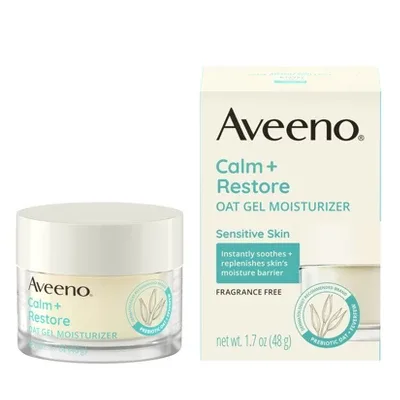
Three different calming botanicals — oat, feverfew, and centella asiatica — each working through distinct anti-inflammatory pathways. Most drugstore sensitive-skin moisturizers use one soothing ingredient; this stacks three with proven mechanisms. The gel format keeps it lightweight enough for oily-sensitive skin, a combination that's chronically underserved.
A triple-botanical soothing gel that delivers genuine calm to reactive skin at a drugstore price point. The oat-feverfew-centella combination works through three distinct anti-inflammatory pathways, and the lightweight texture makes it one of the few sensitive-skin moisturizers that oily skin can love too.
The case for it
What would change this: A declared concentration would move this to a firmer reading of the dose.
Same rule for everyone. “Good choice” is the verdict on 1,938 of 45,024 concern verdicts across the catalog; rule F2 decided 1,938 of them. Unchanged since September 5, 2026, engine 5.1.1.
Brand or formulator? Disclose a concentration or correct a fact →
The studies behind the evidence row
The case for it
What would change this: A declared concentration would move this to a firmer reading of the dose.
Same rule for everyone. “Supporting role” is the verdict on 8,197 of 45,024 concern verdicts across the catalog; rule R8a decided 1,489 of them. Unchanged since September 5, 2026, engine 5.1.1.
Brand or formulator? Disclose a concentration or correct a fact →
The studies behind the evidence row
The case for it
Same rule for everyone. “Good choice” is the verdict on 9,564 of 45,024 concern verdicts across the catalog; rule R5 decided 9,072 of them. Unchanged since September 5, 2026, engine 5.1.1.
Brand or formulator? Disclose a concentration or correct a fact →
The studies behind the evidence row
The case for it
What would change this: A researched evidence row for the lead active would replace this with a verdict.
Same rule for everyone. “Supporting role” is the verdict on 8,197 of 45,024 concern verdicts across the catalog; rule R8 decided 4,250 of them. Unchanged since September 5, 2026, engine 5.1.1.
Brand or formulator? Disclose a concentration or correct a fact →
The case for it
What would change this: Guideline or regulatory standing for the active on this concern would move this from a promising bet to a recommendation.
Same rule for everyone. “Promising” is the verdict on 7,858 of 45,024 concern verdicts across the catalog; rule R9p decided 7,858 of them. Unchanged since September 5, 2026, engine 5.1.1.
Brand or formulator? Disclose a concentration or correct a fact →
The studies behind the evidence row
Does the jobDoes what a moisturizer is for: draws in water, seals moisture in.
A verdict is DermApproved’s assessment of how well a product’s ingredients fit a concern — never a claim about what the product treats. Evidence dots and collected reviews sit beside it and are never blended in. Rules 0.5.1 · evidence table ev-2026.09-r228 · how we decide
Aveeno's relationship with oats stretches back nearly eight decades, to the moment in 1945 when the brand built its entire identity around colloidal oat and started working with dermatologists from the very start. That is not borrowed heritage; it is genuine dermatological history, and it is the lineage the Calm + Restore Oat Gel Moisturizer extends. Launched in 2021 as an evolution of the sensitive-skin range, this gel is arguably the most precisely calibrated thing the brand has put oat into, because it took eighty years of refinement and two additional botanicals to land something this specifically tuned for skin that reacts to everything.
The formula builds on oat's well-documented calming properties and then keeps going. Avena sativa kernel flour, listed fifth and therefore present at a meaningful rather than token level, delivers beta-glucans, avenanthramides, and lipids, with the avenanthramides in particular doing the anti-inflammatory heavy lifting. But oat is only the first of three calming routes. Feverfew, botanically Chrysanthemum parthenium, brings parthenolide-type compounds that quiet irritation through a different pathway and that have been studied for reducing UV-induced redness. Centella asiatica, the cica ingredient beloved across K-beauty, adds a third layer through its triterpenoid compounds, supporting the barrier and calming inflammation by yet another mechanism. Three botanicals, three distinct anti-inflammatory routes, all converging on the same goal of persuading angry skin to stand down. Most drugstore sensitive-skin moisturizers lean on a single soothing ingredient; stacking three with credible mechanisms is what gives this one its edge.
The gel format is a quiet statement about who this is actually for. Traditional sensitive-skin moisturizers are almost always thick creams, because the long-standing assumption has been that sensitive means dry. But there is a large population of oily and combination types whose skin is simultaneously reactive and breakout-prone, people who flare red from harsh products yet congest under rich creams. This gel serves them precisely. Glycerin, sitting second in the formula, does the real hydration work, drawing water into the upper epidermis and holding it there, while a breathable dimethicone film slows moisture loss without the suffocating feel of heavier silicone-laden formulas. Panthenol reinforces the barrier from within so skin holds onto its own moisture more effectively over time. It absorbs within seconds, leaves no residue, and sits flawlessly under sunscreen and makeup without pilling.
The sensory experience is genuinely pleasant. The gel has a bouncy, almost jelly-like quality and a cooling sensation on application, which is largely texture and evaporation rather than any active cooling agent, but it functions as a reassuring signal that something soothing is underway. Reactive skin tends to respond quickly: the tightness of a compromised barrier and the low-grade burn that sensitized skin carries around like background noise tend to quiet within minutes. It is not dramatic, but it is real and consistent. Over a week or two, redness from everyday triggers calms noticeably, and across four to six weeks the barrier feels sturdier and more tolerant with fewer flare-ups. As a recovery step after retinol, exfoliating acids, or an in-office procedure, it is especially useful, because the formula carries virtually nothing that could sting or kick off a fresh wave of reactivity, the skincare equivalent of a deep breath.
It is also worth dwelling on the prebiotic angle, because it is a newer and underappreciated part of why oat suits sensitive skin specifically. Beyond its direct anti-inflammatory action, oat appears to favorably support the skin's microbial ecosystem, nudging the balance of surface bacteria in a healthier direction, which matters because microbial imbalance is one of the threads tied to the chronic inflammation that sensitive and eczema-prone skin lives with. You will not feel that working the way you feel the cooling gel, but it is part of the long game, the reason consistent use tends to leave reactive skin a little more resilient over time rather than merely calmed in the moment. That patient, barrier-building character is the real personality of this product, and it rewards daily use more than occasional rescue use.
The limitations are honest and predictable. This isn't a moisturizer for genuinely dry skin in a dry climate. The gel prioritizes lightness over richness, and in winter or arid conditions it may not provide enough occlusion to fully prevent moisture loss, so very dry skin will want to layer it under a heavier cream. The jar packaging is a minor knock, since a tube or pump would be more hygienic and travel-friendly, though a gel resists contamination better than a rich cream would. It is not cruelty-free certified, which will matter to some buyers, and it contains synthetic beeswax and silicones that strict clean-beauty shoppers prefer to avoid, though neither is a performance concern. Worth noting too: this is not labeled fungal-acne safe, so malassezia-prone users should check it against their own routine.
At roughly twenty dollars for 1.7 ounces, the value is excellent. This is a thoughtfully formulated, triple-botanical moisturizer from a brand with real dermatological credentials, priced for routine drugstore purchase, and it earns a high irritation-risk score precisely because the formula is so clean and gentle. For sensitive-skinned people tired of paying forty dollars and up for products that promise to soothe and deliver nothing special, this quiet gel offers genuine relief at an honest price. Reach for it if your skin is reactive, combination-to-oily, or recovering from active treatments; pass on it if you have persistently dry skin, especially through a cold winter, where it simply will not provide enough cushion on its own.
The hero actives that drive this product's performance.
| Ingredient | Function | Evidence |
|---|---|---|
| Avena Sativa (Oat) Kernel Flour | Aveeno's signature ingredient — a finely milled oat flour that delivers beta-glucans, avenanthramides, and lipids directly to the skin. In this gel formula, the prebiotic oat supports the skin's microbiome balance while soothing inflammation. It's not just a token oat mention — oat is fifth in the ingredient list, indicating meaningful concentration. | Not yet assessed |
| Chrysanthemum Parthenium (Feverfew) Flower/Leaf/Stem Juice | Feverfew is Aveeno's second hero botanical, used for its potent anti-inflammatory parthenolide compounds. In this formula, it works alongside oat to double down on calming irritation, making this particularly effective for reactive skin that reddens easily from environmental triggers or product sensitivity. | Not yet assessed |
| Centella Asiatica Extract | A wound-healing and barrier-supporting botanical that has been central to Asian skincare traditions for decades. Its madecassic acid, asiatic acid, and asiaticoside compounds promote collagen synthesis and calm inflammation. In this formula, it reinforces the soothing theme from a different mechanism than the oat and feverfew. | Limited for Rosacea |
| Panthenol | Provitamin B5 that strengthens the skin barrier and enhances moisture retention. In a gel moisturizer designed for sensitive skin, panthenol helps compensate for the lighter texture by ensuring the moisture it delivers actually stays in the skin rather than evaporating. | Established mechanism for Dehydration · established mechanism |
| Glycerin | Listed second in the formula, indicating high concentration. Glycerin is the workhorse humectant here, drawing water into the upper skin layers and providing the hydration backbone that the lighter gel texture demands. Works synergistically with the dimethicone to trap moisture after pulling it in. | Established mechanism for Dehydration · established mechanism |
Ingredient standings describe the active at treatment-level doses and vehicles; this product's own condition grades weigh its actual formula.
Water, Glycerin, Dimethicone, Cetearyl Olivate, Avena Sativa (Oat) Kernel Flour, Sorbitan Olivate, Polyacrylamide, Synthetic Beeswax, Phenoxyethanol, C13-14 Isoparaffin, Butylene Glycol, Dimethicone Crosspolymer, Panthenol, Chlorphenesin, Dimethiconol, Carbomer, Laureth-7, Chrysanthemum Parthenium (Feverfew) Flower/Leaf/Stem Juice, Ethylhexylglycerin, Sodium Hydroxide, Avena Sativa (Oat) Kernel Extract, Centella Asiatica Extract
moisturizer
AM & PM
Apply after cleansing and water-based serums. Layers beautifully under sunscreen without pilling. In the PM, this works well as a light moisturizer after active treatments like retinol or exfoliants, though very dry skin may need a richer product on top.
Immediate: skin feels soothed and hydrated with a cooling gel sensation. 1-2 weeks: reactive skin calms noticeably — less redness from triggers. 4-6 weeks: skin barrier feels stronger and more tolerant, with fewer sensitivity flare-ups.
Colloidal oat's dermatological benefits are among the best-documented in the natural ingredients space. A comprehensive 2012 review in the Journal of Drugs in Dermatology examined oat's mechanisms of action and found that avenanthramides — phenolic compounds unique to oats — inhibit NF-kB activation and histamine release, providing anti-inflammatory effects comparable to 1% hydrocortisone in some clinical comparisons. The FDA recognizes colloidal oatmeal as a skin protectant, and it has demonstrated efficacy in reducing pruritus, erythema, and barrier dysfunction in atopic dermatitis.
Feverfew (Chrysanthemum Parthenium) has been studied by Aveeno's parent company Johnson & Johnson, with published data showing that feverfew extract reduces UV-induced erythema, inhibits pro-inflammatory cytokine release, and has potent antioxidant activity. A study in the Archives of Dermatological Research demonstrated its ability to reduce inflammatory markers in skin cells exposed to irritant stimuli.
Centella asiatica's wound-healing and anti-inflammatory properties are supported by decades of research. The triterpenoid compounds — madecassoside, asiaticoside, madecassic acid, and asiatic acid — have been shown to stimulate collagen synthesis, inhibit inflammatory cascades, and strengthen the skin barrier. A 2019 review in Phytomedicine consolidated evidence from over 50 studies confirming centella's efficacy for skin barrier repair, wound healing, and anti-inflammatory activity.
The prebiotic function of oat in skincare is a newer area of research. A paper published in Clinical, Cosmetic and Investigational Dermatology have shown that oat-based ingredients can favorably modulate the skin's microbial ecosystem, supporting beneficial bacteria while reducing the dominance of pathogenic species — relevant for sensitive and eczema-prone skin where microbial imbalance contributes to inflammation.
Dermatologists frequently recommend Aveeno products for patients with sensitive and eczema-prone skin, and this gel moisturizer continues that tradition with a modern formulation update. Many dermatologists observe that the triple-botanical approach — combining oat's proven anti-inflammatory properties with feverfew and centella asiatica — provides multi-pathway soothing that single-ingredient formulas can't match. The gel format is particularly appreciated by dermatologists who treat patients with oily-sensitive skin, a combination often underserved by traditional cream-based sensitive-skin products. The fragrance-free, hypoallergenic formulation aligns with dermatological recommendations for reactive skin.
Apply to clean, dry skin morning and evening. A pea-sized amount is sufficient for the entire face. In the morning, follow with sunscreen. In the evening, apply as the last step or layer under a richer night cream if additional moisture is needed. Can also be used as a soothing mask — apply a generous layer and leave on for 10-15 minutes.
At approximately $20 for 1.7 ounces, this is outstanding value for a formula containing three clinically supported calming botanicals. Comparable sensitive-skin gel moisturizers from brands like Dr. Jart+ or First Aid Beauty typically cost $30-40 for similar sizes. The Aveeno also comes in a 0.5 oz travel size for testing. For sensitive-skinned consumers, this delivers premium-level soothing at a genuinely drugstore price.
Anyone with sensitive, reactive, or rosacea-prone skin looking for a lightweight moisturizer that genuinely calms rather than just claiming to. Also excellent for oily-combination types who need moisture without heaviness, and anyone looking for a gentle post-treatment recovery moisturizer.
Those with very dry skin who need rich, occlusive moisture — especially in winter. This gel won't provide enough long-lasting hydration for genuinely dry or dehydrated skin without layering additional products on top.
Ready to try Aveeno Calm + Restore Oat Gel Moisturizer?
Buy at Amazon ♥Lightweight, bouncy gel that applies with a cooling sensation. Absorbs within seconds, leaving skin feeling soft and refreshed without any residue or film.
No fragrance. Clean, neutral scent — virtually odorless.
White jar with a green lid, consistent with the Calm + Restore line design. The jar format is accessible but less hygienic than a tube or pump — the gel formula is less susceptible to contamination than a cream, which partially mitigates this concern.
The gel has a pleasingly bouncy, water-gel consistency that feels cooling on application. Skin drinks it in almost immediately. Reactive skin feels calmer within minutes, with a noticeable reduction in tightness and discomfort. No stinging even on compromised or recently exfoliated skin.
Around 2-3 months when applied morning and evening to the face
spring summer
Aveeno launched the Calm + Restore line in 2021 as an evolution of their sensitive skin range, moving beyond basic oat formulations to incorporate feverfew and centella asiatica. The gel format specifically targets the younger demographic of sensitive-skin consumers who associate cream moisturizers with heavy, old-fashioned skincare and prefer lightweight, fast-absorbing textures.
Aveeno was founded in 1945 and built its entire identity around oat-based skincare, collaborating with dermatologists from the start. Now owned by Johnson & Johnson, the brand has extensive clinical research behind its oat formulations and is one of the most frequently recommended drugstore brands by dermatologists.
Gel moisturizers don't provide enough hydration
This formula's glycerin-rich base (second ingredient) delivers significant hydration through humectant action, while the dimethicone creates a breathable barrier to prevent moisture loss. The gel format absorbs better than many creams, meaning more of the hydrating ingredients actually reach the skin rather than sitting on top.
Sensitive skin needs thick, heavy moisturizers
Sensitive skin needs appropriate ingredients, not necessarily heavy texture. Thick creams often contain more emulsifiers and stabilizers that can themselves cause irritation. This gel's simple formula with proven soothing botanicals delivers what sensitive skin actually needs: calm, hydration, and barrier support without unnecessary complexity.
For most dry skin types, this gel alone may not provide sufficient moisture, particularly in cold or arid climates. It works best for combination, normal, and oily-sensitive skin. Dry skin users can layer it over a hyaluronic acid serum and under a richer night cream for added hydration.
Yes — the oat, feverfew, and centella asiatica in this formula all have anti-inflammatory properties that can help calm rosacea-associated redness. The fragrance-free, gentle formula is well-tolerated by most rosacea patients. It's not a rosacea treatment, but it provides a soothing base that doesn't exacerbate symptoms.
Excellent choice as a post-retinol moisturizer. The oat and feverfew calm the irritation retinol can cause, while the gel texture absorbs quickly without trapping heat or product against freshly treated skin. Many users specifically apply this after their retinol step to reduce redness and tightness.
Yes — the oat kernel flour in this formula acts as a prebiotic, providing nutrients that support beneficial bacteria on the skin's surface. This microbiome-supporting function is one of the newer areas of oat research and contributes to the overall calming effect of the formula.
This gel is lighter, faster-absorbing, and better suited for combination or oily-sensitive skin. The Redness Relief Cream is richer, contains ceramide NP, and is designed for dry-sensitive skin with visible redness. Choose the gel for lightweight hydration and the cream for more intensive moisture and redness targeting.
Recurring themes our editors read across retailer reviews of this product — summaries in our words, not quotations, and not a substitute for your own patch test.
Incredibly soothing on reactive, redness-prone skin
Lightweight gel texture absorbs instantly without greasiness
Great value for a sensitive-skin moisturizer
Works beautifully under makeup and sunscreen
Calms skin after acid treatments or retinol
Not moisturizing enough for dry or very dry skin
Some users wish it were thicker for winter use
Contains synthetic beeswax which some consumers prefer to avoid
Verified answers from our questions library — the nuance a product page cannot carry.