Tartaric Acid
Products with Tartaric Acid
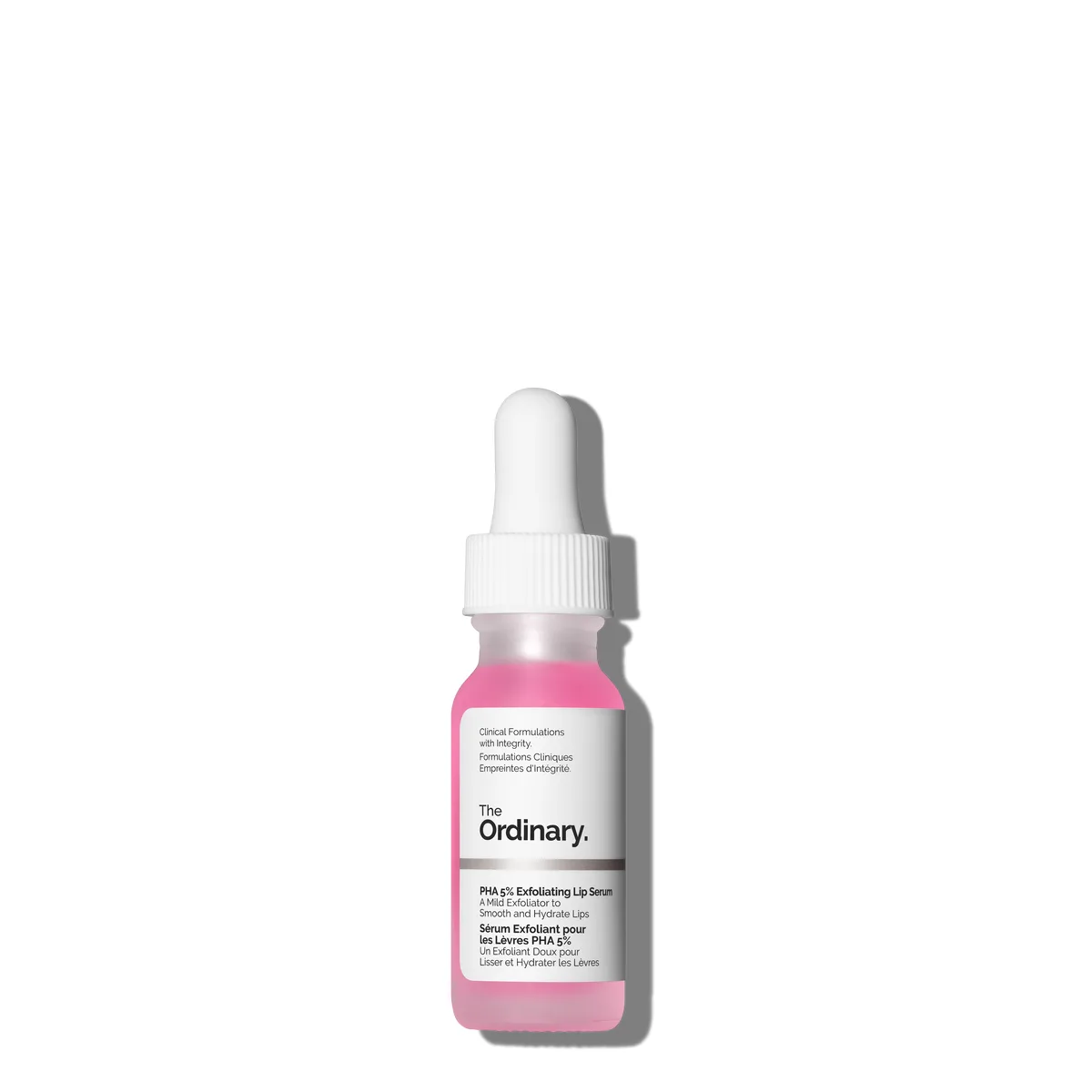 Overnight Flake Eraser
PHA 5% Exfoliating Lip Serum
A well-thought-out chemical lip exfoliant that picks the right acid for thin skin, buffers it with enough glycerin to keep the experience comfortable, and charges less than ten dollars. For chronically flaky lips this is a smarter overnight fix than any sugar scrub, and the price makes it trivial to try.
 Budget Overnight Glow
The Shortcut Overnight Facial Peel
A legitimately potent 10% glycolic overnight peel for under $20 — one of the best budget entries into the leave-on AHA category. It stings on the way in and delivers real morning-after smoothness, with just enough buffering to keep it tolerable for non-sensitive skin.
 OG Clean Exfoliant
T.L.C. Framboos Glycolic Night Serum
The exfoliant that launched a thousand clean-beauty dupes — and still holds its own a decade later. The multi-acid blend is genuinely sophisticated, the botanical buffer system is thoughtful, and the results are real. But at $90 for one ounce, this is the most expensive way to get glycolic acid onto your face, and the irritation potential limits who can actually use it.
 K-Beauty Cult Favorite
Bio-Peel Gauze Peeling Wine
The resurfacing-focused sibling to Neogen's Bio-Peel Lemon pads, with the same three-acid AHA core wrapped in a red-wine-and-berry antioxidant story. The dual-texture gauze format remains satisfying, the brightening effect is real, and the $27 price is reasonable. The dated formula — denatured alcohol, fragrance, and added dyes — keeps it firmly out of the sensitive-skin recommendation zone.
 Derm Office Staple
AHA/BHA Exfoliating Cleanser
A dermatologist-developed dual-exfoliation cleanser that combines chemical acids with smooth jojoba beads in a surprisingly non-stripping formula. It earns its place in the medicine cabinets of derm offices nationwide — but the essential oils and premium price tag may give purists pause.
 K-Beauty Glow Serum
AHA BHA PHA 30 Days Miracle Serum
A soothing centella oil-serum disguised in triple-acid marketing clothing. The 14.51% centella content is real, but the AHA/BHA/PHA at parts-per-billion concentrations are cosmetic theater. Solid for nourishing and calming, but not the exfoliating treatment the name implies.
 K-Beauty Cult Favorite
Bio-Peel Gauze Peeling Lemon
The K-beauty dual-texture peel pad that helped define the category — a three-acid AHA blend (glycolic, lactic, tartaric) wrapped in a cotton gauze pad with a textured physical-exfoliation side. Brightening and satisfying to use, but the denatured alcohol, fragrance, and citrus oils give it a bigger irritation footprint than the modern sensitive-skin category would tolerate. Still a legitimate pick if your skin can handle it.
 European Peel Innovation
Isdinceutics Night Peel
A thoughtfully formulated at-home AHA peel that gets the balance right between effective exfoliation and gentle hydration. The ampoule format ensures freshness and prevents overuse, making it one of the most fool-proof chemical exfoliants available — though the premium price means you're paying for European pharmaceutical elegance.
 Influencer Favorite
Holi(Bright) Resurfacing Mask
Holi(Bright) is a thoughtfully formulated three-acid powder mask that delivers genuine resurfacing — but you're paying a serious clean-beauty premium for what is essentially mandelic and lactic acid with botanical color. If you love the powder ritual and the brand ethos, it earns its place. If you're shopping ingredients, look elsewhere.
 Luxury Splurge
N°1 de Chanel Revitalizing Mask
The N°1 de Chanel Revitalizing Mask is a pleasant, gently exfoliating gel mask wrapped in Chanel's camellia heritage and genuinely commendable refillable packaging. It brightens and smooths well enough as a weekly treatment. But the formula is conventional AHA exfoliation, the alcohol sits high in the list, it is fragranced, and the price is firmly luxury. Nice to use, easy to skip.
 Loaded Brightening Cream
Signature Moisturizer
An unusually loaded daily cream that crams ceramides, peptides, niacinamide, stabilized vitamin C, and a gentle AHA blend into a single smoothing, brightening step. It genuinely delivers softer, more even-looking skin, and the acids are cushioned by a barrier-friendly base — but $85 for 1.7 ounces is steep, and the acids plus citrus extracts make it a poor fit for the most reactive skin.
 Mix-In Brightening Booster
Complexion Booster
A flexible, peptide-forward brightening concentrate that can be layered solo or stirred into your moisturizer, folding a Matrixyl-style peptide duo, niacinamide, stabilized vitamin C, and a light acid blend into whatever routine you already have. It works gradually and overlaps with the brand's other brighteners, and $70 for one ounce is steep — but the modular design and gentle, well-rounded formula make it a genuinely versatile add-on.
The full tartaric acid guide
Most skincare acids earn their reputation by going it alone — tartaric acid earns its place by making the acids around it work better.
Derived primarily from grapes and the byproducts of winemaking, it plays a dual role in AHA formulas: a mild exfoliant in its own right, and a pH stabilizer that keeps the surrounding actives in their effective range. Its larger molecule relative to glycolic and lactic acids makes it the slower, gentler member of the AHA family — a trade-off that tends to work in its favor for skin that reacts badly to stronger acids.
How it's regulated in the US
FDA does not classify ingredients — it classifies products, by what they are sold to do. The same molecule can be a drug active in one product and a cosmetic ingredient in the next, and only the claim on the label decides which. What follows is a statement about that legal standing, not about whether it works — the evidence question is answered separately above.
Cosmetic Tartaric Acid is a cosmetic ingredient in the US: no OTC monograph covers it and it is not an active in any FDA-approved drug, so a product built around it is a cosmetic rather than a drug.
Tartaric acid's exfoliating mechanism is consistent with the broader AHA class, but it has far less skin-specific clinical research behind it than glycolic or lactic acid. Most of what's documented comes from cosmetic-chemistry literature and in vitro work rather than randomized controlled trials, which is why its evidence sits at "promising" rather than well-established. One genuinely interesting finding: lab studies show that when tartaric acid is converted into long-chain diamide derivatives (tartramides), the resulting compounds structurally resemble ceramides and can stand in for them in in vitro stratum corneum lipid models — a preliminary chemistry result that has not been demonstrated as a topical benefit on intact human skin. Its antioxidant reputation rests partly on its dicarboxylic acid structure and its association with grape-derived polyphenols, but this is better described as supportive rather than proven through skin trials. In practice, tartaric acid benefits from the depth of AHA class-level research while rarely having product-specific human studies of its own.
How it works
As an alpha-hydroxy acid, tartaric acid loosens the bonds holding dead corneocytes — the flat, protein-rich cells of the skin's outermost layer — together at the surface. Weakening that cohesion encourages the stratum corneum to shed and reveals fresher skin beneath. What sets tartaric acid apart is pace: its molecule is roughly twice the size of glycolic acid and moderately larger than lactic acid, so it moves through the stratum corneum more slowly and shallowly. The practical result is a softer exfoliation that's less prone to stinging, redness, or barrier disruption, which is why it shows up so often in formulas aimed at reactive skin. Its second job has nothing to do with shedding cells. Effective AHA exfoliation depends on formula pH sitting roughly between 3 and 4.5 — acidic enough for the acid to stay in its active, protonated form rather than an inert salt. Tartaric acid is good at anchoring formulas in that window, helping preserve the activity of co-formulated glycolic, lactic, or malic acids across a product's shelf life. Even when it isn't the headline active, its buffering keeps the rest of the bottle performing more predictably. There's also an early-stage curiosity worth flagging honestly: in the lab, tartaric acid can be modified into tartramides whose structure echoes skin-native ceramides. That hints at barrier-supportive chemistry, but it remains in vitro work with no confirmed benefit when applied to real skin in a finished product.
Key benefits
- Delivers gentle surface exfoliation with lower irritation risk than glycolic acid
- Stabilizes formula pH so co-formulated AHAs stay in their active range
- May offer modest antioxidant support tied to its dicarboxylic acid structure
- Helps soften rough texture and dry patches as surface cells turn over
- Contributes to a more even, radiant tone with consistent use over weeks
- Lab-stage tartramide derivatives mimic ceramide-like barrier chemistry in vitro
Concentration & usage
In finished products, tartaric acid typically appears somewhere between roughly 1% and 10%. When it's acting as the exfoliating or brightening active, the 5–10% range is common; at 1–3% it usually functions as a pH adjuster or supporting buffer rather than a primary exfoliant. The INCI name reads simply "Tartaric acid" whether it's grape-derived or synthesized, so the label won't tell you the source. Pay as much attention to formula pH as to percentage — meaningful keratolytic activity generally requires the product to sit below pH 4.5. Where tartaric acid is listed high on the ingredient deck (ahead of glycerin or butylene glycol), it's more likely doing real exfoliating work than just holding pH. Bear in mind there's no clinically established minimum-effective concentration specific to tartaric acid; this guidance extrapolates from broader AHA research.
Who it's for & who should be cautious
Who it's for
Tartaric acid suits people who want AHA-level resurfacing without the bite of glycolic acid — mildly sensitive skin, first-time acid users, or anyone slowly building tolerance to stronger actives. Its slower, shallower penetration also appeals to those who've had burning or lingering redness from glycolic formulas but still want chemical exfoliation. Because it shows up so often in multi-AHA blends, it's a good match for people who do better with a spread of acids working gently in concert than with one high-dose acid hitting all at once.
Who should be cautious
Anyone in an active eczema or rosacea flare, or with a severely compromised barrier, should hold off — even a gentler AHA can further disrupt vulnerable skin and feed inflammation. Pregnancy and breastfeeding are a gray zone: there isn't enough research on topical tartaric acid to give a confident all-clear, and most cautious prenatal skincare guidance steers away from AHAs unless a physician has signed off on the specific product. People already running prescription retinoids or strong leave-on exfoliants should also watch for cumulative irritation, especially around the thinner skin of the eye area.
Pairs with & conflicts
Pairs well with: Glycolic Acid (AHA), Lactic Acid, Malic Acid, Niacinamide (Vitamin B3), Hyaluronic Acid, Panthenol (Pro-Vitamin B5), Ceramides, Glycerin, Vitamin C (L-Ascorbic Acid)
Use with care alongside: Retinol, Benzoyl Peroxide
Myths & facts
Myth: Tartaric acid is just a pH adjuster and doesn't actually do anything for skin.
Reality: The pH-buffering role in multi-AHA formulas is real, but at around 5% and above it also works as a genuine keratolytic exfoliant. Dismissing it as 'just a pH adjuster' undersells products where it sits high on the INCI list and is doing real resurfacing work.
Myth: A bigger molecule means a weaker acid, so tartaric acid is basically ineffective.
Reality: Larger molecular size slows penetration and lowers irritation potential — it doesn't switch off the exfoliating activity. For sensitive skin that slower pace is a feature, not a flaw, which is exactly why so many exfoliants blend tartaric acid with other AHAs for a more tolerable combined effect.
Myth: Because it comes from grapes, tartaric acid is automatically gentler and safer than synthetic AHAs.
Reality: Botanical origin doesn't set irritation potential — concentration, formula pH, and frequency of use do. Tartaric acid pulled from winemaking byproducts is chemically identical to the lab-made version, and either can sting or trigger photosensitivity at the wrong percentage or pH.
Frequently asked questions
Can I use a tartaric acid product daily, or should I keep it to a couple of times a week?
At lower strengths (under about 5%), tartaric acid serums and toners with a buffered pH are usually mild enough for daily use. Stronger exfoliating masks or peels built around tartaric acid are better kept to 2–3 times a week so the barrier has room to recover between applications.
Does tartaric acid leave skin more sun-sensitive the way glycolic acid does?
Yes — as with any AHA, it speeds up the shedding of surface cells and exposes fresher skin underneath, which can raise UV sensitivity. Daily SPF matters whenever you add an AHA to your routine, and the FDA requires sunscreen advisory language on leave-on AHA products for exactly this reason.
Is tartaric acid more of an anti-aging ingredient or a brightening one?
It leans toward both but plays a supporting role in either. Its exfoliation helps fade surface-level discoloration and lift dullness, and its presence in multi-AHA formulas reinforces the resurfacing work of stronger acids. Formulas where tartaric acid is the lead active tend to be gentler and more moderate than a dedicated glycolic serum.
Why do so many AHA exfoliants pair tartaric acid with glycolic or lactic acid instead of using it on its own?
Its quiet superpower is pH stability — it helps hold the whole formula in the acidic 3-to-4.5 window where glycolic and lactic acids perform best. Combining AHAs of different molecular sizes also spreads exfoliation across the surface more evenly, with less irritation than leaning on a single high-dose acid.
Is it safe to use tartaric acid while pregnant?
The data on topical tartaric acid during pregnancy is thin, and there's no firm clinical consensus. Cautious prenatal guidance generally suggests avoiding AHAs, tartaric acid included, until a healthcare provider has reviewed the specific product and concentration. Rinse-off formats like cleansers and masks mean less systemic exposure than leave-on serums, but checking with an OB or dermatologist is the safest call.
Can I layer a tartaric acid product with my vitamin C serum?
You can, and the two can complement each other — both prefer an acidic environment and both bring antioxidant activity. The thing to manage is cumulative irritation: a low-pH vitamin C plus a tartaric acid exfoliant in the same sitting can overstimulate sensitive skin. Splitting them across the day (vitamin C in the morning, the tartaric exfoliant at night) is usually the more comfortable route.
Sources
- https://pmc.ncbi.nlm.nih.gov/articles/PMC6017965/
- https://pmc.ncbi.nlm.nih.gov/articles/PMC6256927/
- https://www.fda.gov/cosmetics/cosmetic-ingredients/alpha-hydroxy-acids
- https://www.paulaschoice.com/ingredient-dictionary/ingredient-tartaric-acid.html
- https://www.tandfonline.com/doi/full/10.2147/CCID.S453243