Selenium Sulfide
Products with Selenium Sulfide
 Cheapest Way To Buy The Drug
Medicated Antidandruff Shampoo
The cheapest way to buy a full one percent selenium sulfide dose in American retail, and it shows its age in every other respect — an ammonium sulfate base, menthol seventh, fragrance, two synthetic dyes, and not a single conditioning ingredient. The drug works. The formula around it has not been meaningfully improved in a very long time.
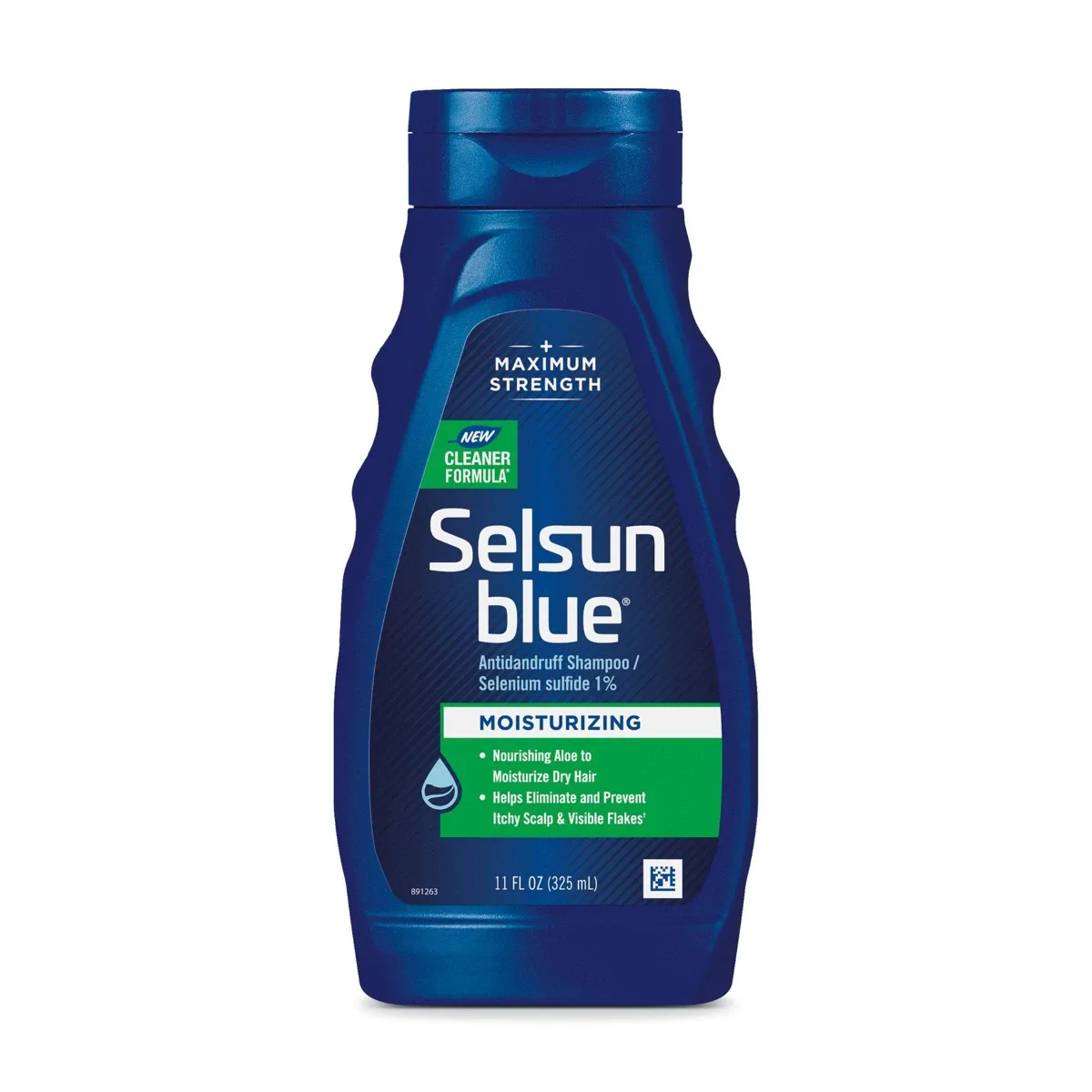 The Sensible One In The Range
Moisturizing Antidandruff Shampoo
Identical drug to the bottle beside it marked Maximum Strength, in a distinctly better vehicle — taurate co-surfactant, silicone conditioning, no menthol. That makes this the sensible pick in the range, and the one most shoppers walk past because its name sounds like the weaker option. Fragrance, a dye and a sulfate base keep it from being the gentlest thing available.
 Monograph-Strength Workhorse
Clinical Strength Advanced Oil Control Shampoo
One percent selenium sulfide, a strength set by federal monograph rather than a marketing team, in a twelve-ingredient base for twelve dollars. It is one of the most effective things you can buy for oily dandruff without a prescription — and it smells faintly of sulfur afterward no matter how much citrus is thrown at it. That trade is the entire product.
 Relief Now, Treatment Later
Clinical Strength Cooling Itch Relief Shampoo
The only bottle in this line whose name tells you what you will actually feel. Menthol plus two mint oils deliver genuine, immediate itch relief; one percent selenium sulfide delivers the actual treatment a fortnight later. Both are real, they are entirely unrelated, and the trouble is that the fast one is doing the persuading while the slow one does the work.
 Right Drug, Wrong Name
Clinical Strength Dry Scalp Rescue Shampoo
The active is right and the name is wrong. One percent selenium sulfide is exactly what most self-diagnosed dry scalps actually need, and over seven thousand reviewers averaging 4.7 stars suggest it delivers. But there is no humectant or emollient in this formula anywhere — it is the line's standard sulfate base with menthol and two mint oils added, which is a peculiar thing to sell as rescue for dryness.
 One Bottle, Short Hair
2-in-1 Antidandruff Shampoo & Conditioner
The same full-strength selenium sulfide as the rest of the range, in a formula whose federal label shows an inactive list identical to the moisturising variant — so the conditioner half of the name is a promise rather than added chemistry. Genuinely convenient on short hair, chemically incapable of replacing a conditioner on long hair, and the hardest bottle in the range to actually find.
 Pharmacy Flake Heavyweight
Dercos Selenium Sulfide Anti-Dandruff Shampoo
The most clinically serious dandruff shampoo on the US drugstore shelf that isn't ketoconazole, built on selenium sulfide and softened with dimethicone and niacinamide so it doesn't wreck your hair getting there. The sulfur smell, sulfates and menthol keep it from being gentle, and the trials Vichy leans on were run on the stronger European formula. For stubborn, oily-scalp dandruff, it earns its shelf space.
The full selenium sulfide guide
Few skincare actives come with a warning to take off your rings first.
Selenium sulfide does — its label tells you to remove jewelry before use, because the compound can tarnish silver and gold, and it can tint blonde, grey or chemically treated hair if you do not rinse properly. That bluntness is a fair signal of what it is: a genuine antifungal drug that predates the modern cosmetics industry and behaves like one.
Where the evidence stands, by concern
Evidence for an ingredient is not one grade — it differs concern by concern. Each row below was researched separately against regulatory approvals, clinical guidelines, and trials our team opened and verified; the band and dots rank how central selenium sulfide is to treating that concern, from first-line therapy down to supportive care, at treatment-level doses and vehicles. A product's own grade weighs its actual formula.
Researched, not established: Fungal Acne. We looked at this concern and the current evidence does not clear our bar for a treatment standing — that is a finding, not a gap in our research.
How it's regulated in the US
FDA does not classify ingredients — it classifies products, by what they are sold to do. The same molecule can be a drug active in one product and a cosmetic ingredient in the next, and only the claim on the label decides which. What follows is a statement about that legal standing, not about whether it works — the evidence question is answered separately above.
Drug — OTC and Rx Selenium sulfide sits on both sides of the counter: 1 percent is an OTC monograph active, and 2.5 percent is a prescription drug with approved applications behind it. The strengths on a shelf and in a pharmacy are not the same product regime.
- dandruff OTC monograph 1 percent; micronized, 0.6 percent
Generally recognized as safe and effective under an FDA order — marketed without FDA approval
Permitted label wording “Controls the symptoms of dandruff; Controls the symptoms of seborrheic dermatitis”
- seborrheic dermatitis and tinea versicolor FDA-approved 2.5 percent
Approved by FDA as a generic of an approved drug
Permitted label wording “Prescription lotion/shampoo”
The originator NDA007936 is discontinued; the prescription strength is now marketed under generics.
Selenium sulfide sits in the FDA's over-the-counter monograph for dandruff, seborrheic dermatitis and psoriasis at 1%, with 0.6% micronized formulations also recognized and the 2.5% strength dispensed as a prescription suspension. The randomized evidence is genuinely old but genuinely controlled: a double-blind, placebo-controlled JAAD trial compared 2.5% selenium sulfide shampoo against 2% ketoconazole in moderate-to-severe dandruff and found both clearly effective. Worth noting when reading the box, though — the strongest trial data sit at the 2.5% prescription strength, while what most people buy is 1% or 0.6% micronized, so the shelf product is a step down from the studied dose.
How it works
Two things happen at once, and the second is what separates selenium sulfide from the other medicated shampoo actives. The first is antifungal: it suppresses Malassezia, the lipid-feeding yeast whose breakdown of scalp sebum generates the free fatty acids that inflame a susceptible scalp and send corneocytes shedding in visible clumps. The second is cytostatic. Selenium sulfide slows mitotic division in epidermal and follicular epithelial cells, which pulls the rate of scalp cell turnover back toward normal. That matters because in dandruff and seborrheic dermatitis, turnover has already accelerated — skin cells reach the surface before they have finished maturing and shed as flakes rather than invisibly. Dampening the division rate directly addresses the visible symptom, not just the organism behind it. There is a keratolytic contribution too, loosening the scale already sitting on the scalp, and the drug reduces fungal adhesion to corneocytes so that yeast and spores shed away instead of holding on. Because it works partly by slowing cell division rather than purely by killing yeast, selenium sulfide tends to be effective on flaking that has an inflammatory, thick-scale character. The tradeoff is the side-effect profile a cytostatic implies: it is more likely than a gentler active to leave the scalp dry or oddly oily, and the label acknowledges occasional increases in normal hair shedding.
Key benefits
- Hits dandruff from two directions — antifungal and cell-turnover slowing
- Keratolytic action loosens thick, adherent scalp scale
- Prescription 2.5% strength available when OTC options fall short
- Reduces fungal adhesion to corneocytes, not only fungal growth
- Long regulatory track record as a monograph drug active
- Also used off-scalp for tinea versicolor under clinical direction
Concentration & usage
Over the counter, the recognized strengths are 1% and 0.6% micronized; the 2.5% topical suspension is prescription-only in the US and is the strength that carried the controlled dandruff trial. Micronized 0.6% is not simply a weaker 1% — the smaller particle size is the formulation's argument for comparable delivery, so do not read the number alone as a potency ranking. Typical directions are twice weekly for two to four weeks, then weekly or fortnightly for maintenance, with the lather worked into the scalp and left for a few minutes. Rinse hair very thoroughly afterwards; the label is explicit that adequate rinsing is what prevents hair discoloration.
Who it's for & who should be cautious
Who it's for
It earns its place when zinc pyrithione has been used properly for a month and the flaking is still thick, adherent or inflamed — the cytostatic action gives it a different angle on stubborn seborrheic dermatitis. People whose scalp scale builds into visible plaque rather than loose dusting often do better here. It is also the familiar treatment for tinea versicolor, the patchy trunk discoloration that follows a related yeast, where it is used on the body rather than the scalp under a clinician's direction.
Who should be cautious
Do not apply it to broken, oozing or acutely inflamed skin — that is a label instruction, not a caution. Anyone with light, grey, bleached or color-treated hair should weigh the discoloration risk and rinse obsessively, and remove jewelry beforehand since the compound can damage metal. It is a poor fit for people who already find medicated shampoos drying, because the cytostatic action tends to leave hair either straw-dry or oddly greasy. Occasional increased hair shedding is a documented adverse effect, so anyone already anxious about hair loss may prefer a different active. Pregnancy and breastfeeding data for topical use are limited; discuss it rather than assuming.
Pairs with & conflicts
Pairs well with: Salicylic Acid (BHA), Panthenol (Pro-Vitamin B5), Glycerin, Urea (Carbamide), Ceramides
Myths & facts
Myth: Selenium sulfide shampoo will turn your hair orange.
Reality: Discoloration is a real, labelled risk, but it is largely preventable. The instruction on the prescription suspension is direct: discoloration of hair can be avoided or minimized by rinsing thoroughly after treatment. The risk concentrates in blonde, grey, bleached and chemically treated hair, where any residue shows. Dark, untreated hair rarely shows anything at all.
Myth: Since it contains selenium, using it regularly risks selenium toxicity.
Reality: Selenium sulfide is a distinct compound, not a supply of dietary selenium, and it is applied to intact scalp as a rinse-off. Systemic absorption from normal use is minimal. The genuine label cautions concern local effects — irritation, dryness, discoloration, occasional shedding — and applying it to broken or inflamed skin, which is exactly where absorption would rise.
Frequently asked questions
What is the difference between the 1% shampoo and the 2.5% prescription lotion?
Strength and regulatory status. The 1% shampoo (and 0.6% micronized versions) sit in the FDA's OTC monograph for dandruff and seborrheic dermatitis; the 2.5% suspension is prescription-only and is the strength that carried the controlled dandruff trial against ketoconazole. If a month of consistent OTC use has not helped, the higher strength is a reasonable conversation to have with a clinician.
How often should I actually use selenium sulfide shampoo?
Twice a week during an active flare for the first two to four weeks, then dropping to once weekly or once a fortnight to hold the improvement. Daily use is not more effective and raises the odds of dryness and irritation. On non-treatment days, an ordinary gentle shampoo is fine.
Can I use it for tinea versicolor on my chest and back?
Yes — that is one of its established uses, applied to the affected skin rather than the scalp, usually as a short daily contact over about a week under clinical direction. Because trunk skin is more reactive than scalp, follow a clinician's instructions on contact time rather than improvising, and keep it off broken or inflamed areas.
Does selenium sulfide cause hair loss?
The prescription label records occasional reports of an increase in the normal amount of hair shedding, alongside oiliness or dryness of hair and scalp. It is listed as an adverse reaction rather than a common outcome, and treating an inflamed scalp usually helps hair more than it hurts. If shedding clearly increases and continues, stop and switch actives.
Why does my shampoo smell like that?
Sulfur chemistry. Selenium sulfide carries a distinct sulfurous odor that formulators mask but rarely eliminate, and some of it lingers on damp hair. It fades as hair dries, and following with a conditioner on the lengths helps. If the smell is a dealbreaker, ketoconazole and zinc pyrithione products are essentially odorless.