Piroctone Olamine
Products with Piroctone Olamine
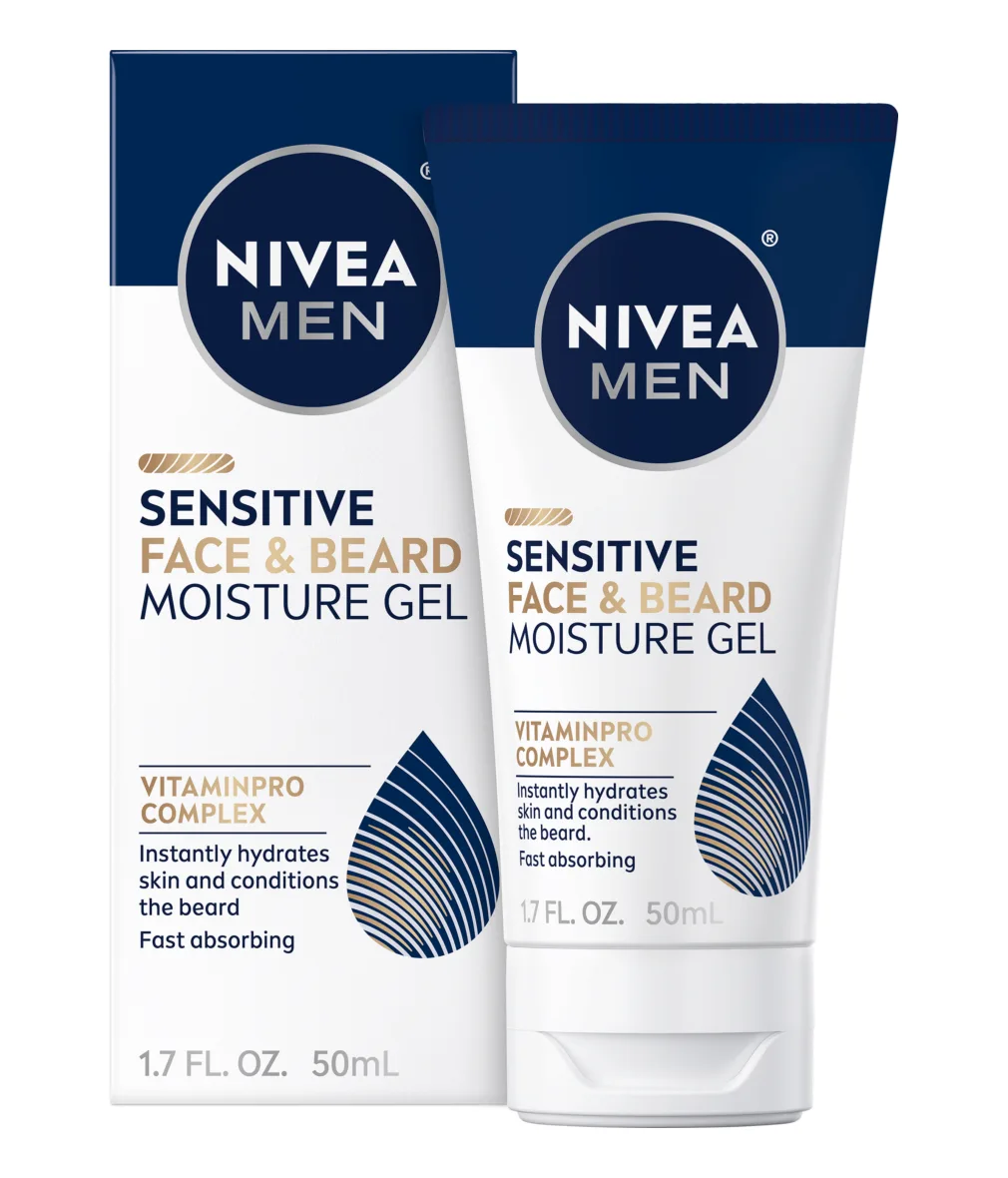 Smart Beard Gel, Fragranced Irony
Sensitive Face & Beard Moisture Gel
This is one of the smarter, better-formulated products in the Nivea Men range: a lightweight, alcohol-free, paraben-free gel that hydrates face and beard skin and — genuinely cleverly — includes piroctone olamine, an antifungal that targets beard dandruff and the itchy, flaky skin beards commonly cause. Most beard products ignore that problem; this one addresses it. It's soothing, non-greasy, fungal-acne safe, and reasonably priced. The one real irony is that a product named 'Sensitive' still contains fragrance, the most common sensitizer — so it isn't ideal for truly fragrance-reactive skin. For most bearded men wanting to de-flake and hydrate their beard skin, though, it's a genuinely useful, well-conceived pick.
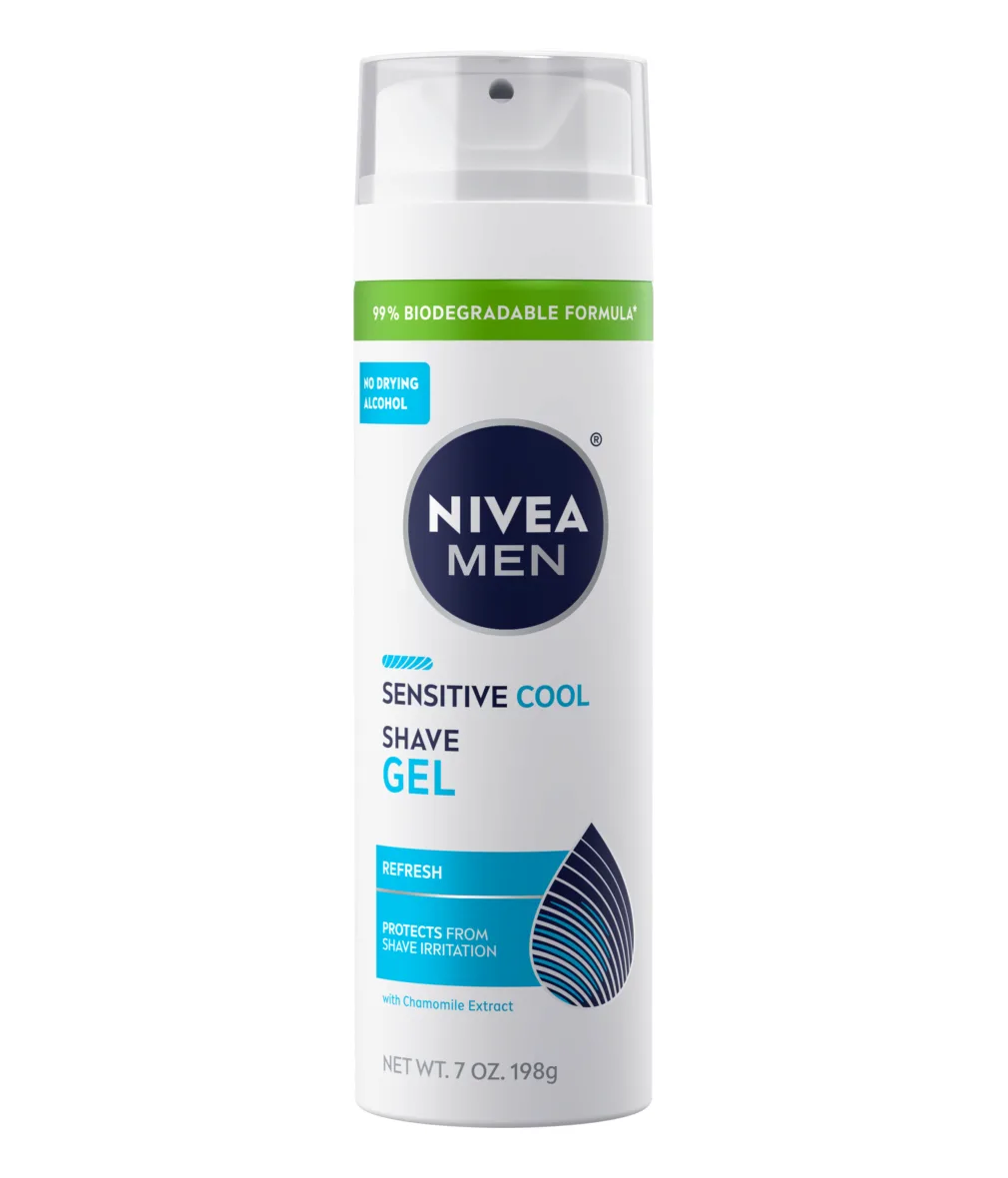 Cool-Finish Sensitive Shave
MEN Cooling Shave Gel for Sensitive Skin
The cooling cousin of Nivea's beloved Sensitive shave gel, delivering the same alcohol-free, chamomile-soothed glide with a refreshing finish that comes from seaweed rather than skin-stinging menthol. It's a smart pick for sensitive shavers who still want that fresh feel, and at well under five dollars the value is excellent; the fragrance and added dye are its only real demerits.
 Flare Spot-Treatment Standard
Eczema Relief Flare-Up Treatment
A thick, targeted flare cream that does the two things a cracked eczema patch needs, calm it and seal it, with a monograph oatmeal active, licochalcone A and a ceramide inside a mineral-and-castor-oil film, plus a menthol derivative for instant cooling. It is greasy by design, meant for patches rather than limbs, and it will not replace a steroid on a serious flare, but for the everyday cracked knuckle or itchy elbow it is one of the most dependable tubes in the drugstore.
 Drugstore Serum, Real Dark-Spot Active
Age Defense Advanced Serum
Quietly the best product in the entire Nivea Men range, and it hides in plain sight: this serum's active is Thiamidol, Beiersdorf's patented, clinically-proven tyrosinase inhibitor — one of the more genuinely effective over-the-counter dark-spot ingredients, the same technology as the pricier Eucerin Anti-Pigment line — paired with real hyaluronic acid, at a drugstore price. Used twice daily with sunscreen, it genuinely fades dark spots and evens tone over a couple of months. The one honest gap: the box references 'fine lines & wrinkles,' but there's no anti-wrinkle active in it — its strength is pigmentation, not wrinkles. Fragrance and dye are minor caveats. For dark spots, a genuine, affordable standout.
 Alcohol-Free, Cooling Balm
Sensitive Cool Post Shave Balm
Nivea Men's Sensitive Cool Post Shave Balm is one of the better-conceived, better-value products in the whole men's line: genuinely alcohol-free, so it soothes freshly-shaved skin instead of stinging it, with calming chamomile and glycerin, a gentle cooling agent (a milder menthol derivative), and a bonus antifungal. It absorbs fast and non-greasy, and it's cheap. The one recurring irony is fragrance in a product named 'Sensitive,' and there's some comedogenic isopropyl palmitate. For a soothing, cooling, alcohol-free post-shave balm at around $7, it's a genuine upgrade over old-school stinging aftershaves and an easy recommendation — just patch test if your skin is truly fragrance-reactive.
 Cooling Scalp Serum
Cica Peptide Anti Hair Loss Derma Scalp Serum
Judged as what the label says, an anti-hair-loss serum, this is a dozen trace peptides and a biotin garnish making a promise nothing in the bottle can keep. Judged as what the formula actually is — a cooling leave-in with piroctone olamine and salicylic acid — it is a genuinely useful daily regulator for an oily, itchy, flaky scalp, and the rolling applicator makes it easy to use. Buy it for the flakes, not the follicles, and skip it if your scalp is dry.
 Menthol Sulfate Wash, Reedle Shot Name
PDRN Reedle Shot Scalp Shampoo
A conventional Korean functional scalp shampoo, two sulfates, menthol and fragrance with the four certified anti-hair-loss actives, wearing the names of VT's two biggest lines: silica sits forty-first and sodium DNA is declared at 0.5 ppb. It degreases an oily scalp thoroughly and feels clinical; it is drying for everyone else, does nothing for shedding, and costs like a treatment.
 Skincare Brand Goes Hair
Peptide 132 Ultra Perfect Hair Bonding Shampoo
A good sulfate-free, silicone-free shampoo from a skincare company, and that is both the compliment and the caveat: it cleans thoroughly, leaves hair soft through three cationic conditioning polymers, and carries an eighty-seven-ingredient roster of peptide, ceramides and amino acids that rinses away before it can matter. Buy it for the wash, not for the bonding.
 Fresh-Roots Daily Wash
Oil-Control & Volumizing Shampoo
A competent daily degreaser for oily, flat, fine hair that is smarter than its marketing: amodimethicone instead of heavy silicone, a real antifungal at a working position, and a big airy lather that leaves roots standing. The green-apple scent and sulfate base narrow it to oily scalps, the 'microcapsule' story is fluff, and at around twenty-three dollars it is priced above what a salt-thickened sulfate wash is worth. Good at its one job; do not expect it to be gentle.
 Himalayan Spikenard, Pharmacy Active
Anti-Dandruff & Itching Relief Shampoo
A properly medicated dandruff shampoo dressed as a perfumed salon wash: piroctone olamine does the antifungal work, a high silicone load makes hair feel conditioned, and the Himalayan spikenard is there for the story. It suits oily, itchy, flaky scalps that hate the feel of drugstore zinc shampoos and can tolerate fragrance; at around twenty-one dollars for 400g it costs several times what a US pharmacy active does, and dry or sensitive scalps should look elsewhere.
 Cooling Wash, Unproven Claim
Anti-Hairloss & Strengthening Shampoo
A good-feeling cooling shampoo with a modest antifungal and a hair-loss claim that nothing in the bottle can back. The menthol tingle, silicone slip and glossy lather make it pleasant to use on an oily scalp, and the piroctone olamine keeps the yeast quiet; the Himalayan botanicals are at trace levels in a rinse-off wash and will not change shedding. Buy it as a nice scalp shampoo, not as a treatment, and spend the difference on minoxidil if hair loss is the real concern.
 Sensitive-Skin Chafe Shield
Anti-Chafe Stick with Shea Butter + Colloidal Oatmeal
An anti-chafe stick that treats the problem as skincare rather than lubrication: a triglyceride-and-ozokerite glide with a starch-and-magnesium dry-touch system, colloidal oatmeal and shea for skin that is already sore, and piroctone olamine keeping fungus out of the folds it lives in, all fragrance-free and allergen-screened in eleven ingredients. It needs reapplying through heavy sweat and costs twice a drugstore stick, and for sensitive skin it is worth every dollar of that.
 Dandruff Routine's Missing Half
Nourishing Conditioner
The rare conditioner engineered for a dandruff routine instead of against it — colloidal oat for the itch, a stealth dose of piroctone olamine so conditioning doesn't refeed the yeast, and a light rinse that respects color-treated hair. It's a genuinely smart supporting player at a premium price; just don't mistake it for the treatment itself.
The full piroctone olamine guide
Buy an anti-dandruff shampoo in Berlin and one in Boston and you may be holding two different regulatory philosophies.
Piroctone olamine is everywhere in European scalp care and comparatively scarce in the American medicated aisle, and the reason has nothing to do with how well it works. The FDA examined it for the dandruff monograph in 2004 and never added it; the EU lists it as an approved preservative with antifungal reach. Same molecule, two systems, two shelves.
Where the evidence stands, by concern
Evidence for an ingredient is not one grade — it differs concern by concern. Each row below was researched separately against regulatory approvals, clinical guidelines, and trials our team opened and verified; the band and dots rank how central piroctone olamine is to treating that concern, from first-line therapy down to supportive care, at treatment-level doses and vehicles. A product's own grade weighs its actual formula.
Researched, not established: Dandruff. We looked at this concern and the current evidence does not clear our bar for a treatment standing — that is a finding, not a gap in our research.
How it's regulated in the US
FDA does not classify ingredients — it classifies products, by what they are sold to do. The same molecule can be a drug active in one product and a cosmetic ingredient in the next, and only the claim on the label decides which. What follows is a statement about that legal standing, not about whether it works — the evidence question is answered separately above.
Cosmetic Piroctone olamine is an established antidandruff active in Europe and Asia and has no US drug standing whatsoever — it is absent from the M032 active list, so a US shampoo containing it is a cosmetic and may not claim to control dandruff.
This is the mirror image of the sunscreen situation: an ingredient the rest of the world treats as a proven active that US regulation simply never processed. Absence verified against the § M032.10 list.
Clinical work supports piroctone olamine as an effective anti-dandruff agent, and comparative studies place it broadly alongside zinc pyrithione rather than far ahead of it — a 2006 comparison found similar reductions in dandruff symptoms after four weeks. It is worth being careful with the more enthusiastic figures circulating for this ingredient, since a good number of them originate with chemical suppliers rather than with independent investigators. The regulatory position is the clearest fact available. Piroctone olamine at 0.05-0.5% leave-on and 0.1-1.0% rinse-off was evaluated for the US OTC dandruff monograph under 21 CFR part 358 subpart H, and it was not included among the recognised active ingredients — so American products containing it are cosmetics rather than OTC drugs and cannot make drug claims. In the EU it appears in Annex V of the Cosmetics Regulation as a preservative at up to 1.0% rinse-off and 0.5% in other products, which is the legal route by which European anti-dandruff shampoos use it.
How it works
The route to killing the yeast here is starvation of a very specific kind. Piroctone olamine is a hydroxamic acid derivative, and hydroxamic acids are excellent metal chelators — this one forms stable complexes with both iron(II) and iron(III), locking the ions up where the fungus cannot use them. Iron is not a nice-to-have for a fungal cell. The electron transport chain that generates its energy runs on iron-containing proteins, so removing access to iron collapses mitochondrial energy metabolism from underneath. Growth stops, and the Malassezia population on the scalp declines. It is a different attack from the azoles, which block ergosterol synthesis in the membrane, and from zinc pyrithione, which floods the cell with copper — three actives, three unrelated vulnerabilities, which is part of why rotating between them is rational when one stops delivering. There is a second reported consequence worth knowing. By disrupting fungal metabolism, piroctone olamine interferes with the breakdown of scalp sebum triglycerides into the free fatty acids that irritate susceptible skin, so the composition of scalp lipids shifts alongside the fall in yeast numbers. That means the ingredient is acting on the irritant supply and not only on the organism producing it — which fits the clinical picture, where itch often settles before flaking fully does.
Key benefits
- Chelates iron, shutting down fungal mitochondrial energy metabolism
- A mechanism entirely distinct from azoles and zinc pyrithione
- Alters scalp lipid composition, reducing the irritant free fatty acids
- Comparable dandruff control to zinc pyrithione in head-to-head comparison
- Colourless, odourless and non-staining, unlike tar or selenium
- Generally well tolerated on hair and colour-treated hair
Concentration & usage
The functional range studied and permitted is roughly 0.1-1.0% in rinse-off products and 0.05-0.5% in leave-on. In the EU it sits within Annex V limits of 1.0% rinse-off and 0.5% elsewhere. Because it is not a US monograph active, an American product will list it in the ordinary INCI rather than on a Drug Facts panel, which means no stated percentage and no way to know your dose — a genuine practical disadvantage of the cosmetic route. Position on the list is the only available proxy. As with any rinse-off scalp active, contact time is part of the dose: work it into the scalp, leave it a few minutes, then rinse. It is frequently paired with climbazole or salicylic acid, and those combinations are formulation strategy rather than evidence of a stronger product.
Who it's for & who should be cautious
Who it's for
It suits people with ordinary dandruff or mild seborrheic dermatitis who want an effective active that is cosmetically undemanding — no smell, no colour, no staining, and gentle enough on colour-treated hair to use regularly. It is a particularly sensible choice for anyone whose scalp has stopped responding to zinc pyrithione, since the mechanisms are unrelated and there is no reason for cross-tolerance. European readers will find it in mainstream shampoos; American readers will more often meet it in imported or cosmetic-positioned products.
Who should be cautious
Anyone with moderate to severe seborrheic dermatitis should start with an active carrying stronger evidence and a clearer regulatory footing — ketoconazole has guideline backing and pooled trial data that piroctone olamine does not match. The absence of US monograph status is not a safety verdict, but it does mean an American product cannot state a percentage or make a drug claim, so you are dosing blind. Treat the more dramatic efficacy figures with caution, since many trace back to supplier marketing rather than independent trials. Stop and get assessed if six weeks of consistent use has not helped, because scalp psoriasis and tinea capitis flake too and neither responds to this. Contact allergy is uncommon but documented, and pregnancy and breastfeeding data for topical use are limited enough to be worth a conversation rather than an assumption.
Pairs with & conflicts
Pairs well with: Salicylic Acid (BHA), Zinc Pyrithione (ZPT), Panthenol (Pro-Vitamin B5), Glycerin, Urea (Carbamide)
Myths & facts
Myth: Piroctone olamine is more than 80% more effective than zinc pyrithione.
Reality: Figures in that region circulate widely and largely originate with chemical suppliers selling the ingredient, not with independent investigators. The better-grounded comparison is a 2006 study finding similar reductions in dandruff symptoms between the two after four weeks. Piroctone olamine is a legitimate alternative with a genuinely different mechanism, and that is a more defensible reason to try it than a supplier's percentage.
Myth: It is not FDA-approved, so it must be unsafe or unproven.
Reality: It was reviewed for inclusion in the US OTC dandruff monograph and not added, which is a regulatory outcome rather than a safety finding — and the EU lists it in Annex V of its Cosmetics Regulation with defined concentration limits. Different systems reached different conclusions about how to classify it. The practical consequence for an American buyer is real but narrow: no Drug Facts panel, no stated percentage, no drug claims.
Myth: It stops working after a few months, so you have to keep switching.
Reality: There is no good evidence of acquired resistance. What usually happens is the same pattern seen with every dandruff active: symptoms improve, the routine relaxes, and the yeast population recovers. Dandruff is controlled rather than cured. That said, because piroctone olamine chelates iron while zinc pyrithione floods cells with copper and azoles block ergosterol synthesis, switching between them is mechanistically sensible if one genuinely underdelivers.
Frequently asked questions
Why is piroctone olamine so common in European shampoos but not American ones?
Regulatory classification. The FDA evaluated it for the OTC dandruff monograph and did not include it among the recognised actives, so US products containing it are cosmetics. The EU lists it in Annex V of its Cosmetics Regulation at up to 1.0% in rinse-off products, which gives European formulators a straightforward route to using it in anti-dandruff shampoo.
Is it gentler than zinc pyrithione or ketoconazole?
It is generally well tolerated and cosmetically undemanding — no odour, no staining, and usually fine on colour-treated hair. Whether it is meaningfully gentler is harder to say, since the comparative data are limited and tolerability differences between modern anti-dandruff actives are small relative to how much formulation and wash frequency matter.
Can I use it with a zinc pyrithione shampoo?
Yes, and alternating them is reasonable given that they attack unrelated targets — one starves the fungus of iron, the other overloads it with copper. There is no chemical incompatibility. Using both in the same wash adds nothing; alternating between washes, or switching if one stops delivering, is the more sensible pattern.
How long before it should work?
Comparative studies measured meaningful improvement at around four weeks with regular use, so give it a month before drawing conclusions, then taper to maintenance rather than stopping. Leaving the lather on the scalp for a few minutes matters, since a rinse-off active only has the contact time you give it.
How do I know how much is in my shampoo?
Outside the EU you often cannot. Because it is not a US monograph active, American products list it in the ordinary ingredient list with no percentage. Position is the only clue — appearing above the fragrance and preservatives suggests a functional level, while sitting at the very end suggests it is there for the label.
Sources
- https://www.federalregister.gov/documents/2004/02/18/04-3413/over-the-counter-drug-products-safety-and-efficacy-review-additional-dandruff-control-ingredient
- https://ec.europa.eu/health/ph_risk/committees/sccp/documents/out162_en.pdf
- https://www.ncbi.nlm.nih.gov/pmc/articles/PMC10947268/
- https://cosmileeurope.eu/inci/detail/11818/piroctone-olamine/