Caviar Extract
Products with Caviar Extract
 The Satisfying One
Caviar PDRN Capsule Cream
A fragrance-free violet gel-cream that is more honest than most PDRN products — the salmon DNA is declared at 1,000 ppm and actually sits mid-list — and more fun than most moisturizers, thanks to 7,000 oil capsules that burst under your fingers into a dewy, cushioned finish. The firming claims borrow from the clinic; the hydration and the feel are real and worth the sale price.
 Budget Hydrating Eye Cream
Hyaluron Shot Eye Cream
A genuinely good-value hydrating eye cream that punches above its budget price by including a real adenosine anti-wrinkle active alongside ceramide and hyaluronic acid. It smooths and hydrates the under-eye nicely. The caviar and truffle are marketing filler, and the fragrance so close to the eyes is the main caveat — but for the money, this is a smart, honest little eye cream.
 Two-Sided Trend Pad
Caviar PDRN Dual Gel Toner Pads
Buy these for the format, not the fish. The cotton-then-hydrogel construction genuinely works — a slippery, trace-acid polish followed by a five-minute humectant sit is a smart way to spend a toner step — and the niacinamide, PHA and squalane do real work. The caviar water and 1,000 ppm PDRN that justify the name and the $26 are humectant-grade passengers. A good pad wearing an expensive costume.
 KP Treatment Cream
AHA/BHA Renewing Body Cream
A thoughtful body cream that treats keratosis pilaris gently rather than aggressively — wrapping mild fruit acids in a rich, nourishing base that moisturizes as it exfoliates. The approach works with consistent daily use, though the gentle acid concentration means patience is part of the prescription.
 Unscented Caviar Night Balm
Caviar Night Cream
A dense petrolatum, polyisobutene, ceresin and beeswax night balm with cocoa butter and lanolin-derived sterols that seals very dry skin overnight as well as any modern occlusive, and, unusually for the brand's old creams, without fragrance. The caviar, collagen and nucleic acids are 1980s spa garnish at trace positions, the tail carries a formaldehyde releaser, parabens and four dyes, and it is far too heavy for anyone but the dry. For that skin, and only that skin, a decent cheap buy.
 Trend-Chasing Comfort Mask
Rejuvenating Caviar PDRN Real Deep Mask
The most luxurious-feeling Biodance mask and the one whose headline ingredients matter least. Caviar water and PDRN are the fashion; shea, squalane and niacinamide under eight hours of occlusion are the function, and for dry, mature skin that function is genuinely lovely. Buy it for comfort, not for regeneration, and not at all if you are oily.
 Rinse-Off Eye Ritual
Luxury Caviar Eye Mask
A comfortable, fragrance-free rinse-off eye cream with caffeine and escin in a dense emollient base that leaves under-eyes soft and briefly depuffed. The rinse-off format limits how much its actives can do, and the caviar is a trace ingredient. At around $90 for 15g, it is a pricey ritual rather than a treatment.
 The Rich One of the Trio
Caviar PDRN Eye Patches
The most luxurious-feeling of Biodance's eye patches, with a caviar-water base and a little macadamia oil that leaves dry under-eyes genuinely softer — and the least honest lid, since the salmon PDRN that names it is the second-to-last ingredient of forty-nine. Buy it as a nourishing twenty-minute de-puffer for dry skin, and read the DNA as branding.
 Caviar-Named Comfort Cream
Caviar Day Cream
A rich, comfortable glycerin-and-ester day cream that hydrates dry, mature skin well, sits under makeup and costs twenty dollars, with caviar extract, elastin and nucleic acids as trace luxury garnish from the 1980s spa era. It has no SPF, its esters and lanolin are wrong for congestion-prone faces, and its fragrance, formaldehyde releaser, parabens and four dyes rule out sensitive ones. Buy it for the base, not the name.
 Gilded Caviar Rinse-Off Mask
Luxury Caviar Facial Mask
A creamy, pleasant rinse-off mask that leaves dry skin soft and glowing, packaged like a luxury salon treatment with its own brush. The formula behind the gold jar is mostly emollients, glycols and a humectant sugar, with the headline caviar and ginseng near the end, plus fragrance, dyes and coconut oil. At close to $90, it is hard to justify on ingredients.
 Split-Jar Moisture
Gold Caviar Serum and Cream
A clever split jar that pairs a hyaluronic gel with a rich ceramide cream, letting dry and normal skin adjust the balance day to day. The moisture is real and comes from niacinamide, ceramides and a good emollient base; the gold and caviar are trace-level décor, and the fragrance is a real drawback.
 Budget Adenosine Wrinkle Serum
Power 10 Formula WR Effector
A budget wrinkle serum that, refreshingly, leads with a real active: adenosine, one of the few gentle anti-wrinkle ingredients with genuine clinical backing, plus polyglutamic acid for plumping hydration. The caviar and mistletoe are premium-sounding filler, and there's added fragrance, but for a low-cost, low-irritation way to add legitimate anti-wrinkle support, the adenosine makes it a smart little buy.
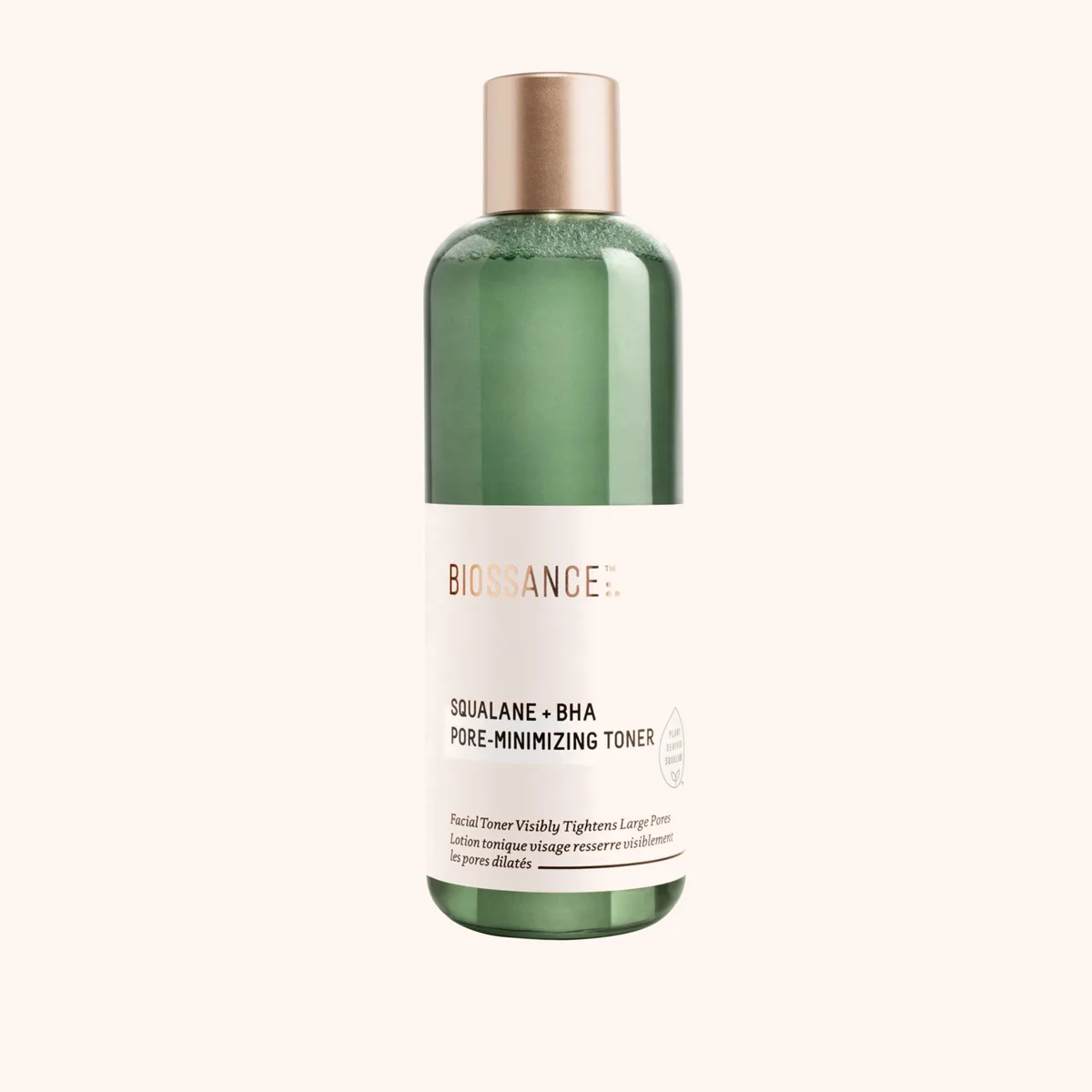 Clean Beauty BHA Pick
Squalane + BHA Pore Minimizing Toner
A well-intentioned clean beauty BHA toner that prioritizes gentleness and moisturization over raw exfoliating power. The squalane-infused formula genuinely prevents the stripping sensation common to acid toners, and the dual-BHA approach works well for mild congestion. But at $32, you are paying a premium for the clean positioning and essential oils that ironically limit who can use it.
 Niacinamide First Essence
Gold Caviar First Essence
A comfortable, fast-absorbing first essence whose real strength is a meaningful dose of niacinamide sitting behind the gold-and-caviar branding. It hydrates well and has a solid user following, but the fragrance and a price close to forty dollars for a water-thin essence make it a treat rather than a necessity.
 Pore-Focused Derm Scrub
PoresDermabrasion Pore Perfecting Exfoliator
A pore-focused twist on Dr. Brandt's classic microdermabrasion formula, adding salicylic acid and caviar lime extract to the alumina base for a three-layer exfoliation attack. Effective for oily, congested skin, but the alcohol denat and menthol content, fragrance load, and $58 price make it a harder recommendation than a well-formulated daily BHA at a fraction of the cost.
 Swiss Luxury Brightening Icon
White Caviar Illuminating Pearl Infusion
La Prairie's White Caviar Illuminating Pearl Infusion delivers an immediate optical glow from pearl mica plus a multi-botanical brightening complex that does real work over months. At 690 dollars for 30ml, you're paying as much for the Swiss-luxury ritual as for the underlying formulation.
 Skin Caviar Franchise Cornerstone
Skin Caviar Absolute Filler
La Prairie's Skin Caviar Absolute Filler pairs the brand's heritage caviar extract positioning with a triple-HA volumizing complex and a three-peptide framework. The formulation is sophisticated; the 685-dollar price tag is luxury-tier extreme for 50ml of cream.
 Instant-Lift Luxury Icon
Skin Caviar Liquid Lift
An ingeniously theatrical serum that delivers a genuinely impressive instant lift from its pullulan film-forming technology, backed by Matrixyl 3000 peptides and caviar extract for longer-term benefits — but the 10 price, high alcohol content, and army of fragrance allergens make this a luxury indulgence rather than a skincare necessity.
 Good Formula, Extraordinary Price
White Caviar Light Concentrate
A genuinely well-built brightening serum — niacinamide, Thiamidol, and a sensible supporting cast — trapped behind an extraordinary $665 price for 20ml. The formula works. The value does not: its key actives are available, doing the same job, for a tiny fraction of the cost. A heavy fragrance load is a further, real drawback.
 Premium Caviar Eye Balm
Eye Balm CV
The premium caviar eye balm in KAHI's CV line, stacking a caviar ferment, a buzzy longevity NAD complex and de-puffing escin onto a cupuacu-and-bisabolol base that is gentler than the salmon eye balm. It feels rich and plumping under the eye, but the trendy longevity actives are mostly marketing, seven fragrance allergens sit at the delicate eye area, and the price is steep.
 Premium Caviar Glow Balm
Multi Balm CV
The premium caviar reformulation of KAHI's viral multi-balm, swapping the salmon complex for a caviar-derived ferment, adding soothing bisabolol and dialing the fragrance down to fewer allergens. It is a slightly more refined, marginally gentler version of the same convenient glow-and-seal stick, though it remains fragranced, animal-derived and dry-skin-focused, at a higher price than the original.
 Ultra-Luxury Brightener
White Caviar Eye Extraordinaire
The most scientifically interesting of the three La Prairie eye creams reviewed here, thanks to the genuinely innovative Lumidose brightening molecule and the thoughtful dual-pathway approach to dark circles. But six fragrance allergens in an eye cream and a $630 price tag for what amounts to a good brightening formula make this a product where the science is excellent and the economics are punishing.
 Science-Forward Brightening Luxury
White Caviar Crème Extraordinaire
The rare luxury brightening cream that actually has the science to back it up — Thiamidol is a clinically validated powerhouse for hyperpigmentation, and the supporting cast of Matrixyl 3000, licorice root, and caviar extract creates a multi-pathway formula. The 65 price and alcohol-plus-fragrance load are the catches.
The full caviar extract guide
Skincare's most theatrical ingredient is, underneath the gold-foil packaging, a genuinely interesting lipid-and-peptide complex.
Harvested from sturgeon (and sometimes salmon) roe, caviar extract carries omega-3 fatty acids, phospholipids, low-molecular-weight peptides, and a full spread of amino acids. The cost is real rather than invented — sturgeon roe runs into the thousands of dollars per kilogram before any extraction happens, and keeping these fragile lipids stable in a jar is legitimately tricky chemistry. The science is encouraging but early: a handful of small human studies and some mechanistic cell work point to plausible anti-aging activity, but nothing here individually justifies a four-figure moisturizer.
How it's regulated in the US
FDA does not classify ingredients — it classifies products, by what they are sold to do. The same molecule can be a drug active in one product and a cosmetic ingredient in the next, and only the claim on the label decides which. What follows is a statement about that legal standing, not about whether it works — the evidence question is answered separately above.
Cosmetic Caviar Extract is a cosmetic ingredient in the US: no OTC monograph covers it and it is not an active in any FDA-approved drug, so a product built around it is a cosmetic rather than a drug.
The human evidence is thin but not absent, and worth reading carefully because the studies are not all topical. A 2023 randomized, double-blind, placebo-controlled trial in Nutrients (45 adults, 8 weeks) tested an enzyme-treated supercritical caviar extract taken as an oral supplement, and reported improved skin hydration, reduced transepidermal water loss, and gains in elasticity and wrinkle measures versus placebo — an ingestion result, not proof that the same extract works applied to the face. On the topical side, a 2023 In Vivo study on caviar oil (the "Cavi Balm" product) found reduced MMP-1, MMP-2 and MMP-9 expression alongside measurable moisture, elasticity and density improvements across its clinical arms. The mechanistic backbone comes from a 2020 International Journal of Molecular Sciences cell study identifying DHA as a key driver: it suppressed UVB-induced MMP-1 in fibroblasts via adiponectin upregulation. Encouraging for a luxury ingredient — but the trials are small, short, and largely supplier-adjacent, so effect sizes deserve skepticism and the oral-versus-topical distinction matters.
How it works
No single mechanism carries caviar extract; its plausibility rests on several modest effects stacking up. The most studied driver is its fatty acid fraction, especially docosahexaenoic acid (DHA) and EPA. In cell work, DHA pushed adipocyte differentiation and adiponectin output, and that adiponectin in turn dampened MMP-1 — a collagen-chewing enzyme that UV exposure ramps up. The practical reading is preservation: less breakdown of the collagen skin already has, rather than a dramatic build of new collagen. Alongside the lipids sit short peptides rich in leucine, tyrosine and phenylalanine. In the supplement and ex-vivo studies, these tracked with greater fibroblast activity and higher expression of collagen type I, hyaluronic acid synthase, and ceramide-related enzymes — a useful trio of structure, water-binding, and barrier lipids, though much of that signal comes from ingested extract and shouldn't be assumed identical for a topical. The phospholipid portion is the part most clearly relevant when applied to skin: phosphatidylcholine and related membrane lipids mirror the lipids already woven through a healthy barrier, so they slot in to help reinforce a depleted one and hold water without sitting heavy on the surface. Taken together, the picture is a quiet, multi-front contribution — guarding existing collagen, nudging synthesis pathways, and topping up barrier lipids — none of it transformative on its own, which is exactly why no component here earns a luxury price by itself.
Key benefits
- Supplies barrier-compatible phospholipids that help reinforce a depleted lipid layer
- May curb collagen breakdown by lowering UV-driven MMP-1 expression (shown in cell studies)
- Delivers a dense amino acid and peptide profile linked to fibroblast support
- Improved hydration and lowered water loss in early human trials
- Omega-3s (DHA/EPA) provide a plausible photoaging-defense pathway via adiponectin
- Holds moisture without the occlusive heaviness of petrolatum-style finishers
Concentration & usage
No standardized effective topical percentage has been established, since the strongest human data comes from an oral supplement rather than a fixed-percent cream; topical products generally use caviar extract or caviar oil somewhere in the low single digits. Processing matters at least as much as the number on a marketing claim — raw roe lipids oxidize quickly under heat, light, and air, so enzyme-treated, supercritical CO2-extracted, cold-processed, or microencapsulated forms are far more likely to stay bioactive through a product's shelf life. As a rough sniff test, caviar extract sitting high on the INCI list suggests a real dose, whereas an appearance below the preservatives or near the tail end usually signals a label flourish. No meaningful pH dependency has been documented for topical use.
Who it's for & who should be cautious
Who it's for
Mature or persistently dry skin gets the clearest payoff, especially where firmness and density have started to slip — the barrier-lipid support and the collagen-sparing signals tend to work in the same direction rather than against each other. It also suits people who find slick synthetic-peptide serums aesthetically off-putting and would rather get comparable signals from a richer, naturally-derived complex. Anyone chasing a single dramatic active will be underwhelmed; this is a supporting player in a layered routine, not a headline treatment.
Who should be cautious
A confirmed fish allergy is the real disqualifier here, and it shouldn't be treated as fine print: caviar extract retains fish-derived proteins, topical exposure can provoke contact reactions in sensitized people, and cross-reactivity across sturgeon, salmon and other species is documented. If you carry a fish-specific IgE sensitivity, patch test cautiously or simply skip it, and loop in an allergist if your sensitivity profile is unclear. Oily and acne-prone skin may also find the phospholipid-rich, emollient bases that caviar extract usually ships in heavier than they want — the ingredient itself isn't notably comedogenic, but its typical formulations lean rich.
Pairs with & conflicts
Pairs well with: Peptides, Hyaluronic Acid, Ceramides, Vitamin C (L-Ascorbic Acid), Retinol, Phospholipids, Antioxidants
Myths & facts
Myth: Caviar extract is pure marketing — an expensive moisturizer with no real activity behind it.
Reality: There's genuine peer-reviewed work here: a 2023 placebo-controlled human trial (oral supplement), a 2023 topical caviar-oil study, and a 2020 cell study mapping a DHA-to-adiponectin-to-MMP-1 pathway. The evidence is limited in scale and often supplier-adjacent, so healthy skepticism about effect size is warranted — but flat dismissal ignores real mechanistic and clinical data.
Myth: The pricier the caviar product, the better it must work.
Reality: Price tracks sourcing cost, brand positioning, and packaging far more than active quality. A well-stabilized extract at a modest percentage in a thoughtful base can outdo a poorly preserved, oxidized formula at a higher percentage. Extraction method and stabilization technology tell you more than the number on the price tag.
Myth: You have to use it for years before anything happens.
Reality: In the available human studies, hydration and water-loss measures shifted within about four weeks and elasticity within eight — not instant, but not a multi-year wait either. Collagen-level change is slower and harder to see, but surface hydration and barrier feel can improve sooner.
Frequently asked questions
Does the caviar in my serum come from actual sturgeon eggs?
Yes — cosmetic caviar extract is genuinely derived from sturgeon or salmon roe, the same eggs behind the luxury food. Manufacturers typically use supercritical CO2 or enzyme hydrolysis to pull out the peptide and fatty acid fractions. The high raw-roe cost (roughly $2,500–$4,000/kg for sturgeon) is a real contributor to the price, not just branding.
Is caviar skincare safe to use if I'm allergic to fish?
Treat this as a real risk, not a hypothetical. Caviar extract retains fish-derived proteins, which are documented contact allergens, so a confirmed fish allergy or fish-specific IgE sensitivity means you should patch test very carefully — or just skip it. If you're unsure where you stand, an allergist is worth a conversation before regular use.
How is this any different from rubbing fish oil or an omega-3 capsule on my skin?
More different than it sounds. Caviar extract's activity comes from peptides, phospholipids, amino acids and DHA acting together, a complexity plain fish oil doesn't replicate — and the peptide fraction is thought to nudge fibroblasts through routes separate from the fatty acids. Bare fish oil also oxidizes fast on skin, which can spin off free radicals rather than calm them.
What does 'enzyme-treated supercritical caviar extract' actually mean — and should I care?
It's worth caring about. Supercritical CO2 extraction uses pressurized carbon dioxide as a gentle solvent that spares heat-sensitive omega-3s and peptides, and enzyme treatment chops proteins into smaller, more penetrable fragments. The 2023 human trial used exactly this processed form (as an oral supplement), so its results apply to that specific preparation rather than to every caviar ingredient on a shelf.
Is caviar extract aimed at sun-related aging or just general aging?
Both, by overlapping routes. The DHA-and-adiponectin pathway from the 2020 cell study targets UV-driven collagen breakdown by suppressing MMP-1 — a specifically photoaging mechanism — while the elasticity and density gains in human studies likely reflect general aging support too. The catch is that the photoaging data is still at the cell-study stage and hasn't been confirmed in large human trials.
Is it ethical to use caviar skincare when sturgeon are endangered?
Wild sturgeon are critically endangered, so reputable suppliers use aquaculture-farmed roe rather than wild-caught, and salmon roe sometimes stands in as a lower-impact alternative with a comparable nutrient profile. If sourcing matters to you, favor brands with clear sustainability statements or salmon-roe formulas over Beluga or Osetra claims — and it's a fair thing to ask a brand directly.