Bee Venom
Products with Bee Venom
 Cult-Franchise Daily Sealer
Snail Bee High Content Lotion
The lotion chapter of K-beauty's founding ingredient-first cult: snail secretion in literal first position, niacinamide and trace EGF and venom riding the franchise's eccentric arsenal, fragrance-free to Benton's standing discipline, twenty dollars. The bee-allergic are categorically excluded and the everything-soup invites audit anxiety — but as daily mark-fading hydration with a decade of receipts, the cult was always right about this line.
 K-Beauty Gateway Drug
Snail Bee High Content Essence
One of the most ingredient-dense snail essences on the market, and by a clear margin the best value in the category. 61% snail secretion filtrate as the first ingredient, a meaningful niacinamide addition at position five, a five-peptide bench, and a soothing support stack — all for under $20. The only real caveat is the bee venom at the bottom of the INCI, which bee-allergic users should avoid.
 Ultimate-Tier Orbital Flagship
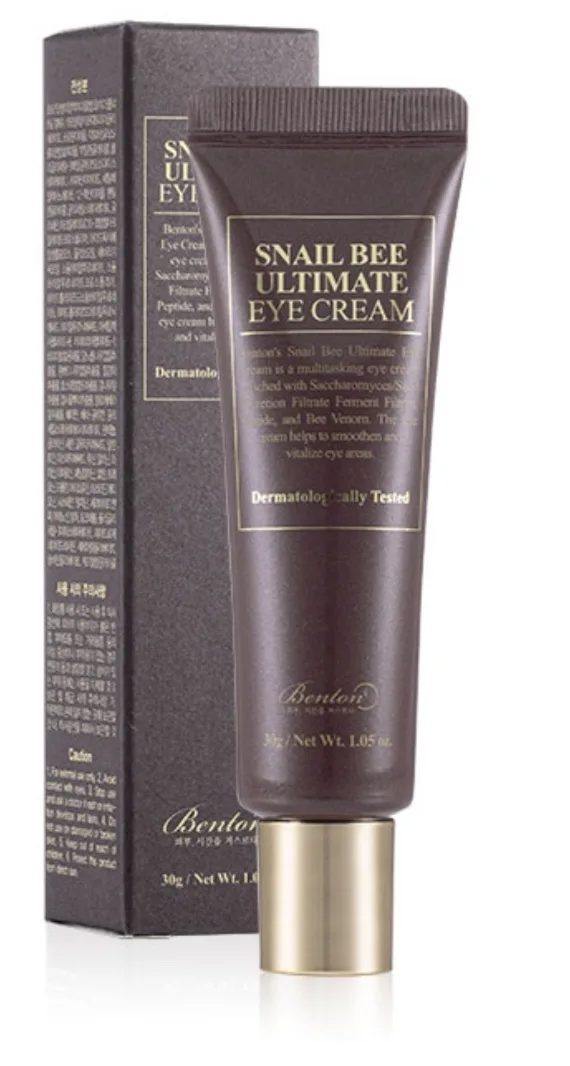
Snail Bee Ultimate Eye Cream
The Ultimate tier's orbital flagship stacks fermented mucin, two peptides, a collagen ferment, and eighteen amino acids into a twenty-seven-dollar eye cream Western peptide pricing would triple. It conditions crepe and civilizes concealer on the franchise's week-two schedule, restructures nothing as no cream does, and carries the venom exclusion that shadows every Snail Bee product — incremental over its cheaper sibling, generous against the category, honest where the label always is.
 Ultimate-Tier Sealing Flagship
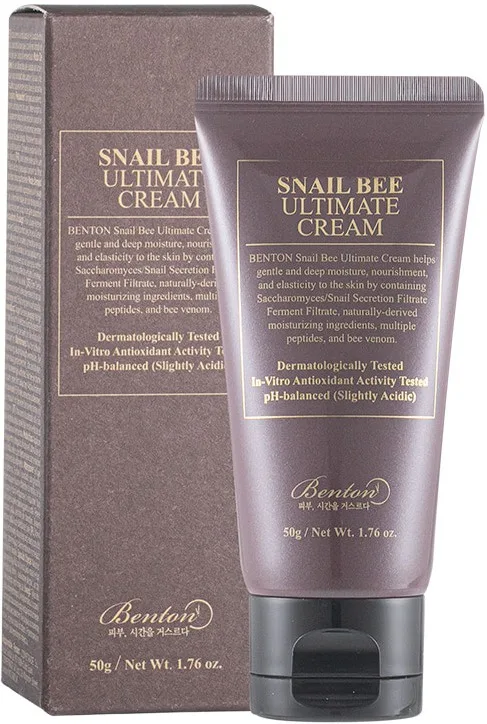
Snail Bee Ultimate Cream
The Ultimate tier's sealing flagship stacks fermented mucin, six peptides, and a real ceramide-squalane-polyglutamic barrier architecture into a twenty-six-dollar face cream Western peptide pricing would triple. It seals, conditions, and fades marks on the franchise's week-two schedule, runs its peptide firming as honest upside, and carries the venom exclusion that shadows every Snail Bee product — incremental over its siblings, generous against the category, and built on a floor that works before a peptide is counted.
 Peptide-Stacked Base Toner
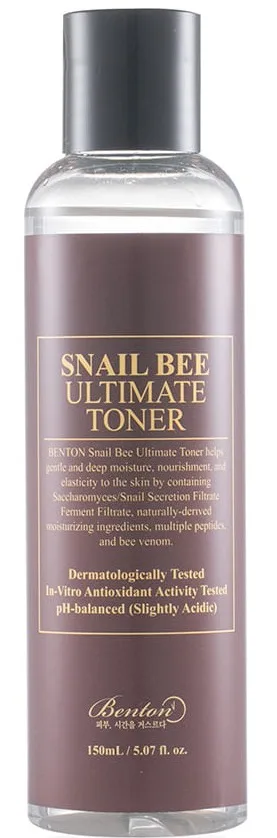
Snail Bee Ultimate Toner
A toner doing a serum's job: fermented mucin and six peptides at the routine's base step, over a seven-form HA roster and polyglutamic acid, for twenty-five dollars. It hydrates and brightens immediately on the verifiable floor, runs its peptide firming as base-step upside, and carries the venom exclusion that shadows every Snail Bee product — the franchise's most active-dense first layer, priced like the toner it's labeled rather than the essence it behaves as.
 EGF Peptide Ampoule
EGF Crystal 10 PPM Origin
A short, fragrance-free and oil-free ampoule that pairs EGF with a generous hyaluronic acid dose and three peptides at meaningful positions, leaving skin plump and smooth. It is gentle and well built; the thin evidence for topical EGF, bee venom for allergy-prone users and uncertain US pricing are the main caveats.
 Maximalist Indie Flagship
Snail Bee Ultimate Serum+
The founding indie's own classic, rebuilt with a budget: snail mucin fermented twice over at seventy percent, six peptides including GHK-Cu, anchored niacinamide, five supporting ferments — twenty-seven dollars for a deck Western peptide pricing would triple. The gains over the classic essence are incremental and honestly textural, the venom exclusion carries over, and the peptide vocabulary runs on faith-tier doses; the mucin-niacinamide floor, as ever, does the verifiable work on the franchise schedule.
 Gentle Low-pH Stack Cleanser
Snail Bee Ultimate pH-Balanced Cleansing
A genuinely gentle amino-acid low-pH cleanser — non-stripping, barrier-respecting, with a conditioning floor that survives the rinse — wearing the franchise's full fermented-mucin-and-six-peptide vocabulary at a step where most of it washes away. Twenty-two dollars buys a good cleanser and a decorative label; pay for the verifiable mildness, take the Ultimate actives as the bonus they functionally are, and skip it entirely if bee venom is your allergy.
 High-Volume Hydrogel Patch
Snail Bee Ultimate Hydrogel Eye Patch
Sixty hydrogel under-eye patches with real Ultimate-tier chemistry — snail filtrate, niacinamide, copper peptide — under carrageenan occlusion at under fifty cents a pair, an order of magnitude below prestige patches. The instant plump-and-brighten is real and hours-long, the gold-pearl-diamond powders are inert theater, and the essential-oil load under the eye is the format's worst aromatic site — value-forward with one real caution near a delicate zone.
 Snail Bee Cult Classic
Snail Bee High Content Mask Pack
The sheet-mask chapter of Benton's cult Snail Bee story — snail mucin and niacinamide do the real, reliable work of hydrating and evening tone, with a peptide-and-adenosine firming nod and the brand's signature bee venom along for the ride. Versatile and comfortable for combination and oily skin; just note the bee venom is an allergen and its 'natural Botox' billing is marketing, not science.
The full bee venom guide
" Its main peptide, melittin, mildly irritates skin to provoke a temporary plumping response and shows anti-inflammatory activity in lab work.
In most cosmetics it sits at trace levels, functioning more as a signature flourish than a workhorse ingredient.
How it's regulated in the US
FDA does not classify ingredients — it classifies products, by what they are sold to do. The same molecule can be a drug active in one product and a cosmetic ingredient in the next, and only the claim on the label decides which. What follows is a statement about that legal standing, not about whether it works — the evidence question is answered separately above.
Cosmetic Bee Venom is a cosmetic ingredient in the US: no OTC monograph covers it and it is not an active in any FDA-approved drug, so a product built around it is a cosmetic rather than a drug.
Most evidence is preclinical: cell cultures and mouse studies suggest melittin has anti-inflammatory, anti-microbial and collagen-supporting effects. Human topical data is thin, small, and often industry-funded. As an active in cosmetics it is promising in theory but unproven at the trace concentrations typically used, and it carries a real allergy risk.
How it works
Bee venom is a complex mix of peptides, enzymes and amines, dominated by melittin (roughly half its dry weight), a 26-amino-acid peptide that disrupts cell membranes. Applied to skin, this mild membrane irritation triggers localized micro-stimulation and increased blood flow, which can produce a transient firming, plumping look the marketing frames as a "natural botox" effect, though it does not relax muscles the way botulinum toxin does. In laboratory and animal models, melittin downregulates inflammatory signaling through the NF-kB and related pathways, reducing pro-inflammatory cytokines, and has shown antibacterial activity against Cutibacterium acnes and Staphylococcus species, which underpins its use in blemish-focused lines. Mouse studies report increased dermal collagen, hydroxyproline and hyaluronic acid after bee venom exposure, hinting at an anti-aging mechanism. Crucially, these effects are dose-dependent and demonstrated at concentrations far higher than the trace amounts in most toners and essences, where venom typically sits near the end of the ingredient list as a brand signature rather than a clinically meaningful dose.
Key benefits
- Lab-shown anti-inflammatory activity that may calm reactive, blemish-prone skin
- Antibacterial action against acne- and infection-related bacteria in vitro
- Mild micro-stimulation can give a temporary firmer, plumper appearance
- Animal studies link it to increased collagen and hyaluronic acid in skin
- Carries antioxidant components that may help counter oxidative stress
- Adds marketing appeal and novelty to K-beauty blemish and anti-aging lines
Concentration & usage
Effective topical concentrations are not established, and most commercial products do not disclose a percentage. In essences, toners and creams, bee venom usually appears low on the INCI list at trace levels, where its biological contribution is likely minimal. Higher-concentration serums and ampoules exist, but more venom also means more irritation and allergy risk, so patch testing matters more than chasing a high dose.
Who it's for & who should be cautious
Who it's for
Curious users with normal, resilient skin and no history of bee or insect sting allergy who want to experiment with a novelty firming or blemish-calming active. It suits people drawn to K-beauty formulations and willing to patch test, treating any visible benefit as a bonus rather than a guarantee.
Who should be cautious
Anyone with a known bee, wasp or insect-sting allergy must avoid bee venom entirely, as topical exposure can trigger reactions ranging from hives to, rarely, anaphylaxis. It is also unsuitable for very sensitive, eczema-prone or compromised skin, and pregnant or breastfeeding users should skip it given the absence of safety data. Discontinue at the first sign of swelling, itching or rash.
Pairs with & conflicts
Pairs well with: Niacinamide (Vitamin B3), Centella Asiatica (Cica), Hyaluronic Acid, Snail Mucin (Snail Secretion Filtrate), Panthenol (Pro-Vitamin B5)
Use with care alongside: Retinol, Benzoyl Peroxide
Myths & facts
Myth: Bee venom is a natural, needle-free alternative to Botox that freezes wrinkles.
Reality: It does not paralyze facial muscles. Any firming is a brief, mild stimulation-and-plumping effect from membrane irritation, not the muscle-relaxing action of botulinum toxin, and it fades quickly.
Myth: Because it is natural, bee venom is gentle and safe for everyone.
Reality: Bee venom is a genuine allergen. People allergic to stings can react severely to topical products, so it is one of the few cosmetic ingredients carrying an absolute exclusion for an entire group of users.
Frequently asked questions
Does bee venom skincare actually firm or lift the skin?
It can create a short-lived plumping appearance by mildly irritating the skin and boosting local circulation. This is cosmetic and temporary, not a structural lift, and the trace amounts in most products limit even that effect.
Is bee venom safe if I'm allergic to bee stings?
No. If you are allergic to bee or insect stings, you should avoid bee venom skincare completely. Topical exposure can trigger allergic reactions, and in rare cases serious ones, so this is a hard exclusion regardless of concentration.
Are bees harmed to make bee venom skincare?
Modern venom collection typically uses a gentle electrical pad that prompts bees to deposit venom without dying, unlike a defensive sting. That said, sourcing practices vary by supplier, so ethically minded buyers should check a brand's claims.
Can I use bee venom every day?
If your skin tolerates it and you have no sting allergy, daily use of a low-concentration product is generally fine. Start a few times a week, watch for redness or itching, and scale back if your skin feels irritated.
Does bee venom help with acne?
Lab studies show melittin has antibacterial and anti-inflammatory activity relevant to acne, but human topical evidence is limited and most products use only trace amounts. Treat any clearing effect as a possible bonus, not a reliable acne treatment.