'Prevention' Is Doing Heavy Lifting in the Prejuvenation Pitch
Two interventions genuinely prevent skin ageing, with randomised evidence behind them. Neither is the one being sold to twenty-five-year-olds — and one half of the prejuvenation pitch has no mechanism at all.
Read the preview
From the DermApproved blog, in Industry and Trends: prejuvenation. Buying injectables in your twenties to prevent lines you don't have yet. One half has a plausible mechanism and almost no evidence — the best study is one pair of twins. The other half has no mechanism. And the things that do prevent ageing cost almost nothing. For the full breakdown, visit dermapproved.com/blog.
The pitch, in its own words
Prejuvenation is the industry's term, and it is a good one — it does exactly what a coined word should, which is make an unfamiliar purchase sound like an obvious extension of a familiar one.
The argument runs: lines start as dynamic creases that appear only on movement, and become static creases etched into the skin at rest. Intervene before the etching and you prevent the permanent version. Start at twenty-five rather than forty-five and you will need less, later. Treating early is cheaper than correcting late.
The first thing to notice is that the underlying principle is entirely correct. Prevention genuinely does beat correction in skin — that is one of the least controversial statements in dermatology, and the reason photoprotection is the profession's most consistent piece of advice.
The second thing to notice is what the principle has been attached to. It has been attached to the two highest-margin items in an aesthetic clinic, and not to the two interventions the prevention evidence actually supports. That is the whole story, and the rest of this article is the receipts.
What follows is not an argument that anyone in their twenties should not buy injectables. It is an argument that the prevention framing is being asked to carry weight it cannot bear, and that a person deciding should know which parts of the pitch have evidence behind them and which are inference.
The honest half: early neuromodulators
Give the pitch its strongest case first, because it has one.
The mechanism is specific and plausible. A dynamic line becomes a static one through repeated mechanical folding of the dermis over years — the same reason a folded sheet of paper eventually holds a crease. Reduce the frequency and force of folding and it is entirely reasonable to expect the etching to develop more slowly. There is no biological objection to that reasoning.
The evidence is where it thins, and the specifics deserve to be stated because they are almost never given.
The most-cited support is a 2006 paper in Archives of Facial Plastic Surgery comparing identical twin sisters. One had received botulinum toxin in the forehead and glabella roughly two to three times a year for thirteen years, plus crow's feet treatment twice in the preceding two years; her twin had been treated only twice, in the forehead and glabella, three and seven years earlier. Imprinted forehead and glabellar lines were not evident in the regularly treated twin and were evident in the minimally treated one.
That is a genuinely interesting observation and an elegant natural experiment — using identical twins controls for genetics, which no ordinary study design can do.
It is also a case report. One pair. Unblinded, retrospective, no randomisation, no control over thirteen years of two separate lives — different sun exposure, different smoking, different sleep, different weight change, different everything except the genome. Nobody has run the randomised trial, and the reason is unglamorous rather than sinister: it would require randomising young people to years of injections or placebo, which is expensive, slow, and commercially unnecessary when the product already sells.
So the honest verdict on early neuromodulators is: plausible mechanism, coherent reasoning, and an evidence base consisting of one pair of twins. That is a legitimate thing to act on. It is not what most people think they are being told.
The half with no mechanism: preventative filler
The other component of the prejuvenation package does not survive its own logic, and it is worth being blunt because nobody selling it will be.
Dermal filler replaces volume. That is what it does — it occupies space in a compartment where tissue has been lost, restoring contour. It is an excellent tool for that job.
A twenty-five-year-old with a full mid-face has no volume deficit. There is nothing to replace. So the question 'what is being prevented?' has no available answer, and the ones offered in practice do not hold up. 'Supporting the structure so it doesn't descend later' has no proposed mechanism and no supporting evidence; there is no reason to think a gel placed in a compartment now alters how the underlying fat pads and ligaments behave in twenty years. 'Training the tissue' is not a thing that tissue does.
What filler in a twenty-five-year-old does do is change how they look now, which — to be clear — is a completely legitimate reason to buy it. It just is not prevention, and calling it prevention is the part worth objecting to.
There is also a cumulative argument that runs the other way. Imaging work has found hyaluronic acid filler persisting for years rather than months, with repeated deposition into the same compartments producing layering. Someone starting at twenty-five and topping up on a schedule set by appearance rather than by residual volume arrives at forty-five having accumulated considerably more product than they think. Starting earlier is not a neutral choice with respect to that.
So the two halves of the prejuvenation package are not equally supported. One has a plausible mechanism and thin evidence. The other has no mechanism, which is a different category of problem entirely.
The evidence gradient, laid out side by side
Here is what makes this frustrating rather than merely uncertain. Two interventions genuinely prevent skin ageing, with the kind of evidence the injectables do not have — and both are boring, cheap and available without an appointment.
Daily sunscreen. A randomised trial in Nambour, Australia, followed 903 adults under 55 for four and a half years, randomising them to daily sunscreen use or discretionary use. The daily group showed no detectable increase in skin ageing over the study period, and around 24% less ageing than the discretionary group. Randomised. Controlled. Years long. Published in Annals of Internal Medicine.
Topical retinoids. The foundational study, published in JAMA in 1988, used a double-blind vehicle-controlled split-forearm design in which each participant served as their own control; all thirty who completed showed significant improvement on the tretinoin-treated forearm and not the vehicle-treated one. A 2025 systematic review and meta-analysis pooled eight randomised controlled trials covering 1,361 patients and found significant improvement in fine wrinkles and coarse wrinkles against vehicle — alongside a roughly threefold increase in adverse events, almost entirely cutaneous irritation, which is the honest cost.
Early neuromodulators. One case report. One pair of twins.
Preventative filler. No mechanism, no evidence.
Now the cost axis, which sharpens it. A year of daily sunscreen and a retinoid is a small fraction of the annual cost of quarterly neuromodulator treatment, and a very small fraction of that plus filler. The interventions with the best prevention evidence are the cheapest ones, and they are the ones nobody is running a marketing campaign for — because a bottle of sunscreen does not require a clinic, a membership, or a return visit.
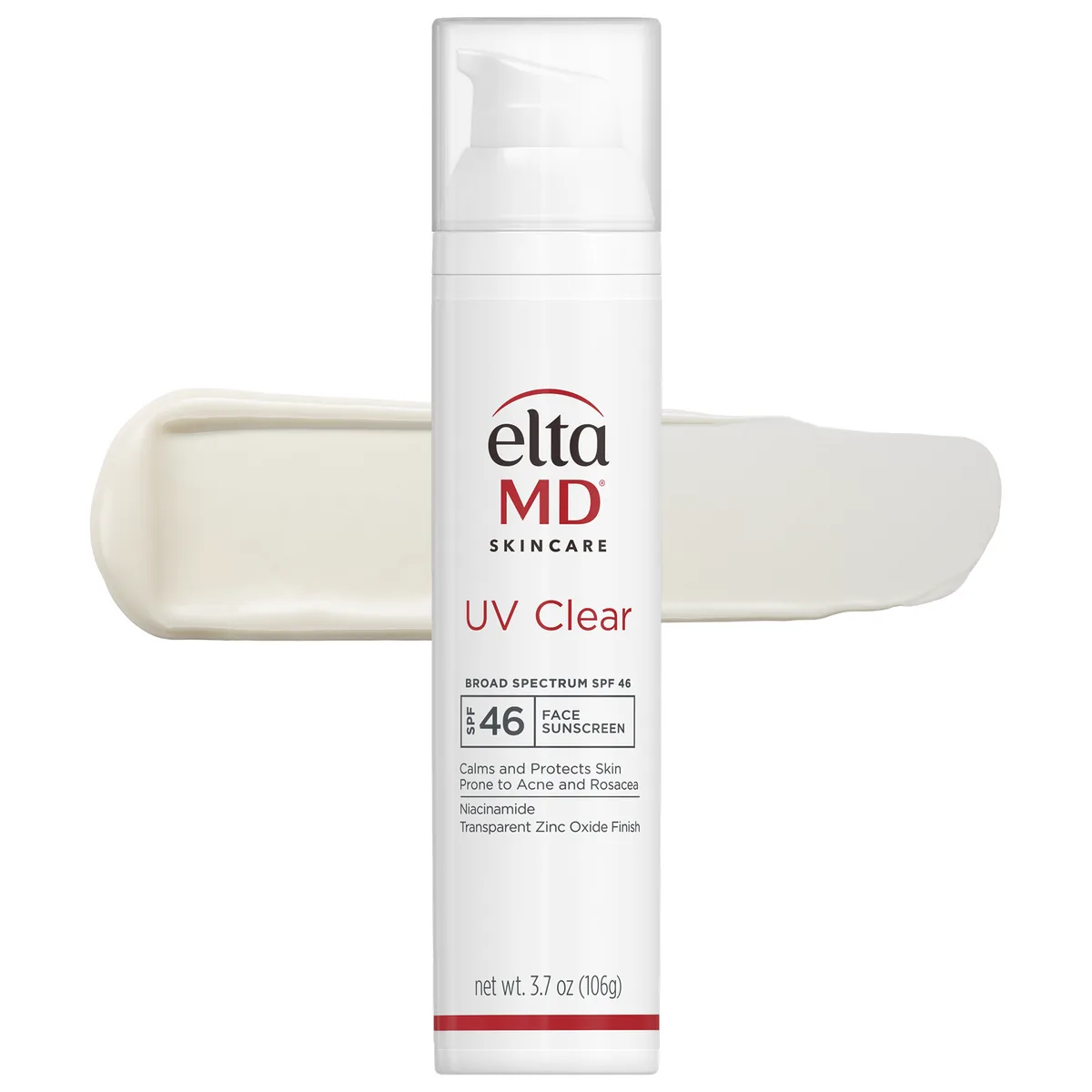
A daily sunscreen you will genuinely wear is the first half. EltaMD UV Clear and Supergoop! Unseen Sunscreen are both textures people tend to keep using, which is the only property that matters here.
A retinoid is the second half, introduced slowly. Differin Adapalene Gel and The Ordinary Granactive Retinoid Emulsion are reasonable places to begin; The Ordinary Retinal Emulsion and CeraVe Resurfacing Retinol Serum are steps up once tolerance is established. That pairing is the entire evidence-backed prevention protocol. Our retinoid ladder tool sequences the introduction so tolerance is built rather than blown, and the sun safety guidance covers the half of photoprotection that is not a bottle.
Respecting why people actually buy it
The lecture version of this article would stop at the gradient and imply that anyone buying preventative injectables has been fooled. That is both condescending and, mostly, wrong.
Most people in their twenties buying neuromodulators are not confused about the evidence. They want their forehead smooth now. They can afford it, they like the result, and looking the way you want to look is a legitimate thing to spend money on — no more in need of a medical justification than a haircut or a gym membership.
That purchase is fine, and it does not require the prevention story at all.
The objection is to the pitch, not the purchase, and it is specific. Framing a present-tense aesthetic choice as a long-term investment does two things. It converts a discretionary spend into something that feels like an obligation you are neglecting if you skip it — the same rhetorical move that sells extended warranties. And it recruits people who would have declined 'this will soften your forehead for about four months' but accept 'this will mean you need less work later', which is a claim resting on one pair of twins.
There is a related cost that is easy to miss. Starting quarterly injections at twenty-five is a forty-year commitment if the reasoning is prevention, because the logic never delivers a stopping point. That is a very different financial and medical proposition from an occasional cosmetic treatment, and it is worth deciding which one you are entering.
A framework that fits on one hand
Four questions, in order, for anyone under thirty weighing this.
Is the concern present or predicted? A line you can see at rest is a present concern and treating it is straightforward. A line you expect to develop is a prediction, and the case for treating a prediction rests entirely on the evidence gradient above. Both are valid reasons to spend money; they are not equally supported reasons.
Is it reversible? A neuromodulator wears off in months. Hyaluronic acid filler is mostly dissolvable, though less completely and less quickly than commonly assumed. A biostimulator is not reversible at all. Reversibility matters more the younger you are, because your taste at thirty-five will not be your taste at twenty-five, and the aesthetic that is fashionable now will not be.
What does this cost across ten years, not per session? Multiply the session price by the annual frequency by ten. That is the number the decision should be made against, and it is not the number anyone quotes you.
Would you still want it if the prevention claim were false? This is the question that does the work. If the answer is yes — you like how you look with it, now, and the future is not why you are buying — then buy it as a cosmetic treatment with clear eyes and no guilt. If the prevention claim is the thing persuading you, then the gradient says your money buys more prevention as a sunscreen and a retinoid than as a syringe, by a margin that is not close.
Our routine finder will build the boring version around whatever your actual skin is doing, and if you are wondering whether it is worth buying sunscreen in bulk when it goes on sale, we have an answer on that too — which is, in its own small way, a better use of a prevention budget than most of what this article has been about.
Products mentioned
Independently reviewed and scored — the real products behind this piece.


- Routine Beginner Anti-Aging Routine The evidence-backed version of prevention, built for someone starting out
- Ingredient Retinol The intervention with eight randomised trials behind it
- Ingredient Tretinoin (All-Trans Retinoic Acid) The prescription version the foundational photoaging evidence used
- Ingredient Zinc Oxide One filter route for the daily photoprotection half
- Question Is stockpiling sunscreen during sales actually economical? A better use of a prevention budget than most of what this article covers
References
- Sunscreen and prevention of skin aging: a randomized trial — Annals of Internal Medicine, 2013
- Topical tretinoin improves photoaged skin. A double-blind vehicle-controlled study — JAMA, 1988
- Tretinoin for Photodamaged Facial Skin: Systematic Review and Meta-Analysis of Randomized Controlled Trials — Dermatology Practical & Conceptual, 2025
- Long-term effects of botulinum toxin type A (Botox) on facial lines: a comparison in identical twins — Archives of Facial Plastic Surgery, 2006
Every cited link is verified to resolve to the paper named. Where a source could not be independently confirmed, it is listed without a link rather than pointing you somewhere wrong.
Frequently asked
Does preventative Botox actually work?
The mechanism is plausible — repeated folding is how a dynamic line becomes a static one, so folding less should etch more slowly. The evidence is one case report comparing a pair of identical twins over thirteen years, unblinded and retrospective. That is the best available support, and nobody has run the randomised trial. Act on it if you like, but know what it is.
Is preventative filler a thing?
Not on any coherent logic. Filler replaces lost volume, and someone in their twenties has none to replace. The offered justifications — supporting the structure, training the tissue — have no mechanism and no evidence. Filler at twenty-five changes how you look now, which is a fine reason to buy it; it is not prevention.
What actually prevents skin ageing?
Two things, with randomised evidence. Daily sunscreen: a trial of 903 adults found the daily-use group showed no detectable increase in skin ageing over 4.5 years, around 24% less than discretionary users. And retinoids: a 2025 meta-analysis of eight randomised trials in 1,361 patients found significant improvement in fine and coarse wrinkles, with irritation as the trade.
Is it wrong to get injectables in my twenties?
No. Wanting to look a certain way now is a legitimate reason to spend money and needs no medical justification. The objection is to the framing: calling a present-tense cosmetic choice a long-term investment converts a discretionary purchase into something that feels obligatory, and recruits people on a claim that rests on one pair of twins.
How do I decide?
Ask whether the concern is present or predicted, whether the treatment is reversible, what it costs across ten years rather than per session, and — the decisive one — whether you would still want it if the prevention claim were false. If yes, buy it as a cosmetic treatment without guilt. If the prevention story is what persuades you, the evidence points at a sunscreen and a retinoid instead.