There Are More Medspas Than Ever, and Fewer Rules Than You Think
The rules exist. They are just different in every state, unevenly enforced, and invisible from the pavement — which is why the excellent clinic and the volume shop can charge the same price.
Read the preview
From the DermApproved blog, in Industry and Trends: the medspa boom. Thousands of clinics, growing faster than regulators kept up with. The rules exist — they're just different in every state, and a trade association needs a hundred questions to describe them. Which is why the excellent clinic and the volume shop look identical from the pavement. For the full breakdown, visit dermapproved.com/blog.
The numbers, and how much to trust them
The American Med Spa Association, the sector's trade body, reports the industry passing seventeen billion dollars in annual revenue and growing by more than a billion dollars a year. Its State of the Industry work puts the number of US medical spas above eleven thousand, employing over a hundred thousand people, having added more than four billion dollars in revenue and upwards of thirty thousand jobs across three years.
A caution before those figures do any work. Market-size estimates in this sector vary substantially between research firms — published projections for the same market disagree by tens of billions depending on what gets counted as a medical spa — and AmSpa is a trade association with an interest in a growing industry. Treat the direction as reliable and the precise magnitude as approximate.
The direction is not in dispute. There are thousands of clinics offering prescription-only injectables and medical-grade energy devices, in strip malls and shopping centres, opening faster than any professional or regulatory body has established a common standard for. That is the fact everything else in this article follows from.
And it is worth saying plainly at the top: this is not an argument that medical spas are bad. Many are excellent, staffed by experienced injectors with genuine clinical oversight, and they made aesthetic medicine accessible to people who would never have walked into a dermatology practice. The problem is not that the sector exists. It is that it grew faster than the signals a consumer could use to tell one clinic from another.
What is actually driving it
Three forces, and understanding them explains most of the behaviour you encounter as a customer.
Injectable unit economics. A neuromodulator treatment takes fifteen minutes of chair time and consumes a fraction of a vial. A syringe of filler is a single-visit product with a high gross margin. Compared with almost anything else in healthcare-adjacent retail — where reimbursement is negotiated, procedures are long, and margins are thin — the economics are extraordinary. Capital notices economics like that.
Franchising and MSO structures. Many states bar non-physicians from owning a medical practice under the corporate practice of medicine doctrine. California is the strict example: only physicians may own or control a medical practice, and a nurse practitioner cannot serve as a med spa's medical director. The industry's standard workaround is the management services organisation — a non-clinical company owns the business assets and handles marketing, staffing, leases and finance, while a physician owns the professional entity that delivers care, connected by a services agreement. Tennessee explicitly permits non-physician ownership through an MSO provided a physician maintains clinical oversight. This structure is legal, ubiquitous and not inherently sinister. It is also precisely the mechanism through which non-clinical capital sits upstream of clinical decisions.
Demand normalisation. Injectables stopped being a secret somewhere around the point they became content. The stigma that once suppressed demand has largely gone, and a treatment people discuss openly is a treatment they buy repeatedly.
None of these is a scandal. Together they produce an industry expanding on volume, with a franchise-shaped incentive to standardise the business and no comparable pressure to standardise the medicine.
The patchwork, in the trade body's own accounting
There is a common misconception that medspas are unregulated. They are not. In every state where injectable treatments or energy-based devices are used, a licensed physician must supervise the practice — as medical director or through a collaborative or supervisory agreement. That is the floor everywhere.
Almost everything above the floor differs.
Whether the supervising physician must be physically present. What constitutes an adequate good faith examination before treatment, and whether it may be conducted remotely. Which of a long list of procedures may be delegated to which professional title — AmSpa's own delegation reference covers twenty-one procedures across six professional titles, and the answers change at state lines. Whether nurse practitioners have full practice authority: Arizona grants it, allowing NPs to evaluate, diagnose, prescribe and own their own practice without a collaborative agreement, while California restricts ownership under its corporate practice doctrine even as it has loosened supervision requirements in designated settings.
The most telling statistic in this whole article is not a revenue figure. It is that AmSpa's state-by-state legal resource answers 103 distinct legal questions across 50 states, sold at tiers because the full set is that large.
A landscape requiring a hundred and three questions to describe is not one a consumer can navigate by intuition. It is also not one an operator can drift through by accident — which means variation between clinics in the same state is a choice about how close to the line to work, and variation between states is a fact about where you happen to live.
What rapid growth does to quality variance
Here is the structural consequence, and it is the reason this piece exists.
Fast expansion in a fragmented market with no common credential does not lower the average standard so much as it widens the spread. Excellent clinics get better — experienced injectors doing high volumes in a specific technique are genuinely superior to occasional practitioners. And the bottom of the distribution extends downward, because the barriers to opening are commercial rather than clinical.
The result is two clinics in the same shopping centre, at similar prices, with similar interiors and similar photography, where one is physician-led with an on-site medical director and a full complication protocol, and the other has a medical director who signs off remotely and an injector three months into practice. Nothing visible distinguishes them. There is no rating body, no mandatory disclosure of who is actually supervising, and no requirement to tell you how many procedures the person holding the syringe has performed.
The tail of that distribution is documented. In 2024 the CDC and FDA investigated adverse effects in 22 people across 11 states following botulinum toxin injections that were either counterfeit or administered in non-healthcare settings by unlicensed or untrained individuals. Symptoms included blurred or double vision, difficulty swallowing, weakness and shortness of breath. Eleven people were hospitalised, some were treated with botulism antitoxin, and all but two of the injections had been given for cosmetic purposes. The FDA has separately issued warnings to online sellers marketing unapproved botulinum toxin products.
Proportion matters and this is the tail, not the typical experience — millions of treatments happen uneventfully. But it is a tail that exists because two things have gaps at once: the supply chain the product arrives through, and the standard the person injecting it is held to.
Price wars: what a discount tells you about the upstream
This is the most practically useful piece of reasoning in the article, and it takes one paragraph of arithmetic.
The cost of the product is close to fixed. Manufacturers sell to clinics within a fairly narrow band, and there is no volume discount large enough to explain a treatment priced far below the market. So when a clinic advertises injectables at a price materially under everyone else, the difference has to come from somewhere, and there are only a handful of places it can come from.
A cheaper product — which may mean a non-US-sourced or unapproved one. Over-dilution, so a stated number of units is delivered in more saline than intended and does less. A less qualified or less experienced injector, whose time costs the business less. Less chair time per patient, which shows up as a rushed assessment. Or a genuine loss-leader, priced below cost to convert you into a package or a membership.
The last of those is ordinary retail and entirely fine. The first two are the reasons the CDC investigation happened. And the crucial point is that you cannot tell which from the outside — the price is identical in all five cases.
So the correct reading of an unusually cheap injectable is not 'bargain'. It is 'this is information about how the business is structured, and I do not yet know which structure it is.' That is a prompt to ask questions, not a reason to walk out.
The vetting burden is yours now — the six questions that carry it
Since no regulator, rating body or credential does this for you, it falls to a short list of questions asked before you book. A good clinic answers all six without friction, and the friction itself is the signal.
Who will actually inject me, what licence do they hold, and how many of this specific procedure do they perform in a typical week? Volume in the specific technique is the strongest available proxy for skill.
Who is the medical director, and are they on site today? Remote supervision is legal in many states. It is still worth knowing which arrangement you are in.
Will a licensed provider perform a good faith examination before treatment, and will it be in person? This is a legal requirement whose interpretation varies enormously.
Where is the product sourced, and will the vial be opened in front of me? After 2024, this is not a rude question.
What is your protocol for a vascular occlusion, and do you stock hyaluronidase on site? For filler specifically, this is the single highest-yield question anyone can ask, because occlusion is time-critical and the enzyme is the treatment.
What happens if I have a complication at nine o'clock on a Saturday night? A clinic with a real answer has thought about the worst version of its own service.
Our derm visit prep tool assembles this list along with the condition-specific questions worth adding.
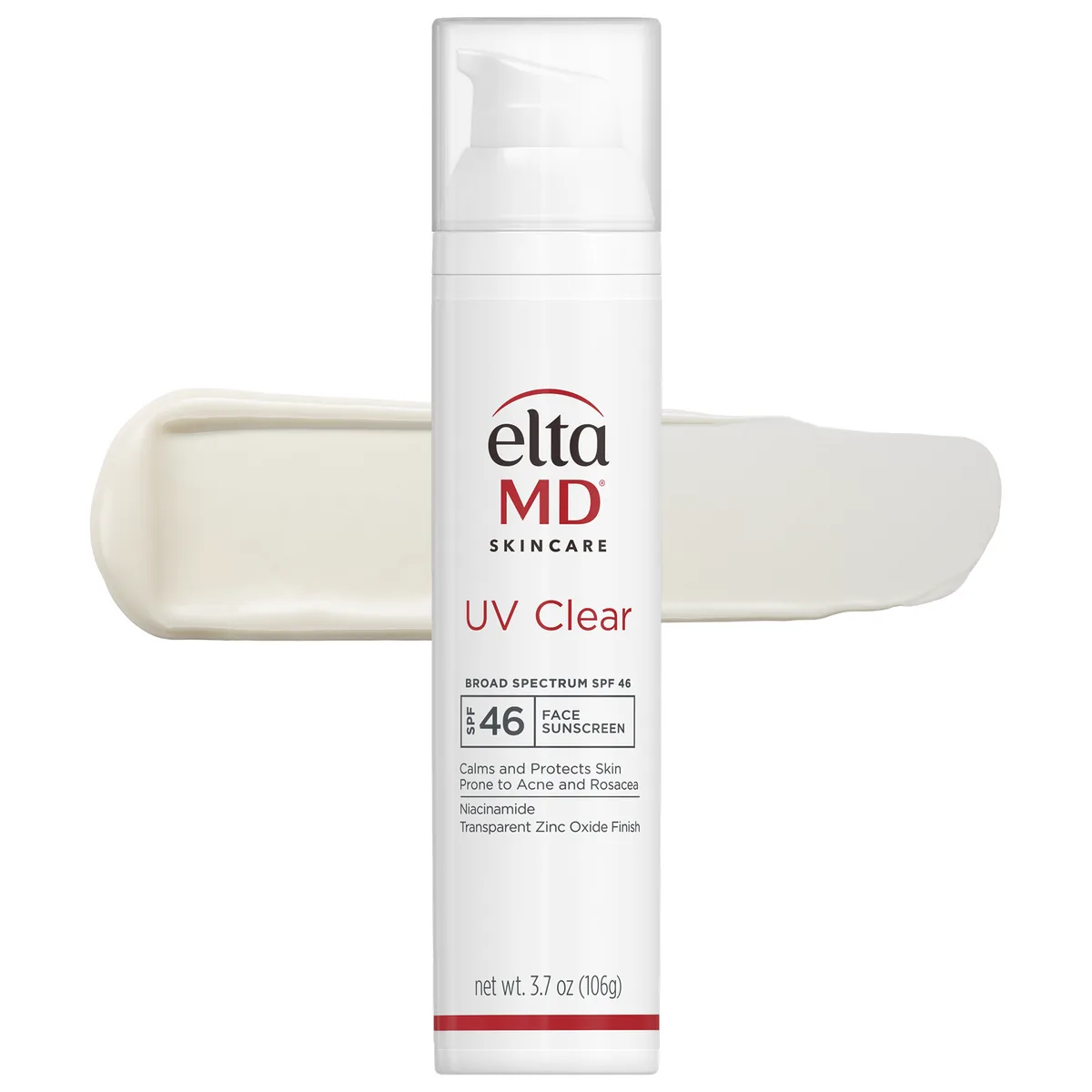
And a closing note that the industry has no incentive to make. For a large share of entry-level concerns — early texture change, dullness, mild pigment, the first fine lines — the marginal benefit of a procedure over a consistent home routine is considerably smaller than the marketing implies, and the routine is reversible, cheap and does not depend on who is holding a syringe. A retinoid such as The Ordinary Retinal 0.2% Emulsion or Naturium Retinaldehyde Cream Serum 0.05%, daily photoprotection like EltaMD UV Clear Broad-Spectrum SPF 46, and a hydrating layer — CeraVe Hydrating Hyaluronic Acid Serum, The INKEY List Hyaluronic Acid Serum or Good Molecules Hyaluronic Acid Serum — is the unglamorous baseline that makes any procedure you do later work better, and occasionally makes it unnecessary. The retinol page covers the timescale honestly, which is slower than a syringe and considerably more forgiving.
Products mentioned
Independently reviewed and scored — the real products behind this piece.




Frequently asked
Are medspas regulated at all?
Yes, but unevenly. Every state requires physician supervision for injectables and energy devices, as a medical director or through a collaborative agreement. What varies is whether that physician must be on site, what a good faith exam requires, which procedures may be delegated to which professional title, and who may own the business. The trade association's own state reference covers 103 legal questions across 50 states.
Why can a nurse own a medspa in one state and not another?
The corporate practice of medicine doctrine. California restricts ownership of a medical practice to physicians and does not allow a nurse practitioner to serve as medical director; Arizona grants nurse practitioners full practice authority including practice ownership; Tennessee permits non-physician ownership through a management services organisation with physician clinical oversight. Same procedure, three different legal structures.
Is cheap Botox a red flag?
It is information rather than a verdict. Product cost is close to fixed, so a price well below market has to come from somewhere: a cheaper or non-US-sourced product, over-dilution, a less experienced injector, less chair time, or a deliberate loss-leader. The last is ordinary retail; the first two are how people get hurt. You cannot tell which from the price.
How common are serious problems?
Rare relative to volume, and documented. In 2024 the CDC and FDA investigated 22 people across 11 states with adverse effects after counterfeit botulinum toxin or injections given in non-healthcare settings by unlicensed or untrained individuals, with 11 hospitalised. That is the tail of the distribution, not the typical experience — but it is a tail produced by gaps in both the supply chain and the operator standard.
What should I ask before booking?
Six things: who will inject me and how many of this procedure do they do weekly; who is the medical director and are they on site; will a licensed provider do a good faith exam in person; where is the product sourced and will the vial be opened in front of me; what is your vascular occlusion protocol and do you stock hyaluronidase; and what happens if I have a complication on a Saturday night. Friction in answering is the signal.