Your Routine Stops at the Jaw. Your Sun Exposure Never Did.
Extending a retinoid to the neck, chest and hands is worth doing — but the strength and frequency that suit your face will not survive the trip, and one of the best chest trials found the vehicle nearly kept up.
Read the preview
From the DermApproved blog, in Body Care: your routine stops at the jaw; your sun exposure never did. A retinoid on the neck works — at your face's strength, it also peels. The trial that should humble everyone is on the chest, where the plain moisturiser nearly kept up with the drug. There's a reason that matters. For the full breakdown, visit dermapproved.com/blog.
The most famous photograph in dermatology is a man's left cheek
A delivery driver spent 28 years with one side of his face beside a window. The case published in the New England Journal of Medicine in 2012 shows the result with a clarity no clinical trial can match: the left side of his face thickened, furrowed and coarsened; the right side, shielded by the cab, looked ordinary for his age. Window glass filters most UVB and lets UVA through, and UVA is the part that reaches the dermis and destroys elastic tissue over decades.
The photograph is usually deployed as a sunscreen argument. It is also a map of everywhere your routine stops. The skin along that driver's jaw got the same dose as the skin above it. So did his neck, his forearm on the door, and the backs of both hands on the wheel — the three areas where people first notice they look older than they feel, and the last three anyone treats.
The fix is not exotic. Retinoids are the most thoroughly documented topical intervention for photodamage there is, and nothing about their mechanism is face-specific. What is face-specific is the dose. Take the tube from your bathroom shelf, apply it below the chin at the same strength and frequency, and you will spend a fortnight peeling — then quit, and conclude the neck cannot tolerate retinoids. It can. It just cannot tolerate yours.
Three regions, three different pieces of skin
The neck and upper chest are sparsely supplied with pilosebaceous units compared with the face. Less sebum means less of the lipid film that blunts an irritant, and fewer follicles means a different penetration route for the drug. The skin is also thinner over a structure that hinges, swallows and turns thousands of times a day, and it spends much of that time under a collar. Irritation that would settle on a cheek gets mechanically aggravated on a neck.
Hands are the mirror image. Stratum corneum at the extremities has been measured at roughly 12.7 µm against 7.7 µm on the abdomen — a small in vivo study, but consistent with what anyone can feel — and hands are washed, wiped and degreased repeatedly through the day. Product applied at eight in the evening is largely gone by the time it has had a chance to work, which is why hand treatment fails for reasons that have nothing to do with the formula.
The chest sits between the two and adds a wrinkle of its own: sleep. Vertical creasing between the breasts is compression damage from side-sleeping laid over sun damage, and no topical addresses the compression half. Being honest about that split matters, because a product judged against a result it cannot deliver gets abandoned before it delivers the result it can.
One practical consequence of all this: treat the jawline as a place to feather, not a border. The untreated strip beneath the chin is conspicuous precisely because it is the boundary between a treated and an untreated field, and it is entirely self-inflicted.
Lower the strength, lower the frequency, raise the quantity
The instinct when extending a routine is to keep the same product and simply cover more ground. Invert that. Below the chin the sensible starting point is a lower-strength retinol two nights a week, applied over a moisturiser rather than under one, with a fortnight at each step before anything increases. A formulation such as The Ordinary Retinol 0.2% in Squalane exists exactly for this kind of cautious beginning, and a body-scaled treatment like Paula's Choice RESIST Retinol Skin-Smoothing Body Treatment or the drugstore-priced Gold Bond Age Renew Retinol Overnight Body & Face Lotion solves the other half of the problem, which is volume. Facial retinoids are sold in quantities that make nightly neck-and-chest use financially silly.
Quantity is the step people get wrong in both directions — too little to work on the chest, too much for the neck to tolerate. The Fingertip Unit Calculator is the least glamorous tool on this site and the most useful here, because "neck and upper chest" is a defined area with a defined dose, not a vague smear. The Retinoid Ramp handles the other axis: which frequency, for how long, before you are allowed to increase.
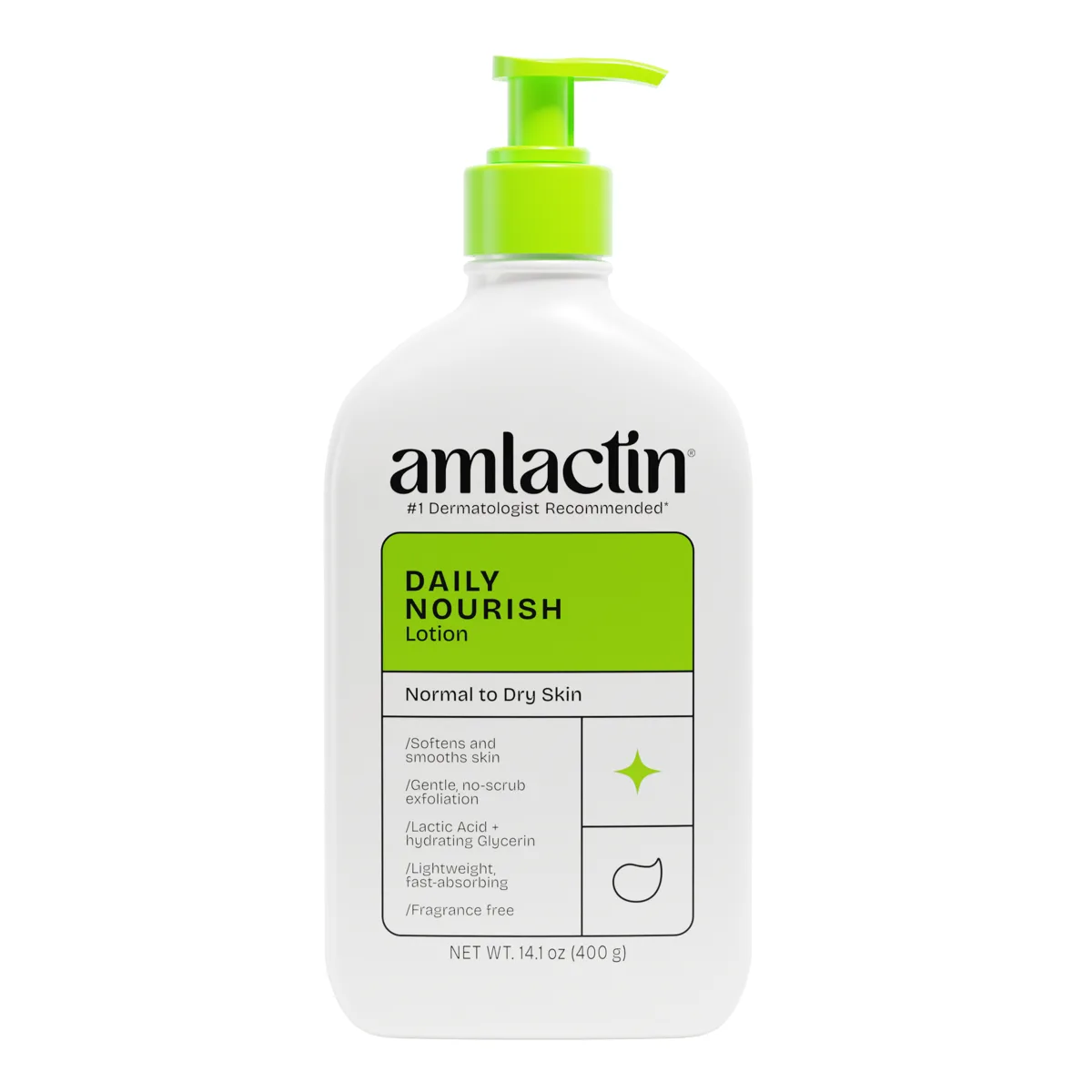
Buffering is legitimate, not a compromise. Applying Aveeno Daily Moisturizing Lotion first and the retinoid over the top slows delivery, and slowed delivery is precisely what a low-sebum region needs. If retinoids remain intolerable after a genuine ramp, an alpha hydroxy acid lotion such as AmLactin Daily Moisturizing Lotion does real work on texture and roughness through a different mechanism, and there is no prize for insisting on the more prestigious active.
One rule has no exceptions: below the chin, retinoids are for evenings, and daytime is for protection. Read the full retinol brief if you want the pharmacology behind the ramp rather than just the schedule.
The chest trial that should make everyone more modest
Here is the study you will not find quoted in a body-retinoid marketing deck. A prospective, randomized, double-blind, vehicle-controlled trial put micronized tretinoin 0.05% lotion up against its own vehicle for chest rejuvenation. Twenty-nine patients completed it, average age in the mid-fifties. At day 180, blinded evaluators scored both groups — active and vehicle — as improving by roughly 30–40%.
That result deserves care rather than dismissal. It was small, it was not powered to detect a modest difference between arms, and the vehicle was not inert: a polymer emulsion carrying sodium hyaluronate, soluble collagen and glycerin is a serious moisturiser, applied twice daily for six months by people who had signed up for a skin study and were presumably not sunbathing.
But that is the finding, and it is more useful than a clean win would have been. On the chest, sustained hydration plus behaviour change accounts for a large share of what people credit to the active. The retinoid's contribution is real and mechanistic — epidermal turnover, matrix metalloproteinase inhibition, new collagen, dispersal of melanin granules — and it is stacked on top of a base that is doing most of the visible early work.
The practical conclusion is not "skip the retinoid." It is that on the chest, tolerability beats potency by a wide margin, because the moisturising half of the regimen is carrying real weight and irritation costs you both halves at once. A gentle version used consistently for a year outperforms an aggressive one abandoned in week three, and that is not a consolation prize — it is what the data actually supports.
Hands: the earliest damage, the latest treatment, the best response
Hands make the strongest case of the three, because the outcome they respond to best is the one people mind most. In a 40-week vehicle-controlled trial of 0.1% tretinoin applied to face and hands, hyperpigmented lesions were lighter or much lighter in 90% of treated patients against 33% on vehicle, and biopsies showed a 41% reduction in epidermal pigmentation where the vehicle group had drifted 37% in the wrong direction. Solar lentigines are not permanent furniture. They are the most treatable feature on the back of your hand.
The wider photoaging evidence runs the same way. The 1988 JAMA study that started the field had every participant treat one forearm and use vehicle on the other for 16 weeks; all 30 completers improved on the retinoid side and none on the control side, with histological changes to match. A later randomized trial in women over 60 compared tretinoin cream three nights a week against a periodic tretinoin peel on the forearms and found photoaging scores down about 20% and actinic keratosis counts down about 60%, with no meaningful difference between the two approaches.
That actinic keratosis figure quietly reframes the whole exercise. Treating the backs of your hands is not vanity maintenance on an area nobody looks at; it is work on a field that produces genuine precancerous lesions, and the same regimen addresses both. Anything that reads as suspicious, changes, bleeds or refuses to heal belongs with a clinician, not a night cream.
The practical obstacle remains washing. Retinoid at night, immediately after the last wash of the day, is the only version that survives contact with real life — and daytime protection has to come in a format you will reapply, which is the entire argument for a dedicated product like Ducray Melascreen Anti-Spots Hand Cream SPF 50+ sitting where you actually dry your hands.
What improves, in what order, and what never will
Set expectations by mechanism and the sequence becomes predictable. Pigment moves first, because dispersing melanin granules and accelerating turnover are fast processes — though "fast" in the trials still means months, and the hand study ran a full 40 weeks before its final assessment. Roughness and texture follow. Fine crepiness, which is dermal collagen, is slowest and most partial, and the trials that measured it honestly reported percentage improvements in scores, not restoration.
Laxity is the one to be blunt about. Loose skin under the jaw is fascia, fat and muscle as much as it is dermis, and no topical retinoid addresses it. Anyone promising a jawline from a jar is selling you a mechanism that does not exist. If that is the concern, the honest answer is a procedural conversation, not a stronger cream.
And the whole edifice rests on the sun protection, which on the body is where compliance collapses. UVA reaches you through the car window on the commute, through the office glass all afternoon, through the passenger window on a long drive — the reason a driver's left arm and the backs of both hands accumulate damage far faster than skin you notionally protect. Sunscreen on the neck, chest and hands is not a garnish on the retinoid plan; it is the half that determines whether the retinoid is repairing damage or merely keeping pace with fresh damage. Use enough of it, reapply after washing, and give the plan a year before you judge it.
Products mentioned
Independently reviewed and scored — the real products behind this piece.



References
- Images in clinical medicine. Unilateral dermatoheliosis — New England Journal of Medicine, 2012
- Water diffusion characteristics of human stratum corneum at different anatomical sites in vivo — Journal of Investigative Dermatology, 1998
- A Prospective, Randomized, Double-Blind, Vehicle-Controlled Study Evaluating the Efficacy, Safety, and Patient Satisfaction of Tretinoin 0.05% Lotion for Chest Rejuvenation — Journal of Drugs in Dermatology, 2022
- Topical tretinoin (retinoic acid) treatment of hyperpigmented lesions associated with photoaging in Chinese and Japanese patients: a vehicle-controlled trial — Journal of the American Academy of Dermatology, 1994
- Topical tretinoin improves photoaged skin. A double-blind vehicle-controlled study — JAMA, 1988
- Tretinoin (0.05% cream vs. 5% peel) for photoaging and field cancerization of the forearms: randomized, evaluator-blinded, clinical trial — Journal of the European Academy of Dermatology and Venereology, 2018
Every cited link is verified to resolve to the paper named. Where a source could not be independently confirmed, it is listed without a link rather than pointing you somewhere wrong.
Frequently asked
Can I just use my face retinoid on my neck and chest?
Eventually, perhaps — but not at the same frequency from day one. The neck and chest have far fewer oil glands than the face and are mechanically irritated by collars and movement, so most people need a lower strength two nights a week, applied over a moisturiser, before working upward. Starting at your facial schedule is the single most common reason people conclude their neck cannot handle retinoids.
How long before crepey skin on the chest actually looks different?
Longer than pigment and less completely. Turnover and pigment effects are measurable within months, while crepiness is dermal collagen and improves partially over a year or more. In a randomized chest study, both the tretinoin and vehicle groups improved by roughly 30–40% at six months, which suggests consistent moisturising and sun avoidance are doing a large share of the early visible work.
Do retinoids remove age spots on the backs of hands?
They lighten them substantially in most people who persist. A 40-week vehicle-controlled trial found hyperpigmented lesions on the face and hands lighter or much lighter in 90% of tretinoin-treated patients compared with 33% on vehicle, with a 41% reduction in epidermal pigment on biopsy. The limiting factor on hands is usually washing the product off, not the active failing.
Is a body retinol strong enough, or do I need a prescription?
For the neck and chest, a well-tolerated over-the-counter retinol used consistently is generally the better trade, because tolerance is the binding constraint in low-sebum areas. Prescription tretinoin has the deepest evidence base for photodamage on forearms and hands, where the skin is more robust, so escalating there and staying gentler above the collarbone is a defensible split.
Does sunscreen on the neck and hands really matter if I am indoors?
Yes, because UVA passes through window glass — the documented reason a long-term driver's left side ages faster than the right. Commutes, office windows and time at the wheel all deliver UVA to exactly the areas being treated. Without daytime protection, a body retinoid spends its effort keeping pace with new damage rather than reversing the old.